
EPISODE 64 · DISNEY+ SEASON 2, EPISODE 25 · SNAFU · RAE RAE REACTS
Lilo & Stitch: The Series Episode 64: Snafu
Nosy reveals where Gantu is holding the missing cousins. Lilo builds a rescue team, Snafu destroys every careful plan, and Stitch’s love for Angel turns a prison break into the series’ emotional reckoning.
The series finally counts the cousins who disappeared between adventures
Nosy tells Lilo and Stitch that the experiments captured across earlier episodes are being held on Gantu’s ship. The revelation turns a season of isolated defeats into one continuing detention story. A cousin did not stop mattering because the camera followed the next activation pod.
Lilo immediately understands the information as a rescue obligation. Her scrapbook, memory, and relationships preserve what the episodic format often lets viewers forget. Every named experiment has a place in the family record, including the ones the heroes failed to bring home.
Nosy’s escape proves that an irritating ability can become crucial testimony
Experiment 199 has spent much of the series exposing secrets without consent. Here, the information he carries is evidence of captivity and the key to locating the missing cousins. Usefulness does not erase his prior privacy violations, but it shows why reducing him to “gossip” was never a complete assessment.
The family should document his account, separate observation from rumor, and protect him as a witness. Gantu may try to recapture him or discredit what he heard. Nosy needs safety before anyone asks him to repeat details for an audience.
Woops changed the rescue map without receiving credit inside the mission
The previous episode’s “failed” prototype accidentally exposed Hämsterviel’s prison operation and helped Nosy escape. That chain moved the captives back within reach of Lilo and Stitch. A behavior everyone treated as meaningless damage created the opening the family needed.
The rescue should acknowledge Woops without reframing every accident as hidden destiny. He deserves value whether or not his clumsiness helps somebody. The strategic benefit belongs beside his personhood, not in place of it.
Angel makes the mission personal for Stitch without making other prisoners secondary
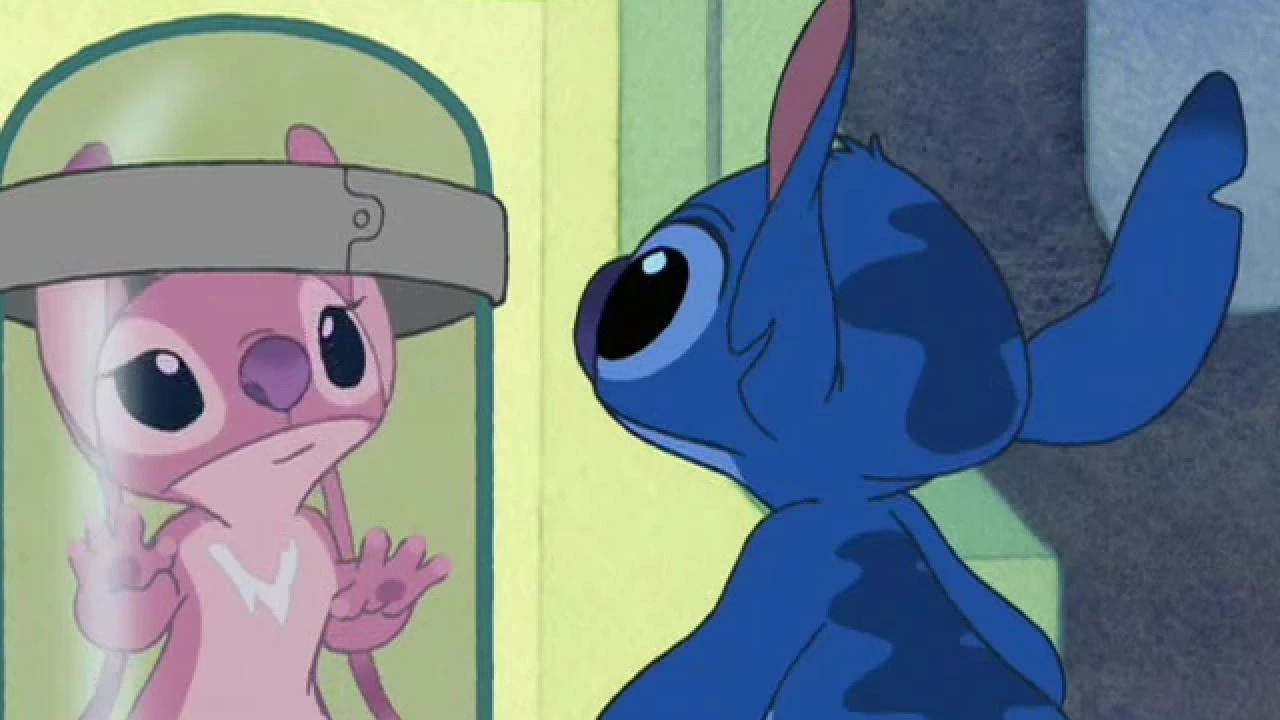
Lilo reminds Stitch that Angel is among the captives, and his grief and love sharpen his commitment. That emotional focus is honest. He has unfinished pain around her capture and no reason to believe she has been safe in Hämsterviel’s custody.
The plan must still account for every prisoner. A rescue organized around one beloved person can overlook quieter captives, inaccessible cells, medical needs, or those whose abilities make transport difficult. Love begins the mission. A roster finishes it.
Lilo should not be the commander of an armed extraction
She designs a complex operation because the adults around her have not created a standing response for captured experiments. Her courage and knowledge are real, but she is a child planning entry into an enemy vessel controlled by a larger armed captor.
Jumba, Pleakley, the Federation, and local adult allies should carry command responsibility. Lilo can identify cousins and explain relationships while trained responders handle entry, communications, medical support, and evacuation. Competence does not cancel the duty to protect her.
A rescue blueprint needs redundancy before anybody begins training
The team creates plans and an obstacle course, but one activated experiment can tear up the paperwork and sabotage rehearsal. A mission that exists in one set of blueprints has already failed its resilience test.
Copies should be stored separately, essential steps memorized, routes reduced to clear phases, and changes communicated through a shared briefing. The team needs rendezvous points, abort conditions, and a plan for losing equipment or contact. Complexity becomes dangerous when nobody can recover from deviation.
Jumba correctly warns that Experiment 120 is hostile to plans
Snafu was designed to ruin enemy operations by any possible means and frustrate attempts to capture him. Activating him during rescue preparation creates a direct conflict between his programming and every organized step the team needs to take.
Jumba’s warning is useful, but keeping the pod in a shoebox under his bed is not responsible containment. High-risk dormant experiments require labeled, water-resistant storage with inventory controls. A warning delivered seconds before accidental activation is evidence of a failed system.
Pleakley’s hose turns preventable storage risk into an activation
Water reaches the pod during an ordinary household task. The mistake is easy to blame on Pleakley, yet the pod should never have been stored where a cleaning accident could activate it. Jumba created a hazard that depended on perfect behavior from everyone else.
After activation, the response should protect bystanders, secure the remaining pods, and track Snafu without revealing the rescue target. Pleakley can acknowledge his part while Jumba remains accountable for storage design.
Snafu studies the team before sabotaging it
He does more than create random chaos. He observes plans, identifies dependencies, and chooses actions that increase failure. That intelligence means responders cannot assume he will repeat the same tactic or approach an obvious trap.
The family needs deception-resistant communication, compartmentalized information, and a plan simple enough to survive exposure. They should also attempt contact. An experiment following harmful programming may still understand choices, relationships, and consequences.
The obstacle course reveals strengths but cannot reproduce captivity
Training helps cousins coordinate movement, timing, and their abilities. It can build confidence and expose weak points before entry. Still, a backyard course cannot simulate Gantu’s weapons, locked cells, ship layout, surveillance, frightened prisoners, or the uncertainty of Snafu’s interference.
The team needs scenario changes, casualty drills, communication loss, and practice evacuating someone who cannot move independently. Success on a rehearsed course should increase readiness without creating certainty.
Every cousin on the rescue team needs a defined role and a safe refusal
The mission brings together experiments whose abilities can solve different problems. That diversity is powerful when roles are based on knowledge and consent. It becomes exploitation when Lilo assumes every cousin owes dangerous service because others are imprisoned.
Each participant should understand the objective, known hazards, extraction signal, and option to withdraw. The family must provide care after the mission whether a cousin joins, freezes, or refuses. Belonging cannot be conditional on combat usefulness.
Gantu’s plan to reverse Angel’s song is mass neurological coercion
Angel’s song can turn experiments built before her from good to evil, and a reversed recording can undo that effect. Gantu tries to weaponize the mechanism across the island. The plan treats the cousins’ moral state as a switch available to whoever controls the audio system.
Broadcasting it would violate autonomy on a community scale and could trigger immediate violence, family separation, and public panic. The response needs warning systems, audio protection, signal interruption, and follow-up for anyone exposed.
Reuben driving the ice-cream truck shows how ordinary infrastructure becomes a weapon
The villains use a familiar vehicle and public sound system to distribute the recording. Residents may approach because they recognize the truck, while experiments hear the song before they understand the threat. Camouflage works through trust built by ordinary community routines.
Local authorities should receive a description and a non-panicked instruction to avoid the broadcast path. The family must stop the signal without creating a vehicle chase through crowded streets. Protecting ears and speakers matters as much as catching the driver.
Snafu swapping the tape foils harm without becoming good on command
He replaces Angel’s reversed song with Gantu’s karaoke recording, humiliating Gantu and preventing mass conversion. The act serves the community even though Snafu is still sabotaging somebody’s plan rather than choosing a stable moral allegiance.
That ambiguity is valuable. Rehabilitation does not have to begin with a perfect speech or immediate obedience to Lilo. A harmful design can first become misaligned with another harmful plan, creating room for relationship and further choice.
Public laughter protects the experiments and increases Gantu’s volatility
The failed broadcast makes the operation look like a prank. That reduces immediate danger but embarrasses an armed captor already under pressure from Hämsterviel. Humiliation can make him more reckless toward prisoners and subordinates.
The rescue team should treat the moment as a short operational window, not a complete victory. Gantu may tighten security, move captives, or retaliate. Celebration waits until every prisoner is counted.
Sample imitating the alarm exposes the weakness of voice-only verification
Snafu tricks Experiment 258 into reproducing the ship’s alarm, alerting Gantu to the rescue. Sample performs his ability without necessarily understanding the tactical result. The failure belongs partly to a team that did not protect communications from imitation.
Alarms need visual confirmation, coded context, and a second channel. The cousins also need briefing about which sounds can compromise the mission. Training should inform rather than blame an experiment for using the function he was designed to perform.
The prison trap captures rescuers because the plan assumes the cells behave normally
Snafu rewires containment so Lilo and the team become prisoners. Entering a hostile vessel means every door, corridor, and control panel may be manipulated. Familiar technology can be the most dangerous because responders approach it with confidence.
A technical scout should inspect systems before the full team crosses a threshold. Rescuers need physical wedges, independent power, remote testing, and a person outside the compartment able to initiate extraction.
Snafu trapping himself creates the accident his design cannot anticipate
Experiment 120 can foil deliberate capture plans, but his own sabotage places him inside the prison. The contradiction exposes a limit in programming built around opposition. A system optimized to defeat intentions may fail when consequences are shared.
His accidental confinement should not invite punishment. It creates a moment where he experiences the condition imposed on others and can observe the relationships among the captives. Empathy becomes possible because he is no longer positioned outside the harm.
Stitch telling Angel he loves her reaches Snafu where strategy could not
Stitch’s confession is not a tactical command. It is vulnerable, specific, and directed toward someone whose captivity matters to him. Snafu cries because the emotional reality interrupts the logic of endless sabotage.
The scene works best as the beginning of moral choice rather than proof that love automatically rewrites anybody. Snafu still needs support, accountability, and a place where his ability can be used with consent. One tear opens a door. It does not complete rehabilitation.
Angel deserves more than the role of Stitch’s reward
Her rescue carries romantic weight, but Angel has endured capture, forced confinement, and the threat that her own voice will be used against her community. She needs medical care, privacy, time, and control over when she reconnects with Stitch.
Affection cannot erase the possibility of trauma or make physical contact automatic. Stitch can express love while allowing Angel to choose pace and boundaries. Their reunion belongs to both of them.
The other captive experiments require individual recovery plans
Some prisoners may have been isolated, restrained, threatened, experimented on, or repeatedly moved between Gantu and Hämsterviel. Others may be injured or distrustful of any new transport. A mass release is the start of recovery, not the ending.
The team should identify every cousin, photograph injuries for protected records, provide food and medical assessment, and reunite them with prior caregivers when safe. No one should be sent directly into public celebration before choosing it.
The roster discrepancies should be documented instead of quietly ignored
The series references a large group of captured experiments, while not every expected cousin is clearly visible in containment. Production order and episodic continuity make the exact list messy. A guide should distinguish confirmed appearances, dialogue references, and reasonable inference.
Precision matters because captivity is not a decorative continuity puzzle. Claiming someone was rescued without evidence can hide an unresolved absence. The family’s in-world record should remain open until each cousin is located.
Freeing Bonnie and Clyde raises a separate legal question
Bonnie and Clyde had been incarcerated for theft. Their presence among captives does not authorize Gantu’s detention, but rescue from an illegal captor does not automatically resolve the earlier sentence or the harm they caused.
They need legal review, representation, and a safe transfer that does not return them to abusive conditions. Justice can recognize their rights while maintaining obligations for restitution and rehabilitation.
Snafu’s ability needs an ethical purpose that does not depend on warfare
A talent for finding and disrupting weak points could support safety testing, emergency planning, cybersecurity, disaster exercises, or medical quality review. Those roles require consent, clear scope, and protection against sabotage spreading into real harm.
He should work with teams that want their plans tested and can stop the exercise. Housing, care, and belonging cannot depend on constant adversarial performance. Snafu also deserves hours when nobody expects him to break anything.
The ship must be treated as a crime scene after evacuation
Prison cells, restraints, recordings, logs, weapons, and transport records can establish what happened to each captive and who ordered it. Destroying or abandoning the vessel may erase evidence needed for accountability and future protection.
Federation investigators should secure the ship after everyone is safe. Lilo and the cousins should not conduct the forensic work. Survivor testimony must be voluntary and protected from public release.
A real aftercare operation would be larger than the rescue itself
The family needs a quiet reception site away from Gantu’s ship, with individual check-in, medical triage, food, water, interpreters, and secure transportation. Caregivers should be contacted only after confirming that a location has not been compromised.
Angel and other high-profile cousins may require temporary confidential housing. Everyone needs a chance to report missing companions without being forced into an immediate interview. Children involved in the rescue, including Lilo, need assessment and rest.
Jumba should compare the recovered roster with his complete experiment inventory. The Federation must issue protection orders, investigate Hämsterviel’s communications, and remove Gantu’s access to tracking or transport systems.
Follow-up cannot disappear after the reunion scene. Trauma, sleep, distrust, injury, and fear of recapture may surface later. Recovery funding should remain available without requiring each cousin to prove visible damage.
The family needs to examine why rescue depended on children and former weapons
Lilo and Stitch succeed because they care enough to act, not because the adults built a reliable protection system. That distinction should make the Federation uncomfortable. A child’s heroism cannot become the institution’s emergency plan.
The island needs a confidential experiment registry controlled with the cousins, rapid response contacts, legal protection, and trained adults who can act when someone disappears. Jumba must share risk information. Nani needs support before another mission begins in her living room.
Cousins can volunteer for community rescue roles, but their designed abilities do not make service compulsory. The system should protect experiments who cannot fight as carefully as those who can.
Success is not evidence that the plan was acceptable. It is evidence that the family survived another failure of adult infrastructure.
What I would keep and what I would repair
I would keep Nosy bringing the evidence home, the full cousin rescue, Snafu shredding and infiltrating every plan, the sabotaged broadcast, Sample’s alarm mistake, Stitch’s confession to Angel, and Snafu being caught by the consequence of his own sabotage. The episode earns its place as the emotional series finale before the film.
I would add adult command, redundant planning, an exact prisoner roster, survivor-centered aftercare, legal review for Bonnie and Clyde, a protected recovery for Angel, and Federation accountability for allowing Hämsterviel to run an experiment prison from his cell.
RaeRae’s final verdict
“Snafu” finally looks back at every cousin the weekly formula left behind and says their stories did not end at capture. Nosy carries the truth out. Woops creates the opening by accident. Lilo refuses to accept disappearance as closure. Stitch lets love become a reason to act without pretending Angel is the only prisoner worth saving.
My verdict: count everybody before celebrating, give the rescued cousins care instead of another assignment, and stop calling a child-led extraction proof that the system works. Snafu ruins plans because Jumba built him to do it. The family reaches him when Stitch offers something that is not a plan at all: an honest reason somebody must come home.
Where to watch
Watch “Snafu” through Lilo & Stitch: The Series on Disney+. Disney+ catalogs it as Season 2, Episode 25, while some broadcast databases use different late-season numbering. CVM Sekai records it as overall Episode 64. Availability and numbering can change by platform.
Keep exploring
Return to the episode directory or return to the Lilo & Stitch hub.