
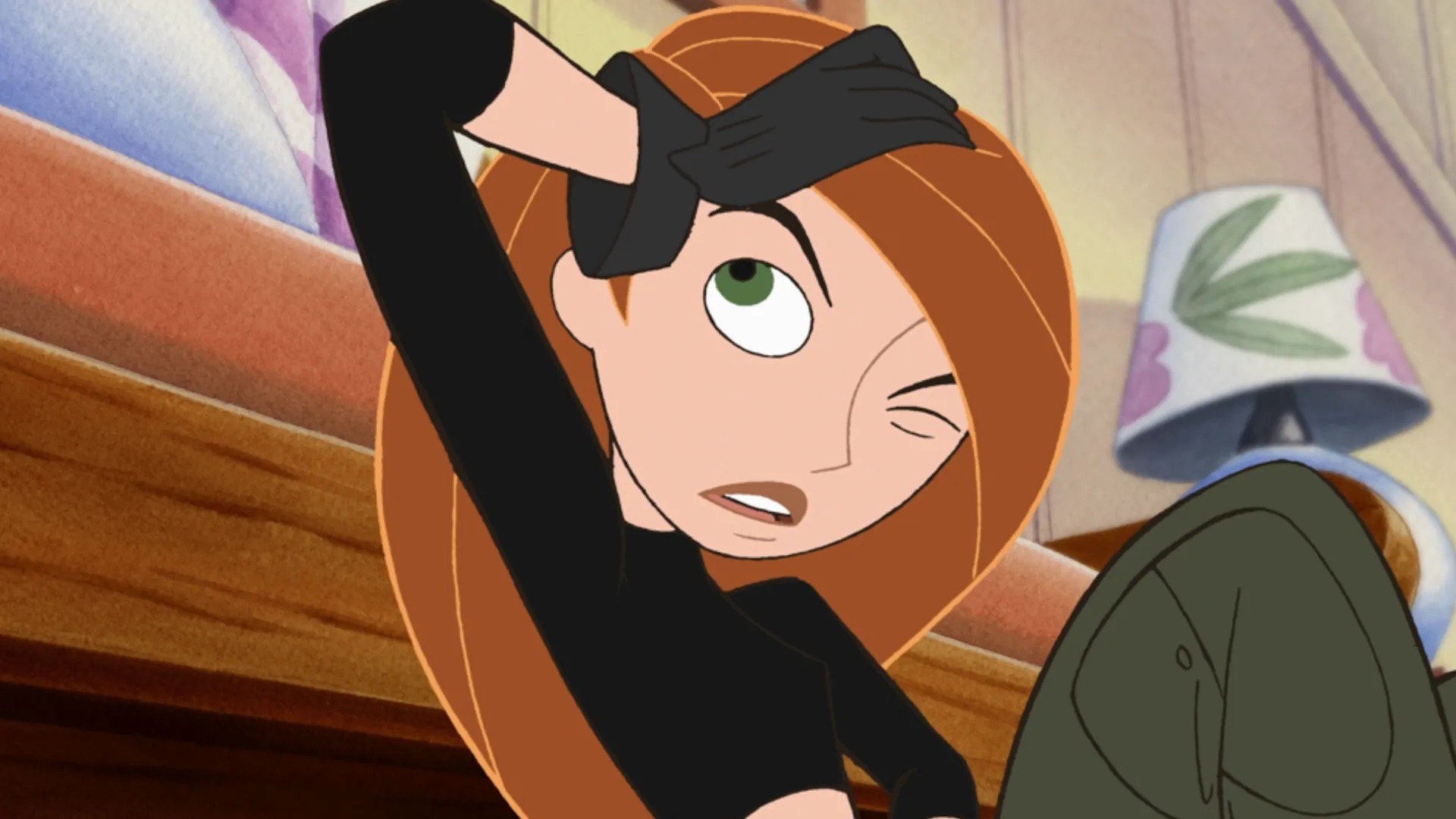
EPISODE 58 · DISNEY+ SEASON 2, EPISODE 19 · RUFUS · RAE RAE REACTS
Lilo & Stitch: The Series Episode 58: Rufus
Drakken and Hämsterviel kidnap Stitch to build an obedient clone army. Lilo calls Kim Possible, Ron and Rufus join the rescue, and Jumba becomes convinced that one very annoyed naked mole rat belongs in his experiment catalog.
Stitch’s kidnapping turns family separation into industrial theft
Drakken and Hämsterviel do not capture Stitch merely to remove a hero. They want his body as a manufacturing template for an obedient army. The plan converts a person into genetic inventory and repeats the logic that once defined him as Experiment 626.
Lilo experiences the abduction as a family emergency, while the villains discuss production capacity. That gap is the moral center of the crossover: one side sees somebody loved, and the other sees scalable force.
Cloning cannot produce consent or loyalty
A duplicate body would not guarantee the memories, choices, relationships, or moral growth that make Stitch who he is. If the process creates sentient clones, each clone becomes a person owed care rather than equipment owned by the laboratory.
Engineering obedience would add coercive programming to reproductive exploitation. An army of Stitch bodies is not a collection of tools. It is a population created inside captivity.
Hämsterviel outsources because he wants capability without accountability
Hämsterviel hires Drakken and Shego to reach Stitch using unfamiliar tactics and human-world access. Contracting the operation lets him direct harm while treating failure as somebody else’s incompetence.
The alliance requires financing, communication, transport, and shared intelligence. Stopping one villain is insufficient if the infrastructure that connected them remains available.
Drakken sees Stitch as proof that his next scheme can finally scale
Drakken is drawn to a creature whose strength, durability, and intelligence already work. Instead of creating responsibly, he wants to copy success and attach it to his own ambition. Stitch becomes a shortcut around every failure that should have taught restraint.
The plan also underestimates growth. Stitch changed because relationships gave him choices. A villain who copies the body while ignoring that history misunderstands the most important feature.
Shego recognizes the pattern and still participates
Shego remembers Drakken’s poor cloning record and voices skepticism, but she remains part of the abduction. Competence makes her awareness sharper, not less accountable. Knowing a plan is reckless creates a reason to stop it.
Her presence also raises worker-power questions. She can challenge Drakken in ways other employees cannot, yet the partnership keeps converting her judgment into sarcastic commentary rather than refusal.
Pleakley contacts Kim because the local response has failed
Calling Kim Possible is a sensible escalation after Stitch disappears. Pleakley recognizes that pride cannot outrank rescue and reaches beyond the household’s usual methods. External help is a strength when the mission exceeds local capacity.
The request should include known captors, medical risks, technology, location evidence, and Lilo’s safety needs. “Save Stitch” is emotionally complete but operationally incomplete.
Kim arrives as a capable teenager, not an unlimited public service
Kim has experience with Drakken and Shego, yet she is still a minor repeatedly dispatched into international danger. Adults celebrate availability instead of asking why emergency systems depend on a student answering a message.
The crossover can admire her preparation while naming the labor. She needs transportation, intelligence support, medical backup, and adults accountable for the mission’s consequences.
Lilo and Kim bring different expertise to the same rescue
Kim understands Drakken’s habits, Shego’s abilities, and tactical infiltration. Lilo understands Stitch’s behavior, alien technology, and the emotional stakes. Neither girl is a sidekick in the other’s world.
A strong plan divides work according to knowledge rather than age or brand hierarchy. Lilo should not be excluded from decisions about family, and she should not be placed in the most dangerous position simply because she insists.
Ron’s contribution is more than comic disruption
Ron knows Kim’s rhythms, notices details from an unexpected angle, and cares for Rufus as a partner. His apparent clumsiness can obscure practical loyalty and willingness to enter danger without pretending he is invulnerable.
The team needs to use his strengths deliberately instead of treating survival through improvisation as a strategy. Humor should not erase the risk he and Rufus absorb.
Rufus is a person before Jumba’s database says anything
Jumba mistakes Rufus for Experiment 607 because Rufus is unusual and unfamiliar. He treats visual resemblance as evidence of authorship, repeating the habit of claiming every strange creature through his catalog.
Ron already knows Rufus’s history, preferences, communication, and relationship. Existing identity should outrank an inventor’s unsupported guess. Jumba needs to ask, scan noninvasively, and accept correction.
Misidentification can become abduction when authority refuses correction
If Jumba believes Rufus belongs in his experiment system, he may attempt containment, testing, or relocation without consent. A joke about taxonomy then carries the same logic used against Stitch: unusual biology becomes presumed property.
The team needs a rule that uncertainty protects the subject. No capture, invasive scan, or reprogramming occurs until identity is established and the individual or guardian agrees.
Rufus communicates even when strangers hear only an animal
Rufus uses speech, gesture, expression, and shared routines with Ron. Limited human vocabulary does not reduce his agency. People who know him can interpret preferences without claiming perfect access to his mind.
The crossover should let Rufus’s actions disprove the catalog theory while still respecting him beyond usefulness. Saving somebody does not make personhood newly earned.
The clone facility is evidence that must be preserved
Rescue teams should secure genetic samples, machine logs, communications, payment records, and containment equipment before villains destroy them. The evidence can identify additional victims and prevent the same system from being rebuilt elsewhere.
Stitch’s DNA requires privacy. Authorities should seal or destroy unauthorized copies through accountable procedures rather than leaving samples available to the next ambitious scientist.
Stitch needs medical care after captivity and attempted cloning
Restraint, sedation, scanning, tissue collection, and machine exposure may create injuries that are invisible during escape. His durability does not eliminate pain, fear, or physiological harm.
A trusted clinician should assess him privately, explain what was taken, and offer choices about evidence collection. Lilo’s relief should not pressure him to act fine immediately.
Rescue does not restore the time Stitch spent as an object
Stitch has a history of confinement, judgment, and being discussed as a destructive specimen. The cloning plan returns him to that identity after he has built a family. Trauma may come from the repetition as much as the machinery.
Recovery should include control over touch, space, and conversation. The family can reassure him that no copy, weapon label, or laboratory claim replaces the person they know.
Lilo also needs support after another sudden disappearance
Stitch’s abduction activates the fear that family can vanish without warning. Lilo responds through action because rescue gives panic a task. When the mission ends, the feelings may remain.
Nani or another trusted adult should help her process what she saw, correct self-blame, and create a plan for future emergencies. Courage cannot be the only permitted response.
Kim and Lilo should compare support systems, not trauma credentials
Both girls save people while adults rely on their competence. The crossover could let them recognize the loneliness beneath being “the one who handles it.” Neither needs to prove her world is more dangerous.
Sharing protocols, contacts, and boundaries would create a meaningful legacy beyond the guest appearance. Their friendship can be practical and emotionally honest.
The villains’ cooperation requires jurisdictional cooperation too
Drakken and Shego operate in human systems while Hämsterviel’s conspiracy crosses planets. Local police, the Galactic Federation, and Kim’s support network each hold only part of the evidence.
An accountable investigation needs information sharing without exposing Stitch or Rufus publicly. Secrecy should protect victims, not create gaps where perpetrators escape responsibility.
Crossover continuity is less important than character consistency
Episode lists disagree about where “Rufus” sits inside Kim Possible continuity, and the story may never be referenced again. The emotional events still need to respect established relationships while the episode is happening.
Kim should remain strategic, Ron loyal, Rufus agentic, Lilo protective, and Stitch more than a weapon. Brand combination works when characters recognize each other rather than becoming interchangeable mascots.
Jumba must confront why every cloning villain can use his work
Hämsterviel and Drakken exploit the existence of a creature Jumba built for destruction. Jumba cannot control every criminal response, but he can secure genetic records, dismantle replication technology, and stop treating safeguards as an afterthought.
Scientific responsibility includes anticipating misuse, especially after repeated capture attempts. Genius without stewardship keeps turning the family into emergency cleanup.
Any surviving clone would be a victim, not evidence to destroy
If Drakken’s machinery produced a living Stitch clone before the rescue, destroying the laboratory cannot include killing that being. Unauthorized creation does not reduce the clone’s moral status. The clone would need medical care, legal protection, and freedom from the obedience programming imposed at birth.
Stitch should not be forced to become parent, sibling, trainer, or donor because the clone shares his body. He may choose a relationship after receiving time and support, while the Federation remains responsible for housing and independent advocacy.
Identity questions would require patience. A clone might share genetic traits without memories, or the machine might copy fragments of behavior. The family should use a new name only with the clone’s participation and avoid treating difference as defect.
Evidence collection must preserve the clone’s privacy. Medical samples and testimony should be limited to what prosecution requires, with records sealed against future research or military use. Rescue cannot repeat the laboratory’s claim over the body.
DNA custody needs a documented chain from seizure to destruction
Stitch’s cells may remain in scanners, cartridges, waste containers, computer models, or transmitted files. Smashing the visible machine does not prove the material is gone. Investigators need an inventory covering physical samples, backups, remote systems, and every person who accessed them.
An independent authority should verify secure deletion or ethical retention for prosecution. Jumba cannot hold the only copy of the audit because his own research history creates a conflict. Lilo and Stitch need an advocate who explains each decision in language they understand.
The process should also search for data derived from earlier captures. Hämsterviel has pursued Stitch long enough that this facility may be one node in a larger archive. Drakken’s involvement could have spread information into human criminal networks unfamiliar to the Federation.
Stitch deserves a final report stating what was recovered, what was destroyed, and what remains uncertain. Privacy repair includes honest limits rather than promising that every copy vanished when investigators cannot prove it.
Teen heroes need an exit path after the dramatic rescue
Kim and Lilo move from fear to planning because the mission demands focus. Afterward, adults often celebrate competence and send them home without decompression. Both girls need food, sleep, medical checks, private conversation, and permission to stop performing bravery.
Ron and Rufus need the same care. Comic roles can hide injury or distress, especially when everyone assumes relief should replace every other feeling. Each teammate should be screened according to exposure rather than narrative status.
A debrief should distinguish what worked from what succeeded through luck. Contacting Kim, combining local knowledge, and preserving team communication may be repeatable strengths. Entering an unsecured clone facility without adult backup should not become the standard because everybody survived.
The adults must convert lessons into systems: emergency contacts, evacuation roles, medical providers, evidence protocols, and limits on child participation. Admiring young heroes is easier than building a world that asks less of them.
Shared villains expose the gaps between separate justice systems
Human authorities may know Drakken and Shego, while the Galactic Federation knows Hämsterviel, Gantu, and illegal experimentation. Each system could dismiss evidence outside its familiar jurisdiction, allowing collaborators to exploit the boundary between Earth crime and galactic crime.
A joint case needs agreed definitions for kidnapping, genetic theft, cloning, weapons manufacture, and crimes against newly created beings. Witnesses require protection from public exposure, especially Stitch, Rufus, and children whose identities connect the two investigations.
Jurisdiction cannot become an excuse for indefinite detention or secret experimentation. Independent oversight should review how alien evidence is stored and whether human defendants receive a fair process. Protecting victims and respecting legal rights are compatible obligations.
The crossover earns lasting meaning if the alliance changes preparedness. Kim’s network should know who to call for alien threats, and the Federation should recognize human criminal partners as more than local nuisances. Otherwise the same villains can rebuild the partnership after the guest stars leave.
What I would keep and what I would repair
I would keep Pleakley contacting Kim, the girls combining expertise, Ron and Rufus entering the alien mess, Shego mocking the clone plan, and Stitch refusing to become inventory. The crossover has a clean reason for both worlds to meet.
I would add post-captivity care, evidence handling, accountability for Jumba’s misidentification, and a clearer role for Nani and adult authorities after the rescue.
RaeRae’s final verdict
“Rufus” puts Hämsterviel and Drakken in the same room long enough to decide one Stitch is insufficient, then lets two girls, one sidekick, one naked mole rat, and an alien household repair the adults’ cloning conspiracy. The fun works because the rescue teams recognize people where villains see resources.
My verdict: destroy the stolen DNA, treat Stitch, believe Ron when he says Rufus is Rufus, and prosecute the partnership instead of celebrating another narrow escape. A body can be copied. Ohana, consent, memory, and choice cannot be printed by the machine.
Where to watch
Watch “Rufus” through Lilo & Stitch: The Series on Disney+. Disney+ labels it Season 2, Episode 19, while some Kim Possible guides list the crossover as Season 2, Episode 20. CVM Sekai records it as overall Episode 58 in the Hawaiian-series directory. Availability and numbering can change by platform.
Keep exploring
Return to the episode directory or return to the Lilo & Stitch hub.