
EPISODE 51 · DISNEY+ SEASON 2, EPISODE 12 · BELLE · RAE RAE REACTS
Lilo & Stitch: The Series Episode 51: Belle
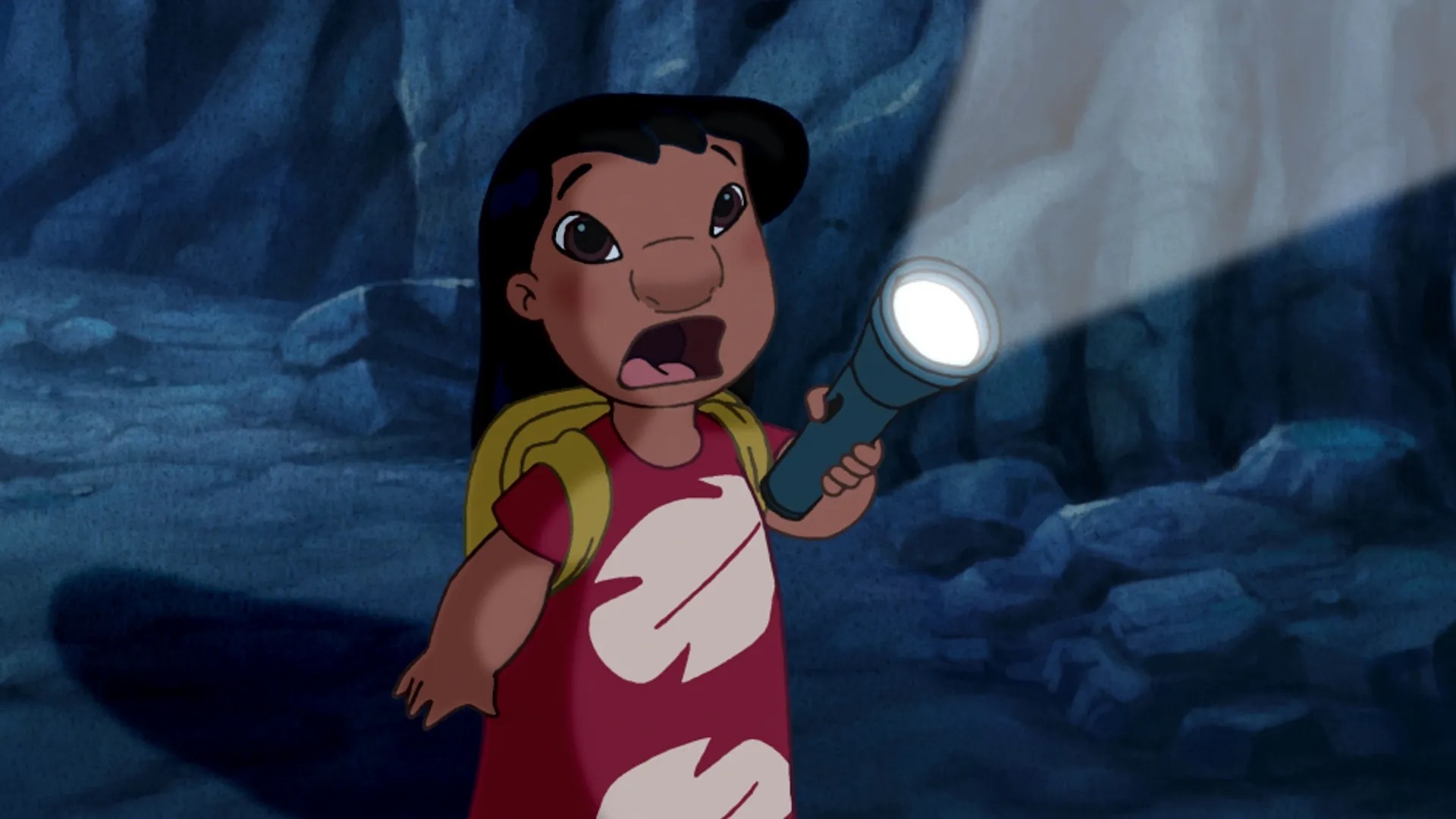
Lilo accepts Mertle’s challenge to prove the Night Marchers exist, but the scream in the dark belongs to Experiment 248. Fear, belief, bullying, cultural respect, and an alien sonic emergency all collide on the same trail.
Lilo wants proof because Mertle has turned belief into a public trial
Mertle does not simply disagree with Lilo about the Night Marchers. She makes belief another test of whether Lilo is credible, normal, and worthy of being heard. The wager sends Lilo looking for evidence because losing would feel like confirming every insult Mertle has attached to her imagination.
That pressure explains the hunt without making every choice wise. A child who has been mocked repeatedly may chase certainty long after the activity stops being fun. The adults should notice when a ghost story becomes a referendum on Lilo’s honesty and help her leave the contest without treating withdrawal as defeat.
The Night Marchers are not generic campfire monsters
Night Marchers belong to living Hawaiian cultural traditions, not a costume rack the episode invented for a spooky night. Stories vary by family and place, but the subject carries history, genealogy, sacred movement, warnings, and protocols that deserve more care than a dare between children.
The episode can use uncertainty and fear while still identifying whose tradition it borrows. RaeRae does not need a cartoon to settle spiritual truth. I need the story to avoid flattening a specific Hawaiian belief into interchangeable ghosts whose only purpose is proving Mertle wrong.
A respectful investigation begins with people, not traps
Lilo, Stitch, Jumba, Pleakley, and Mertle head into the night equipped for spectacle. A better first step would be asking a trusted cultural practitioner, elder, historian, or family member what the stories mean and whether visiting a reported route is appropriate. Curiosity does not automatically grant access.
That conversation would also protect the children from misinformation. It could distinguish public history from family knowledge, explain why some locations should be left alone, and make clear that refusing to produce supernatural proof is not evidence that a tradition lacks value.
Mertle’s skepticism is less important than the way she uses it
Nobody must share Lilo’s belief. The problem is Mertle using disbelief as permission to humiliate her and set the terms of acceptable knowledge. She is not offering careful inquiry. She has designed a contest where she wins if nothing appears and can ridicule any ambiguous sound that does.
Healthy skepticism asks what evidence would change a conclusion and accepts that some cultural claims are not laboratory assignments. Bullying dresses certainty in social power. Mertle wants control over who looks foolish, which means the wager was never a neutral experiment.
Fear spreads through suggestion before Belle ever screams
The group tells frightening stories while waiting in darkness. Every branch, shadow, and unfamiliar sound then arrives inside a nervous system already expecting danger. This is ordinary threat detection, not proof that anyone is weak or irrational. Context changes what the brain thinks it hears.
The episode gets useful comedy from escalating panic, but it also shows why eyewitness memory can become unreliable under stress. Each person enters with a different story and fills missing information accordingly. A careful response records the sound, checks the area, and avoids declaring a supernatural or alien cause too early.
Experiment 248 weaponizes the body’s alarm system
Belle produces a scream powerful enough to terrify listeners and create confusion. The ability attacks orientation before anyone can identify the source. People may run, freeze, fall, lash out, or abandon companions. In darkness and uneven terrain, panic can injure someone before the experiment touches them.
Her power therefore needs to be treated as a public-safety and health concern rather than a funny noise. Responders should reduce exposure, protect hearing, establish a visible meeting point, and account for every person. Children should never be assigned to chase the source through an unsecured area.
The name Screamer describes a function, not a person
Apple’s synopsis calls the experiment Screamer, while the franchise names Experiment 248 Belle. Functional labels are common in Jumba’s catalog, but they can trap a cousin inside the behavior she was engineered to perform. A scream is something Belle can do. It is not the total boundary of who she may become.
Lilo’s naming practice often creates room for identity beyond a number and weapon. That change should include consent and observation. Belle may communicate through movement, pitch, distance, rhythm, or choices the episode does not translate. The family needs to learn her language instead of assuming silence between screams means absence of thought.
A scream can be communication before it is aggression
Belle may scream because she is frightened, cornered, overstimulated, calling for help, warning others, or following programming she cannot yet regulate. Intent does not erase harm, but it changes the safest intervention. Punishing every vocalization could increase fear and make future incidents more likely.
The household should track triggers and outcomes. Does she vocalize when Gantu approaches, when strangers surround her, or when darkness removes escape routes? A humane plan separates deliberate attack from distress and gives Belle another reliable way to signal danger before demanding perfect control.
Hearing protection is only the beginning of accommodation
Ear protection may reduce immediate damage, but it cannot become an excuse to isolate Belle. The family needs safe distances, quiet zones, visual cues, warning signals, and agreed conditions for practice. People with sensory vulnerabilities need advance notice rather than being used as test subjects.
Belle also deserves protection from noise and crowding. If her ability responds to stress, a calm environment is part of community safety. Accommodation works in both directions: neighbors gain predictable safeguards, while Belle gains a life that does not require suppressing every natural expression.
Gantu’s pursuit makes the night more dangerous for everyone
Gantu treats each newly activated cousin as property for delivery to Hämsterviel. His chase turns a confusing encounter into an armed retrieval operation around children. Even when Lilo has made a risky choice, an adult military figure remains responsible for escalating force and targeting a vulnerable being.
The group needs an exit plan that does not depend on Stitch winning another fight. Adults should move the children away, document Gantu’s presence, and secure Belle only long enough to prevent injury. Capture cannot be called rescue if the destination is confinement and exploitation.
Stitch cannot be the entire emergency system
Stitch is strong, fast, and familiar with the cousins, so everybody defaults to him as tracker, shield, translator, and combat response. He is also a family member with his own fear and history of being hunted. Constantly placing him between children and armed danger is not a sustainable safety plan.
Jumba should provide detection equipment and accurate ability profiles. Pleakley can coordinate civilians. A responsible adult can manage transportation and medical care. Lilo can help identify patterns without being made commander. Ohana means distributing care, not celebrating one childlike experiment for absorbing every risk.
Jumba owes the group accurate information before contact
Experiment 248 is part of Jumba’s catalog, yet the family frequently learns abilities through exposure. That failure converts civilians into involuntary field research. “I forgot this one” stops being charming when the forgotten detail can cause hearing damage, panic, falls, or a stampede.
A usable record should include number, known function, activation method, range, duration, vulnerabilities, reversal needs, and safe containment. If information is uncertain, Jumba should say so plainly. Confidence without records puts Lilo in the position of discovering hazards with her own body.
Proving the sound is alien does not disprove Hawaiian tradition
Belle explains the scream heard by this group on this night. She does not prove that every Night Marcher account across generations was secretly an experiment. The episode should resist the easy colonial habit of letting a science-fiction answer declare local knowledge foolish.
Specific evidence deserves a specific conclusion. The investigators found Experiment 248 near their route. That finding resolves the immediate danger and Mertle’s wager only if the wager was narrowly about this sound. It cannot erase beliefs, experiences, and protocols belonging to people outside the scene.
Lilo does not need Mertle’s permission to belong to her own home
The deeper wound is Lilo repeatedly being forced to defend her knowledge of the island to a child who uses popularity as authority. Mertle can question a claim, but she cannot appoint herself judge of Lilo’s relationship to place, family, grief, or culture.
An adult should interrupt that dynamic instead of waiting for Lilo to win through alien evidence. The goal is not to make Mertle believe everything. It is to establish that mockery, dares, and public humiliation are unacceptable ways to negotiate difference.
The adults must own the decision to take children into the dark
Jumba and Pleakley join the search, which gives the outing adult supervision in name. Supervision requires more than presence. They need a route, weather check, lights, charged communication, first-aid supplies, boundaries, and a plan for ending the trip when conditions change.
Their alien expertise makes the omission worse because they know active experiments may be nearby. If Belle’s pod has opened, the search is no longer a childhood ghost hunt. It is a hazardous-material response involving an unknown engineered being.
Belle’s one true place should not exploit fear
A tempting placement would use Belle as an alarm, attraction, haunted-house effect, or security weapon. Each option rewards the scream without asking whether she wants to produce it, what it costs her body, or how repeated exposure affects listeners. Utility alone is not belonging.
A humane placement begins with quiet housing, communication support, voluntary training, medical assessment, and relationships that continue when she is silent. If Belle later chooses work involving sound, she needs protective limits and the ability to stop. The family cannot rescue a cousin from Gantu only to rent out her nervous system.
Repair includes the people frightened during the hunt
Anyone exposed to Belle’s scream may need hearing checks, injury screening, and a calm explanation. Children who thought they encountered a sacred procession or monster may carry fear after the physical danger ends. Telling them it was “only an experiment” does not settle the body’s response.
The group should revisit what happened without mocking anybody’s panic. Lilo can admit the wager pushed her too far, Mertle can own the humiliation she created, and the adults can acknowledge inadequate safety. Belle’s arrival is not permission for every human to avoid accountability.
What I would change without draining the episode’s weirdness
I would keep the night setting, competing stories, escalating nerves, Belle’s startling entrance, and Lilo’s refusal to let Mertle control the meaning of everything. The episode has the bones of a good conversation about fear, evidence, and who gets believed.
I would add a Hawaiian cultural consultant inside the story, clarify that one alien sound does not explain a living tradition, and give Belle a quieter scene where she communicates without screaming. I would also send the children home before Gantu turns the investigation into a battle.
The story needs a clearer boundary between mystery and entitlement
Lilo’s curiosity is one of the best things about her. She notices what adults dismiss, keeps records, and follows strange evidence until the island makes more sense. Curiosity becomes entitlement when the search assumes every place, story, creature, and person must reveal itself on demand so she can win an argument. Mystery is allowed to remain unresolved.
That boundary would make the episode stronger because Lilo could still be brave without treating sacred tradition as a scavenger hunt. She might document sounds from a respectful distance, stop when warned, and accept that responsible research sometimes produces a careful “we do not know.” Mertle would hate that answer because it denies her a clean victory, which is exactly why it matters.
Belle complicates the mystery without closing it. Finding a biological source for one scream is useful evidence, but evidence has a scope. The family can identify Experiment 248, address the immediate hazard, and still admit that they did not investigate every account or earn authority over the tradition. Intellectual honesty should feel more satisfying than a smug reveal.
I also want Lilo protected from the idea that she must endanger herself to be believed. Her knowledge is not valuable only when it produces a captured experiment. Adults can respect her observations, challenge unsafe methods, and help her separate a genuine question from Mertle’s bait. That is how curiosity survives without becoming another weapon used against her.
RaeRae’s final verdict
“Belle” starts with Lilo trying to win a bet and ends with Experiment 248 proving that the loudest thing in the dark was an alien cousin. The fun is real, but the episode wanders into Hawaiian tradition, childhood bullying, sensory danger, and involuntary weaponization without giving all of them the room they deserve.
My verdict: protect people’s hearing, stop letting Mertle turn culture into a humiliation game, make Jumba produce an actual hazard file, and give Belle a home where silence does not cancel her value. One scream can explain one terrible night. It cannot explain an entire culture, and it definitely cannot make Gantu the responsible adult.
Where to watch
Watch “Belle” through Lilo & Stitch: The Series on Disney+. Disney+ labels it Season 2, Episode 12. Apple UK labels the same story Season 2, Episode 16, and its synopsis calls Belle “Screamer.” CVM Sekai records it as overall Episode 51 in the complete aired-order directory. Availability and platform numbering can change by region.
Keep exploring
Return to the episode directory or return to the Lilo & Stitch hub.