
EPISODE 39 · SEASON 1 · DROWSY · RAE RAE REACTS
Lilo & Stitch: The Series Episode 39: Drowsy
Stitch wants Lilo to rest. Experiment 360 removes her ability to wake, and one secret exposure becomes a full day of sunglasses, puppetry, and everybody mistaking appearance for consent.
Lilo is exhausted before anybody tries to make her sleep
Lilo has found twelve experiment pods, is late for hula again, and is trying to hold school-age obligations beside a mission that should belong to trained adults. Her restlessness is not random childish refusal. Her nervous system has no clear end to the workday.
The first response should reduce demands, sort what can wait, and help her settle. Sleep support cannot fix a schedule built around chronic over-responsibility.
Jumba leaves dangerous inventory with Pleakley and a child nearby
Twelve unidentified pods create twelve unknown risks. Jumba is too busy to catalog them and passes the task to Pleakley without a complete containment process. One contains Experiment 360, whose bleat can place populations into near-permanent sleep.
High-risk biological inventory needs chain of custody, hazard screening, locked storage, and independent oversight. A family home should never function as the Federation’s unsupervised evidence room.
Being late to hula is a support problem before it is a discipline problem
Lilo arrives late for the third time, and Nani speaks seriously with her. Repeated lateness affects the teacher and other students, so the boundary is fair. The family also needs to ask what makes punctuality impossible.
A child collecting alien experiments cannot use an ordinary calendar without adult help. Nani should receive enough truthful information to protect Lilo’s schedule rather than seeing only the final missed minute.
Stitch wants to solve a symptom because the cause looks too large
Lilo cannot settle, and Stitch discovers a cousin who can make her sleep immediately. The solution appears efficient because it bypasses the workload, anxiety, and unfinished tasks keeping her awake. He chooses sedation over conversation.
Care driven by love can still violate autonomy. Stitch wants her rested, but intent does not authorize secret exposure to an unknown neurological effect.
Experiment 360 does not provide a bedtime song
Drowsy’s bleat causes a near-permanent sleep. That is incapacitation, not ordinary rest. The victim cannot decide when to wake, respond to danger, drink water, use the bathroom, or communicate distress.
Calling the effect sleep makes the power sound gentle. The medical reality inside the fiction is loss of consciousness under external control.
Lilo never consents to the exposure
Stitch uses Drowsy because he believes he knows what Lilo needs. He does not explain the experiment, ask permission, verify a reversal, or ensure adult monitoring. Lilo loses control of her body before she can evaluate the risk.
A child cannot meaningfully agree to an unknown sedating agent without a guardian and clinical information. Secret administration is wrong even when the person has complained about insomnia.
Jumba should have documented the wake protocol first
Any experiment capable of suppressing consciousness needs a verified reversal procedure attached to the containment record. The household should know the trigger, duration, contraindications, and emergency steps before the pod is opened.
Jumba’s habit of explaining functions after disaster is negligent. Memory and confidence cannot serve as the only safety system for hundreds of created beings.
Stitch realizes that a sleeping body cannot complete a life
Morning arrives and Lilo does not wake. Hula, errands, family communication, food, and safety still exist. Stitch tries to preserve the schedule rather than admit the emergency, which converts one violation into many.
The correct action is to tell Nani immediately and seek qualified help. Fear of punishment does not excuse delaying care for an unconscious child.
Sunglasses do not turn unconsciousness into participation
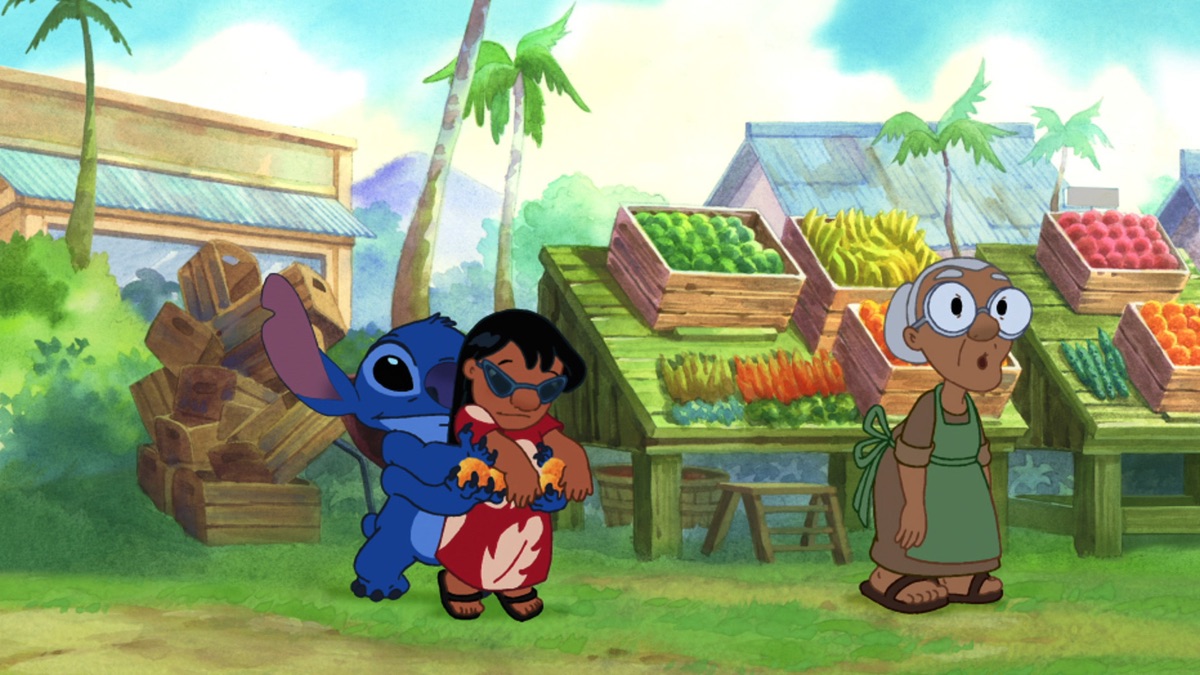
Stitch places sunglasses on Lilo and moves her body so others will think she is awake. The disguise protects him from discovery while removing everyone else’s ability to recognize a medical crisis. It also presents Lilo publicly in a condition she did not choose.
Appearance is not consent. A body positioned to look alert remains a person who cannot speak, refuse, or protect herself.
Puppeting Lilo crosses every bodily boundary
Stitch manipulates her limbs and posture to complete responsibilities. The cartoon staging is inventive and deeply uncomfortable because her body becomes equipment. She may later have pain, bruising, missing memory, or fear when she learns what happened.
Emergency movement should be limited to safety and performed by trained caregivers. Chores and reputation are never reasons to operate an unconscious person like a marionette.
The errands can wait
Stitch treats Lilo’s obligations as fixed appointments that must be performed regardless of her condition. That reflects how children learn to value being dependable even when sick. A medical emergency cancels the schedule.
Adults can contact the hula teacher, reschedule tasks, and protect privacy. Nobody needs a fake performance of wellness to prove responsibility.
Nani is denied the information required to protect her sister
The deception keeps Nani from making medical decisions, monitoring breathing, or understanding why Lilo is unresponsive. It also threatens guardianship because outsiders could interpret the condition without knowing about Experiment 360.
Stitch must trust Nani with the truth even when he expects anger. Family safety depends on caregivers receiving bad news early.
Drowsy is a person and not an unregulated sedative
Experiment 360 acts through a power Jumba created. Treating him like medication erases his agency, needs, and possible discomfort. He may not understand why his natural bleat changes people or why others want access to it.
A humane plan must protect Drowsy while preventing involuntary exposure. Sound-dampened housing, visual communication, and controlled environments can serve both goals.
Sound transmission makes his ability a community hazard
A bleat can travel beyond the intended listener. Distance, walls, recordings, speakers, and hearing differences may change exposure without eliminating it. One activation could affect drivers, swimmers, caregivers, or workers operating machinery.
Containment needs acoustic testing and emergency alerts. Ear protection alone should not be assumed sufficient until Jumba proves how the power works.
Near-permanent sleep changes the ethics of every rescue delay
Because the effect may continue indefinitely, waiting to see whether Lilo wakes is unsafe. Hydration, airway protection, circulation, temperature, nutrition, and pressure injuries become concerns while consciousness remains absent.
This is editorial analysis of fictional biology, not medical advice. A real person who cannot be awakened requires immediate emergency assistance from qualified professionals.
Gantu treats Drowsy as a population-control weapon
Hämsterviel orders Gantu to capture Experiment 360 because forced sleep can neutralize groups without a visible battle. A power that looks soft becomes strategically terrifying when deployed against guards, communities, or political targets.
The Federation should classify Drowsy as a protected person with a high-risk ability, not store him as deployable equipment for whichever side reaches him first.
Kidnapping a vacationing celebrity exposes another absurd mission
Gantu is also instructed to kidnap Regis Philbin during his vacation. The assignment folds celebrity obsession into alien operations and pulls an uninvolved visitor into a conflict he cannot understand. Fame does not make a person available for abduction.
Local security and the Federation should coordinate without turning the island into a surveillance zone. Protect the target, preserve residents’ privacy, and remove Gantu’s access to weapons.
Stitch’s fear of consequences makes the emergency worse
He hides what happened because admitting the choice threatens trust. The longer he maintains the puppet performance, the more people interact with Lilo without knowing she is unconscious. Shame becomes a risk multiplier.
A household safety rule should promise that revealing an emergency reduces punishment rather than increasing it. Accountability follows after the person is safe.
Lilo deserves control over who hears the story later
Once awake, she may find that classmates, teachers, shopkeepers, or strangers saw her body being moved. The family should explain the facts privately and let her decide what others are told. The event is her medical and bodily history.
Nobody should replay the puppet scenes for laughs before asking how she experienced the missing time.
Repair requires more than Stitch saying he meant well
He needs to name the secret exposure, delayed disclosure, body manipulation, and public deception. Each choice caused a different harm. Lilo can decide what apology, distance, or reassurance she needs.
Stitch should also help build the new protocol: no experiment power is used on a person without informed permission and a known reversal plan.
Drowsy’s one true place needs clinical boundaries
The obvious placement is helping people with insomnia. That can be compassionate only if Drowsy chooses the work and patients receive medical screening, informed consent, monitoring, and a reliable wake procedure. Desperation for sleep can make people accept risks they do not understand.
He needs pay, rest, legal representation, acoustic safeguards, and the right to refuse. A clinic cannot own his bleat or his body.
Drowsy also needs a life outside treatment rooms. Friends, play, privacy, housing, education, and activities unrelated to sleep protect him from becoming a single-function employee. A placement is ethical only when he can stop working without losing food, shelter, or protection.
A recording of the bleat could become a permanent weapon
The household must determine whether microphones, phones, broadcasts, or archived video preserve Drowsy’s effect. If a recording works, one unauthorized clip could expose thousands of people repeatedly and travel far beyond the island before anyone understands the source.
Testing must occur in controlled conditions with independent review and no human exposure until safety is established. Any effective recording should be encrypted, access-limited, logged, and deleted when the approved purpose ends. Drowsy must retain rights over the captured sound because it originates from his body.
The safest assumption is that casual filming is prohibited. Nobody at the clinic, the household, or the Federation should keep a sample as a curiosity, ringtone, training aid, or emergency shortcut. That boundary must remain clear after every staff change.
Sleep care should begin with the life surrounding bedtime
Lilo’s overloaded evening, repeated lateness, alien responsibilities, family stress, and fear all matter. A safe plan might reduce tasks, create predictable wind-down time, limit late experiment work, and give her space to talk about what is keeping her alert.
A supernatural sleep switch avoids those conditions. Sustainable rest requires adults to change the system around the child.
The Federation owes the family overnight support
Lilo should not be cataloging pods or responding to newly activated experiments at bedtime. A rotating trained team could secure pods, handle nighttime emergencies, and let the household sleep without waiting for the next siren.
The cost belongs to the institution that lost the experiments. Nani’s home cannot remain an unpaid twenty-four-hour field office.
What made me laugh
Stitch looks at an unconscious child and decides the missing ingredient is sunglasses. Apparently every medical emergency becomes a normal Tuesday if the patient has enough accessories.
The idea of Gantu jobbing between experiment capture and celebrity kidnapping also feels like Hämsterviel built assignments by spinning two unrelated wheels and yelling whatever they landed on.
What made me mad
I get mad at the puppet routine because Lilo’s body becomes a disguise for Stitch’s mistake. He protects himself from a hard conversation by making her perform cooperation while she cannot object.
I also get mad that Drowsy’s potential clinical future is so easy to romanticize. People desperate for sleep are vulnerable. A living experiment should never become an unreviewed shortcut sold as gentle care.
The response plan I wanted
Stitch tells Nani immediately, places Lilo safely under adult observation, contacts a qualified clinician and Jumba, and secures Drowsy in an acoustically controlled room. All errands and hula obligations are canceled with minimal disclosure.
After reversal, Lilo receives medical and emotional follow-up. Drowsy receives independent advocacy and a placement assessment. The family creates a written consent and exposure protocol for every experiment ability.
The order is unusually simple this time
CVM Sekai and Apple both list “Drowsy” as Season 1, Episode 39 in the aired sequence. Other DVD catalogs may place stories differently, but the main platform label matches this directory entry.
The agreement is worth recording because earlier episodes required repeated corrections. Readers can use the title and Experiment 360 as the stable identifiers across catalogs.
The quiet scene I wanted
After Lilo wakes, I wanted Nani to sit beside her before anyone explains the errands. Lilo could ask what happened to her body and hear the answer without jokes. Stitch could remain in the room only if she wanted him there.
Later, Lilo could meet Drowsy behind a sound-safe barrier and learn that neither of them chose the purpose Jumba created. Forgiveness would be separate from safety.
The Episode 39 verdict
“Drowsy” turns exhaustion into a consent crisis. Stitch wants to help, uses an experiment without permission, panics when the effect will not reverse, and makes Lilo’s unconscious body perform a normal day. The comedy works because the disguise is increasingly impossible, while the ethical cost grows with every stop.
My verdict is cancel the errands, call Nani, protect Drowsy from weaponization, and let Lilo wake before anyone discusses responsibility. Sleep is care only when the sleeper retains dignity, safety, and a path back to consciousness.
Where to watch
Watch “Drowsy” through Lilo & Stitch: The Series on Disney+. Apple and CVM Sekai both currently list the story as Season 1, Episode 39 in aired order. Availability can change by region.
Keep exploring
Return to the episode directory or return to the Lilo & Stitch hub.