
EPISODE 25 · SEASON 1 · NOSY · RAE RAE REACTS
Lilo & Stitch: The Series Episode 25: Nosy
Experiment 199 hears every secret. The neighborhood still decides whether curiosity becomes care or cruelty.
Nosy turns private information into neighborhood weather
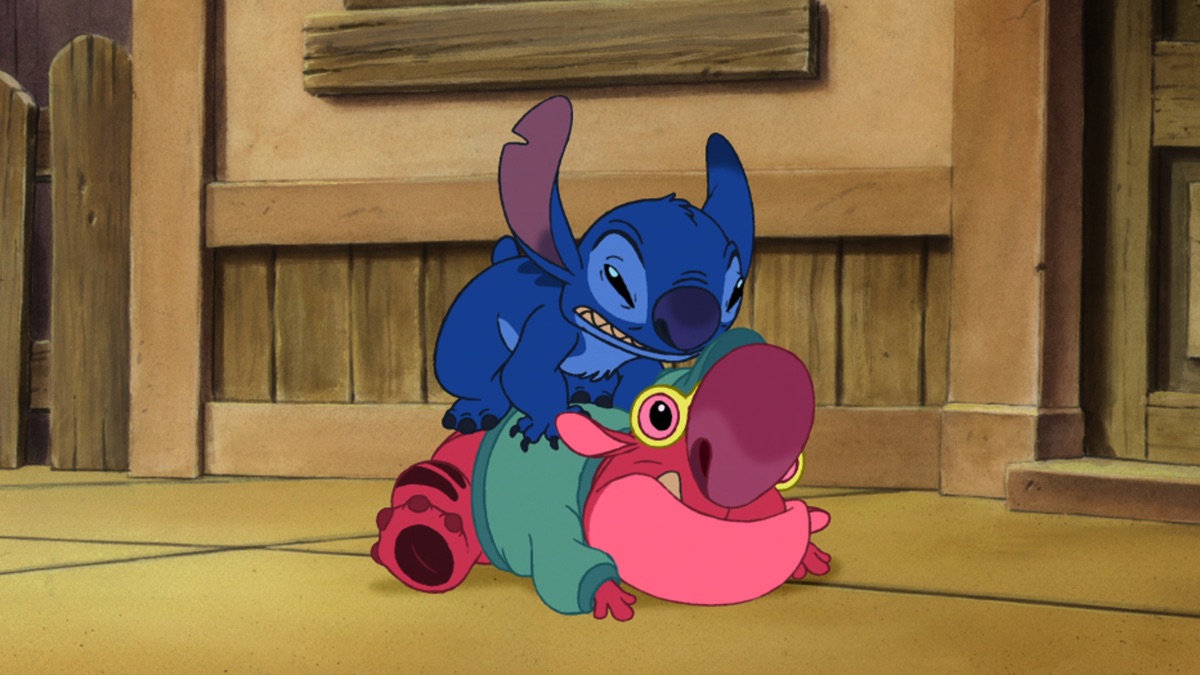
“Nosy” introduces Experiment 199 through an ability that sounds comic until the first secret reaches the wrong person. He can overhear conversations across remarkable distances and repeat what he learns. On an island where families, classmates, businesses, and social circles overlap, one disclosure can move faster than context and remain longer than correction.
The episode understands the thrill of gossip. Information creates attention, belonging, and temporary power. The deeper question is whether Nosy can build relationships without purchasing interest with somebody else’s privacy.
RaeRae check-in: hearing something is not ownership
A private conversation does not become public material because sound traveled farther than intended. Nosy’s ability changes access, not consent. He needs to learn that accidental knowledge carries responsibility, especially when the speakers could not reasonably know he was listening.
The rule can be simple enough for a child and serious enough for an adult: if the information concerns somebody else’s body, family, money, safety, relationships, or fear, ask before repeating. Curiosity does not create publication rights.
Gossip offers belonging with an invoice attached
People lean closer when someone says, “You did not hear this from me.” For a lonely experiment, that attention may feel like friendship. The listeners laugh, invite him back, and reward each new disclosure. The welcome lasts only while Nosy supplies material.
That dynamic is exploitation dressed as popularity. Real friends remain when he has nothing private to reveal. A true placement should teach him that silence can protect connection rather than threaten belonging.
Lilo knows what rumors can do to a child
Lilo already carries a reputation as strange, difficult, and socially outside. Classmates interpret her actions through stories decided before she enters the room. She understands how quickly one detail can become a permanent identity.
That experience should make her compassionate toward Nosy and protective of his targets. She can explain that a funny fact becomes cruelty when repeated to people looking for ammunition. Empathy has to face both directions.
Stitch cannot solve speech with punching
Stitch may want to chase, trap, or intimidate Nosy after a secret causes harm. Physical power cannot pull words back into a mouth. Fear may stop one disclosure while teaching Nosy to hide future behavior more carefully.
Stitch can help by modeling repair. Admit what happened, correct false versions, protect the person targeted, and refuse to reward the next rumor. Accountability works better when the family stops making gossip entertaining.
Nani’s private life is already under surveillance
Nani lives under the possibility that one complaint, misunderstanding, or visible mistake could affect custody. A rumor about dating, work, money, or household chaos carries institutional risk beyond embarrassment. She does not receive the luxury of being messy in private.
Nosy’s disclosures therefore land inside an unequal system. The same fact may be harmless gossip about one adult and evidence used against Nani. Privacy protects more than comfort when authorities are waiting to judge a family.
The custody file changes the stakes
A social worker hearing an out-of-context story about aliens, property damage, or Lilo being left alone could interpret the household without understanding the circumstances. Nosy cannot be expected to know child welfare law, but the adults must recognize the danger.
The solution is not forcing secrecy around genuine harm. Children need safe routes to report abuse. The family needs to distinguish protective disclosure from entertainment. “Tell a trusted adult when someone may be unsafe” is different from “tell everyone because the story is juicy.”
Jumba built an intelligence device with feelings
Experiment 199 makes obvious sense inside Jumba’s conquest plan. Nosy can collect secrets, identify weakness, and destabilize groups without firing anything. Information warfare looks less dramatic than a laser and can cause damage across years.
Jumba owes him honesty about that design. Calling the behavior annoying without naming its intended purpose leaves Nosy carrying blame for an instinct somebody deliberately engineered. Rehabilitation begins with truth about who profited from the original function.
The Federation would recruit him before protecting him
An institution faced with extraordinary hearing may imagine surveillance, interrogation, and counterintelligence assignments. Officials will call the work service while restricting where Nosy can live and what he may refuse. National security has a long vocabulary for removing consent.
Nosy needs legal representation, bodily autonomy, and protection against compelled listening. Nobody should force him to hear traumatic material or treat every private sound as government property.
Gantu and Hämsterviel understand blackmail
Secrets become leverage in a coercive hierarchy. Hämsterviel could use Nosy to identify fears, fractures, locations, or bargaining points. Gantu already works under humiliation and threat, so he knows exactly how information controls somebody who cannot safely leave.
That knowledge makes capture more disturbing. Gantu would deliver another person into the mechanism hurting him. Shared suffering does not automatically create solidarity. Sometimes power teaches the harmed worker to imitate the boss.
Mertle’s social circle runs on controlled information
Mertle protects status by deciding who belongs, whose embarrassment counts as entertainment, and which version of a story becomes official. Nosy can become extremely valuable inside that structure. He supplies material without receiving lasting rank.
Lilo should resist using him for revenge even when Mertle has been cruel. Exposing a bully’s private pain may win one afternoon and reproduce the same system. Boundaries matter most when the target is somebody we dislike.
Correction never travels as fast as the rumor
A sensational claim is easy to remember and fun to repeat. The correction arrives later, requires attention, and often sounds defensive. Even when everybody hears the truth, the original version remains attached to the person through suspicion.
Repair requires repeating the correction with the same energy used for the gossip. Nosy and every listener should return to the people they told. Quietly deleting one message or whispering “my bad” does not match the scale of the harm.
A secret can be true and still be cruel to share
Fandom and social media often treat factual accuracy as the entire ethical test. Truth matters. Consent, context, timing, power, and public interest matter too. A person can reveal something perfectly true for a completely selfish reason.
Nosy needs a framework beyond “I did not lie.” Ask who could be harmed, who benefits, whether safety requires disclosure, and whether the person had a reasonable expectation of privacy. Accuracy does not wash cruelty clean.
Silence can protect harm, so the rule needs care
Children are often told not to tell family secrets, which can protect abuse and neglect. Nosy should never learn that privacy means obeying every demand for silence. Some information needs to reach a trusted adult, medical professional, or authority.
The distinction depends on safety and power. A surprise party deserves secrecy. A threat does not. Someone being hurt deserves help. Good guidance gives Nosy people he can consult when the answer feels uncertain.
Listening without being able to stop sounds exhausting
Extraordinary hearing may expose Nosy to arguments, grief, fear, bodily sounds, machinery, and hundreds of conversations at once. The episode treats information as temptation, but sensory overload could be the more painful reality.
He needs quiet space, hearing protection designed for his anatomy, control over range, and medical support. Rest should not require total isolation from everyone he loves.
The family house needs privacy protocols
Nani, Lilo, Stitch, Jumba, and Pleakley all need places where conversation stays contained. Soundproofing, agreed quiet zones, and an announcement when Nosy enters can reduce accidental listening. Technology should support trust rather than replace human judgment.
Nobody should make him wear a humiliating device all day. The household can build routines together and revisit them when something fails. Consent works through ongoing negotiation, not one punishment after disaster.
What made me laugh
Pleakley absolutely has secrets that begin with a dramatic gasp and end with a story nobody requested. Nosy does not need enhanced hearing. Pleakley will provide the entire archive voluntarily once eye contact lasts three seconds.
Stitch trying to whisper with a voice built for growling also belongs in the episode’s best comedy. Stealth communication requires a volume setting he does not possess.
What made me mad
I get angry when listeners blame only the person who brought the gossip. Every neighbor who asked for another detail helped create the harm. Demand is part of the system. Nosy learns what receives applause from the people around him.
I also refuse the idea that public humiliation is the correct lesson. Shame teaches hiding. Repair, boundaries, and a community that stops rewarding disclosure can change behavior.
The island grapevine carries cultural closeness and risk
In a close community, people notice when someone misses work, needs food, loses housing, or struggles after a storm. Information can mobilize care quickly. The same network can police difference, spread judgment, and make privacy feel impossible.
Nosy’s placement should preserve the caring function without turning neighbors into content. Ask what help is wanted. Share needs with permission. Community knowledge becomes love when the person remains more important than the story.
A newspaper job would need an ethics desk
Nosy’s hearing might seem perfect for reporting, but journalism is not collecting whatever can be overheard. Verification, public interest, source protection, consent, and harm reduction separate reporting from rumor.
If he enjoys news work, he needs training and an editor willing to reject invasive material. Payment and credit matter. So does the right to leave a story alone when publication would satisfy curiosity without serving the public.
The right to be forgotten matters
A mistake repeated through a neighborhood can freeze somebody at the worst moment. Years later, the person may still be introduced through the rumor. Nosy should learn that people deserve room to change without permanent social punishment.
Repair includes refusing to resurrect old stories for entertainment. Memory belongs to the community, but dignity requires restraint. Not every accurate archive needs a fresh audience.
Nosy deserves privacy too
People fascinated by his hearing may study his body, test his limits, or demand demonstrations. They may ask what he heard during private moments and treat refusal as suspicious. The listener becomes an object of surveillance in return.
Nosy needs medical confidentiality, private rest, and control over interviews. An unusual ability does not cancel the right to keep parts of himself unknown.
The quiet scene I wanted
After the neighborhood settles, I wanted Lilo and Nosy sitting somewhere genuinely quiet. She could close her notebook and tell him one harmless thing by choice, then explain that chosen sharing feels different from discovery.
Nosy could decide not to repeat the story even when Stitch asks. That small silence would show growth without demanding a speech. Trust often sounds like nothing happening.
A true place cannot depend on supplying secrets
If Nosy joins a community role, the work should value listening without requiring invasion. He might help locate distant calls for assistance, monitor equipment with consent, or support people who choose to speak. The purpose must include limits and alternatives.
On days when he hears nothing useful, he still deserves home, food, companionship, and respect. Belonging purchased with information expires as soon as the information does.
Apologies need to name the audience
A private apology to one person cannot repair a rumor shared with twenty. Nosy needs to identify where the information traveled, who repeated the story, and which version each listener received. Repair becomes uncomfortable because the harm became social, not private.
Every participant should help correct the record. The correction must avoid repeating sensitive details unnecessarily. “I shared something that was not mine, and the story circulating is harmful” may protect the person better than broadcasting the secret one more time in the name of accuracy.
Adults gossip too, and children notice
The episode cannot place every ethical burden on Nosy while adults whisper about neighbors, coworkers, custody, dating, and money. Children learn which disclosures create laughter by watching grown people. A rule ignored by adults will sound like punishment created for the smallest person.
Nani, Jumba, and Pleakley should examine their own habits. Adults can model stopping a rumor, changing the subject, checking on somebody directly, and admitting when curiosity crossed a line. Nosy needs examples more than another lecture.
Digital gossip would make the damage permanent
The series began before every neighborhood rumor could become a screenshot, group chat, reaction video, and searchable record. Nosy’s ability becomes even more dangerous in a connected world because one overheard sentence can leave the island within minutes and return stripped of all context.
Responsible placement now requires digital literacy. Do not record private conversations. Do not forward screenshots. Report impersonation and harassment. Ask before posting another person’s image or story. The internet does not forget simply because the original speaker regrets pressing send.
The Episode 25 verdict
“Nosy” turns gossip into a superpower and reveals why the ordinary version already carries so much force. The episode reaches beyond manners into privacy, custody risk, surveillance, social status, sensory overload, and the responsibility shared by every eager listener.
My verdict is protect the secret, correct the rumor loudly, and stop inviting Nosy places only when somebody else’s business is available. Let him learn that silence can be care. Then give those enormous ears a quiet room and a real friend.
Where to watch
Watch “Nosy” through Lilo & Stitch: The Series on Disney+. Availability can change by region.
Keep exploring
Return to the episode directory or return to the Lilo & Stitch hub.