
EPISODE 20 · SEASON 1 · THE ASTEROID · RAE RAE REACTS
Lilo & Stitch: The Series Episode 20: The Asteroid
The family can escape, Earth cannot, and one incoming asteroid forces ʻohana to grow from a household promise into a planetary obligation.
The sky turns family into a planetary decision
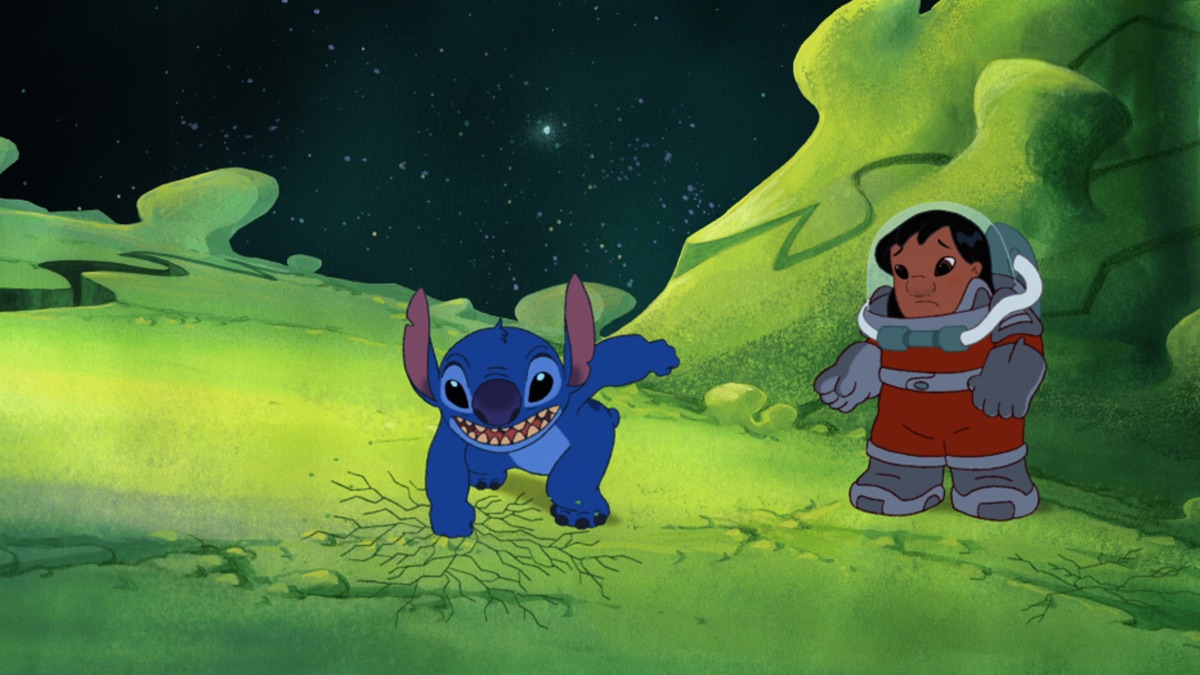
“The Asteroid” leaves the experiment-of-the-week rhythm and gives the household a threat too large for one true place. A massive object is heading toward Earth. Every home, argument, photograph, job, pet, and unfinished apology sits beneath the same trajectory. The scale changes what courage means.
The family may have access to alien knowledge and transportation unavailable to everyone else. Escape becomes possible for a few. Protection may be possible at enormous risk. The episode asks whether ʻohana stops at the edge of the house or expands to people who will never know who saved them.
RaeRae check-in: why does one household have the planetary defense portfolio
Jumba and Pleakley possess galactic technology. The Federation has ships, sensors, and authority. Somehow Lilo, Nani, and Stitch still end up near the center of an extinction-level response. I need to know what the intergalactic taxes are funding.
A child should not decide whether Earth receives protection because institutions failed to arrive. Heroism can be moving while the underlying abandonment remains outrageous. The episode celebrates family courage and accidentally writes the strongest possible argument for emergency infrastructure.
Escape is not morally simple
If the family can leave Earth, survival becomes a real option. Choosing escape does not automatically mean cowardice. Nani is responsible for Lilo. Protecting a child is a moral obligation, not selfishness. Stitch, Jumba, and Pleakley may also have lives beyond the planet.
The pain comes from unequal access. Neighbors cannot board the ship. A private escape vehicle turns privilege into a seat count. Every person saved creates a question about who was left behind and who made the list.
Nani has to choose as a guardian before choosing as a hero
Nani cannot treat planetary danger like a clean philosophical exercise. She must consider Lilo’s fear, safety, and future. A heroic decision that risks the child may conflict with the responsibility she has fought to maintain through every social-service visit.
Her hesitation would be love, not weakness. Stories often praise sacrifice without asking who granted permission for a guardian to sacrifice someone else. Lilo may want to help. Nani still has to decide what a child can meaningfully consent to under extinction pressure.
Lilo cannot imagine home without the people around it
For Lilo, Hawaiʻi is not scenery. Home includes neighbors, school conflict, beaches, memories of her parents, routines with Nani, and every place where grief has learned to coexist with life. Leaving the planet means losing more than property.
Her attachment makes planetary protection personal. She is not saving an abstract population. She is saving the world that carries her family history. That motivation gives the science-fiction scale an emotional address.
Stitch finally has something larger than himself to protect
Stitch was designed to survive and destroy. The asteroid offers no approval, rivalry, or personal grudge. He cannot intimidate a rock into submission. The choice to act comes entirely from attachment to Earth and the people who made him family.
That shift completes the moral journey begun in the first film. Power once proved independence. Power now creates responsibility. Stitch risks himself because survival without his chosen world would feel incomplete.
Jumba’s intelligence becomes accountable only when he shares risk
Jumba often provides explanations while others stand closer to danger. A planetary threat should require him to use knowledge alongside the family rather than directing from safety. Expertise becomes moral when the expert accepts responsibility for consequences.
He also needs humility. Asteroid defense involves uncertainty, timing, and possible failure. The inventor cannot solve fear by announcing confidence. The family deserves honest probabilities and alternatives.
Pleakley has grown roots on a planet he once studied
Pleakley arrived as an observer assigned to Earth. The asteroid forces him to decide whether the planet remains a research subject or has become home. Domestic life, clothing, food, Lilo’s questions, and ordinary panic have changed the assignment into attachment.
Choosing Earth shows belonging can develop through care rather than origin. Pleakley does not need to become human. He needs to recognize that losing this place would mean losing a version of himself created here.
The asteroid makes class inequality brutally visible
Disaster never reaches everyone equally before impact. Wealthier people may access bunkers, transportation, information, and influence. Working families may receive late warnings and impossible instructions. The Pelekais briefly possess alien privilege despite living with economic precarity.
That reversal should sharpen empathy. Access to a ship creates responsibility to share information and fight for everyone, not proof that the family earned survival more than neighbors did.
Planetary defense requires public trust
If authorities warn people, residents need credible information and practical guidance. Secrecy can prevent panic temporarily while destroying trust later. A hidden asteroid response leaves communities unable to prepare or say goodbye.
The family alone cannot manage disclosure. The Federation and Earth authorities should coordinate honestly. People deserve agency even when options are limited. Dignity includes knowing what danger approaches.
Children understand extinction anxiety more than adults admit
Young viewers live with climate change, war, disease, and disasters discussed around them. An asteroid converts diffuse fear into one visible object. The episode can offer courage without pretending adults control everything.
The healthiest message is not that one brave child will always save the world. The message should be that fear can coexist with action, and responsibility belongs collectively. Children may contribute. Adults must build systems worthy of their trust.
Saving Earth cannot erase whose Earth gets protected
Planetary survival sounds universal, but environmental protection often prioritizes wealthy neighborhoods, profitable coastlines, and politically powerful communities. A world saved physically can remain unjust socially. Heroism should not end when the asteroid changes course.
Lilo’s local perspective matters because she knows home from the edge of institutional attention. Protecting Earth should mean protecting communities usually asked to sacrifice first and recover last.
The ocean reflects the threat before anyone can touch it
An incoming asteroid over the Pacific carries immediate implications for waves, atmosphere, climate, and island survival. The beautiful sky becomes terrifying because distance does not reduce consequence. The ocean connects the point of impact to every shore.
Hawaiʻi should not function as a pretty viewing platform. Island histories include navigation, observation, disaster knowledge, and relationships with sky and sea. Local people deserve a role beyond watching alien technology work.
What made me laugh
The household confronting extinction with the same improvised energy used for smaller experiments creates excellent tonal absurdity. Jumba can turn a kitchen-adjacent workspace into planetary defense while Nani wonders whether anything is insured.
Stitch approaching an asteroid with physical confidence also feels inevitable. He has spent nineteen episodes learning that some problems cannot be punched and still deserves one opportunity to consider punching space.
What made me mad
The Federation’s absence during an extinction threat makes every previous failure look worse. If galactic authorities can monitor Earth enough to prosecute Stitch, they can detect an asteroid. Jurisdiction should not disappear when help costs resources.
I also resist any story that frames Nani’s protective instinct as less noble than Lilo’s desire to save everyone. Guardianship is moral labor. Her fear deserves respect.
Sacrifice should be chosen by the person paying
A heroic plan may require someone to take extraordinary risk. Nobody else should assign that risk casually. Stitch can volunteer. Lilo cannot treat his durability as automatic consent. Jumba cannot treat creation as ownership.
The family should name the danger and allow refusal. Love makes sacrifice meaningful only when choice remains real. Otherwise heroism becomes another word for exploitation.
Survival guilt would follow the ship
If the family escaped while Earth was destroyed, physical safety would not produce peace. Every meal, argument, and new planet would carry memories of people left behind. Lilo and Nani would lose their parents again through the places that preserved them.
The possibility explains why staying may feel necessary even when leaving is rational. Home shapes identity so deeply that survival without home can become another kind of wound.
Collective action is the real superpower
No one family should save a planet alone. Jumba’s calculations, Pleakley’s knowledge, Stitch’s abilities, Nani’s judgment, Lilo’s moral clarity, and broader institutional resources need coordination. Success belongs to the network.
That model fits the franchise. ʻOhana is not one heroic individual carrying everyone. ʻOhana means distributing work according to capacity and refusing to abandon the vulnerable when pressure rises.
After survival comes repair
Even a deflected asteroid may create debris, waves, damaged equipment, fear, and economic disruption. The crisis does not end when the object misses. People need information, medical care, reunification, and time to process how close loss came.
The Federation should fund recovery. Earth governments should communicate. Nani should not return from planetary defense and immediately worry about a missed shift.
The episode needs a grief scene
Lilo’s parents should enter her thoughts when Earth appears temporary. Their absence already made home fragile. The asteroid threatens the places where memory lives: photographs, beach routes, stories, and the house Nani keeps standing.
Naming them would deepen the choice. Lilo is not only afraid to die. She is afraid the world that remembers them could disappear. Saving Earth becomes an act of memory.
The Federation needs an Earth-defense agreement
A protected planet cannot depend on informal favors from aliens living in one household. Earth needs monitoring, communication channels, shared technology, evacuation planning, and clear limits on jurisdiction. Mutual aid should replace emergency improvisation.
Local communities must participate. Planetary agreements built only between powerful institutions will reproduce exclusion. Lilo’s neighbors deserve a voice even if they never learn every alien secret.
Who gets a seat on the ship reveals every hidden value
A limited escape craft forces the family to rank lives under impossible pressure. Children first? Caregivers? Scientists who might rebuild? Elders? Animals? Neighbors? Every answer carries assumptions about whose future matters and whose relationships count.
The cruelty comes from scarcity created before the emergency. A society with shared shelters and coordinated evacuation would reduce the power of one private list. The family should reject the idea that moral worth can be calculated cleanly while still making the immediate choices survival demands.
Nani has already survived one world ending
The death of their parents ended the world Nani expected. She rebuilt life around guardianship, work, and keeping Lilo home. An asteroid literalizes the feeling that stability can vanish without permission. Her body likely recognizes the terror before anyone finishes the scientific explanation.
That history makes her caution emotionally specific. Nani is not afraid of adventure. She knows what sudden loss requires afterward. Any plan asking her to risk Lilo touches the deepest promise she made after becoming the only parent left.
Planetary heroism should not become another secret
If the family saves Earth and nobody knows, secrecy protects the alien household but hides the failure of responsible institutions. The Federation can continue neglecting the planet because private courage covered the gap. Gratitude cannot produce reform when the public never learns what happened.
Some details may need protection. An accountable record should still exist. Nani deserves evidence if the crisis affects employment. Local authorities need plans for recurrence. Heroism should leave systems stronger, not merely preserve the conditions that required heroism.
The morning after should include anger
Survivors may feel grateful, joyful, numb, or furious that extinction came so close. Those emotions can coexist. Lilo might cling to Stitch and then yell at Jumba. Nani might cry while making breakfast. Pleakley might start packing and stop halfway.
A healthy family does not demand one inspirational response. Trauma enters ordinary routines unevenly. Giving everybody space to react would make survival feel human rather than polished for the closing credits. The household might need lights on overnight, repeated reassurance, and a new emergency plan before sleep feels safe. Nobody should joke Nani out of preparation. Anxiety after a real threat is information the family can use, not a personality flaw to hurry past before the next ordinary morning finally arrives for everyone.
The Episode 20 verdict
“The Asteroid” expands the franchise from experiment rescue to planetary belonging. The threat reveals how completely Stitch, Jumba, and Pleakley have chosen Earth, while forcing Nani and Lilo to confront the unequal ethics of escape.
My verdict is purple extinction anxiety with a family group project attached. Protect Lilo without dismissing her courage. Let Stitch choose heroism. Make the Federation show up. Then give Nani paid leave for saving the entire planet.
The quiet aftermath I wanted
After the sky clears, I wanted the family sitting on the beach without dialogue. Lilo could hold Nani’s hand. Stitch could press against both of them. Jumba and Pleakley could look at Earth as residents rather than visitors.
The next morning should remain ordinary. Breakfast burns. A bill arrives. Somebody complains about sand. Survival matters because ordinary life returns, and nobody has to pretend the fear vanished with the asteroid.
Where to watch
Watch “The Asteroid” through Lilo & Stitch: The Series on Disney+. Availability can change by region.
Keep exploring
Return to the episode directory or return to the Lilo & Stitch hub.