
EPISODE 8 · SEASON 1 · YAPPER · RAE RAE REACTS
Lilo & Stitch: The Series Episode 8: Yapper
A pet contest becomes an argument about cuteness, status, obedience, and who gets loved without having to pass as normal.
A dog show is already a strange place to measure love
“Yapper” takes the experiment hunt into a pet competition, which means everybody arrives carrying an opinion about whose animal is prettiest, smartest, best behaved, or most worthy of applause. The setting looks harmless. Underneath the ribbons sits a blunt social hierarchy. Animals become evidence of human taste, money, discipline, and status. Mertle understands that hierarchy immediately because turning affection into a contest is one of her favorite sports.
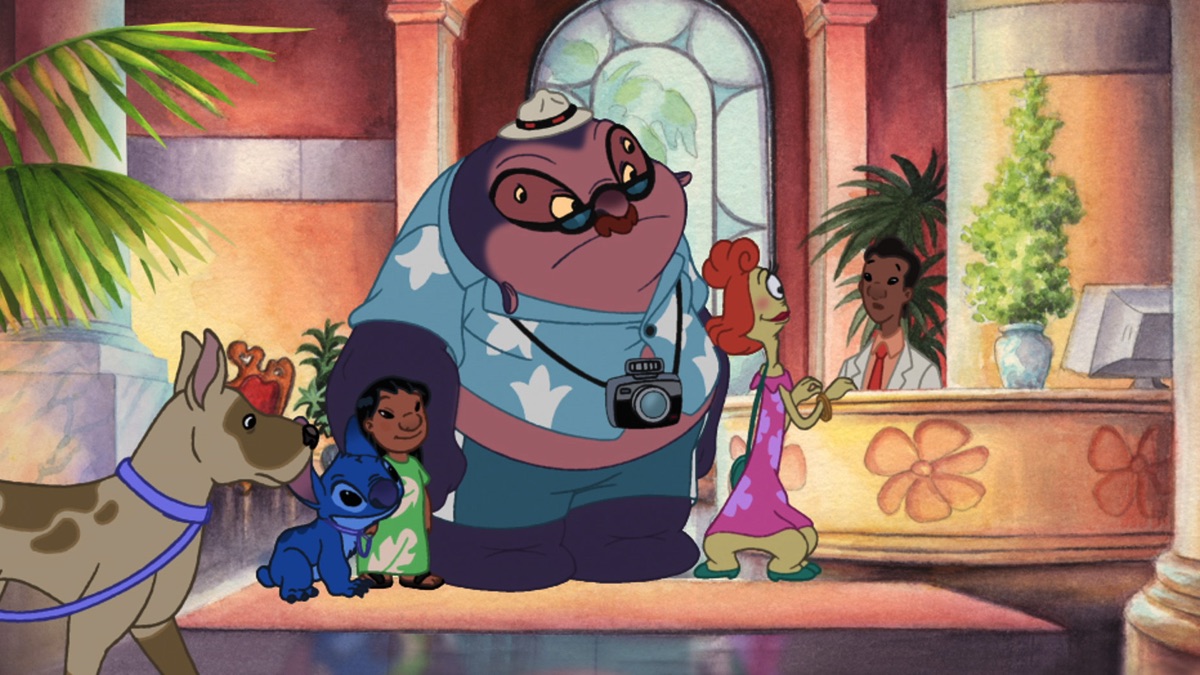
Lilo enters from a completely different emotional position. She knows Stitch cannot pass as an ordinary dog for long, and she cares more about loyalty than presentation. Then Experiment 007 appears with the body language of a pet and the history of a weapon. Yapper forces the episode to ask whether belonging depends on performance or whether a creature can be loved before proving anything useful.
RaeRae check-in: stop making children run alien intake
Another pod opens. Another specialized life-form needs identification, deactivation planning, housing, emotional regulation, and protection from Gantu. Lilo receives no staff, budget, transport, medical guidance, or reliable emergency contact. She receives Jumba shouting a number after the creature starts moving. The Federation has somehow converted galactic negligence into a child’s extracurricular activity.
Yapper looks manageable because the experiment resembles a small pet. Cute packaging lowers everybody’s guard. Powers still matter. Trauma still matters. A creature waking in an unfamiliar world needs careful observation before somebody adds a ribbon and walks into a crowd. Lilo’s compassion saves these experiments repeatedly, but compassion should never be used as an excuse to deny her adult support.
Yapper passes because people recognize the category
Humans respond differently to Yapper than they respond to experiments whose bodies signal danger. A dog-shaped creature receives baby talk, touching, and immediate assumptions of harmlessness. Stitch rarely gets that grace. His face, strength, extra limbs, and history place him outside the comfortable category even when his intentions are protective. Appearance decides who receives patience before behavior can speak.
The contrast exposes how quickly society confuses familiarity with goodness. A polished show dog may bite. A blue alien may protect a child. Yapper may carry a disruptive power while looking ready for a purse. Visual legibility helps people relax, but moral character cannot be read from a silhouette. The episode’s pet-show setting makes that bias visible without pausing for a lecture.
Mertle wants the ribbon because the ribbon has witnesses
Mertle’s competitiveness is never only about the object. A prize matters because classmates can see who received the prize. Public recognition lets her organize the social room around winners and losers. Her pet becomes another instrument for proving that her family owns the right things and understands the right rules. Affection gets folded into display.
That does not mean Mertle feels no genuine love for her animal. Children can care deeply while copying the status systems adults teach them. The interesting tension sits between tenderness and possession. Mertle wants her pet safe, admired, and associated with her own importance. The show rewards that mixture instead of separating care from prestige.
Lilo refuses the respectable-pet performance
Lilo has never been good at performing normality for an audience determined to misunderstand her. Stitch makes the problem impossible to hide. He may sit, stay, and imitate a dog for a few minutes, but his personality exceeds the category. Lilo’s affection survives the failed performance because their bond was never built on public approval.
That loyalty carries a rebellious charge. Respectability says Stitch deserves a place only when he conceals the traits that make other people uncomfortable. Lilo says the household can teach boundaries without demanding disappearance. She wants him to behave safely, not become somebody else. Those goals sound similar until social pressure arrives.
Stitch understands jealousy before he understands dog shows
A new experiment can make Stitch wonder whether his place is secure. Lilo’s attention once belonged almost entirely to him. Every cousin adds responsibility, affection, and comparison. Stitch may respond through competition because competition gives him a clear rule: win and remain important. Family does not operate through that rule, but abandoned creatures often expect love to be scarce.
His growth appears when protection becomes more important than winning. Stitch can dislike sharing attention and still defend Yapper. That emotional combination feels honest. Good behavior does not require the absence of jealousy. Maturity begins when jealousy stops deciding what another person deserves.
The episode turns training into a moral question
Pet training can create safety and communication. Training can also become domination dressed as discipline. The difference depends on whether the animal’s needs matter alongside human convenience. Yapper needs boundaries in a crowded setting, but Yapper also needs rest, trust, and room to communicate. A ribbon cannot tell us whether those needs are being met.
Lilo’s best instinct is relational. She watches, listens, and adjusts instead of forcing obedience through fear. The method takes longer and looks messier than a perfect routine. The method also treats the experiment as a participant rather than equipment. That principle should guide every one-true-place decision.
Jumba’s numbering system keeps flattening people
Experiment 007 sounds like an inventory entry. Yapper sounds like a personality somebody encountered. Both names carry information, but only one name emerges from relationship. Jumba remembers design specifications first because he built functions. Lilo discovers preferences, fears, habits, and bonds because she meets persons.
The franchise’s moral movement lives inside that shift. Numbers are not automatically cruel, especially when dozens of experiments require records. Cruelty begins when the record becomes the whole identity. Yapper can be Experiment 007 for safety documentation and Yapper inside a family. Administrative accuracy and personhood do not have to compete.
Gantu sees a small target and misses the larger problem
Gantu treats Yapper as another item needed for Hämsterviel’s plan. A pet show gives him crowds, witnesses, fragile animals, and almost no room for force. He still approaches capture as a question of professional success. The mission erases the environment around the target.
His failure pattern keeps repeating because Hämsterviel rewards urgency instead of judgment. Gantu cannot admit a plan is unsafe without admitting the job itself is corrupt. He doubles down, threatens civilians, and leaves with more humiliation. I can understand his wound while still wanting every plasma weapon confiscated before he reaches another public event.
Nani should not learn about danger after the cleanup
Nani’s absence from experiment planning remains one of the franchise’s most frustrating habits. Every creature can affect her home, employment, finances, or guardianship. Secrecy is framed as protection, yet secrecy prevents preparation. She cannot make safe choices with incomplete information.
A family meeting would not destroy the comedy. Give Nani the experiment list, emergency signals, and authority to say when an event is too dangerous for Lilo. Let her contribute practical knowledge while Jumba handles alien science. The household would feel more like an actual family and less like a child-managed rescue organization hiding behind the laundry.
What made me laugh
Stitch attempting respectable pet behavior will always work on me because dignity loses the argument almost immediately. His body contains too many opinions for a neat competition routine. Yapper’s tiny confidence makes the surrounding panic funnier, especially when adults keep reading cuteness as proof that nothing unusual could happen.
Jumba bringing scientific arrogance into a space full of grooming standards also creates the correct flavor of nonsense. One group argues about breed presentation. Another group knows extraterrestrial engineering could explode beside the judging table. Both groups remain equally committed to winning their own conversation.
What made me mad
Children and animals absorb the consequences while the adults responsible for the experiment program remain distant. Lilo mediates conflict. Stitch provides protection. Yapper must prove harmlessness. Jumba explains the danger after exposure. The Federation contributes silence.
The pet-show culture also encourages people to treat living beings as accessories. Care becomes visible only when care produces beauty, obedience, or a prize. Messy animals, disabled animals, frightened animals, and creatures with difficult histories deserve homes too. A ribbon measures compliance with one event’s rules, not the quality of a bond.
Belonging without passing
Yapper’s true place matters most if acceptance does not depend on maintaining a perfect pet disguise. Passing can provide immediate safety, but constant performance becomes another cage. The experiment needs people who know the truth and choose care with full information.
Stitch already lives that lesson. Outsiders may call him a strange dog. Lilo calls him family. The difference is knowledge. Her love includes the extra arms, destructive programming, fear, humor, mistakes, and ongoing work. Yapper deserves the same complete recognition.
Cuteness is a kind of social currency
Cute characters receive forgiveness faster. People lower their voices, assume vulnerability, and reinterpret disruption as mischief. Yapper benefits from that response while Stitch has spent much of the franchise being read as dangerous before he acts. Neither judgment comes from a complete understanding of the person in front of the observer.
The advantage can also become a trap. When care depends on remaining adorable, age, illness, fear, or difficult behavior can make affection disappear. Yapper needs a home prepared for the full experiment, not an audience enchanted by one presentation. Love built on cuteness alone is branding with snacks.
The show ring rewards control more than relationship
Judges can observe posture, grooming, responsiveness, and rehearsed behavior during a brief appearance. They cannot see who wakes for a frightened animal, pays veterinary bills, notices pain, or rearranges life around care. The visible performance receives the ribbon while invisible labor remains outside the ring.
That gap resembles many human institutions. Schools, workplaces, and social groups reward polished evidence of stability without asking what support produced the performance. Lilo and Stitch rarely look polished. Their bond survives grief, destruction, fear, and repair. I trust that messy record more than a perfect lap around a judging table.
Mertle and Lilo are fighting over more than pets
Their rivalry contains a battle over whose version of girlhood counts. Mertle performs social fluency, conventional taste, and control. Lilo arrives with grief, strange interests, an alien family, and very little interest in hiding emotional intensity. A pet contest gives Mertle rules that already favor her preferred performance.
Lilo’s refusal to disappear threatens the hierarchy even when she does not win. She keeps showing up with the family she chose and the knowledge other children dismiss. Mertle can collect public victories, yet Lilo possesses a moral confidence that cannot be awarded by judges. The episode is stronger whenever that difference remains complicated instead of turning either girl into a single joke.
Who pays for the experiment rescue program
Food, shelter, repairs, transportation, and medical care cost money. The experiment family grows while Nani’s income remains fragile. Jumba and Pleakley occupy the house, but the series rarely treats intergalactic responsibility as a household budget question. Affection cannot purchase supplies.
The Federation should establish a recovery fund administered with local input. Nani deserves compensation for housing agents and protecting civilians. Lilo deserves adults trained to support each placement. Experiments deserve care that does not depend on one working-class family absorbing every expense. A true place needs resources or the phrase becomes sentimental cover for unpaid labor. Give the family a vehicle, emergency housing money, veterinary equipment adapted for alien bodies, and a direct line to somebody authorized to act. Nobody should have to choose between groceries and containment supplies because a galactic prison transport failed over Hawaiʻi. Nani already performs the work of several adults before extraterrestrial emergencies enter the schedule. Compensation would be accountability, not charity, and the Federation has avoided both for far too long.
The Episode 8 verdict
“Yapper” uses a bright competition setting to examine status, appearance, obedience, and the social privileges attached to looking harmless. The story remains playful, but the experiment raises a serious question about who receives immediate tenderness and who must earn safety through performance.
My verdict is one purple ribbon for Yapper and one enormous invoice for the Galactic Federation. Let the creature bark. Let Stitch be a terrible fake dog. Let Lilo reject the ranking system. Then give Nani the emergency binder before another alien enters a public event disguised as somebody’s adorable new pet.
The quiet aftermath I wanted
After the show, I wanted Lilo to sit with Yapper away from the crowd. No judging table, no ribbons, no applause. She could offer food, wait for the experiment to approach, and learn what calm behavior looks like when nobody is demanding a performance.
Stitch could place the ribbon beside Yapper without treating the prize as ownership. Mertle could check on her own pet and briefly forget the scoreboard. Nani could arrive, see the alien, close her eyes, and ask Jumba for the complete file. That final question would tell me the household had learned something larger than who won.
Where to watch
Watch “Yapper” through Lilo & Stitch: The Series on Disney+. Availability can change by region.
Keep exploring
Return to the episode directory or return to the Lilo & Stitch hub.