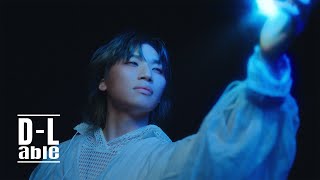
BIGBANG · Artist and Group Member Profile
Daesung
Profile
| Stage name | DAESUNG |
|---|---|
| Birth name | Kang Dae-sung |
| Born | April 26, 1989 |
| Roles | Vocalist, entertainer |
| Group | BIGBANG |
| Group debut | August 19, 2006 |
| Solo activity | 2008-present |
BIGBANG’s rough-edged vocal engine, Korea’s smiling variety ambush, and Japan’s D-Lite, who quietly built a touring career large enough to make “the underrated member” sound mathematically silly.

Status
Active member and solo artist
Years
2006–present
Profile
Kang Dae-sung
Korean: 강대성
Born: April 26, 1989
From: Seoul, South Korea
Group: BIGBANG
Core roles: vocalist, performer, variety entertainer
Japanese stage name: D-Lite
Solo debut: 2008
Current company: R&D Company, D-LABLE
The audition that did not fit the idol beauty checklist
Kang Dae-sung wanted to sing despite opposition from his parents, who understood how unstable entertainment careers could be. He auditioned for YG Entertainment and entered the competition documented in the 2006 BIGBANG formation series.
The early story was cruel in a way second-generation television often treated as normal. His appearance was discussed openly against idol beauty standards, including criticism from people around the company. Daesung responded by becoming impossible to dismiss once he opened his mouth.
He made the final lineup with G-Dragon, Taeyang, T.O.P, and Seungri and debuted in August 2006. The group’s vocal contrast became one of its advantages. Taeyang was smooth and R&B-centered. Daesung sounded rougher, larger, and emotionally immediate.
That contrast explains why “Haru Haru,” “Sunset Glow,” “Tonight,” “Blue,” “Fantastic Baby,” “Loser,” “If You,” “Sober,” “Fxxk It,” “Last Dance,” and “Still Life” would lose structural weight without him. He does not merely add a high note. He changes the temperature.
A voice built for rock, ballads, trot, and people who enjoy lungs
Daesung’s voice has a raspy, resonant edge and strong projection. He can belt through a band arrangement without becoming a generic musical-theater siren. The tone remains recognizably his, especially when he leans into a cry or roughens the attack.
His technique and vocal health have changed across long tours, military service, accidents, and nearly two decades of work. The best performances balance force with control. When he pushes too hard, the strain is audible. When the placement is working, he sounds enormous.
BIGBANG uses him most effectively as contrast. G-Dragon’s narrow rap, T.O.P’s low register, and Taeyang’s smoother vocal create space for Daesung to arrive like an open door in a storm. In “If You,” the lack of flashy production exposes the emotion. In “Sober,” his rock instincts make the chorus feel inevitable. In “Still Life,” age and wear become part of the sound.
His Japanese solo catalog further proved that he could carry entire concerts rather than function only as the powerful voice between two famous rappers.
Family Outing and the variety ace hiding behind his eyes
Daesung became a major variety personality through SBS’s Family Outing, joining Yoo Jae-suk, Lee Hyori, Kim Jong-kook, and others. His comic timing, imitations, willingness to look ridiculous, and “Dumb and Dumber” chemistry with Yoo Jae-suk introduced him to viewers who did not follow idol music.
He did not behave like a polished celebrity visiting a rural set for branding. He threw himself into chores, games, cooking disasters, and cast relationships. The show made his smile and humor nationally recognizable.
That experience later strengthened his solo concerts. Daesung does not treat the speaking segments as air between songs. He can hold an audience through stories, improvisation, crowd work, and self-mockery. Japanese promoters built talk-and-live formats around this ability because the entertainment did not stop when the backing track did.
His later YouTube program ZIP Daesung revived that strength. Interviews with idols and old colleagues work because he knows industry history, understands what performers avoid saying, and can make the conversation loose without pretending not to have done research.
Trot was not a joke assignment
Daesung’s first major solo release, “Look at Me, Gwisun” in 2008, was a trot song written by G-Dragon. The concept let BIGBANG’s powerful vocalist lean into an older Korean genre while performing with full comedic confidence.
“Big Hit” followed, and “Cotton Candy” showed a softer singer-songwriter side. Trot suited his direct vocal attack and variety personality, but it also risked trapping him as the funny member with novelty songs while other members received sleek solo campaigns.
Daesung refused the trap by expanding in several directions. He sang ballads, rock, drama music, and Japanese covers. The through-line was not genre. It was his ability to make a song feel physically present.
D-Lite: the solo empire English profiles keep shrinking
In Japan, Daesung performs under the name D-Lite. His Japanese career is not a minor branch of BIGBANG activity. It is one of the most substantial solo touring careers built by a Korean group member.
His 2013 album D’scover reinterpreted Japanese songs through his vocal style and reached high on the Oricon chart. The accompanying tour expanded because demand exceeded the original plan. D’slove followed in 2014 with more original material and another major tour.
He moved between arenas, extensive hall runs, and dome-scale concerts. The 2017 D-Lite Japan Dome Tour: D-Day made him one of the rare Korean soloists capable of headlining Japanese domes. He then launched D na Show, a talk-and-live hall tour that used his variety skills as seriously as his setlist.
Japanese audiences embraced the combination: huge voice, self-deprecating humor, language effort, and concerts designed for connection rather than imported K-pop spectacle. Calling him underrated while ignoring Japan is not analysis. It is geography failure.
The 2011 traffic accident and what the legal record actually says
On May 31, 2011, Daesung was driving on Seoul’s Yanghwa Bridge when he struck a motorcyclist lying in the roadway after an earlier crash, then collided with a taxi that had stopped nearby. The motorcyclist died.
Police initially said Daesung’s vehicle caused the death. Prosecutors later declined to charge him with negligent homicide because the forensic evidence could not establish whether the motorcyclist was still alive before Daesung struck him. Reports also concluded the rider had suffered severe injuries in the first crash. Prosecutors noted that Daesung had failed to see the man in the road and had been driving carelessly.
Both halves belong in the biography. He was not convicted of causing the death. A man still died in an accident involving his car, and the uncertainty did not make the trauma imaginary.
Daesung withdrew from public activity and struggled deeply afterward. He returned with BIGBANG’s Alive era in 2012. The group’s music did not erase the event, but work became part of surviving it.
Military service and a stage full of accidental collaborators
Daesung enlisted in March 2018, one day after Taeyang. He served in the army and participated in military events with fellow enlisted entertainers including Taeyang, Beenzino, and others. The performances became popular because the lineup looked like somebody had accidentally booked a festival behind the gate.
He was discharged in November 2019. The expected return collided with the pandemic and a BIGBANG landscape permanently altered by Seungri’s departure and later T.O.P’s distance from the group.
Daesung left YG Entertainment as an individual artist in 2022 while remaining connected to BIGBANG. In 2023, he signed with R&D Company under the dedicated label D-LABLE.
“Falling Slowly,” ZIP Daesung, and D’s Wave
Daesung returned to Korean solo music with “Falling Slowly” in March 2024. The single emphasized mature ballad-rock emotion rather than attempting to chase a younger trend cycle. He also launched the D’s Road fan-meeting tour and continued Japanese touring through D’s Is Me.
ZIP Daesung gave him a regular digital home, reconnecting the variety performer with current-generation idols, BIGBANG history, and viewers who knew only the singer.
His 2025 EP D’s Wave and the corresponding Asia tour extended the return. The project placed him in active solo promotion while G-Dragon and Taeyang were also working publicly, making the 2024 MAMA reunion feel less like an isolated memory.
At MAMA, G-Dragon performed “Home Sweet Home” with Taeyang and Daesung. Daesung’s entrance supplied the vocal lift and the grin of a man who understood exactly what the room’s reaction meant. BIGBANG’s twentieth-anniversary plans for 2026 now center the current three-member lineup.
Fandom file
Group fandom: V.I.P
Names: Daesung in Korea, D-Lite in Japan. Both names lead to separate parts of a discography that should be treated as one career.
Start listening: “Try Smiling,” “Look at Me, Gwisun,” “Cotton Candy,” “Wings,” “Baby Don’t Cry,” “Shut Up,” “Rainy Rainy,” “D-Day,” “Falling Slowly,” and D’s Wave.
Start watching: Family Outing clips, Japanese live performances, D na Show material, ZIP Daesung, and BIGBANG performances of “If You,” “Sober,” “Last Dance,” and “Still Life.”
What shallow profiles miss: Daesung is not the funny BIGBANG vocalist who released a few songs. He built a bilingual, multi-genre career across television, arenas, halls, domes, YouTube, trot, rock, and ballads while carrying one of the most traumatic chapters in second-generation idol history.
Official Socials
Official link hub: Daesung
Official YouTube: ZIP Daesung
Official Instagram: D-LABLE
Universal Music Japan biography: D-Lite
BIGBANG official archive: YGEX
2011 prosecution outcome: The Korea Times
Checked against Universal Music Japan, official tour and release archives, Korean legal reporting, YG records, Japanese chart and concert histories, and documented broadcasts. The accident section reflects both the initial police conclusion and the later prosecutorial decision.