
RaeRae Reviews · Volume 5 · Complete read
The floor chose a hero—and made him share the credit.
The strongest ensemble volume so far, because the final strike is not confused with the whole fight.

The verdict
What works
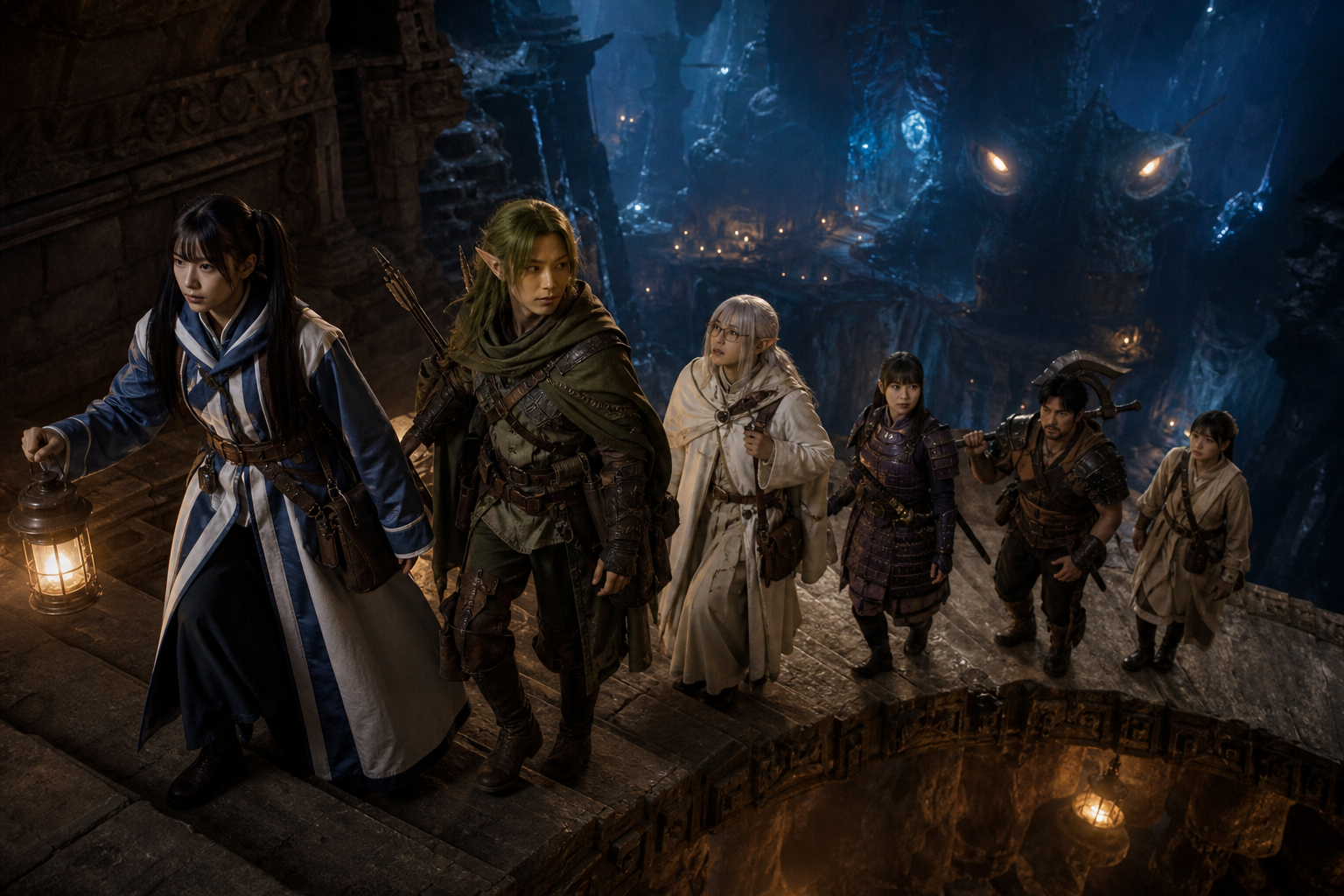
The rescue has real logistics
Every member brings a reason to be there and a skill the descent actually needs. Nobody is just emotional luggage.
What works
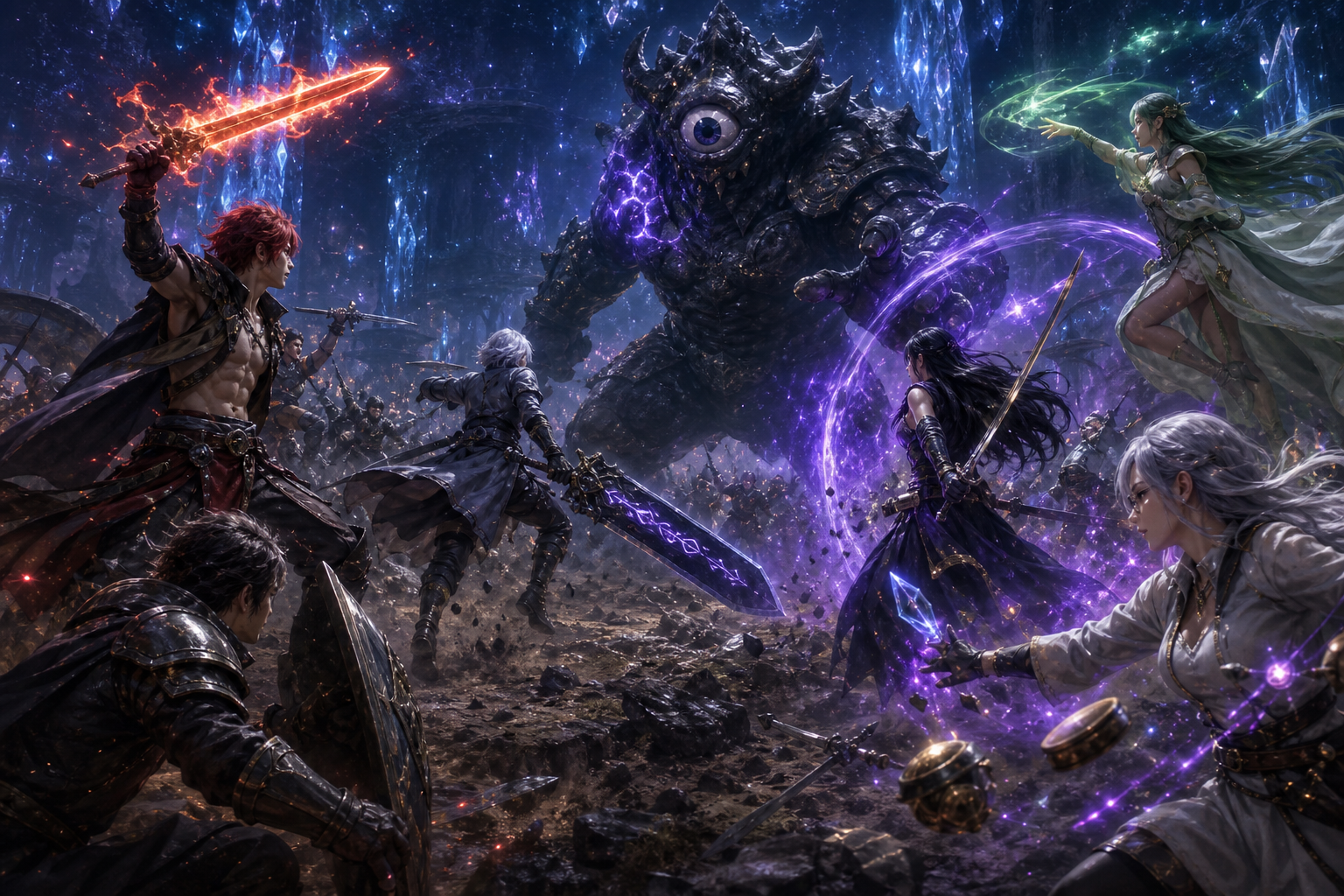
The boss fight distributes heroism
Lyu, Asfi, Mikoto, Welf, Ouka, Mord and Rivira all move the outcome. Bell’s climax crowns the work instead of deleting it.
What bites
Hermes treats trauma like curriculum
The god’s long game is fascinating. It is also a spectacular violation of Bell’s right not to be engineered into myth.
The complete RaeRae ruling · full spoilers
This is the first volume that makes an entire floor feel like the protagonist.
Bell remains the emotional center and gets the impossible finishing strike. Volume 5 becomes the strongest ensemble book so far by refusing to confuse “the person who lands the last hit” with “the only person who won.” Every phase expands the circle of responsibility—from three stranded adventurers, to an improvised rescue team, to Rivira, to everyone capable of standing against the Black Goliath.
What works immediately
The pass parade is morally ugly in a useful way
Ouka redirects the monsters because Chigusa is wounded and his party is failing. The decision is understandable. It is also a betrayal committed against strangers whose consent never enters the calculation. The book lets both truths stand. Bell’s party experiences the damage before learning the reason, which prevents motive from becoming an eraser.
Mikoto’s apology later completes the idea. Guilt is not treated as private suffering that automatically restores innocence. She names who paid and accepts that Bell’s forgiveness cannot rewrite the route they endured.
What makes the rescue land
Hestia brings urgency; everybody else brings a necessary skill
The rescue party avoids the common problem where half the cast exists only to worry attractively. Lyu has deep-floor experience. Asfi brings tools and planning. Hermes brings access and an agenda. Mikoto, Ouka and Chigusa bring responsibility for the triggering choice. Hestia is emotionally incapable of waiting, but she does not mistake emotion for a complete plan.
Their descent turns love into logistics. That is one of the most flattering things the book has ever done for Hestia.
What changes the world
Floor 18 is refuge, marketplace and cemetery
Rivira makes the Dungeon feel inhabited rather than merely explored. People have built prices, jobs, shelter and hierarchy inside a place designed to kill them. Lyu’s graves add memory beneath the commerce. The safety is conditional, the community imperfect and the beauty real.
That complexity gives the Black Goliath something meaningful to threaten. We are not protecting a rest stop. We are protecting a society assembled against the environment.
The boss fight
Bell is the final blow. The floor is the victory.
The Black Goliath’s regeneration removes the possibility of one clean solution. Lyu, Asfi, Mikoto, Ouka, Welf, Mord and Rivira’s adventurers must keep solving different portions of the monster long enough for a decisive opening to exist. The scene becomes an argument about specialization: strength matters, but no single strength can own an irregular enemy built to punish an entire floor.
Burning Moon: Kaduki is the perfect Welf payoff. His refusal to mass-produce magic swords remains morally intact because he chooses one weapon for one collective crisis. It does not replace the wielders. It gives them time.
Bell’s Argonaut strike then carries all of that work to its conclusion. He gets the image people will remember. The book keeps the labor visible underneath it.
The character surprise
Mord becomes useful without becoming sanitized
Hermes pushes Mord’s resentment until it becomes a trap for Bell. Bell defeats him without turning victory into humiliation. When the Black Goliath destroys morale, Mord becomes the voice insisting Bell can win. He is still loud, insecure and difficult. His belief feels earned precisely because the book does not replace him with a nicer personality.
The emotional bruise
Lyu standing beside Astrea Familia’s graves
Volume 5 does not yet unpack all of Lyu’s history, but it lets Floor 18 hold the weight. She is not simply the most competent person in the rescue party. She is somebody returning to the physical location of loss while trying to prevent another group from joining it. Her stillness expands the meaning of every risk she takes.
The institutional problem
“Calamity” is a safer word than the truth
The Guild’s cover-up is understandable as panic control and troubling as historical ownership. Hestia’s divine release provoked the Dungeon’s irregular response. The people who fought know that relationship. The public receives a classification stripped of cause. Survival is followed by a quieter contest over who gets to describe it.
What bites
Hermes treats suffering like a curriculum for somebody else’s hero.
Hermes is charismatic, useful and absolutely operating on a second agenda. He encourages Mord, watches Bell under pressure and frames the resulting spectacle as evidence. The Zeus reveal explains why he is invested. It does not grant him ownership over the conditions Bell must survive.
This makes him fascinating rather than comforting. Like Freya, he sees potential and decides potential justifies intervention. Their desires are different—Hermes wants myth where Freya wants possession—but Bell’s right not to be engineered gets trampled either way.
The book is strongest when it lets that manipulation remain uncomfortable instead of treating every successful outcome as retroactive permission.
What wobbles
The aftermath opens three doors before the reader finishes leaving the battlefield.
The Guild cover-up, Zeus reveal and Apollo introduction are all consequential. Stacking them immediately after the Black Goliath victory makes the ending feel like the franchise changing train lines while we are still emotionally on Floor 18. I understand the momentum: Bell’s survival has made him visible to institutions, bloodline and another predatory god. I still wanted one more breath with the people who fought.
That overload does not damage the battle. It slightly steals from the communal aftermath the volume worked so hard to earn.
Why Volume 5 matters
The story proves Bell can be central without making everybody else peripheral.
That sounds simple and is not. Power-progression stories often turn supporting characters into an audience calibrated to the lead’s next achievement. Volume 5 gives its ensemble jobs that cannot be replaced by Bell trying harder. Navigation, magic, tools, gravity, firepower, morale and accumulated damage all remain separate contributions.
The structure also enlarges Bell’s heroism. His final strike matters more because it finishes something communal. He is not reduced by sharing credit. He becomes worthy of the center precisely because the narrative lets him stand on other people’s work without pretending the ground is empty.
Then Apollo arrives, looking at that public center and deciding it should be his. The next conflict grows naturally from the victory: Bell’s fame has become valuable enough to attract ownership.
Final RaeRae verdict
The strongest ensemble volume so far—and the first boss fight that treats support work like the heroic act it is.
The pass parade is morally sharp, Floor 18 is alive, the Black Goliath battle earns its scale, and Hermes is exactly charming enough to make his manipulation worse. The ending is crowded, but the victory belongs to everyone who stood up.