RaeRae Reacts
BABYMONSTER BATTER UP Performance React
The polished debut special, the raw practice room and the stadium version tell three different truths about the same six-member choreography.
Artist: BABYMONSTER
Song review: BATTER UP
Debut-special performance: December 4, 2023
Choreographers: Chae Dasom, YGX dancers, Kyle Hanagami and Kiel Tutin
Lineup: six members; AHYEON was on health hiatus
Overall vibe
Bottom line: BABYMONSTER did not get a normal music-show debut, so the performance videos had to do three jobs at once. The debut special sold the fantasy, the practice room exposed the technique, and the stadium version showed the scale YG wanted from the beginning. The choreography is not revolutionary, but watching all three versions proves the members understood how to turn a simple bat swing into a group identity while performing around the obvious hole in a six-member formation.
First thought: The music video flirted with baseball. The choreography at least remembers somebody brought a bat.
Formation check: Six is an annoying number. There is no natural center without hiding someone or building asymmetry, and the routine keeps negotiating that math in public.
The moment I leaned in: The rap handoffs. RUKA and ASA do not only hit counts; they change the weight of the room.
The side-eye: The chorus swing is memorable because it is obvious. Nobody at the choreography meeting was paid by the metaphor.
Current status: The debut lacked broadcast stages, so YG built its own miniature promotion cycle and uploaded the evidence in installments.
What changed every time I replayed it
First watch: the debut special felt like the missing stage from the original rollout. The music video cut quickly enough to protect every transition. This version lets the formation breathe. I could finally see where the members traveled, when the center changed, and how much work the wide ending required. My first response was relief. The choreography had more structure than the music video allowed us to see.
Second watch: I stopped following the center and watched the edges. Six-member choreography can punish whoever stands outside the main picture. RORA and PHARITA keep their lines clean even when the camera is not rewarding them. RAMI controls her shoulders and breath so the vocal sections never look like recovery time. CHIQUITA performs through the ends of gestures instead of waiting for the next close-up. The group does not have a weak corner.
Third watch: RUKA and ASA became the reason the routine changes texture. The vocal sections stay lifted and polished. The rap sections lower the center of gravity. RUKA lets the beat sit heavier in her torso, while ASA clips details with smaller, faster accents. They are hitting the same counts, but they are not pretending the same body should produce the same feeling. That difference keeps synchronization from turning into photocopying.
After the practice video: some moments I credited to camera drama belonged to the members. The fixed frame confirms the angles, spacing and quick center transfers are real. It also reveals small compromises. A member can disappear behind center for a beat, and a diagonal can look less balanced than it did under stage lighting. Those are not scandals. They are the math of building for six while a seven-member future still sits in the background.
After the stadium version: the song finally reached the environment it was designed for. The chorus leaves room for audience noise. The swing reads from far away. The final chant stops feeling like extra padding because the bodies and set fill the empty production space. I still prefer the practice room for judging skill. The stadium version explains the business decision.
Three videos, three different kinds of truth
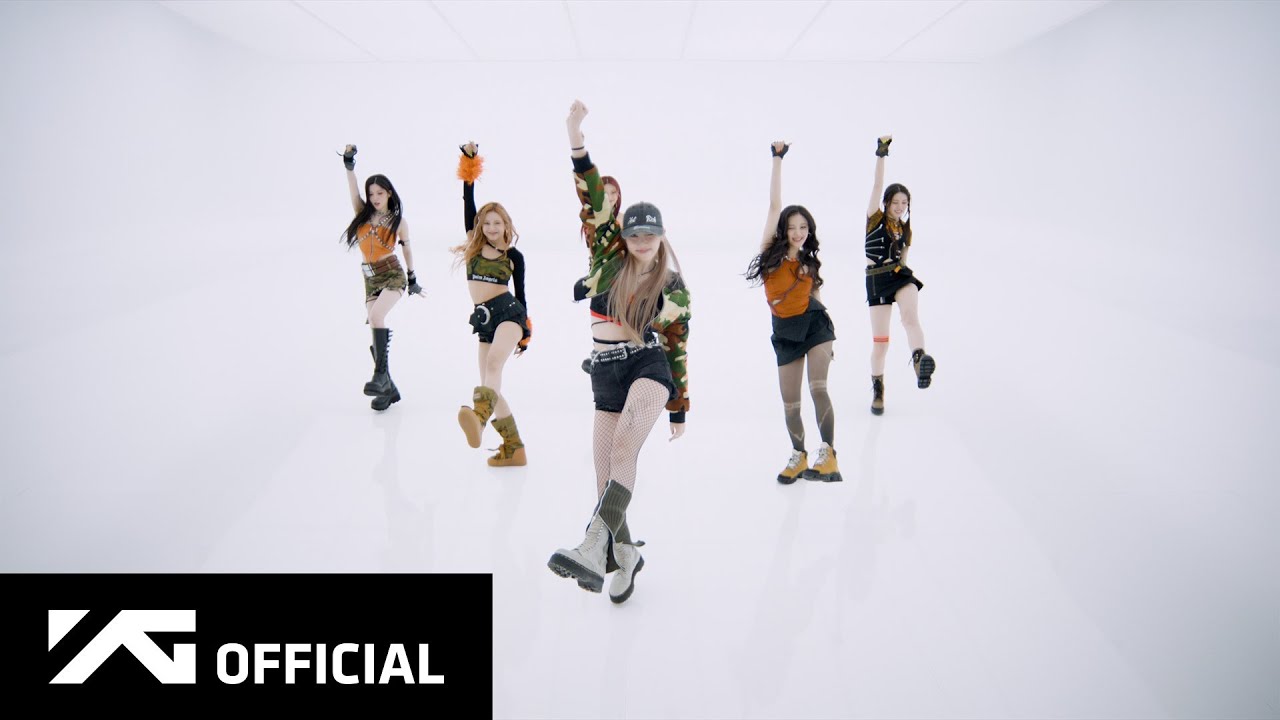
The debut special is a sales pitch, and I do not mean that as an insult. Lighting, costume contrast and moving cameras teach viewers where to look. The white set keeps silhouettes readable. Red and black give the track a company-family edge. Orange military details make six young performers look more battle-ready than the rookie calendar says they should be. Every choice helps BABYMONSTER arrive as a finished product.
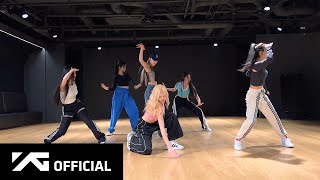
The practice room removes most of that protection. There is nowhere for a missed line to hide, and a fixed camera does not rescue a slow transition with a close-up. This is where the group earns the performance claim. Their feet arrive on time, upper-body angles agree, and individual movement quality survives inside the shared picture. Clean does not have to mean identical.
The stadium version tells the third truth. YG was planning a group for large stages before the group had completed the ordinary rookie circuit. The oversized setting is not realistic evidence of their debut audience. It is a preview of the market position the company intended to build. That is why the performance feels both impressive and slightly strange. BABYMONSTER is being framed as a touring-scale act before the members have been allowed to grow in public.
The missing seventh member is part of the choreography story
AHYEON was absent for health reasons, and the six performers should not be treated like temporary placeholders. They carried the debut. Still, the announced seven-member design affects how the choreography reads. Odd-number formations give a director an easy center with balanced wings. Six forces a choice: hide someone behind the center, split the focus, offset the lines or keep the formation moving before the imbalance becomes obvious.
The routine uses all four solutions. Diagonals give each member a visible lane. Pairs create short conversations. Moving centers keep one person from becoming permanent scenery. The final section widens the formation so the audience reads collective force instead of counting bodies. When the routine struggles, it usually happens during the brief moments when symmetry demands that one person sit behind another.
That tension adds meaning the song never planned. BATTER UP announces a complete team while the choreography keeps solving an incomplete-team problem. The members respond the only way working performers can. They make the available lineup look intentional. AHYEON later returns, but these six-member videos remain the record of who stood on the field when the debut actually happened.
What the rollout says about modern K-pop labor
A debut without music shows sounds like less work. It was different work. Instead of repeating one stage across weekly broadcasts, BABYMONSTER filmed controlled performance products for a global online audience. Each upload extended the life of the song, created a new thumbnail, gave fans another version to compare and generated proof that the group could perform without relying on one highly edited music video.
That strategy also gives the company more control. Broadcast stages include outside cameras, schedules and production limits. In-house videos let YG select the set, framing, release timing and edit. The fans receive better access to choreography, but the company decides which truth appears first. We see the polished special before the practice room. We are invited to buy the image before inspecting the mechanics.
The members still make the strategy work. A content plan cannot manufacture RUKA’s weight, ASA’s rhythmic precision, RAMI’s control, RORA and PHARITA’s clean transitions or CHIQUITA’s reach beyond the lens. The company can build the field. The performers still have to play.
Why these videos mattered
One more thing the fixed camera catches: the members keep performing through transitions that the polished edit could have hidden. Nobody drops character while traveling to the next mark. That sounds basic until a routine asks six people to cross, rotate and rebuild the center inside a few counts. The performance remains alive between the obvious highlights, which is usually where rookie choreography tells on itself.
BABYMONSTER did not take BATTER UP through a normal music-show debut. That left a strange hole: the official MV said “performance group,” but fans had no full stage to judge. The December 4 debut special became the first complete look at the choreography, followed by themed live performances and a practice-room version. Online content was not a bonus. It was the debut stage.
The white horizontal set, black-and-red lighting and orange military accents are designed for legibility. We can see the bat-swing point move, the shifts between vocal and rap centers, and the strength changes the MV editing partially hides. The video is polished, but it is still more honest about the dance than the title video.
The choreography understands its marketing assignment
The chorus gives us a swing and a look over the imaginary fence. It is literal, instantly copyable and visible from far away, the exact qualities a debut point move needs. Chae Dasom, YGX, Kyle Hanagami and Kiel Tutin are credited across the collaborative choreography. You can feel the routine being edited toward a shared goal: hip-hop attitude that remains clean enough for six young performers to execute as a group.
The stronger work happens between the point moves. The pre-chorus opens the formation and lets the vocalists appear larger without adding frantic steps under their lines. Rap sections sit lower and tighter. The final group section increases travel and width, matching the song’s switch from individual introductions to crowd command.
Six-member geometry creates compromises. A symmetrical picture usually means someone is directly behind center, while a visible six requires offset lines or a split focal point. The routine uses diagonals, pairs and moving centers instead of pretending six behaves like seven. Sometimes the transitions call attention to the missing space. More often, the six members turn the imbalance into motion.
The practice room removes the sales pitch
The December 13 dance practice is the page I would show somebody studying formations. Fixed framing reveals spacing and full-body timing without dramatic cuts. It also exposes the difference between synchronizing shapes and synchronizing texture. BABYMONSTER does not move like six copies, and it should not.
RUKA settles into the groove with more weight. ASA makes smaller rhythmic details sharp. CHIQUITA projects beyond the practice camera, while RAMI, RORA and PHARITA preserve vocal control by not attacking every count with identical force. The group picture stays coherent because the angles agree even when the personal movement quality does not.
The stadium version reveals the destination
The stadium version makes the song’s design obvious. BATTER UP was always written for a crowd larger than the debut moment actually had. The empty-drop chorus leaves room for shouting. The swing reads across distance. The final chant grows naturally when the visual scale expands. What can feel thin through headphones becomes practical architecture on a giant set.
This does not erase the song’s familiarity or solve the absent seventh member. It does explain why the company chose it. YG was not only releasing a digital single; it was manufacturing a future concert opener before BABYMONSTER had played the ordinary rookie circuit.
Details worth watching across all three
- The fence-look completes the swing. The members do not merely mime hitting; the follow-through sells the imaginary ball leaving the field.
- Rap sections change body weight. RUKA and ASA’s centers are grounded differently from the vocal pre-chorus.
- The chorus prioritizes silhouette. Broad, readable shapes matter more than tiny footwork in the hook.
- The practice exposes six-member compromises. Fixed framing shows when a center obscures another member and how diagonals repair it.
- The finale is the destination. Every version becomes larger at the end because the song is designed to recruit a crowd.
What I love, what I side-eye, and the verdict
The debut-special video sells BABYMONSTER. The practice video explains BABYMONSTER. The stadium version explains YG’s plan for BABYMONSTER. Together they are more useful than three isolated “OMG slay” posts because the contrast shows how the same choreography works as product, technique and future-tour promise.
The bat swing is not revolutionary. The formation occasionally reminds us that the announced group was missing a member. But six rookies fill the frame with enough confidence that the absence never becomes emptiness. They were not the complete team yet. They still took the field.