
RaeRae Reacts
BABYMONSTER Stuck In The Middle Live Stages React
Two official stages strip away the CGI garden and leave six young singers with microphones, breath control, and nowhere to hide. The fairy dresses are cute. The vocal blend is the actual plot.
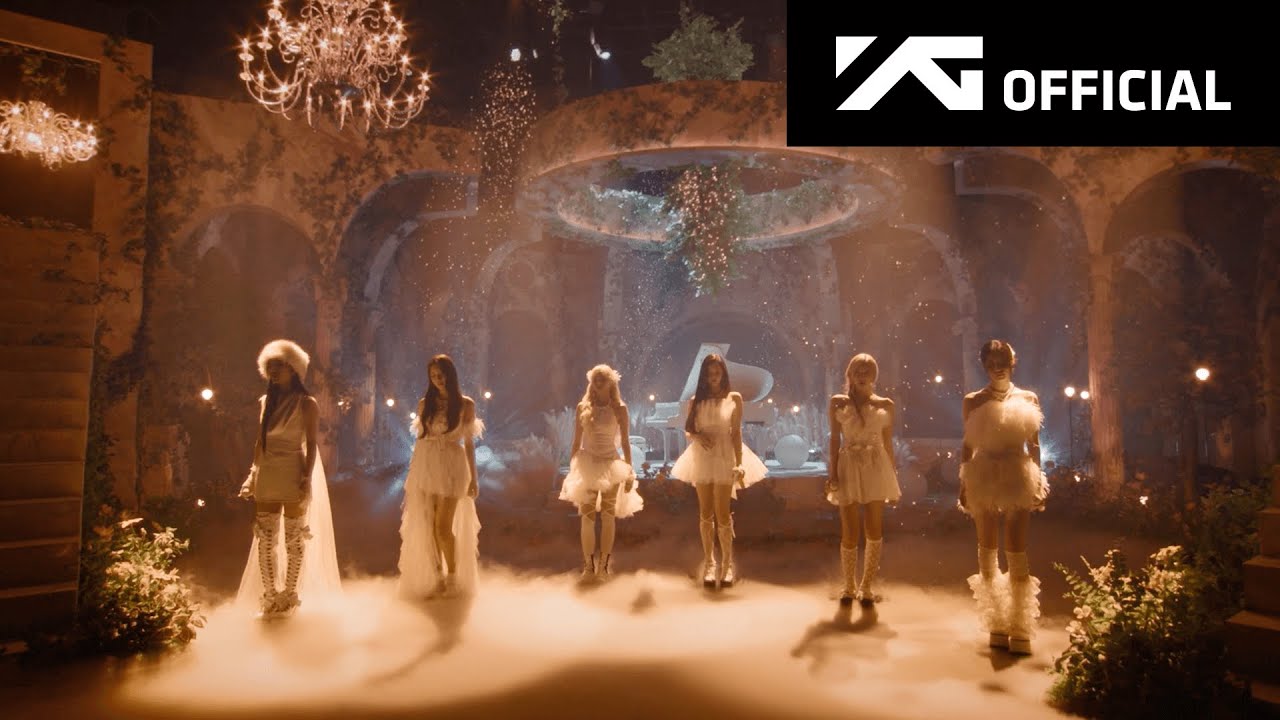
Artist: BABYMONSTER
Song React: Stuck In The Middle
Special stage: February 8, 2024
Live stage: April 1, 2024
Lineup in these performances: RUKA, PHARITA, ASA, RAMI, RORA and CHIQUITA
What I am watching: vocal color, phrasing, blend, camera choices, staging, and what survives outside the music video
Bottom line: BABYMONSTER did not need choreography, pyrotechnics, or a fake high-note emergency to prove the point. These stages work because six different voices carry one restrained ballad without sanding themselves into one anonymous sound. The special stage sells the fairy tale. The later live stage sells the singers.
First watch: the fairy tale is doing a lot
The special stage opens like somebody gave a wedding planner access to a fantasy drama budget. There is a grand piano, a huge arch, scattered petals, glowing stars, pale dresses, and enough soft light to make every relationship problem look expensive. The stage keeps the music video’s storybook language, so the transition from screen to performance feels intentional instead of cheap. Nobody suddenly rolls out a steel staircase and calls it emotional depth.
My first reaction was still suspicion. A stage can look live while hiding behind prerecorded vocals, heavy correction, selective camera cuts, or backing tracks turned up loud enough to do the job. BABYMONSTER debuted under constant claims that they were the next great vocal group. Pretty framing could not settle that argument. I needed to hear entrances, breaths, endings, and the tiny differences that appear when six people have to pass one emotional sentence across six bodies.
That is where the performance earns my attention. The members do not attack the song. They let it sit. The melody is simple enough that every shaky vowel or rushed breath would show, but the group treats restraint like a skill instead of an absence. This is not the stage for proving who can scream the longest note. It is the stage for proving who understands that uncertainty sounds quieter than triumph.
Second watch: I stopped looking at the dresses
On the second watch, I ignored the set and followed the handoffs. RAMI gives the arrangement weight. Her tone keeps the ballad connected to the floor whenever the piano and strings threaten to float away with the petals. RORA sounds more composed. She does not perform confusion like a fresh wound. She sounds like somebody who has been stuck in the same undefined relationship long enough to recognize the furniture.
PHARITA brings the bright polish that the fairy-tale concept expects, while CHIQUITA leaves more youth in her delivery. That difference matters. The lyrics are emotionally broad, so the singers have to provide the specific shades. One voice sounds hopeful, another guarded, another tired, and another still young enough to believe the other person may finally answer the question.
ASA and RUKA quietly make the strongest case for BABYMONSTER as a group rather than a row of assigned positions. Both arrived with rap and performance labels attached to their names. The ballad removes that safe job description. Neither becomes decorative. Their lighter vocal colors help the arrangement move, and their presence makes the harmonies sound like a team instead of a vocal-line demonstration with guests.
What changed every time I replayed it
The first replay made me notice breath. The members do not all breathe in the same places or shape English vowels the same way. Those differences keep the performance human. Perfect uniformity would make the group sound like one studio preset copied six times. The slight shifts in texture show where one singer ends and another begins without breaking the mood.
The second replay made me notice posture. The staging asks the members to stand or sit still for long stretches. That sounds easy until there is no choreography to spend nervous energy on. A dancer can hide tension inside movement. A vocalist standing under a close camera has to let the face and shoulders stay connected to the lyric without acting like the relationship has caused organ failure. BABYMONSTER mostly keeps the emotion readable and scaled correctly.
The third replay made the harmonies feel more important than the solo highlights. A debut rollout naturally encourages fans to rank every member, count seconds, and declare somebody robbed before breakfast. The layered moments reject that habit. The voices become most convincing when they support one another. The harmony is where separate trainees start sounding like a group.
The fourth replay made me side-eye the stage less and the song more. The fantasy styling is not hiding weak performers. It is hiding how unspecific the writing can be. The members give the words more personality than the words give them. That is a compliment to the singers and a note for the writers. A stronger lyric would include one detail that belongs to this relationship and nobody else’s.
The camera behaves because the song gives it no excuse
The special-stage camera uses close shots, slow movement, and group framing instead of pretending a ballad needs action editing. That choice matters because fast cutting can manufacture excitement while destroying vocal evidence. Here, longer shots allow us to see a phrase begin and end. We can match the face, breath, and sound without playing detective through twenty angles.
The wide shots also explain the visual hierarchy. The members are arranged as parts of one painting, which supports the fairy-tale concept but occasionally makes them feel too placed. Emotional uncertainty becomes a royal portrait appointment. Still, the controlled frame is better than forcing choreography into a song that does not want it. Standing still is not laziness when the assignment is pitch, breath, tone, and restraint.
The lighting keeps faces readable, the pale wardrobe separates the members from the darker background, and the piano anchors the empty space. The set tells us romance before anybody sings. That is efficient visual storytelling, even if it is not daring. The production team understands the song’s world and refuses to interrupt it for a viral dance clip.
The second live stage removes another layer of protection
The later live stage matters because repetition exposes luck. One good recording can be a perfect day, a forgiving mix, or smart editing. A second performance lets us compare choices. The phrasing remains recognizable. The members still respect the verses instead of rushing toward the climaxes. The blend still holds when the novelty of the first stage is gone.
This version feels less like an extension of the music video and more like a performance test. The members look more settled inside the song. They know where the difficult entrances live, where the breath must be saved, and where adding extra force would make the emotion less believable. Confidence does not turn into oversinging, which is impressive for young vocalists carrying a reputation they did not create by themselves.
The stage also confirms that the rap line is musically useful beyond rap breaks. RUKA and ASA do not need a beat switch to justify screen time. Their tones add contrast, and their participation helps BABYMONSTER avoid the old idol-group problem where half the members disappear whenever a song becomes vocally exposed.
Six-member history matters here
These performances preserve a specific moment in BABYMONSTER’s history. AHYEON was absent during the group’s early six-member rollout and later returned, making the group seven. Fans watching now may instinctively compare the arrangement to the later lineup, but the stages deserve to be read as evidence of what the six active members built under pressure.
The absence created an awkward industry situation. YG had promoted AHYEON heavily, so every six-member appearance carried a silent question about what was missing. The remaining members had to establish their own chemistry without treating the lineup as temporary. Stuck In The Middle helped because a ballad could distribute emotional responsibility across voices. The group did not have to replace AHYEON onstage. It had to prove the six people present could carry a complete performance.
When the seven-member version arrived, the song gained another texture, but it did not invalidate these stages. The earlier performances show the foundation. They document RAMI’s structural role, RORA’s calm phrasing, PHARITA’s polish, CHIQUITA’s youthful color, and the rap line’s flexibility before the full lineup could rebalance the catalog.
The lyric is still the weak link
The stages improve my opinion of the performance, not the writing. The central idea is familiar: two people behave like a couple while one refuses to define the relationship. That emotional limbo is real, especially in a culture where public labels, private behavior, family expectations, and social risk do not always move at the same speed. The song understands the discomfort but describes it with broad language.
I want one concrete memory. Give me the message left unread, the seat saved in public, the hand released when somebody walks into the room, or the promise that only exists after midnight. A specific detail would let the singers act against something tangible. Instead, they carry a general ache beautifully. The voices do the close-up work that the lyric avoids.
The English language helps global access, but it also makes comparison easier. Listeners can immediately place the song beside decades of Western pop ballads about undefined love. BABYMONSTER’s vocal colors keep it from becoming anonymous. The writing should have worked harder to return that favor.
What the stages prove and what they cannot prove
| Question | My answer |
|---|---|
| Can BABYMONSTER sing outside a music video? | Yes. Exposed entrances, long phrases, vocal handoffs, and harmonies survive on official stages. |
| Does every member add a useful color? | Yes. The contrast is more valuable than forcing six voices toward one identical tone. |
| Does the group need choreography here? | No. Movement would distract from the vocal test and cheapen the lyric’s uncertainty. |
| Does this song define BABYMONSTER? | Not by itself. It proves range and training, but it does not contain the group’s full personality. |
| Do the stages fix the generic lyrics? | No. Strong delivery makes the emotion believable, but the words still need more lived detail. |
What I love
I love that nobody treats volume as character. The members let tone, timing, and restraint do the work. I love that RUKA and ASA remain part of the musical argument instead of waiting for a rap verse that never arrives. I love the harmonies because they answer the most important debut question: do these people sound better together than they do alone?
I also love that the second stage exists. One performance can become fandom mythology. Two performances create a pattern. BABYMONSTER’s reputation for live ability has receipts, and these stages belong in that file.
What I do not love
The visual concept is almost too clean. The song is about emotional confusion, yet every petal knows exactly where to land. I wanted one imperfect image, one shadow, one costume detail, or one camera choice that acknowledged how ugly uncertainty can feel. The production gives us beautiful sadness, not the irritation and embarrassment that come with waiting for somebody else to make a decision.
I also do not love how easily the stage can be reduced to a vocal ranking. Fans will always count notes, but the real achievement is coordination. Turning the performance into a contest misses the point. The members succeed because they listen, adjust, and leave room for one another.
RaeRae verdict
The special stage is prettier. The later live stage is more useful. Together they prove BABYMONSTER’s early vocal reputation was not studio smoke. The members carry a restrained English ballad with distinct tones, clean handoffs, and enough control to keep uncertainty from becoming melodrama.
Stuck In The Middle still is not the song I would use to explain the group’s entire identity. The lyric needs sharper details, and the fairy tale could use dirt under its fingernails. But if the question is whether six young idols can stand mostly still and make a soft song hold attention, the answer is yes. The microphones are the plot.
Receipts, not rumors
 BABYMONSTER Stuck In The Middle Special Stage, YG EntertainmentDaily+751Total views17M
 BABYMONSTER Stuck In The Middle Live Stage, YG EntertainmentDaily+2.5KTotal views18.7M
- YG Entertainment special-stage announcement and song description
- YG Entertainment special-stage release report
- CVM Sekai song and music-video React