
RaeRae Reacts · S1E14 · 1992 Animated Series
Eel-Ectric City
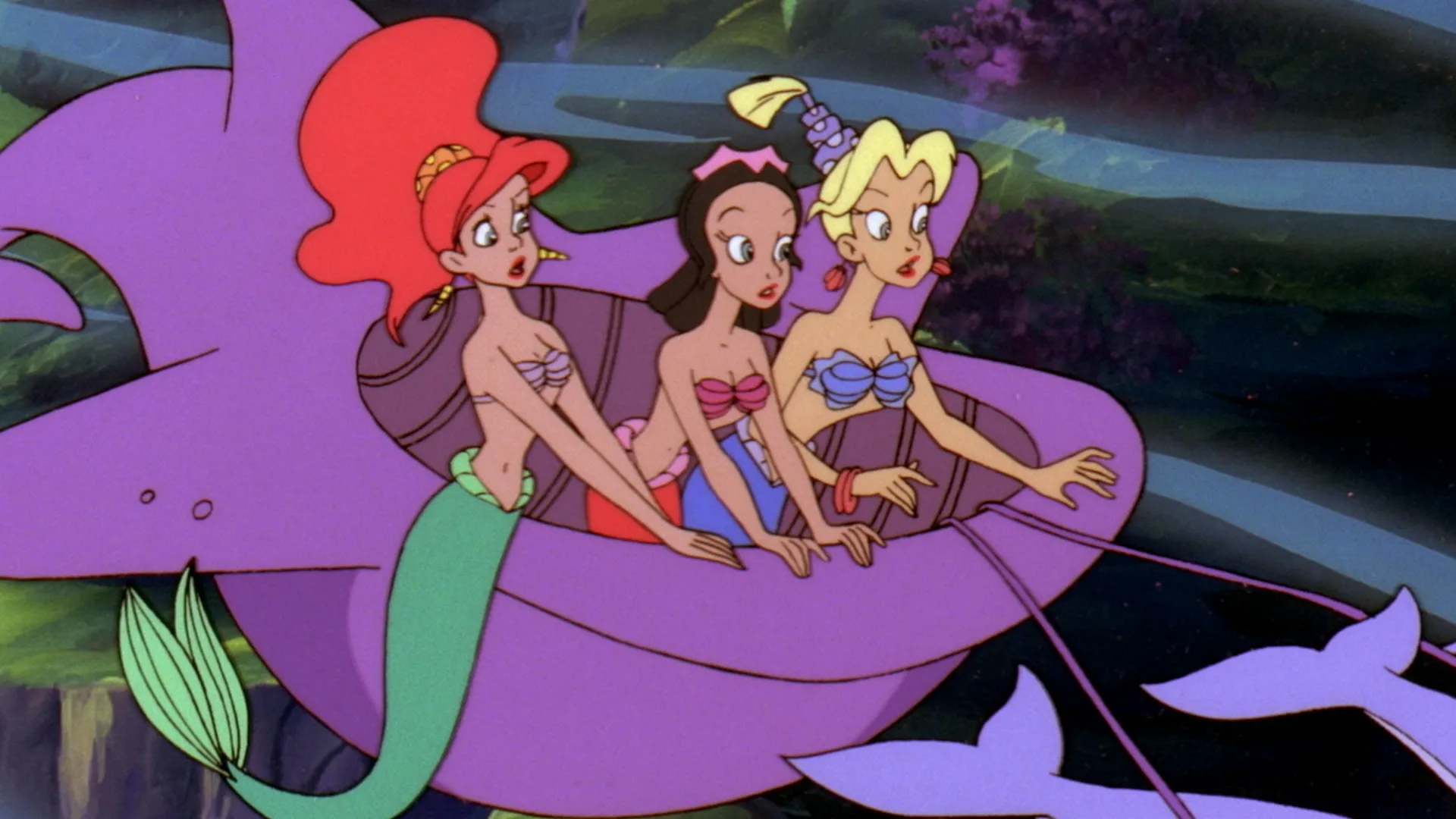
Ariel follows her sister Alana’s glamorous friend Pearl into a dangerous night out where rebellion, status, and actual freedom stop looking identical.
The episode receipt
Series: The Little Mermaid (1992). Episode: S1E14 “Eel-Ectric City.” Broadcast-order position: 14 of 31.
What happened
Ariel follows her sister Alana’s glamorous friend Pearl into a dangerous night out where rebellion, status, and actual freedom stop looking identical.
What the episode is really testing
Where to watch
Disney+ currently lists this episode. Regional catalogs and numbering can differ because the pilot is omitted from the service.
First reaction: Pearl sells danger as freedom because being watched feels like being valued
Pearl tells Ariel and Alana they are going to a party at her house, then takes them to Eel-Ectric City. The deception is not a spontaneous change of plans. It removes their ability to make an informed choice before social pressure and distance make refusal harder.
Her later admission that she has done worse without getting her parents’ attention changes the whole episode. Recklessness is performance, status, and a desperate test of whether somebody will finally notice the risk she is taking.
Ariel asks to come because Pearl represents a life without visible fear
Pearl appears brassy, socially fluent, and unconcerned with royal rules. Ariel already experiences Triton’s protection as confinement, so Pearl’s confidence can look like proof another kind of girl has solved freedom.
What Ariel cannot see at first is the labor beneath the image: hiding plans, controlling reactions, and escalating whenever ordinary rebellion stops producing attention.
Alana brings Ariel into a social world where Ariel is the younger sister
Ariel is often the franchise center and the family crisis. Here she enters through Alana’s invitation and relationship with Pearl. The shift lets Alana hold social knowledge Ariel lacks.
That difference can create protection and resentment. Alana may feel responsible for Ariel while also wanting one evening that is not reorganized around the youngest sister.
The fake house party removes consent from both sisters
Ariel and Alana may have agreed to Pearl’s home under conditions their family considered acceptable. Eel-Ectric City carries different distance, people, weather exposure, and escape options. Consent to one destination is not consent to another.
Pearl’s lie makes later participation ambiguous because saying no after arrival carries embarrassment and practical difficulty.
Peer pressure works best when nobody issues a direct threat
Pearl does not need to say friendship ends if the sisters leave. She frames risk as what confident girls do and caution as failure to belong with the “big fish.” The social penalty remains implied.
Ariel and Alana begin policing themselves. They take risks to avoid appearing afraid, which lets Pearl maintain innocence about the pressure she created.
Pearl keeps plausible deniability while the sisters carry the risk
Because she rarely states the social penalty directly, Pearl can later claim Ariel and Alana chose everything freely. The structure lets the most influential person avoid responsibility for how she framed the options and controlled information.
Influence is not total control, and it is still power. Ethical friends notice when their approval changes what somebody feels able to refuse.
The “bad girl” label can hide every adult who built the conditions
Pearl’s lying and recklessness deserve accountability. Reducing her to a bad influence lets parents, city organizers, and the royal family avoid examining neglect, inaccessible safe nightlife, and communication systems that reward secrecy.
Girls often become the visible container for a group’s moral panic. One charismatic teenager is easier to blame than the adult environment that made her performance attractive.
Cool is an audience-dependent performance
Pearl’s identity requires witnesses who believe she is fearless, experienced, and beyond parental control. Eel-Ectric City supplies lights, speed, crowds, and danger capable of making that performance visible.
The need for constant escalation reveals the insecurity inside the image. If Pearl stops moving, somebody may notice she does not know what freedom feels like without applause.
Rebellion is not freedom when another person controls the script
Ariel leaves palace rules and enters Pearl’s rules. She is still adjusting behavior to somebody else’s approval, only the aesthetic has changed. One authority uses paternal command. The other uses social status.
Actual freedom requires information, meaningful alternatives, and the ability to leave without punishment. The night offers excitement and very little autonomy.
Pearl’s neglect explains the escalation and does not excuse the lie
A child who cannot gain attention through ordinary need may discover that crisis reliably summons adults. Dangerous behavior becomes communication the family finally reads. Pearl’s line about doing worse suggests that pattern is established.
Understanding the function should change the response. It should not make Ariel and Alana responsible for absorbing risk so Pearl can test her parents again.
Parents who “do not make waves” may be avoiding their daughter
Pearl’s parents tell Triton she does what she pleases and they usually do not make waves. The phrase sounds permissive and can conceal disengagement. Avoiding conflict is not the same as respecting independence.
Teenagers need room and reliable limits. Total noninterference can feel like freedom from the adult side and abandonment from the child side.
Triton’s meteorologists prove the danger is knowable
The Arctic current is not random punishment for disobedience. Royal meteorologists identify a real approaching storm, and Triton travels to warn and retrieve the girls. The episode gives authority factual grounds rather than relying only on “father knows best.”
The tragedy is that the girls are not where the adults were told they would be. Deception breaks the emergency route before the current arrives.
Location sharing is safety, not automatic surveillance
Young people deserve privacy and still need trusted people to know enough for rescue when plans change. The challenge is proportionality. Constant monitoring can become control, while a false destination can make help impossible.
Pearl treats secrecy as proof of independence. The storm reveals the practical cost without proving parents deserve unlimited access to every movement.
Sebastian and Flounder follow because the official plan feels wrong
Their pursuit can look like intrusive chaperoning, and their suspicion is justified. They recognize enough inconsistency to keep contact with the girls who are being moved into a riskier environment.
Informal rescue again fills the gap left by weak communication. Sebastian and Flounder should not be the only safety system available.
The city is visually seductive because danger must look worth choosing
Lights, movement, music, and crowds give Eel-Ectric City an energy Atlantica’s palace does not offer. If the place looked miserable from the start, peer pressure would have no emotional logic.
The episode respects the appeal of nightlife even while criticizing the conditions of this trip. Pleasure and risk can occupy the same place.
Ariel’s human-world curiosity and nightlife curiosity share a method
She enters unfamiliar spaces because official warnings often mix real danger with prejudice. That history teaches her to discount caution before evaluating which part is evidence-based.
Triton’s overbroad control makes Pearl’s underbroad caution more persuasive. When authority exaggerates, young people can miss the moment authority is finally specific and right.
Alana is caught between sister duty and peer belonging
She may feel responsible for Ariel’s safety while fearing that objecting will make Pearl see her as boring. The competing loyalties produce hesitation exactly when early refusal would be easiest.
Older sisters are often expected to supervise without being given actual authority. Alana can be blamed for Ariel while Pearl controls the plan.
The race turns social pressure into physical danger
Pearl’s challenge against the “big fish” makes speed and risk the currency of belonging. Backing out becomes a public identity statement, not a simple safety decision. The approaching storm raises the cost while pride makes withdrawal harder.
A race is voluntary only when participants can stop without social retaliation and understand conditions. Neither is fully true here.
“Funny, but not fun” marks the moment the image breaks
Ariel recognizes that the night’s performance has stopped producing pleasure. The distinction is small and powerful. Something can generate laughs, spectacle, and status while leaving the participants miserable.
Naming that difference is the beginning of leaving. She stops asking whether the crowd approves and starts asking what the experience actually feels like.
Pearl’s audience rewards the version of her that is least safe
The city crowd responds to daring, racing, and visible rule-breaking. It does not know the neglected daughter whose parents may not notice her absence. Public approval attaches to the symptom and makes the underlying need harder to admit.
Attention is finally available, but only while Pearl keeps performing the behavior that endangers her.
The storm does not make Triton correct about every form of rebellion
He is correct that this current can sweep away everything in its path and that the false destination created danger. The event does not prove daughters should never attend parties, visit cities, or make independent plans.
Specific consequences should support specific rules. Turning one crisis into permanent control would guarantee more secrecy later.
Harm reduction is more useful than pretending teenagers will never go
A realistic safety approach would include weather checks, verified destinations, a return plan, sober or trusted companions, and a way to leave if a race or crowd becomes dangerous. These measures accept that nightlife will exist and reduce preventable harm.
Abstinence-only rules can make every violation equally secret. Once the first boundary is crossed, the teenager may feel there is no reason to preserve smaller safety practices.
Attention and control are not the same parental response
Pearl wants evidence that her parents care whether she returns. They could answer with consistent interest, time, and proportionate limits. Sudden total control after the storm might confirm that only danger earns engagement while making honesty even less likely.
A child needs adults who notice ordinary life. Surveillance cannot substitute for relationship, and permissiveness cannot substitute for trust.
Rescue should be followed by truth, not only punishment
Ariel and Alana lied about the destination and continued after warning signs. Consequences are reasonable. The family also needs to examine why Pearl’s status mattered, what made refusal difficult, and how the sisters can call for help without fearing only rage.
Punishment can stop the next outing. Honest debriefing can make the next outing safer.
The sisters need different accountability from Pearl
Ariel and Alana accepted the changed destination, remained after warning signs, and lied to their father. Pearl originated the false plan and used social influence to keep the night moving. Treating all three identically would ignore who controlled which decision.
Proportionate consequences can recognize peer pressure without erasing agency. The goal is better judgment, not a convenient list of equally guilty girls.
Pearl’s parents need to hear the line she told the girls
“I’ve done worse than this and not got their attention” is a direct report of relational failure. Adults should not respond only to the danger while ignoring the reason she keeps escalating.
Their daughter needs consistent presence, boundaries, and interest before crisis. Attention delivered only after catastrophe trains catastrophe.
Ariel is not responsible for repairing Pearl’s family
She can care, tell the truth, and refuse future unsafe plans. She cannot become the friend who must attend every dangerous event because Pearl is lonely or neglected. That role would turn compassion into captivity.
Adults must carry the structural responsibility. Friends deserve boundaries without being accused of abandonment.
Cree Summer gives Pearl charm and damage in the same register
Pearl has to be magnetic enough that two princesses follow her and brittle enough that escalation feels like necessity. Summer’s performance keeps the character from becoming a flat cautionary “bad girl.”
The confidence remains real as performance even when the security beneath it is missing.
Jodi Benson makes Ariel’s social uncertainty different from adventure fear
Ariel can confront monsters with confidence and still hesitate before a glamorous peer. Physical courage does not eliminate the desire to be accepted. Benson lets the younger-sister energy surface without making Ariel helpless.
The episode broadens vulnerability beyond Triton’s rules and human obsession.
The electric-city setting externalizes adolescent intensity
Everything glows, moves, and threatens to shock. The environment makes social energy physical, with no quiet space where a participant can reconsider without losing the group.
The approaching Arctic current crashes cold reality into that charged performance. Weather interrupts the illusion that the night controls its own consequences.
This is Alana’s chance to exist beyond a chorus line
The feature film uses the sisters mostly as a coordinated introduction to Ariel. Here Alana has friends, judgment, insecurity, and a relationship with the youngest sister. The episode gives one of Triton’s other daughters narrative weight.
That expansion makes the family feel more real and exposes how much character coverage the franchise still owes the remaining sisters.
The episode should distinguish nightlife from neglect
Eel-Ectric City is not morally bad because young merpeople gather, dance, and race. The unsafe conditions come from deception, weather, social coercion, and adults who do not know where the girls are.
Condemning the entire city would let families avoid building safer ways for teenagers to socialize.
A future safety plan needs an exit that preserves dignity
Ariel and Alana need a code, contact, or trusted escort they can use when a plan changes without first proving total innocence. Young people delay asking for help when rescue guarantees humiliation and maximal punishment.
The safest family is not the one whose children never make mistakes. It is the one they contact before the mistake becomes unrecoverable.
What Pearl should learn about friendship
Friends are not props used to prove she is daring. Ariel and Alana deserve the real destination, known risks, and the freedom to leave. If Pearl needs attention, she can tell them without converting their bodies into the message.
Honesty may feel less glamorous and is the only route to intimacy that survives daylight.
What Triton should learn about independence
The daughters will seek cities, parties, and peers beyond his direct control. He needs negotiated rules, accurate risk information, and consequences that do not turn every desire for independence into evidence of moral failure.
Protection works best when it teaches judgment capable of traveling without him.
Where this sits in broadcast order
“Eel-Ectric City” is S1E14, the first season finale in the complete thirty-one-episode inventory, and originally aired December 5, 1992. Disney+ shows it one number earlier because the pilot is absent. CVM Sekai preserves broadcast order.
Season one ends by taking Ariel out of palace rebellion and into peer-led risk, proving authority can wear a crown or a cool smile.
Final reaction
“Eel-Ectric City” refuses to make danger unattractive. Pearl is charismatic, the city looks alive, and Ariel’s desire to join makes sense. The lie, coercive social pressure, and ignored storm turn that appeal into a trap.
Pearl is not merely reckless. She is a neglected girl who learned catastrophe produces attention. That history deserves care and does not entitle her to risk her friends. Episode grade: A minus, with the nightlife approved, the fake address rejected, and Pearl’s parents ordered to notice her before the next Arctic current does.