
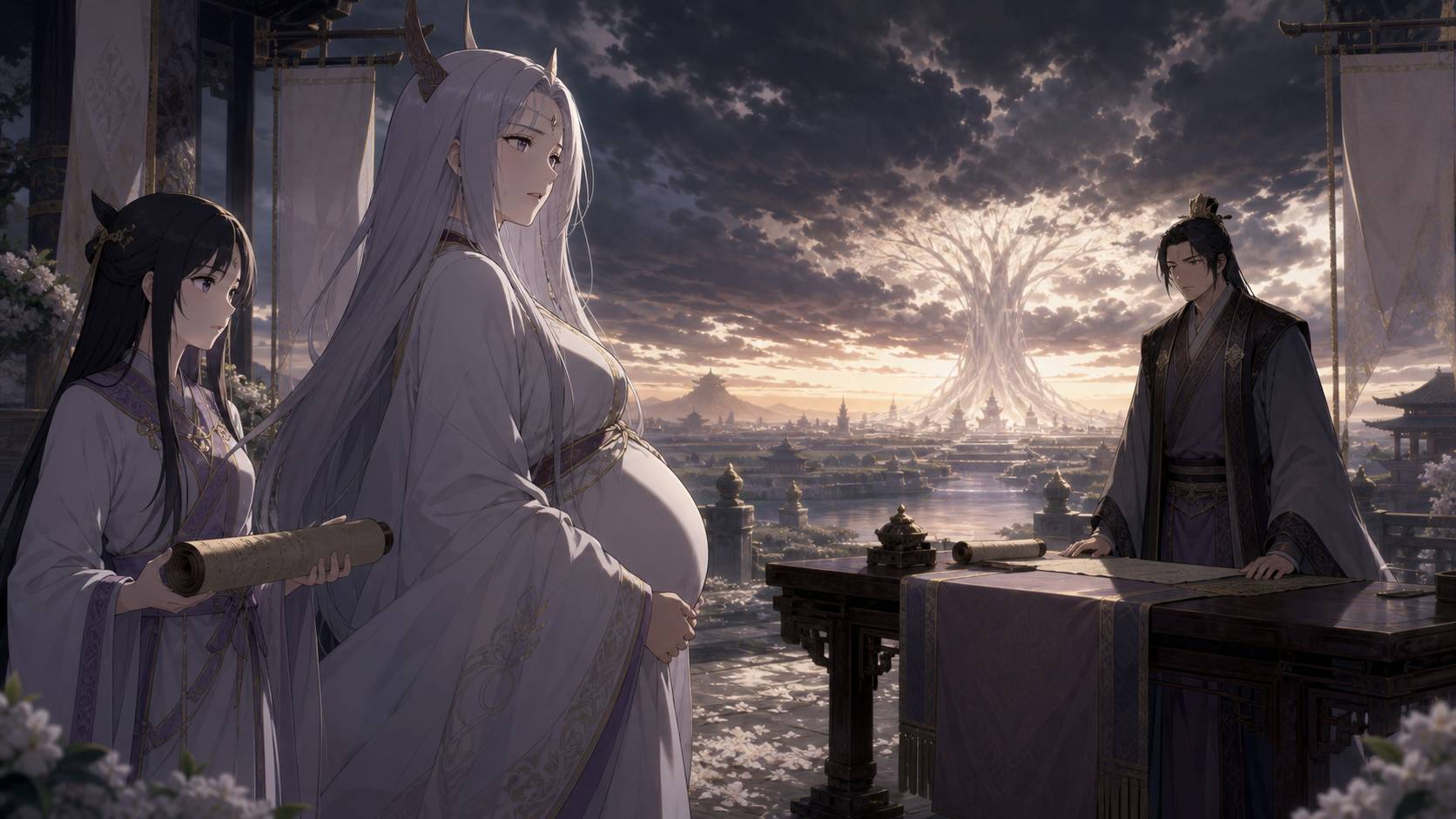
Kaguya Ōtsutsuki
The backstory gives Kaguya a reason to distrust human institutions, but betrayal and grief never become permission to take every human will and future.
Bottom line
“Kaguya Otsutsuki” gives the final antagonist a human betrayal, but the episode does not make her later tyranny inevitable or justified. In this anime-expanded version, Kaguya lives among people, longs for peace, becomes pregnant by Tenji, and watches his political promise collapse the moment protecting her might cost him a treaty. Aino tries to carry the truth of Kaguya's pregnancy to him and dies under his soldiers' arrows. That death matters more than the generic border dispute surrounding the betrayal. Tenji orders Kaguya's execution because another ruler turns her self-defense into diplomatic leverage. Kaguya then runs toward the God Tree while pregnant, wounded by betrayal, and outnumbered. The episode gives her a reason to stop trusting human institutions. A reason is not permission to take every human will, body, and future for herself.
Episode 460 enters an anime-expanded origin
Episode 460 is titled “Kaguya Otsutsuki.” The episode aired in Japan on May 12, 2016.
The backstory expands a small amount of manga material into an anime-specific account involving Tenji, Aino, and two ancient lands.
Black Zetsu controls the narration
Naruto and Sasuke remain trapped while Black Zetsu begins explaining Kaguya's history. He calls himself her will and claims authority over the story.
The narrator is also a manipulator with a reason to frame every event around his mother's return.
The continuity label matters
Later Ōtsutsuki material adds motives, partners, and planetary cultivation rules not shown here. This episode should be read as the anime's 2016 expansion, not a complete franchise biography.
Calling that boundary out protects the reader from false certainty.
Kaguya arrives from beyond the known world
People in the Land of Ancestors find a mysterious woman whose power, clothing, and presence do not match anything they know. Her arrival introduces the celestial scale behind chakra history.
The humans respond through curiosity, fear, and political possession.
Tenji receives her at court
The ruler of the Land of Ancestors brings Kaguya into his domain. His authority decides where she will live and how others will treat her.
Hospitality and control sit uncomfortably close from the start.
Kaguya identifies herself simply
She gives her name without explaining an entire alien lineage or mission. Silence preserves mystery while leaving the court to invent its own meaning.
The episode humanizes her through observation before exposition.
Aino becomes her attendant
Aino helps Kaguya navigate daily life among people. Their relationship gives Kaguya someone who speaks to her with care rather than political calculation.
The attendant becomes the emotional bridge between visitor and human society.
Kaguya watches the night sky
She spends long evenings looking upward. The image suggests memory, distance, and a home or threat she does not explain.
Quiet longing gives her more interior life than the battlefield introduction allowed.
She says she wants peace
Kaguya sees human conflict and wishes for an end to repeated violence. The desire connects her to nearly every major Naruto antagonist.
Peace becomes dangerous when one person decides that choice itself causes the problem.
Tenji becomes attached to her
His fascination grows into an intimate relationship, and Kaguya becomes his concubine. The episode frames genuine affection inside a hierarchy where he remains ruler.
That imbalance will matter when politics turns against her.
Kaguya becomes pregnant
She carries the children who will become Hagoromo and Hamura. Pregnancy raises the physical and political stakes of every later pursuit.
Tenji does not know the truth soon enough to let parenthood challenge his decree.
The Land of That presses the border
A neighboring state disputes territory and begins provoking conflict. The deliberately vague country names make the political setting feel more like an ancient parable than developed geopolitics.
The threat is still concrete for the people living near the boundary.
Tenji fears a larger war
He wants to prevent retaliation from expanding into open conflict. Restraint could protect thousands if both sides respect the same limit.
The rival land quickly learns how to exploit his fear.
Tenji announces an execution decree
He says anyone from his land who attacks the Land of That will be put to death. The rule aims to stop unauthorized violence before a war begins.
Absolute wording leaves no room for self-defense, context, or coercion.
The decree values diplomatic appearance over justice
Tenji needs to prove that his side will not escalate. A public promise may reassure the neighboring ruler.
The promise also hands the rival state a weapon against any defender from the Land of Ancestors.
A large army approaches
The border threat grows beyond scattered provocation. Tenji goes to the front because leadership requires a visible response.
He still hopes negotiation can stop the fighting.
Tenji tells Kaguya to hide
He instructs her to move somewhere safe if he does not return. The request shows concern and an awareness that his position may collapse.
Kaguya follows the plan because she still trusts him.
The rival land has a spy nearby
Information about Kaguya's movement reaches the Land of That. Her hiding place is compromised before safety can exist.
Diplomacy proceeds while covert aggression undermines the terms.
Soldiers attack the refuge
The invading group does not come to negotiate. They intend to capture the mysterious woman associated with Tenji.
Kaguya faces an organized attack after being ordered not to strike the rival land.
The attackers use Tenji's restraint against her
They assume political consequences will prevent meaningful resistance. His peace decree protects the aggressors more than the person hiding under his orders.
A rule without a self-defense exception rewards the side willing to violate trust first.
Kaguya kills the attackers
Her power overwhelms them almost effortlessly. The response is lethal and far beyond anything ordinary soldiers can answer.
Self-defense explains why she acts. The scale of slaughter terrifies everyone who witnesses the result.
The survivors call her a monster
People who saw her as quiet and beautiful now see a force capable of wiping out armed men. Fear replaces fascination.
The label avoids asking what the soldiers planned to do to her.
Kaguya leaves with Aino
Remaining at court is no longer safe. Aino chooses to accompany her rather than retreat toward the ruler's protection.
That loyalty makes Aino the one human relationship Kaguya can still trust.
Suzaku brings a witness to negotiations
The Land of That's leader presents someone from Tenji's own land who saw Kaguya's violence. The witness gives the accusation local credibility.
The rival ruler turns a failed capture into diplomatic advantage.
Peace talks become a trial in Kaguya's absence
Kaguya cannot explain the attack or the danger she faced. Men negotiating territory decide what her actions mean.
Her body becomes the price requested for continued peace.
Suzaku invokes Tenji's own decree
He demands the execution Tenji promised for anyone who attacked the rival land. The legal trap works because the rule erased context in advance.
Consistency becomes an excuse for injustice.
Tenji chooses the treaty over Kaguya
He orders his soldiers to kill her. The command protects his political credibility and avoids immediate war.
The person he loved becomes expendable once love threatens his public authority.
Tenji does not know she carries his children
Lack of knowledge deepens the tragedy without clearing him of responsibility. Kaguya's right to protection should not depend on pregnancy.
The unborn children make the consequence larger, not the betrayal more legitimate.
Kaguya heads toward the God Tree
With both lands against her, she moves toward the one source of power beyond human government. The tree offers capacity no army or decree can restrain.
Her flight begins turning fear into a search for absolute control.
The God Tree already dominates the region
The enormous trunk and roots predate the shinobi systems that will later grow around chakra. Ancient people live near a power they do not understand.
Kaguya understands more and trusts the tree more than the courts chasing her.
Archers from the Land of Ancestors attack
Tenji's own soldiers fire on the woman he told to hide. The order has moved from political statement to bodily violence.
Kaguya must defend herself against the people who once sheltered her.
She deflects the first arrows
Her abilities prevent an immediate execution. Power gives her the option most accused people in Tenji's land would never possess.
Numbers and physical strain still close around her.
Pregnancy limits her endurance
Kaguya cannot maintain defense against every volley while carrying twins. The episode makes her body part of the danger instead of treating pregnancy as decorative information.
Even celestial power has a physical cost in this version.
Aino runs toward Tenji
She believes the truth about the pregnancy may stop the execution. The decision is brave because the path crosses the same soldiers hunting Kaguya.
Aino still trusts that information can reach the man behind the ruler.
Aino tries to restore human context
Tenji issued an abstract rule and received a political accusation. Aino carries the missing facts: Kaguya was attacked, she is pregnant, and the king has a personal responsibility.
Her message could break the false simplicity of the decree.
The soldiers shoot Aino down
Arrows strike before she can reach Tenji. The person attempting peaceful communication dies under orders issued in the name of peace.
The irony is not subtle, and the episode earns the bluntness.
Aino's death closes Kaguya's last trusted bond
The attendant chose her when rulers and soldiers turned away. Losing Aino confirms Kaguya's belief that human systems destroy loyalty when authority feels threatened.
Grief now points directly toward the God Tree.
Tenji never hears the warning in time
His decree prevents the information that might have changed his choice from reaching him. Command travels outward faster than truth can travel back.
That is a political failure, not bad luck alone.
Kaguya's betrayal is institutional and intimate
The court rejects her, the army hunts her, and the man who loved her authorizes the execution. Public and private safety collapse together.
Absolute power begins to look like the only protection nobody else can revoke.
The episode makes her fear understandable
Kaguya has been targeted by a rival state, traded away by her partner, and attacked while pregnant. Viewers can understand why she stops trusting negotiation.
Understanding fear does not require approving every choice that follows.
The episode risks making tyranny look reactive
By placing human betrayal immediately before the chakra fruit, the anime can imply that domination grew mainly from what people did to Kaguya. Later franchise lore gives a larger extraterrestrial context.
The expanded version should not become the only explanation for her motives.
Tenji's peace policy fails its own test
His decree avoids immediate retaliation but invites provocation, punishes self-defense, kills Aino, and drives Kaguya toward overwhelming force. No durable peace emerges.
A policy measured only by whether war starts today ignores the violence required to postpone war.
Suzaku wins without proving moral innocence
The rival leader gets the execution order he wants by invoking Tenji's words. His side initiated the covert attack that produced the killings.
Diplomatic success rests on concealed aggression.
Aino is the episode's moral center
She offers companionship without ownership, stays beside Kaguya after the slaughter, and risks her life to carry truth. Her choices oppose every ruler's use of people as pieces.
The story loses its most humane character before the ancient conflict fully begins.
Kaguya stands at the edge of another choice
The God Tree can give her power beyond the armies pursuing her. Taking that power may save her and the unborn children.
The same choice will change humanity's relationship with chakra forever.
Kaguya Otsutsuki adds emotion after introduction
The battlefield presented a distant force who wanted chakra returned. This backstory supplies attachment, pregnancy, betrayal, and grief after the audience has already met the tyrant.
The material helps, though earlier seeding would have made the final-antagonist transition stronger.
Aino gives the legend a human heartbeat
Kaguya’s history could have become a parade of ancient names explaining where chakra came from. Aino prevents that. She helps a stranger live among people, remains beside her after fear replaces fascination, and runs toward armed authority because she believes truth might still interrupt an execution.
She has no celestial power and no throne. Her importance comes from choosing care when every institution is converting Kaguya into a diplomatic object. That is why her death lands harder than the mythology around it.
Tenji confuses peace with the absence of immediate war
His decree looks responsible from the treaty table. Anyone who attacks the neighboring land will die, so neither side should risk escalation. The rule collapses the moment the Land of That sends men after Kaguya and counts on her being unable to defend herself.
A peace policy that protects aggressors from resistance is not neutral. It relocates violence onto the person least able to make the consequences public. Tenji avoids one battle by authorizing an intimate betrayal and calling the result restraint.
Pregnancy raises the stakes without creating Kaguya’s worth
Aino hopes news of the twins will make Tenji remember the woman behind the accusation. The information might have changed his order, which makes her interrupted journey devastating. Still, Kaguya deserved context, safety, and a chance to answer before anybody knew she was carrying his children.
The pregnancy enlarges Tenji’s responsibility. It does not manufacture it. A woman should not need to be connected to a ruler through heirs before her self-defense becomes worth investigating.
The episode understands how commands outrun truth
Tenji’s execution order moves through ranks instantly. Aino’s correction has to cross the battlefield inside one vulnerable body. Soldiers obey before she can reach the man whose assumptions she might disturb.
That imbalance is political, not accidental. Institutions built for commands routinely demand that truth travel through slower, riskier channels. By the time authority receives context, obedience may already have destroyed the person carrying it.
Sympathy cannot do accountability’s job
The episode gives Kaguya fear, affection, pregnancy, betrayal, and grief. Each detail makes her easier to understand than the distant figure who emerged through Madara. None grants permission to absorb humanity into the God Tree or erase disagreement through Infinite Tsukuyomi.
Trauma can explain why absolute control begins to feel safe. It cannot turn other people into medicine for that trauma. Kaguya’s pain belongs in the judgment, but so do the bodies she will later bind and drain.
Black Zetsu is not a neutral family historian
He tells this story while physically covering Naruto and Sasuke and taking their chakra. His account presents Kaguya as the betrayed origin waiting to be restored, exactly the framing that serves his current violence.
That does not make every event false. It means viewers should notice selection, emphasis, and missing context. A narrator can describe real wounds while arranging them into propaganda for an ending he already chose.
The anime expansion creates a continuity boundary
Tenji, Aino, and the ancient border conflict give this episode a complete emotional arc. Later Ōtsutsuki stories introduce a broader system of partners, cultivation, and planetary consumption. The two frames do not fit together without seams.
Honest fandom writing names those seams instead of sanding them away. This is the anime’s 2016 attempt to humanize Kaguya during the final battle, not the last word on every motive the franchise later assigns her.
Power answers the immediate chase, but it cannot answer the question Aino carried toward Tenji. Kaguya needed protection, context, and somebody willing to challenge a convenient decree. The fruit can make soldiers powerless; it cannot make their obedience just, bring Aino back, or transform possession into peace. That is the tragedy beneath the origin story. Kaguya reaches the tree because human authority failed her, then builds an authority that fails everyone else by refusing the freedom she was denied to others afterward.
RaeRae’s verdict
“Kaguya Ōtsutsuki” is strongest when it stops explaining cosmic lineage and watches ordinary power fail an extraordinary woman. Tenji creates a rule too absolute to recognize self-defense. Suzaku exploits it. Soldiers convert it into arrows. Aino dies trying to restore the context every ruler found convenient to remove.
Kaguya’s turn toward the God Tree is understandable at the level of fear. Her later rule is not justified at the level of consent. That distinction is the whole episode for me. Betrayal can teach someone that institutions are unsafe. It cannot grant ownership over everyone else’s body, chakra, memory, or future.
Episode 460 ends before power becomes rule
Kaguya reaches the God Tree while Aino lies dead and Tenji's soldiers continue the pursuit. The chakra fruit remains the next irreversible step.
Episode 461 will show Kaguya take that power, end the conflict through terror, give birth to Hagoromo and Hamura, and become the ruler her sons eventually oppose.
RaeRae’s call
Aino is the heart of this origin because she offers care without possession. Tenji’s decree offers peace without justice, and it fails both. Kaguya reaches for absolute power after intimate and institutional betrayal, but explanation cannot become absolution. Her fear deserves recognition. The people she later absorbs still deserve agency. Any reading that keeps only one side repeats the episode’s mistake of turning a person into a symbol and throwing away the inconvenient human cost.
Episode details and viewing routes
- Official episode reference: Naruto Official episode guide
- Licensed episode route: Crunchyroll licensed episode page
What I am carrying forward
Black Zetsu’s account placed Kaguya among the Land of Ancestors, where Aino offered friendship and Tenji offered affection constrained by political authority. A rival land exploited Tenji’s execution decree after its soldiers attacked Kaguya.
Tenji chose the treaty over Kaguya, and his archers killed Aino before she could reveal the pregnancy. Kaguya reached the God Tree carrying grief, twins, and the conviction that human authority could not protect her. Episode 461 follows the power she takes and the rule her sons eventually resist.