

Character File · The Little Mermaid · Full Franchise
Prince Eric
The voice leads him to Ariel. The real character begins when he has to learn who she is without using one remembered sound as the entire answer.
Quick file
Franchise: The Little Mermaid. Primary branches: the 1989 animated feature, 2000 sequel, stage adaptations, and 2023 live-action reinterpretation. Primary performers: Christopher Daniel Barnes in the 1989 film, Rob Paulsen in Return to the Sea, Sean Palmer in the original Broadway production, and Jonah Hauer-King in the 2023 film.
Roles: sailor prince, shipwreck survivor, Ariel’s romantic partner, political heir or ruler depending on branch, father of Melody, and human participant in first contact with Atlantica. Defining problem: he is searching for the woman who saved him, but his certainty attaches to a stolen voice before it attaches to the person standing in front of him.
The prince has a job before he becomes a prize
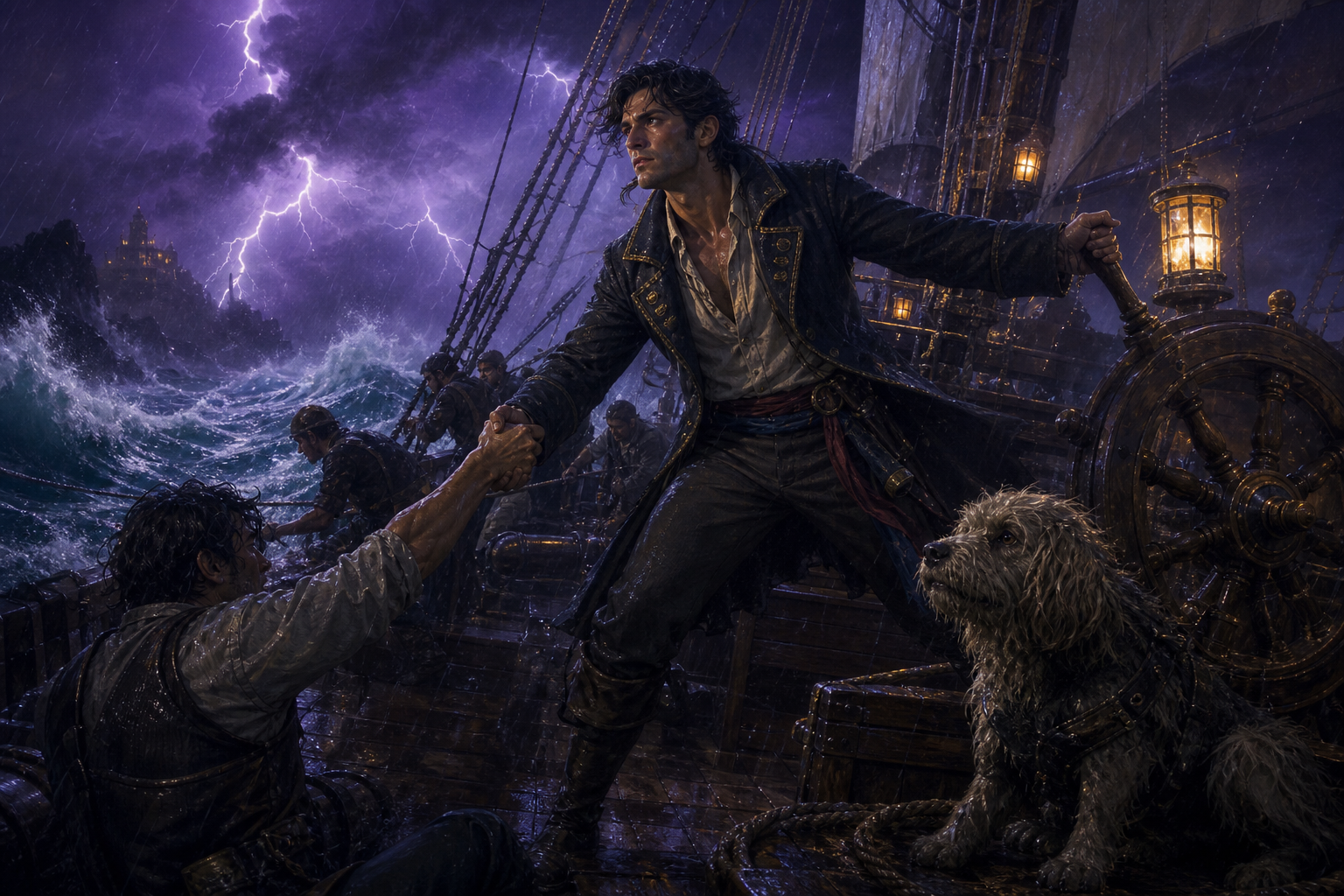
Eric is introduced aboard a ship among sailors rather than waiting in a ballroom. He participates in the voyage, handles Max, and responds during the storm. The sequence gives him a practical world of crew, navigation, danger, and responsibility.
That foundation matters because Ariel is drawn toward the human world before romance. Eric can embody that world without replacing it. He is most interesting as somebody who belongs to the sea from the opposite side and therefore has knowledge Ariel lacks.
The storm establishes courage and limits
Eric stays on the burning ship to rescue Max and nearly dies when the vessel breaks apart. The action proves bravery while making him dependent on a rescuer he does not understand.
Ariel saves his life without asking for reward. Eric wakes through fragments of sight and song. His later search begins in gratitude and fascination, but trauma leaves him with incomplete evidence.
Voice becomes evidence after trauma
Eric remembers the voice because Ariel sings while he is barely conscious. Sound becomes the clearest marker in a disoriented memory. His insistence on finding that voice is psychologically plausible even when it becomes narratively dangerous.
The mistake is treating one marker as conclusive identity. He can spend time with Ariel, enjoy her company, and still believe the rescuer must be somebody else because she cannot reproduce the remembered sound. Ursula understands that bias and weaponizes it.

Ariel arrives without speech or context
Eric finds a young woman who cannot explain her name, origin, family, or circumstances. He brings her into the palace, offers clothing and food, and includes her in daily life. The care is real. The power imbalance remains substantial.
She depends on his household for shelter and social translation while a magical deadline runs. Eric does not know the contract, her age, or the cost of failure. Their courtship therefore happens with radically unequal information.
Communication is more than spoken dialogue
Ariel expresses curiosity, humor, preference, fear, and affection through gesture and action. Eric responds to her rather than treating silence as absence. Their day together works because they build meaning from shared attention.
The film still uses the missing voice as a recognition obstacle, which exposes a contradiction. Eric can understand Ariel well enough to enjoy her company while failing to trust that embodied relationship over an auditory memory.

The town sequence gives the romance a world
The carriage ride, market, dancing, and ordinary public encounters let the pair share experience outside palace formality. Ariel learns human objects through participation. Eric sees familiar places become new through her reactions.
This is stronger romantic evidence than the wedding. Attraction grows through curiosity, laughter, risk, and mutual attention. The problem is not that they know nothing. It is that three days cannot carry the cultural and political weight the ending assigns to marriage.
Grimsby represents dynastic pressure
Grimsby encourages Eric to settle down and accept royal expectations. The prince’s search for the mysterious rescuer resists an arranged social timetable while creating another obsessive timetable of his own.
Marriage is not purely private for a prince. The court treats a bride as succession and stability. That context makes the sudden acceptance of Vanessa especially revealing, even with enchantment involved. The institution is ready to process a stranger into a wife.

Kiss the Girl is romantic and manipulative
Sebastian orchestrates music, animals, lighting, and atmosphere to produce a kiss before the deadline. Ariel knows the stakes. Eric does not. The scene can feel tender while still being an engineered intervention.
Consent to a kiss remains possible, but informed consent to the situation does not. Eric believes he is deciding whether to kiss a mysterious visitor. He does not know that her body and future depend on the act.
Flotsam and Jetsam sabotage his decision
The eels overturn the boat before the kiss, proving Ursula never intended to allow fair performance. Eric’s failure is not simply hesitation. External agents physically interrupt the moment.
The sabotage also shows how little agency the romance has inside the contract plot. Ariel and Eric are trying to know each other while older powers, royal authority and sea-witch surveillance, manipulate the available time.

Vanessa wears the voice Eric trusts
Ursula’s disguise carries Ariel’s stolen voice and uses magic to enchant Eric. The villain does not merely look like another woman. She controls the evidence he believes identifies his rescuer.
Eric becomes a victim of coercion and identity fraud. That does not erase the earlier problem of reducing recognition to voice. It shows exactly how a narrow standard of proof can be exploited when the proof becomes transferable.
The rushed wedding exposes the court
The kingdom prepares Eric’s marriage to Vanessa with extraordinary speed. Enchantment explains his behavior, but the surrounding court still accepts the abrupt decision and unfamiliar bride.
A political household eager for marriage can normalize what should trigger investigation. Where did she come from? Who is her family? Why now? The plot needs urgency, yet the urgency reveals institutional shallowness.
Max notices what people miss
Max recognizes Ariel’s scent and reacts against Vanessa. The dog becomes a counterpoint to Eric’s voice fixation. Recognition is multisensory, relational, and embodied.
The gag has a serious function. Eric’s rational certainty is less reliable than an animal’s accumulated contact. He has been taught to search for one sign while the person attached to every other sign remains beside him.
The shell breaks and knowledge changes
When Scuttle disrupts the wedding and the shell breaks, Ariel’s voice returns. Eric realizes Ariel is the rescuer and moves immediately toward her.
The revelation repairs false evidence but does not give the couple time to process the contract or cultural gap. Ursula takes Ariel before conversation can replace recognition. The climax begins with truth restored and relationship still unfinished.

Eric enters a war he barely understands
Eric follows into the sea conflict without a full political history of Triton, Ursula, the contract system, or Atlantica. He sees Ariel endangered and acts.
His courage is direct rather than informed. That makes him useful in the crisis and potentially dangerous as a future ruler. Cross-cultural alliance needs more than heroic instinct once the immediate villain is gone.
The ship becomes the final weapon
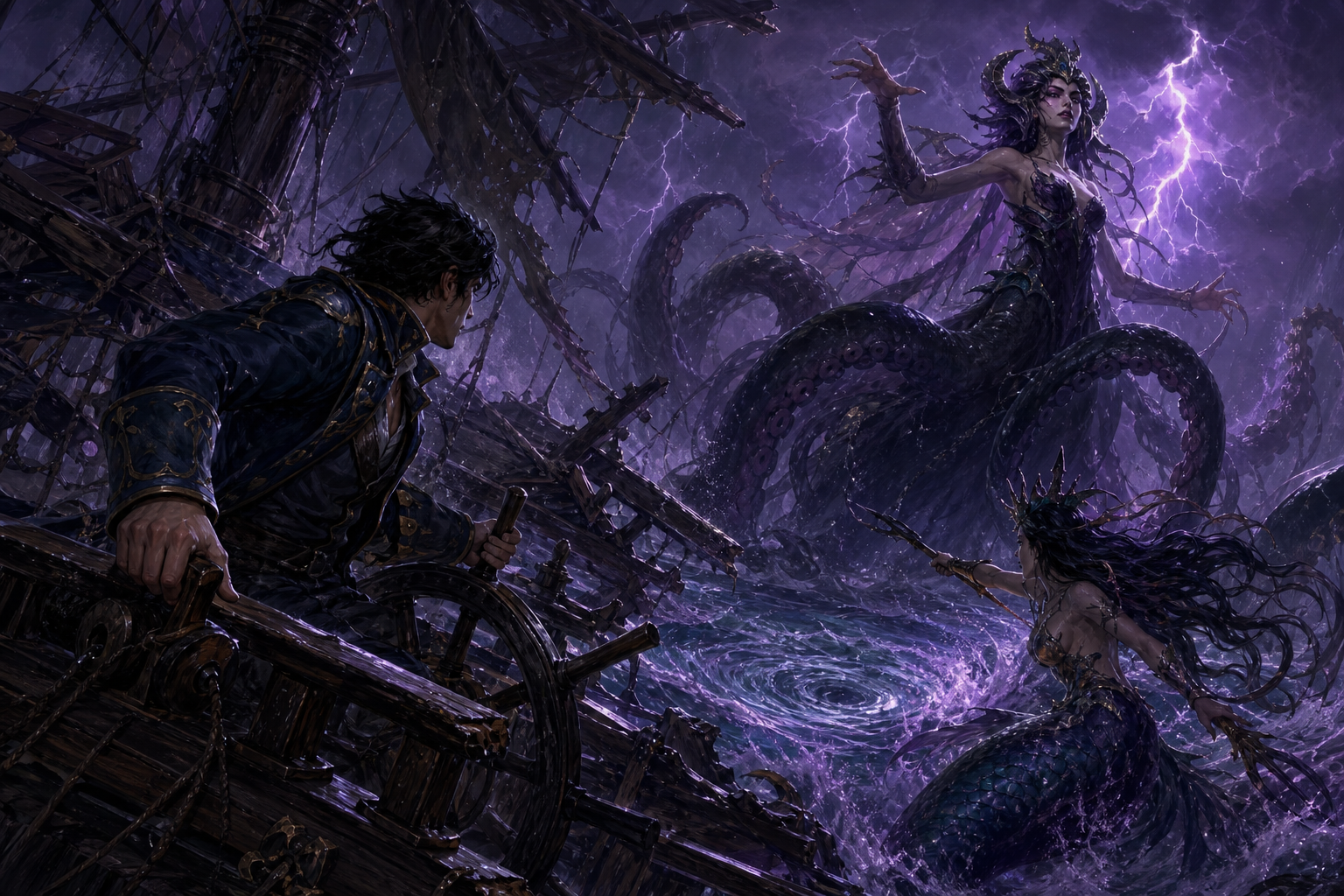
Eric uses the wrecked ship’s splintered bow to impale giant Ursula. The action combines maritime skill, observation, and willingness to drive into lethal danger.
Ariel contributes throughout the struggle, but the 1989 film gives the final blow to Eric. The staging restores the prince as physical rescuer after Ariel saved him at the beginning, creating symmetry while narrowing her final agency.

The wedding begins first contact
Eric marries a woman who was born into an underwater kingdom and whose father publicly attends the ceremony. The union is family celebration and diplomatic event at once.
A responsible future requires language exchange, maritime agreements, rescue protocols, and honest history. Love can motivate contact. It cannot substitute for policy between civilizations.
Return to the Sea makes him a parent
Eric and Ariel respond to Morgana’s threat by hiding Melody’s mermaid heritage and building a wall against the sea. He participates in the secrecy even though the ocean is central to his own identity and marriage.
The decision protects against one enemy while teaching the daughter that part of her family does not exist. Eric’s responsibility is not secondary. He is king of the human shore and co-author of the wall.

Melody repeats the search for a forbidden world
Melody’s curiosity mirrors Ariel’s from the opposite direction. Eric has enough history to recognize the pattern, yet the family maintains the ban until crisis exposes it.
Repair requires him to help dismantle the wall, tell the truth, and support a relationship with Atlantica. Parenthood tests whether the adventurous prince can tolerate his child having an adventure he cannot control.
Christopher Daniel Barnes gives the prince warmth
Christopher Daniel Barnes voices Eric with youthful steadiness, humor, and romantic openness. The performance avoids making him either a swaggering sailor or a blank royal reward.
Because Ariel cannot speak for much of their time together, Eric’s tone and reactions carry half the dialogue. He has to make pauses feel responsive rather than empty.
Sean Palmer and the stage role
Sean Palmer originated Eric on Broadway, where the expanded score gives the prince more interior material and makes his search audible in songs the film does not provide.
Stage Eric can articulate desire, duty, and uncertainty in real time. That expansion belongs to the musical’s interpretation rather than serving as missing canon for the animated film.
The 2023 Eric is explicitly an explorer
Jonah Hauer-King’s Eric collects objects, studies maps, and wants to travel beyond royal expectations. The adaptation gives him a curiosity that parallels Ariel’s archive and makes their bond more symmetrical.
His adoptive relationship with Queen Selina and conflict over dangerous voyages add family context. He is not only the destination of Ariel’s escape. He is also negotiating a home that restricts his contact with the wider world.
Wild Uncharted Waters gives him an interior voice
The 2023 song lets Eric express obsession, gratitude, confusion, and attraction through his own musical language. In 1989, the prince does not receive a comparable solo.
Giving him a song changes narrative balance. The audience hears how the remembered voice operates inside him instead of only watching the search from outside.
The 2023 climax redistributes agency
The live-action adaptation lets Ariel steer the ship into Ursula, shifting the final physical defeat away from Eric. He still participates in survival and alliance without owning the decisive act.
That change answers a long-standing criticism while altering the rescue symmetry of the animated film. Adaptation analysis should name both effects rather than calling the revision automatically better.
Final character receipt
Eric is not deep because later adaptations hand him more hobbies. The 1989 film already gives him courage, maritime competence, affection, vulnerability, and a dangerous dependence on incomplete evidence.
His strongest future is as Ariel’s partner in cultural translation, not the human reward at the end of her transformation. He has to learn the sea’s politics, repair the secrecy imposed on Melody, and help build a world where recognizing one voice becomes the start of listening rather than the end.
A prince aboard ship still benefits from everybody else’s labor
Eric is more active than the decorative princes who wait at the end of older fairy tales, but the ship does not run on his courage alone. Sailors rig canvas, handle lines, navigate, cook, maintain wood, manage cargo, and respond to disaster. The prince can take the helm because a crew has built the conditions in which one heroic action becomes possible.
The storm sequence briefly lets us see that collective labor. Men pull one another through fire and water while Eric rescues Max. The story then narrows the wreck into his personal near-death experience. A fuller political biography would ask who else died, how families were compensated, and what responsibility a royal voyage carries when the weather turns lethal.
The 2023 explorer version makes travel central to Eric’s identity, which raises the same question at larger scale. Exploration is not an individual hobby when ships require crews and enter other people’s waters. Curiosity can produce knowledge, trade, extraction, or conquest depending on the system behind it.
Trauma memory explains the voice without excusing fixation
Eric experiences fire, drowning, impact, and near unconsciousness before Ariel reaches him. Memory formed inside that state would reasonably be fragmented. The voice arrives as he regains awareness and may become the one sensory detail his mind can organize. His search is therefore not ridiculous. It is a trauma narrative shaped like romance.
The problem begins when the fragment becomes a total standard of proof. Eric encounters Ariel’s attention, manner, dog connection, unfamiliarity with the kingdom, and immediate emotional pull. Those details should complicate the belief that only the singer can be his rescuer. Instead, he treats the remembered voice as the fact that overrules the person he is getting to know.
Ursula’s disguise works because she does not need to manufacture a complete identity. She only needs to possess the credential Eric has privileged. The enchantment intensifies control, but the stolen voice is already a forged document accepted by the intended recipient.
Communication with Ariel requires ethical patience
Ariel arrives unable to use spoken language and without a known support network. Eric’s household has enormous power to decide whether she is a guest, patient, curiosity, or potential bride. Ethical care would prioritize safety, consent, interpreters, medical attention, and time before romance. The film compresses these needs into hospitality because the deadline is running.
Eric does several things well. He does not ridicule her silence, includes her in activity, responds to gesture, and allows joy to develop without demanding an explanation she cannot give. His attraction appears tied to personality rather than only beauty. The relationship is more reciprocal than the popular summary suggests.
It remains limited by what he does not ask or cannot understand. Ariel cannot explain that she is sixteen, that a sea witch owns her voice, or that failure means permanent captivity. Eric is consenting to courtship without access to the stakes. Ariel is participating while unable to correct the false premise governing his search.
Enchantment violates Eric, not only Ariel
Vanessa’s spell removes Eric’s ability to choose whom he recognizes and marries. He is commonly discussed as gullible, but the film presents supernatural coercion layered onto identity fraud. Ursula uses Ariel’s voice, a disguised body, and magic to direct his intimate and political decisions.
That matters because princes are not immune to victimization. Eric’s social power remains real, yet Ursula can still override his agency. The rapid wedding would bind him publicly and perhaps legally to a stranger while he is incapable of informed consent. The kingdom treats the enchanted decision as legitimate because royal desire is assumed to authorize procedure.
A post-crisis story should give Eric space to process that violation. He learns that his memory was stolen, his body and judgment were manipulated, and his court nearly formalized the result. The 1989 ending moves directly to the corrected bride without acknowledging the trauma of becoming a tool in somebody else’s coup.
The court wants a marriage more than it wants knowledge
Grimsby’s pressure is affectionate, but it represents dynastic demand. The prince should find a bride, stabilize succession, and satisfy public expectation. That background helps explain why a palace can mobilize for Vanessa so quickly. The institution already has a template waiting for any acceptable woman Eric names.
Ariel also enters that template with almost no scrutiny after the villain is defeated. She is the daughter of a sovereign, which could make the match politically valuable, but the human court has no established knowledge of Atlantica. The wedding resolves romance while skipping negotiation over religion, inheritance, citizenship, language, and succession.
The speed is fairy-tale logic. An editorial profile still has to name what fairy-tale logic hides. Eric’s private affection affects an entire kingdom. His maturation should include learning to slow institutional machinery when enchantment, migration, and first contact have made certainty impossible.
The final blow carries a long gender argument
Eric steering the wreck into Ursula gives him an unmistakable heroic action. It repays the opening rescue, proves he can operate under maritime danger, and lets human technology defeat stolen sea power. The image is effective because every element established earlier returns at once: ship, storm, sailor, sea witch, and the woman who first pulled him from the water.
It also places the decisive kill in the prince’s hands after Ariel has driven the story. Critics reasonably ask why the heroine loses the final physical act. Defenders reasonably note that she has already rescued Eric, resisted Ursula, recovered her voice, and fights throughout the climax. Both readings describe real formal choices.
The 2023 reversal lets Ariel steer the ship, restoring the final action to her while removing Eric’s rescue symmetry. That is not a simple upgrade. It changes what the romance says about mutual rescue. The strongest adaptation would preserve both characters’ agency without making one stand still so the other can become heroic.
Eric co-authors the wall around Melody
The sequel can make Ariel’s fear feel more central because the sea is her origin and Morgana targets her family. Eric still holds political authority on land and helps maintain the wall. He is not the passive spouse of somebody else’s trauma. The architecture protects his kingdom while hiding his daughter’s ancestry.
That decision contradicts the curiosity the franchise associates with him. A sailor who crossed dangerous waters now tells a child the water itself must remain outside family knowledge. He may believe the wall is temporary or necessary. Melody experiences it as a missing part of herself and seeks answers without adult guidance.
Repair requires Eric to explain his role, not merely support Ariel after the truth emerges. He can help create safe routes to Atlantica, train guards against specific threats instead of banning a civilization, and make sure the next royal child receives history before secrecy turns curiosity into vulnerability.
Sea and shore need governance after the kiss
Eric’s kingdom relies on ships. Atlantica is affected by every anchor, net, wreck, oil barrel, and trade route. Once the rulers know each other exists, maritime policy becomes shared policy. Rescue at sea alone gives them reason to establish communication and responsibility.
Ariel can translate culture and Eric can translate institutions, but neither should carry the work alone. Merfolk scholars, human sailors, fishers, healers, musicians, and legal advisers need seats at the table. The same communities Ursula and Triton treated as subjects should participate in defining contact.
This future gives Eric a character arc larger than marriage. He begins by chasing a voice he cannot locate. He matures by learning to listen across bodies, languages, and political interests. Romance opens the door. Leadership is what he does with the doorway.
The 2023 parallel curiosity strengthens and complicates the romance
Giving Eric a collection of travel objects mirrors Ariel’s grotto. Both characters study worlds their parental authorities consider dangerous. The parallel makes attraction intellectual and political, not only physical. Each recognizes in the other a hunger that home has tried to regulate.
The symmetry can become too tidy if it erases their unequal risks. Eric explores with ships, crews, a palace, and human citizenship behind him. Ariel crosses through an exploitative contract, loses her voice, changes her body, and risks captivity. Shared curiosity does not mean identical power.
The adaptation is strongest when it lets the similarity produce conversation rather than equivalence. Eric can understand restriction without claiming he understands Ariel’s migration. He can offer maps while learning that his maps omit an entire civilization beneath the routes he sails.
Max is a relationship witness, not a furry accessory
Max connects Eric’s life before the wreck to Ariel’s arrival afterward. The dog is present on the ship, survives the disaster, recognizes Ariel, enjoys her company, and distrusts Vanessa. His responses create a continuous line through memories Eric experiences only in fragments.
That makes Max more than comic instinct. He has accumulated sensory evidence through contact and behaves consistently toward the person who rescued his human. Eric privileges a disembodied voice. Max responds to the whole embodied relationship. The contrast does not make animals magically infallible. It shows how certainty narrows when somebody decides only one kind of evidence counts.
In the sequel, an older Max also carries domestic continuity into Eric and Ariel’s family life. He belongs to ship, palace, marriage, and parenthood. The character quietly records how quickly a three-day crisis becomes decades of shared history, including the wall the adults build and eventually have to remove.
The palace also owes Max a safer retirement than the franchise usually discusses. He survives a burning ship, another storm, magical conflict, and years beside a dangerous seawall. Care for the dog reflects whether Eric’s household values loyal labor after the adventure ends, not only while the animal can identify the correct heroine or provide a joke.
Keep exploring The Little Mermaid
Return to The Little Mermaid hub for film branches, reviews, Reacts, rants, lore, guides, and the full character directory.