
Frozen Character Profile · Duke of Weselton · Trade Opportunist · Fear with Armed Guards
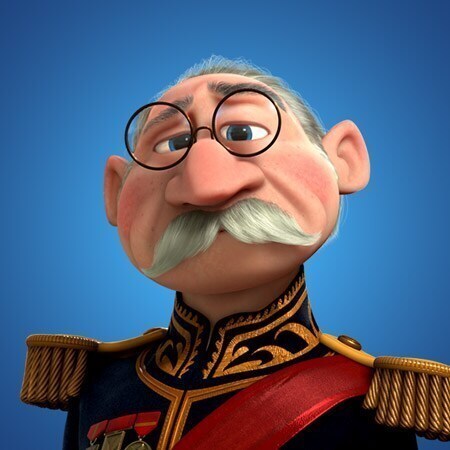
The Duke of Weselton
Trade, dancing, monster rhetoric, attempted regicide, sanctions, and why comic cowardice remains politically dangerous.
Profile
| Name | Not stated; known as the Duke of Weselton |
|---|---|
| Realm | Weselton |
| Role | Duke, foreign dignitary, and trade representative |
| English voice | Alan Tudyk |
| First appearance | Frozen (2013) |
| Primary interest | Trade access to Arendelle |
| Major crime | Ordering his guards to kill Queen Elsa |
| Consequence | Expulsion and termination of Arendelle-Weselton trade |
Bottom line first
The Duke of Weselton arrives as a social joke and becomes a political danger the instant fear offers him leverage. He wants access to Arendelle’s trade, dances at a young queen who clearly does not want him, treats magic as evidence of monstrosity, and sends armed men into the mountains under language that leaves murder available as an outcome.
His cowardice is not harmless. He turns uncertainty into public accusation, converts commercial interest into intervention, and orders Elsa killed while claiming concern for the kingdom. Hans performs intimacy to seize power. The Duke performs respectability while pushing violence from the edge of the room.
Profile and identity
The Duke of Weselton is a foreign noble and trade representative attending Elsa’s coronation. Alan Tudyk voices him in English. He arrives with two guards, pursues commercial access to Arendelle, dances with Elsa, reacts to the revelation of her magic, joins the effort to retrieve Anna, and later orders his men to kill Elsa.
The feature never gives his personal name, age, spouse, children, route to the dukedom, or detailed authority inside Weselton. “The Duke of Weselton” is a title and place-based identifier. The recurring joke mispronounces Weselton as Weaseltown, but the official realm remains Weselton.
Dashboard: confirmed and unknown
Confirmed: he represents Weselton, values trade, has two armed guards, behaves intrusively toward Elsa, calls her a monster after the magic reveal, supports the North Mountain expedition, tells his men to eliminate her if possible, survives the crisis, and loses trade relations with Arendelle afterward.
Unknown: whether his government authorized lethal force, whether he personally owns trade companies, how Weselton responds to the broken relationship, and whether he holds military command beyond his guards. The film shows influence and intent without supplying a constitutional chart.

The coronation as a trade opportunity
Arendelle’s gates open after years of isolation, and foreign dignitaries arrive to witness Elsa’s coronation. The Duke treats the event as access to a previously closed market. His early comments focus on what Weselton can gain from trade rather than curiosity about the kingdom’s people.
Commercial interest is not automatically villainous. Kingdoms need exchange. The problem is entitlement. He speaks as though Arendelle’s reopening exists for outsiders to exploit before the new queen has announced policy or established trust.
The dancing intrusion
The Duke asks Elsa to dance and continues with exaggerated physical performance despite her discomfort. The scene uses his small frame, age, speed, and self-confidence for comedy. Elsa remains polite because coronation etiquette traps her inside the obligation to accommodate a guest.
The joke also reveals power. A visiting man assumes access to a young woman’s body and time because social rules make refusal costly. Elsa’s discomfort does not become important to him until her magic makes her dangerous. Before that, her boundaries are merely obstacles to his performance.
Age, body, and comic framing
The Duke’s thin legs, short stature, pronounced features, and frantic dancing are designed for visual comedy. Animation exaggerates his body before the script exposes his politics. That approach risks implying that physical oddity signals moral deficiency.
His actual wrongdoing does not depend on appearance. He is dangerous because of choices, rhetoric, guards, title, and commercial influence. A responsible profile can discuss the visual gag without allowing body difference or age to become an explanation for villainy.

Trade language and extraction
He speaks about “exploiting” Arendelle’s riches, a word that exposes the appetite beneath diplomatic enthusiasm. The line is comic because he says the quiet part loudly, but it establishes that trade is imagined as access to resources rather than reciprocal relationship.
Arendelle’s closed years create information imbalance. Foreign merchants know opportunity exists but not the kingdom’s internal vulnerability. The Duke sees isolation as a market opening, then treats the magical crisis as permission to influence succession and security.
When Elsa’s glove comes off
Anna’s engagement argument leads Elsa to lose control, revealing ice magic before the court. The Duke immediately interprets the event through danger. He does not ask what happened, whether anyone is injured, or why the queen appears terrified. “Monster” arrives faster than evidence.
His reaction helps fulfill Grand Pabbie’s vision of fear surrounding Elsa. The magic is capable of harm, but the first public response converts a frightened person into a category. Once she is monster rather than queen, violence can be framed as defense.
The word monster as political technology
Calling Elsa a monster does more than insult her. It strips legal and moral standing from the ruler of another kingdom. A monster does not require negotiation, due process, or consent. It can be hunted, contained, or killed for the safety of people defined as normal.
The Duke uses the term while Arendelle is leaderless and confused. Repetition can move a crowd from uncertainty toward permission. His fear may be genuine, but genuine fear still becomes propaganda when a titled outsider directs it at public action.

Fear and opportunism together
The Duke visibly fears Elsa’s power. He also recognizes an opportunity to shape events. Those motives are not mutually exclusive. People often exploit what they sincerely fear because fear supplies moral cover for actions that also increase influence.
Reducing him to a calculating fraud would miss the psychology. Reducing him to a panicked old man would miss the politics. He believes danger and chooses the response most useful to his interests.
Relationship file: Elsa
He first treats Elsa as a commercial gateway and social target, then as a magical threat who should be destroyed. At no point does he engage her as a person balancing grief, rule, secrecy, and fear. His categories shift from queen to monster according to usefulness.
Elsa’s later decision to end trade with Weselton is therefore more than a revenge joke. A foreign dignitary abused hospitality, encouraged panic, and attempted regicide. Continued commerce without accountability would tell every future envoy that Arendelle’s sovereignty is negotiable during crisis.
Relationship file: Anna
Anna initially encounters the Duke within coronation festivities, then later leaves Hans in charge while she searches for Elsa. The Duke remains among the dignitaries and accepts the temporary authority structure created by Anna’s departure.
He does not share Anna’s belief that Elsa can be reached through relationship. His political instinct is containment. The sisters’ love eventually resolves the crisis he wants solved through force, exposing how little he understands the person at its center.

Relationship file: Hans
Hans and the Duke appear to oppose each other socially, but the crisis aligns them around foreign influence inside Arendelle. Hans presents himself as responsible acting authority, while the Duke supplies accusation, guards, and pressure. Each benefits from the kingdom’s uncertainty in a different way.
Hans later restrains the guards from killing Elsa immediately because he needs control of the narrative and throne. That does not make him morally better. It shows the distinction between the Duke’s blunt elimination strategy and Hans’s calculated timing.
The North Mountain expedition
When Anna fails to return quickly and the winter worsens, Hans leads an expedition to find her and Elsa. The Duke sends his two guards. Publicly, the mission can be described as rescue and crisis response. Privately, he gives them a lethal instruction.
The dual purpose matters. Political violence often travels inside legitimate operations. A search party provides access to the target, public approval, and plausible explanation. The hidden order determines what happens when the guards reach the palace.
“If you should encounter the queen”
The Duke instructs his men to put an end to the winter, and when pressed, makes clear that Elsa’s death is acceptable or desired. The wording avoids a clean ceremonial execution order while communicating intent. His guards understand they are authorized to kill.
That ambiguity protects the superior. If they succeed, the threat is gone. If they fail or face consequences, he can point toward crisis language rather than signed assassination. Respectability survives by outsourcing the clearest act.

The guards at the ice palace
The two guards attack Elsa inside her palace. One fires a crossbow while the other uses a sword. Elsa defends herself with escalating force and nearly kills them before Hans intervenes. The sequence visually confirms that the Duke’s rhetoric produces real lethal danger.
Elsa’s defensive violence then becomes additional evidence for people already calling her monstrous. This is the trap of dehumanization: provoke survival, isolate the reaction from the attack, and present the response as proof that the original label was correct.
Did Hans save Elsa
Hans redirects the crossbow shot, causing it to strike the chandelier rather than Elsa. In the moment, he prevents immediate execution. He later intends to kill her himself after securing a story that makes the act politically useful.
The Duke and Hans therefore represent different speeds of the same danger. One wants the feared body removed. The other wants removal narrated as heroic necessity. Neither recognizes Elsa’s right to live beyond what her survival can do for his position.
Attempted regicide and diplomatic status
Ordering guards to kill a reigning foreign monarch would be an extraordinary breach of sovereignty, especially by a coronation guest. The magical emergency does not erase the political fact. The Duke acts without trial, formal declaration, or clear authorization from Arendelle’s legitimate government.
His title and foreign status make the act more serious, not less. He is not a frightened civilian improvising self-defense. He deploys armed retainers under diplomatic cover and expects the kingdom’s chaos to protect him.

The council after Anna returns
As Anna freezes and Hans claims she died after marrying him, the gathered dignitaries accept his account quickly enough for him to announce treason and death against Elsa. The Duke’s prior monster rhetoric helps create the environment where the story sounds plausible.
He does not need to author Hans’s lie to support its conditions. Public fear has already narrowed the range of interpretations. Elsa is framed as unnatural danger, so a convenient accusation of murder fits the category built around her.
Cowardice with institutional reach
The Duke panics, hides, postures, and relies on guards. Those traits make him look weak beside Elsa’s power or Kristoff’s physical competence. Yet cowardice does not cancel influence. A frightened person with title, money, armed men, and diplomatic access can harm people far beyond his own courage.
Comedy often reassures audiences that villains like him are too ridiculous to matter. The plot says otherwise. His guards nearly kill the queen. His language helps normalize lethal action. Ridiculous men can still hold serious power.
The mispronounced realm gag
Characters repeatedly call Weselton “Weaseltown,” irritating the Duke. The joke links his behavior to a weasel stereotype and punctures aristocratic self-importance. Elsa later uses the wrong name while ending trade, making insult part of the sanction.
The gag is memorable but should not replace the political record. Weselton is a fictional trading partner, not simply a funny word. Ending relations affects merchants, workers, supply routes, and citizens who did not personally order the assassination.

Trade sanctions after the thaw
Elsa orders that Arendelle will no longer conduct business with Weselton. The decision responds to the Duke’s exploitation, fear campaign, and attempted killing. It restores a boundary after foreign access was abused during the kingdom’s first public reopening.
Sanctions also distribute consequence beyond the official responsible. The film treats the announcement as satisfying comic justice and does not explore economic fallout. A deeper political reading can support accountability while asking whether targeted removal of the Duke would protect ordinary traders better than total commercial rupture.
Diplomatic immunity is not impunity
The film sends the Duke home rather than showing imprisonment or trial. That outcome may reflect foreign status, family-film pacing, political negotiation, or simple comic closure. It does not make the assassination order a minor etiquette breach.
Arendelle would need records, witness testimony, and terms for future contact. A ruler who opens the gates after isolation cannot build safe diplomacy by treating armed interference as a joke once the villain exits the dock.
Relationship to Weselton’s people
The Duke speaks for Weselton in Arendelle, but the film never shows his subjects or governing institutions. His behavior therefore risks becoming the entire identity of a place the audience never visits. The trade break reinforces that compression.
A future story could separate one aristocrat from merchants, sailors, workers, and officials affected by his choices. Accountability becomes more precise when a country is not reduced to the worst person holding its title.

The outsider who names the insider a threat
Elsa is Arendelle’s queen, born and raised in the castle, yet a visiting dignitary quickly claims authority to define her as danger to her own people. His confidence depends on the assumption that recognizable normality grants more legitimacy than local belonging.
The dynamic resembles scapegoating patterns in which outsiders or minorities are treated as foreign even inside their home. Elsa’s magic makes the category literal fantasy, but the social move remains familiar: difference cancels citizenship when fear finds a microphone.
Security language and the disappearing person
Once the Duke calls Elsa a security problem, her fear, history, and right to explain become irrelevant to the proposed solution. The winter must end, therefore the person associated with it can be eliminated. Political language turns a living queen into an obstacle inside an emergency plan.
That shortcut should feel familiar. Institutions often describe removal as neutral management when the target belongs to a stigmatized group. The Duke does not say he hates a frightened young woman. He says the kingdom needs protection. The softer vocabulary makes the lethal conclusion easier for respectable people to repeat.
Magic, disability, and otherness readings
Viewers often read Elsa’s concealed power through disability, illness, queerness, neurodivergence, or other stigmatized difference. The Duke embodies the public figure who responds to disclosure by demanding removal rather than accommodation, knowledge, or care.
No single real-world identity maps perfectly onto ice magic. The value lies in pattern: visible difference becomes danger, uncontrolled symptom becomes moral proof, and the person loses the right to describe her own experience. His rhetoric makes that process explicit.

Alan Tudyk’s performance
Alan Tudyk gives the Duke nasal urgency, vanity, offended precision, and an ability to make cowardice sound like public duty. The performance shifts from fussy comedy to fearmongering without introducing a new voice. The same insecurity drives both registers.
That continuity keeps the villain readable. His social need to control the room during dancing becomes political need to control the story after magic appears. Humor and danger grow from one character rather than occupying separate halves.
Design and movement
The Duke’s narrow silhouette, prominent features, tiny feet, formal costume, and rapid movement distinguish him immediately among stately coronation guests. Animation turns every dance step and recoil into social overcompensation. He occupies space through motion because his body does not command it automatically.
The design can lean toward physiognomic villain coding if appearance is mistaken for cause. His morality must remain attached to conduct: coercion, dehumanizing speech, armed orders, and opportunism. The body carries animation, not guilt.
Why he is not the main villain
The Duke behaves suspiciously enough to attract attention, making Hans’s apparent goodness easier to accept. He functions as a visible decoy: the unpleasant foreign noble audiences expect to betray the kingdom while the handsome prince performs support.
He still commits villainous acts. “Not the twist villain” does not mean harmless red herring. The story uses multiple forms of threat around Elsa: open fear from the Duke, intimate manipulation from Hans, and internalized fear from years of isolation.
Comic villain versus systemic villain
The Duke receives a humiliating name gag and swift expulsion, suggesting the system can restore order once everyone recognizes his behavior. Runeard represents the deeper historical system whose dam and lie survive him. Hans represents succession capture from inside apparent romance.
The Duke sits between them. His personal removal is easy, but the crowd’s willingness to accept monster rhetoric reveals a social vulnerability Arendelle must address. Sending one man away does not teach citizens how to respond to future difference without panic.
The crowd and shared responsibility
Foreign guests and Arendellian citizens recoil when Elsa’s power erupts. The Duke gives that fear aggressive language, but he does not invent every frightened reaction. The kingdom’s long secrecy ensures nobody has context, vocabulary, or trust ready for the revelation.
Responsibility therefore operates at several levels. Elsa causes dangerous weather unintentionally. Her parents built concealment. The court panics. The Duke weaponizes panic. Hans exploits the vacuum. Naming one villain should not erase the system that makes his message effective.
What the film gets right
The film shows how a silly, physically unimpressive man can become dangerous through title, guards, commerce, and rhetoric. It lets fear and opportunism coexist, then gives his order concrete consequence at the ice palace. Comedy never fully erases culpability.
It also distinguishes blunt prejudice from Hans’s polished manipulation. Elsa faces people who fear what they see and people who pretend not to fear so they can use her. Both forms of danger matter.

What the film leaves unfinished
The Duke receives no trial, no confrontation with Elsa after the thaw, no response from Weselton, and no examination of the guards’ responsibility. Trade ends, the name gag lands, and the political problem exits with him.
A fuller aftermath would ask who authorized the expedition, what evidence survives, whether the guards testify, and how Arendelle reopens safely without turning justified caution into renewed isolation. Diplomacy needs structure after trust fails.
Stage adaptation and character translation
The Broadway adaptation expands songs, dialogue, and political staging while translating animation’s body comedy into live performance. The Duke’s function may shift in emphasis, but the trade interest, public fear, and comic self-importance remain recognizable anchors.
Stage material belongs to its own branch. A line added for theater can illuminate adaptation choices without becoming dialogue spoken in the animated feature. Comparing versions should make differences visible rather than smoothing them away.
Later franchise echoes
The Duke’s most durable franchise legacy is Weselton, Weaseltown, the dance, and the archetype of a visiting dignitary whose fear becomes aggression. Later specials may reference the world around him without giving a substantial personal continuation.
Absence can itself be political. Elsa’s sanction removes him from Arendelle’s circle. A profile should not invent ongoing access simply because familiar villains are marketable. Consequence means he no longer belongs in every celebration.

What Wikipedia has that this page must exceed
The encyclopedic floor includes his title, Weselton trade interest, coronation behavior, fear of Elsa, monster accusation, expedition guards, kill order, Alan Tudyk credit, and termination of trade. Those facts establish the complete screen arc.
CVM Sekai adds diplomatic power, crisis opportunism, assassination ambiguity, body coding, monster rhetoric, sanctions, crowd responsibility, otherness readings, adaptation boundaries, and the difference between comic cowardice and institutional reach.
Future file
If Weselton returns, the story should not restore the Duke as a harmless recurring joke. He can face removal, denial, propaganda at home, or a negotiated accountability process. Arendelle can distinguish citizens and traders from the official who abused diplomatic access.
Elsa also deserves to confront the language used against her. Forgiveness is optional. Clarity is not. A ruler who survived attempted assassination should define the terms under which foreign power reenters her kingdom.
Artwork responsibility
The featured artwork is original CVM Sekai fan art built for a wide hero and directory crop. It presents an elderly trade aristocrat with papers and controlled menace in an icy palace, using purple-black site colors without copying the official animated model.
Local metadata records generation source, alt text, rights note, and lack of Disney endorsement. The same attachment serves featured image, hero, and future directory card, keeping the profile visually consistent across surfaces.
Sources and certainty
Primary evidence includes Frozen, published credits, official Disney material, and documented stage adaptation sources. Exact actions at the coronation, expedition, ice palace, council, and ending supply the factual floor.
Political, disability, queer-adjacent otherness, body, and rhetoric analysis is interpretation grounded in those actions. The profile does not assign powers to the Duke beyond what the title, guards, and film demonstrate or pretend Weselton’s constitution is known.
The final read
The Duke of Weselton is funny because he overestimates his charm and frightening because he overestimates his right to decide who belongs. He arrives for trade, discovers difference, and converts fear into an assassination order without ever surrendering the pose of respectable concern.
Elsa sends him home and closes the market. The satisfying joke should not hide the lesson. Ridiculous men can carry weapons through other people, make prejudice sound procedural, and leave ordinary crowds believing violence is protection. That is why the Duke earns more than a dance GIF.
Frozen coverage
Return to the Frozen hub for every character, review, React, rant, and guide.