
Frozen Character Profile · Troll Elder · Memory Healer · The Warning Everybody Misremembered
Grand Pabbie
Memory magic, true love, fear, parental choices, ethical limits, and the follow-up appointment that never happened.
Profile
| Name | Grand Pabbie |
|---|---|
| People | Rock trolls |
| Home | Valley of the Living Rock |
| Role | Elder leader, healer, and magical adviser |
| English voice | Ciarán Hinds |
| First appearance | Frozen (2013) |
| Known magic | Memory alteration, magical diagnosis, healing intervention, visual projection |
| Central warning | Fear will be Elsa’s enemy |
Bottom line first
Grand Pabbie is the character everyone remembers giving the warning, then half the fandom remembers giving the parenting plan. He does not tell Agnarr and Iduna to lock the gates, reduce the staff, separate the sisters, or teach Elsa that her body is a threat. He removes Anna’s knowledge of magic, shows that fear can become the enemy, and says Elsa must learn control.
That distinction does not make his intervention perfect. He alters a child’s memory without her informed consent, communicates through frightening imagery, and never appears to check what the adults do with his warning. His wisdom is real, his magic is powerful, and his limited follow-through leaves room for a family to turn caution into fourteen years of harm.
Profile and identity
Grand Pabbie is the elder leader of the rock trolls living in the Valley of the Living Rock. Ciarán Hinds voices him in English in both feature films. He heals Anna twice, removes selected memories of Elsa’s magic, offers warnings about fear, recognizes Kristoff as part of the troll family, and helps explain Arendelle’s elemental crisis in the sequel.
The films do not state his age, biological relatives, origin, exact title procedure, or full magical limits. “Grand Pabbie” functions as the credited name and elder designation. He should not be confused with Bulda, Cliff, or the troll chorus that energetically interferes with Kristoff’s love life.
Dashboard: confirmed and unknown
Confirmed: he can manipulate memories, create visual projections, diagnose magical injury, remove dangerous ice from Anna’s head, identify a frozen heart as harder to heal, warn that fear is dangerous, and perceive that Arendelle’s evacuation follows disruption of the natural order. He is treated as an authority by the troll community.
Unknown: whether he can restore every removed memory, cure Elsa’s powers, foresee exact futures, revive the dead, enter Ahtohallan, control elemental spirits, or know every consequence of his advice. The movies show formidable but bounded intervention. They do not grant omniscience.

The night Anna is injured
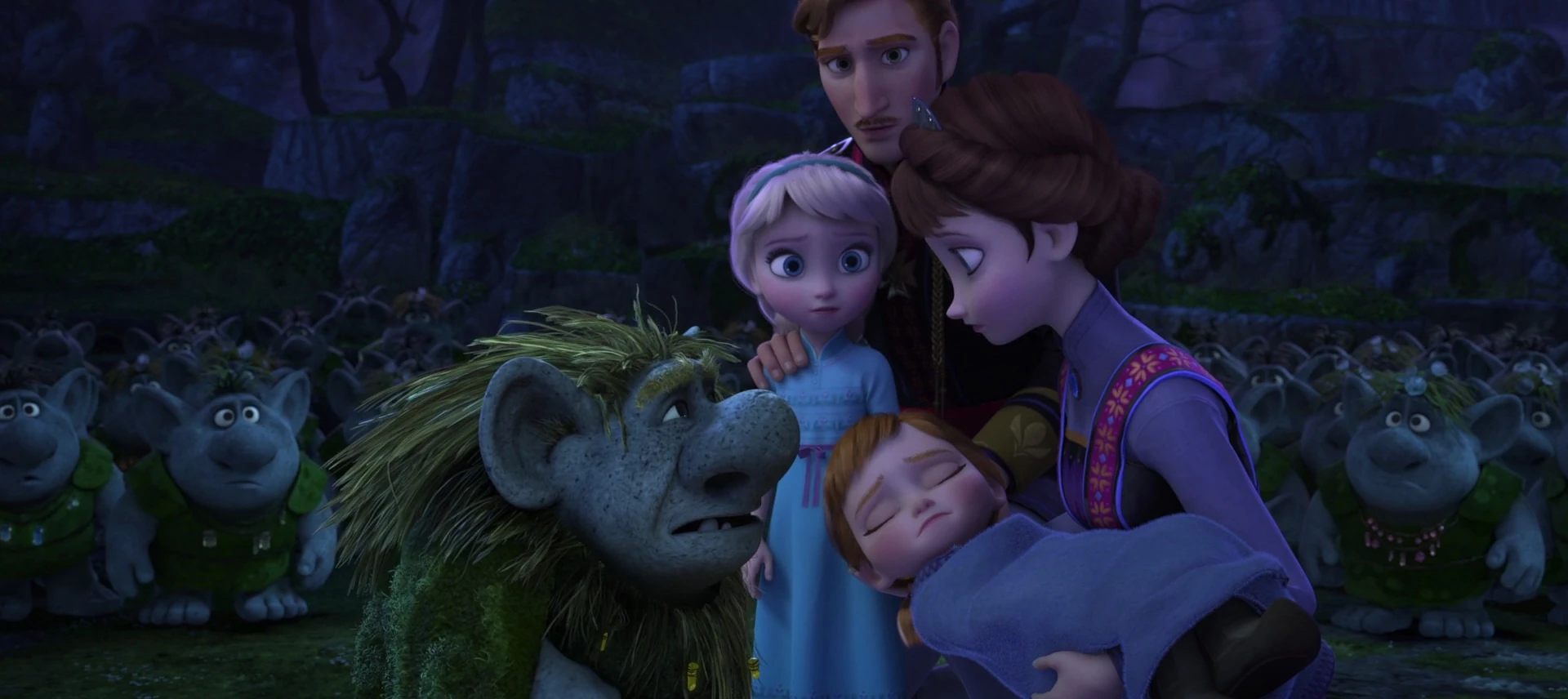
Young Elsa accidentally strikes Anna in the head with ice while the sisters play. Agnarr and Iduna carry the unconscious child to the trolls after consulting an old map. Grand Pabbie examines the injury and removes the magic before it can cause permanent harm. His immediate medical action saves her.
The scene begins in emergency, not counseling. Everyone is frightened, Anna cannot participate, and Elsa believes she may have killed her sister. What follows will shape a family for years, but the first task is preventing injury from becoming death or irreversible damage.
Head versus heart
Grand Pabbie explains that an ice strike to the head is fortunate because the head can be persuaded, while the heart is harder to change. The distinction establishes the first film’s magical logic and foreshadows Anna’s later frozen heart. Healing depends not only on removal of ice but on the location and meaning of the wound.
The line is fairy-tale reasoning rather than anatomy. It works symbolically: memory can be edited, but love, fear, sacrifice, and emotional injury require action. The sequel does not turn the rule into a comprehensive medical system, so profiles should avoid inventing diagnostic categories beyond what the scenes support.
Removing the magic from Anna’s memories
Grand Pabbie alters Anna’s memories so she retains the fun she shared with Elsa but forgets Elsa’s magical power. His projection changes visible magical moments into ordinary winter play. The intervention protects Elsa’s secret and reduces the chance that Anna will recreate the dangerous game without understanding the risk.
It also removes Anna’s ability to understand why her sister suddenly rejects her. She wakes with affection intact and context missing. The result is years of unanswered knocking, self-blame, and loneliness. Emergency benefit and long-term cost can both be true.
Consent in an emergency
Anna is unconscious and a young child, so informed consent is impossible in the moment. Her parents authorize treatment, and the magical injury presents immediate danger. That context distinguishes the act from casual mind control, but it does not erase the ethical seriousness of changing autobiographical memory.
The film never shows a later plan to explain the truth safely, ask Anna how she feels about the alteration, or restore what was removed. Grand Pabbie’s power creates an obligation the adults do not fulfill. Secrecy becomes permanent because nobody builds the next step.
What he actually tells Elsa
Grand Pabbie says Elsa was born with her power, that it is beautiful, that it can also be dangerous, and that she must learn to control it. He does not call her cursed, evil, or broken. His magical vision shows both wonder and a crowd turning against her through fear.
The warning contains two subjects: Elsa’s control and other people’s fear. Agnarr hears danger and responds by controlling exposure. Elsa hears fear and internalizes the idea that discovery will hurt everyone. The words are not the same as the conclusions drawn from them.
Fear will be your enemy
The sentence is sometimes interpreted as Grand Pabbie predicting that Elsa’s fear alone will create disaster. His vision also includes frightened outsiders attacking or surrounding her. Fear operates inside Elsa and around her. The enemy is an emotional and social system, not one child’s failure to stay calm.
That broader reading matches the film. Elsa’s powers intensify under panic, while the kingdom’s fear turns misunderstanding into pursuit. Control cannot be learned by treating every feeling as evidence of danger. Emotional regulation needs safety, practice, knowledge, and relationships.
What Agnarr chooses
Agnarr declares that the family will reduce staff, limit Elsa’s contact, close the gates, and conceal the power. Those are royal decisions. Grand Pabbie does not prescribe them. The edit moves quickly enough that viewers often merge the elder’s warning with the king’s plan, but authorship matters.
Agnarr acts from love, terror, limited information, and inherited fear of magic. His choices still isolate both daughters and deprive Elsa of supported practice. Good intention explains the decision. It does not convert the consequences into Grand Pabbie’s orders.
What Iduna chooses
Iduna participates in the concealment strategy and comforts Elsa within it. Later material gives her deeper knowledge of magic and Northuldra history, making the long silence more painful rather than easier. In the first film, she and Agnarr appear united in protecting the child through secrecy.
Grand Pabbie’s warning does not prevent them from seeking another teacher, returning for follow-up, letting the sisters maintain non-magical contact, or explaining age-appropriate truth to Anna. The absence of those choices belongs to the parents and the story’s compressed fairy-tale setup.
The missing follow-up appointment
Grand Pabbie knows the family, knows Elsa’s power is unusual, and understands that fear can turn dangerous. Yet the films never show him checking Elsa’s progress during the isolation years. The royal family does not appear to return for training, clarification, or a safer memory plan.
That absence is one of the largest logical gaps in the premise. It may reflect secrecy, distance, parental shame, or simple narrative economy. Whatever the explanation, a wise healer who performs profound intervention should have a continuity-of-care question attached to his profile.
Could he have trained Elsa
Nothing onscreen confirms that Grand Pabbie knows how to control ice magic or could have trained Elsa directly. He understands magical harm and memory, but expertise in diagnosis does not prove expertise in every power. The sequel later identifies Elsa’s source through Ahtohallan and the fifth spirit, not troll instruction.
It remains fair to ask whether he could have connected the family to better knowledge, monitored risk, or corrected the concealment strategy. The responsible claim is missed support, not an invented curriculum he secretly possessed.
Relationship file: Elsa
Grand Pabbie meets Elsa as a terrified child who has accidentally harmed the person she loves most. He treats the injury without condemning her and describes the power as beautiful. That affirmation matters, even though the frightening vision becomes the image Elsa carries into isolation.
They do not receive a substantial reunion after she learns control. A later conversation could separate his intended warning from her lived interpretation, acknowledge the years between visits, and let Elsa challenge the idea that concealment ever counted as mastery.
Relationship file: Anna
Grand Pabbie heals Anna’s head injury, edits her memories, and later diagnoses the ice in her heart. He treats her twice without becoming part of her conscious childhood because she cannot remember the first encounter. Their relationship is medically intimate and personally distant.
At the second meeting, he tells Kristoff and the others that an act of true love can thaw a frozen heart. He does not specify romance. Anna ultimately saves herself through sacrificial love for Elsa, completing a healing logic broader than the solution everyone initially assumes.

Relationship file: Kristoff
The trolls raise Kristoff after he follows them home as a child, and Grand Pabbie accepts him within the community. The film does not map a legal adoption process, but affection, belonging, and lifelong familiarity are clear. Kristoff brings Anna to the elder because he trusts his knowledge completely.
Grand Pabbie treats Kristoff seriously during crisis even while the wider troll family later overwhelms him with matchmaking. His authority helps distinguish care from comic interference. A fuller family profile should not reduce the trolls to the song when their community is also Kristoff’s home.
Relationship file: Bulda
Bulda acts as Kristoff’s primary mother figure and the most energetic force in the marriage campaign. Grand Pabbie leads the community’s magical and diagnostic response. The films do not state that they are spouses, biological relatives, or co-rulers.
Keeping their roles distinct matters. “Troll elder” is not a single interchangeable identity. Bulda carries domestic affection and comedy, while Pabbie carries memory, warning, and healing. Both contribute to Kristoff’s belonging through different relationships.
Relationship file: Agnarr
Agnarr knows how to find the trolls and trusts Grand Pabbie enough to bring his injured daughter in secret. The old map suggests prior royal knowledge of magical beings, though the first film does not explain the relationship. The king listens, then builds his own strategy from the warning.
Their unshown history is tempting territory for speculation. A profile should stop at the evidence: access, recognition, trust in healing, and no visible follow-up. Anything about treaties, childhood meetings, or formal royal alliances requires a labeled licensed source.
Relationship file: Iduna
Iduna accompanies the children to the valley and watches the memory alteration. Her Northuldra past, revealed later, raises questions about what she understands and why she remains silent, but the first film presents her as a frightened mother relying on Pabbie’s intervention.
The elder does not expose her origin or explain Elsa through Northuldra history. Whether he knows more than he says is unconfirmed. Mystical authority should not be used as permission to assign secret omniscience whenever the sequel creates a new connection.
The act of true love diagnosis
When Anna’s heart begins freezing, Grand Pabbie says he cannot simply remove the ice as he did from her head. Only an act of true love can thaw a frozen heart. The wording identifies a condition and principle without naming the actor, direction, or romantic category of love.
Everyone rushes toward a kiss because fairy-tale convention trained them to. The elder’s statement is more open. Anna’s decision to protect Elsa is both an act she performs and proof of the bond capable of thawing her. The solution turns interpretation into character growth.
Why he cannot heal the heart directly
The film gives a symbolic boundary rather than a technical explanation. Grand Pabbie’s memory magic can persuade the head, but emotional freezing requires love enacted freely. If he could cast that solution, the story would reduce love to another external treatment.
His limitation protects agency. He can identify danger and preserve time, but the sisters must repair the relationship. Wise characters become more useful when they cannot solve the moral center for everyone else.

The matchmaking chaos around him
The troll community sings “Fixer Upper” while Anna is physically deteriorating, bundling Kristoff and Anna into an improvised wedding. Grand Pabbie does not lead the romantic ambush. He arrives to diagnose the crisis after the song’s momentum collapses into medical urgency.
Separating him from the chorus prevents all troll behavior from being assigned to the elder. The sequence is funny, invasive, affectionate, and poorly timed. The family’s collective personality is not identical to Pabbie’s measured role.
The sequel evacuation
In Frozen II, the elemental spirits force Arendelle’s people out of the kingdom. Grand Pabbie and the trolls meet the displaced population and offer safety. He identifies that the past has not been properly resolved and tells Anna that the truth must be found.
His role shifts from private healer to public interpreter. The crisis involves land, memory, and natural balance rather than one injured child. He still does not supply the answer. He names the condition that requires the sisters to investigate.
The past is not what it seems
Grand Pabbie warns that Arendelle’s history contains unresolved wrong. The phrasing reflects his function across the franchise: he can reveal that the visible problem is incomplete, then leave the protagonists to discover the moral cause through action.
He does not narrate Runeard’s murder or identify the dam’s purpose. That limitation may be lack of knowledge, respect for a journey only Ahtohallan can complete, or plot necessity. The film does not state which.
Protecting Arendelle’s people
The trolls shelter the evacuated citizens while Elsa, Anna, Kristoff, Olaf, and Sven enter the forest. This practical hospitality often disappears behind discussion of prophecy. Grand Pabbie’s community provides food, safety, and calm when royal infrastructure fails.
The arrangement also reverses social hierarchy. Arendelle’s citizens depend on beings living outside palace order. The trolls are not secret resources summoned only for royal emergencies. They are a community choosing to help neighbors.
Relationship to the elemental spirits
Grand Pabbie recognizes that earth, fire, water, and air have driven people from Arendelle and that balance is broken. The film does not show him commanding the spirits, entering the Enchanted Forest during the investigation, or possessing Elsa’s fifth-spirit connection.
Knowledge of natural magic does not equal ownership. The sequel places different magical systems in conversation: troll memory and healing, elemental agency, Ahtohallan’s archive, and Elsa’s bridge role. Treating Pabbie as universal wizard flattens that worldbuilding.
Memory magic and personal identity
Changing memory while preserving affection raises a difficult question: how much of relationship survives when explanation is removed? Anna continues loving Elsa but interprets rejection without the central fact. Grand Pabbie protects one truth by allowing another injury to grow around its absence.
The act does not make Anna a different person, yet it changes the narrative available to her. Memory magic is therefore not a clean eraser. It redistributes consequence. Everyone who authorizes it owes attention to the life built afterward.

Was the memory spell necessary
Removing immediate knowledge of magic reduces the chance that young Anna will repeat dangerous play or expose Elsa before the family understands the power. In an emergency, that protective logic is credible. The unnecessary part may be allowing temporary concealment to become permanent family structure.
A better plan could include age-appropriate disclosure, supervised contact, progressive restoration, and emotional support. The film does not show whether Pabbie proposes any of those steps. Criticism should name the missing plan without pretending a four-year-old needed every frightening detail that night.
Wisdom versus authority
Characters treat Grand Pabbie’s words with enormous seriousness because his magic works and his age implies experience. Wisdom still requires interpretation. A warning can be accurate while a listener builds harmful policy from it. Authority becomes dangerous when nobody returns to test what was heard.
The profile therefore resists two extremes: blaming him for every royal mistake or excusing every ambiguity because he is designated wise. He is a knowledgeable participant with ethical responsibility, not the author of all later choices and not an infallible oracle.
Ciarán Hinds’s performance
Ciarán Hinds gives Grand Pabbie gravity, warmth, and a voice that can make fairy-tale rules sound older than the current crisis. His delivery avoids panic even when the diagnosis is severe. That steadiness makes adults trust him and gives his few lines disproportionate weight.
The performance also leaves space around certainty. He speaks in principles rather than instructions, which fits an elder guiding rather than commanding. The risk is that characters and viewers fill the space with assumptions he never states.
Design: stone, moss, and age
Grand Pabbie’s large stone body, moss, crystals, facial hair, and slower bearing distinguish him from younger trolls. He can curl into a boulder like the rest of the community, connecting apparent landscape with living society. Age is communicated through material weathering rather than human frailty alone.
The design makes nature and personhood visually inseparable without turning him into an elemental spirit. He is a troll with culture, family bonds, humor, and specialized magic. Similar aesthetics do not collapse the beings into one species or power system.
The troll community as more than a plot device
The Valley of the Living Rock contains families, children, elders, ceremonies, jokes, sleeping rhythms, and shared care for Kristoff. Grand Pabbie leads within that social environment. His magic is not an isolated wizard service disconnected from communal life.
Both films use the trolls when humans need healing or shelter, then leave their everyday world mostly unseen. A fuller ecosystem should ask what reciprocal relationship exists with Arendelle, how leadership works, and whether the community consented to decades of royal secrecy.
Licensed appearances and continuity
Grand Pabbie appears in retellings, shorts, television specials, games, and licensed material with varying levels of involvement. Some extensions clarify small relationships or repeat his role as elder and healer. Each branch should be labeled rather than blended into one seamless canon.
Recurring promotional descriptions often call him all-knowing or magical. Those adjectives are not evidence of unlimited power. The features repeatedly show him diagnosing and advising while leaving protagonists responsible for action.

What he gets right
He saves Anna’s life, refuses to label Elsa’s power evil, identifies fear as the central danger, preserves the possibility of love, shelters Arendelle’s people, and recognizes that unresolved history must be corrected. His advice points toward the moral truth of both films.
He also respects limits. He cannot thaw Anna’s heart for her, does not claim to resolve the elemental conflict, and does not seize command when the kingdom evacuates. Guidance remains guidance.
What he gets wrong or leaves incomplete
The memory intervention has lasting emotional cost, the warning imagery terrifies Elsa, and no follow-up interrupts the parents’ isolation strategy. Even if the family never returns, a powerful elder connected to Kristoff and familiar with the royals has reason to notice years passing without resolution.
The films leave responsibility ambiguous because fairy tales compress care into one encounter. A deeper reading should not hide behind genre. Saving a child’s body while the family’s emotional system collapses is an incomplete outcome.
What Wikipedia has that this page must exceed
The encyclopedic floor includes his leadership of the trolls, Ciarán Hinds credit, healing of Anna, memory alteration, warning to Elsa, act-of-true-love diagnosis, relationship to Kristoff, and guidance during the sequel’s evacuation. Those facts establish the record.
CVM Sekai adds consent, continuity of care, exact attribution of the parents’ plan, magical boundaries, memory ethics, family systems, community labor, performance, and the difference between prophecy and interpretation. Depth follows consequences that a cast list cannot.
Future file
Grand Pabbie and Elsa need an adult conversation. She can tell him what his warning became inside the castle, ask what he intended, and question why nobody returned. He can acknowledge limits without being rewritten as either secret villain or flawless mentor.
The troll community also deserves a relationship with post-crisis Arendelle that is not emergency-only. Healing, refuge, trade, secrecy, and magical knowledge create obligations on both sides. Wisdom feels real when it participates in repair.
Artwork responsibility
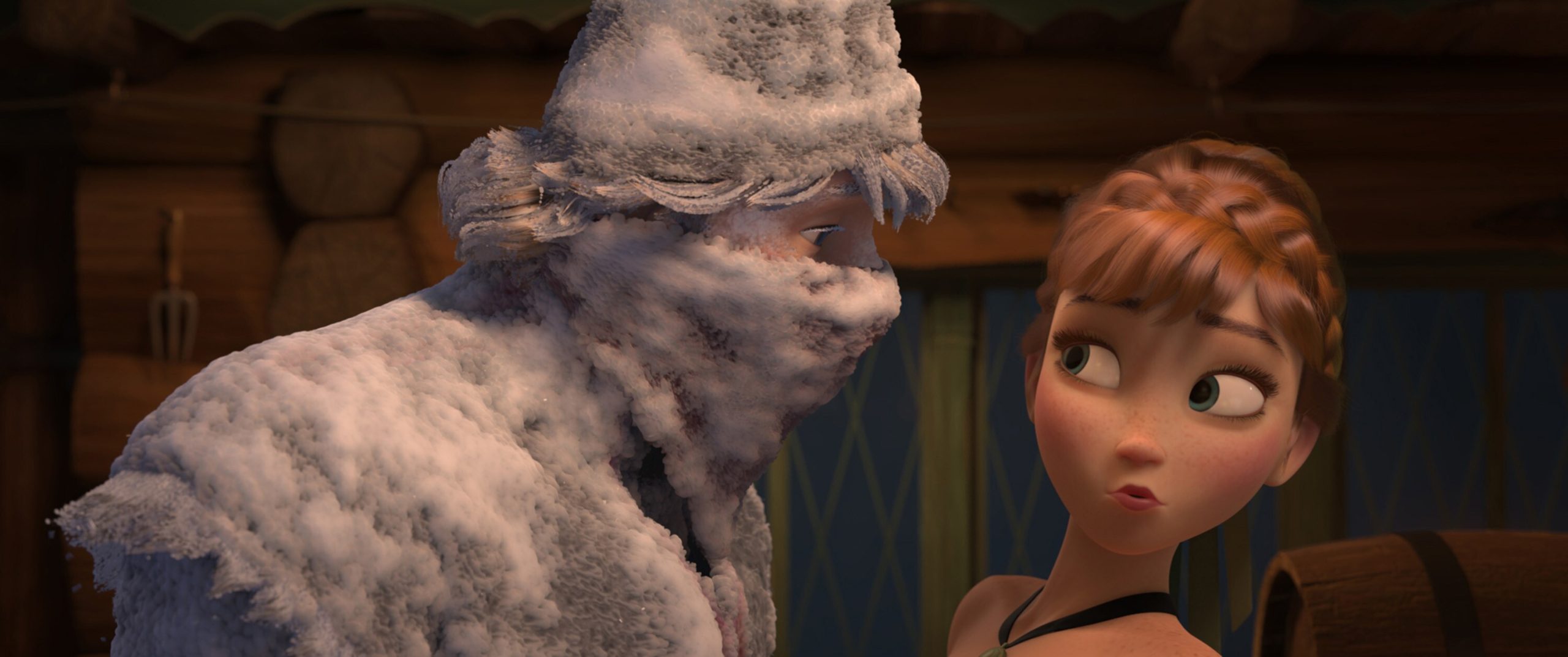
The featured artwork is original CVM Sekai fan art designed for a wide hero and directory crop. It presents an ancient stone elder within a living troll community under purple aurora light, using the site’s color language without copying an official still or character model.
The attachment is stored locally with generation provenance, alt text, caption, rights note, and explicit non-endorsement language. The same file serves the featured image, hero, and future card so Grand Pabbie does not appear as an unrelated image on each surface.
Sources and certainty
Primary evidence includes Frozen, Frozen II, published credits, official Disney character material, and the scenes containing Pabbie’s exact warnings and diagnoses. Licensed extensions remain source-labeled when used.
Ethical analysis of memory, consent, parenting, and care is interpretation grounded in those scenes. It is not presented as an unseen speech. Fan wikis can organize appearances, but the films remain the factual floor for what he does and does not tell the family.
The final read
Grand Pabbie saves Anna twice and correctly identifies the emotional problem both stories must solve. He is neither the villain who ordered Elsa’s imprisonment nor the perfect sage whose words absolve every adult. He is a powerful healer who gives accurate principles inside a family crisis and leaves too much implementation unexamined.
The most honest profile keeps all of that together. His magic protects life. His warning contains wisdom. His memory spell has cost. His absence matters. The parents own their choices, and the elder still belongs in the conversation about what responsible care should have required next.
Frozen coverage
Return to the Frozen hub for every character, review, React, rant, and guide.