
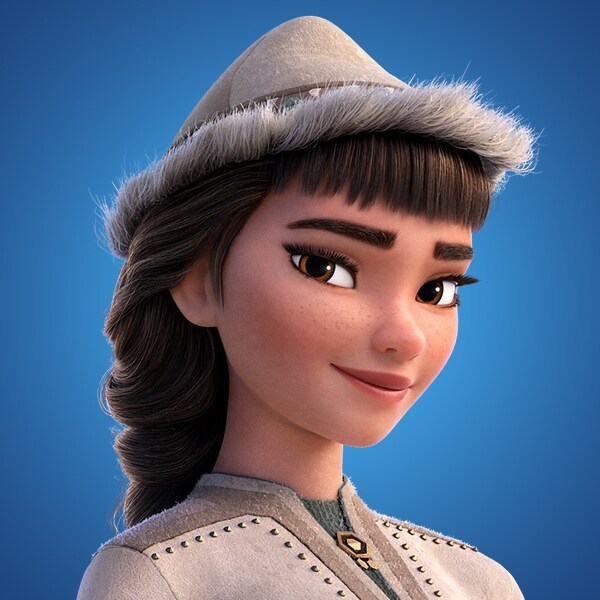
Frozen Character Profile · Northuldra · Ryder’s Sister · Keeper of the Fifth-Spirit Story
Honeymaren
The quiet firelight conversation, Northuldra life, Elsa shipping, cultural responsibility, and everything the sequel leaves unfinished.
Profile
| Name | Honeymaren |
|---|---|
| People | Northuldra |
| Home | Enchanted Forest |
| Family | Ryder, brother |
| English voice | Rachel Matthews |
| First appearance | Frozen II (2019) |
| Known for | Explaining the fifth-spirit tradition to Elsa |
| Canon status with Elsa | Friendly connection; no confirmed romance |
Bottom line first
Honeymaren gets only a handful of scenes in Frozen II, yet she performs several jobs at once. She welcomes Elsa into Northuldra life, explains the elemental symbols on Iduna’s scarf, shares the memory of a fifth spirit, and gives Elsa a conversation that is quiet rather than transactional. That economy makes her memorable. It does not magically make her fully written.
The useful reading is neither “secretly the most important person in the film” nor “background extra with a name.” She is a young Northuldra woman whose knowledge, ease around the spirits, and curiosity help Elsa imagine belonging outside Arendelle. The movie opens that relationship, then leaves most of Honeymaren’s own life outside the frame.
Profile and identity
Honeymaren is a member of the Northuldra community trapped in the Enchanted Forest. She is Ryder’s sister in official character material, lives among the reindeer herders, and appears during the forest investigation in Frozen II. Rachel Matthews voices her in English. The film does not state her age, parents, birthday, romantic history, or formal political office.
Her name is presented as one word in film credits and official Disney material. Fan spaces sometimes shorten it to Honey or Maren, but those are community habits rather than names spoken onscreen. A reference profile needs that small distinction because friendly fandom shorthand can turn into false canon after enough repetition.
Dashboard: confirmed and unknown
Confirmed: Honeymaren is Northuldra, Ryder’s sister, knowledgeable about the elemental spirits, familiar with the fifth-spirit tradition, friendly toward Elsa after the initial confrontation, and present when the forest is freed. She understands the symbols on Iduna’s scarf and speaks with Elsa beside the fire.
Unknown in feature canon: her exact age, rank, parents, whether she has a partner, whether she becomes Elsa’s closest friend, whether she travels to Arendelle, and what daily responsibilities she holds beyond the community’s shared reindeer-centered life. Those gaps are invitations for interpretation, not permission to label headcanon as biography.

Before the mist opens
Honeymaren has spent her entire adult life, and possibly her entire life, inside a magical barrier. The film does not specify whether she was born before or after Runeard’s attack. Her comfort in the forest and her lack of dialogue about a remembered outside world make a post-mist birth plausible, but plausible is not confirmed.
That uncertainty matters. If she was born inside, every map of the wider world came through elders, soldiers, stories, and imagination. If she remembers before, then the barrier interrupted a childhood. Either history produces a character shaped by enforced isolation, but the emotional details would be different.
A generation raised inside inherited conflict
Honeymaren and Ryder represent younger Northuldra adults living with a conflict they did not initiate. They inherit the knowledge that Arendelle betrayed their people, while Arendellian soldiers inherit loyalty to a king whose crime they do not know. The mist prevents either group from reaching new evidence or building a life elsewhere.
The siblings respond differently. Ryder voices restless curiosity about the world beyond the forest. Honeymaren shows a quieter curiosity through Elsa, the spirits, and cultural memory. Neither response cancels historical caution. Young people can want contact without pretending that the adults protecting them invented the danger.
First encounter with the Arendellians
Honeymaren meets Elsa, Anna, Kristoff, Olaf, and Sven after Gale carries them into the long-running standoff. Weapons, magic, old accusations, and family history fill the scene. She is not introduced through a cute friendship beat. She enters a political emergency with people wearing the identity of the kingdom her community distrusts.
Her later warmth therefore represents a judgment made after observation, not instant submission to a protagonist’s charm. Elsa calms elemental forces, recognizes the scarf, and approaches Northuldra knowledge without demanding ownership. Honeymaren has reasons to become interested while Yelena continues carrying the larger responsibility for community safety.
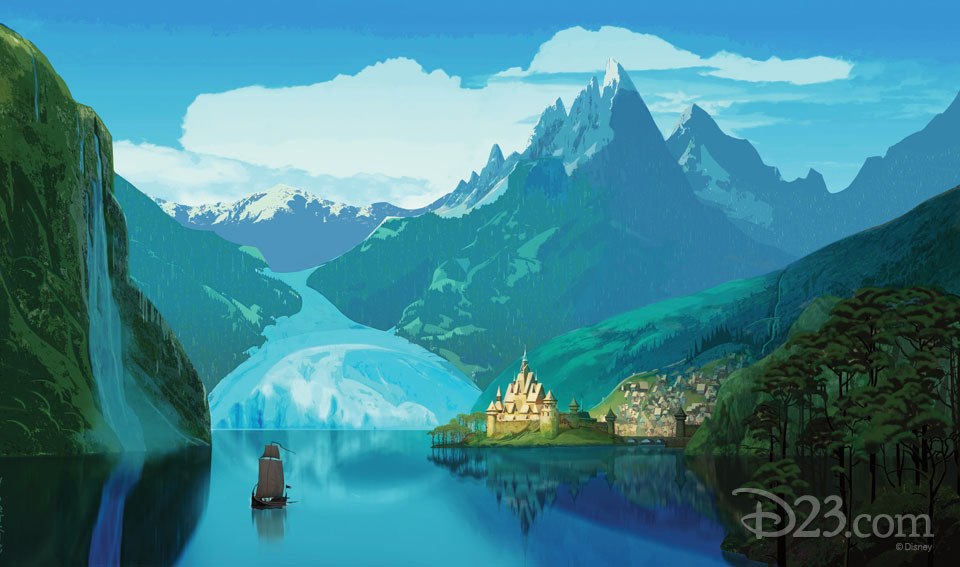
Iduna’s scarf as material evidence
The scarf connects Elsa and Anna’s mother to the Northuldra. Honeymaren helps identify its motifs and meaning, turning an inherited object into evidence of ancestry. The moment gives material culture a narrative function stronger than decorative “tribal” styling. Cloth holds memory because somebody can read what it carries.
The scene also requires restraint. Recognition does not prove Honeymaren knew Iduna personally, that the scarf belonged to one exclusive family, or that every symbol has a fully documented translation beyond what the film states. The object establishes origin and relationship. It does not hand the audience a complete ethnography.
The firelight conversation
Honeymaren and Elsa sit near the fire while the community settles into a temporary truce. The scene is brief, low-volume, and unusually free from the frantic emotional management Elsa performs in Arendelle. Honeymaren does not ask Elsa to reassure Anna, rule a kingdom, or explain herself as a danger. She talks about the forest’s story.
That calm is why viewers return to the exchange. Elsa spends much of both films surrounded by people who love her but fear losing her. Honeymaren meets her as a person whose power might belong within a larger relationship among humans and nature. The scene creates breathing room the plot quickly closes.
The fifth spirit story
Honeymaren tells Elsa that Northuldra tradition once spoke of a fifth spirit, a bridge between nature and people. She points to the central symbol that joins the four elemental diamonds. The exposition matters because it comes from community memory before Ahtohallan confirms Elsa’s role.
Calling her a lore dispenser misses both value and limitation. Knowledge gives her influence over Elsa’s self-understanding, but the screenplay mainly uses that knowledge to launch the heroine’s next step. A richer story would ask what the fifth-spirit tradition means to Honeymaren and how her community debates its return.
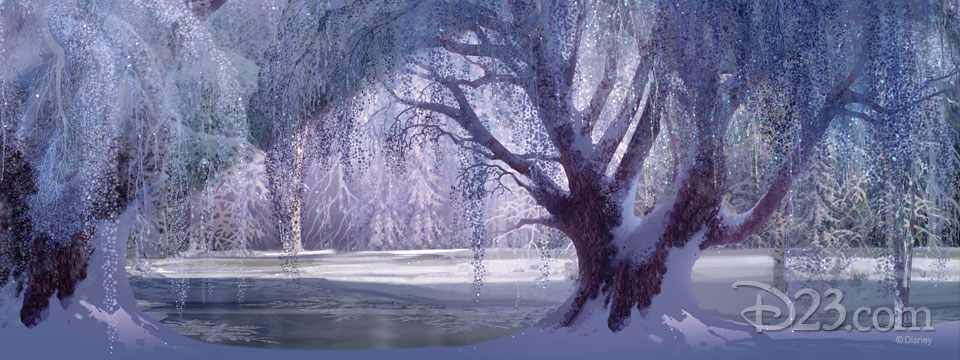
Listening rather than claiming
Honeymaren’s guidance does not sound like a coronation. She offers a story and allows Elsa to interpret the call. That difference protects the scene from turning Northuldra culture into a magical certificate issued to an Arendellian royal. Elsa still has to seek truth, accept consequence, and learn what bridgehood requires.
The strongest future version of their relationship would keep that structure. Honeymaren can teach without becoming Elsa’s cultural assistant, and Elsa can belong without claiming instant mastery. Listening creates reciprocity only when the person with more political and magical power remains willing to be corrected.
Knowledge of the spirits
Honeymaren lives alongside Gale, Bruni, the Nokk, and the earth giants as presences capable of beauty and danger. The film does not show her commanding them. Her knowledge appears relational: recognize signs, respect force, read history, and understand that human decisions can disturb an entire ecological order.
That distinction matters because popular fantasy often gives an Indigenous-coded character automatic mystical control. Honeymaren is not a switchboard for nature. Elsa’s ability to calm or ride spirits does not make Honeymaren less knowledgeable, and Honeymaren’s cultural knowledge does not make every Northuldra person supernatural.
Reindeer life beyond one montage
The Northuldra are described through reindeer herding, and Ryder is especially associated with the animals. Honeymaren lives within the same economy, even though the film does not assign her a named occupational specialty. Herding implies seasonal knowledge, animal care, food systems, material work, weather judgment, and community coordination.
Reducing that life to picturesque tents and friendly reindeer makes the forest feel like a themed retreat for Elsa. Honeymaren’s offscreen day should contain labor, frustration, skill, and responsibility. The community survives more than thirty-four years because people work, not because an enchanted setting supplies everything automatically.
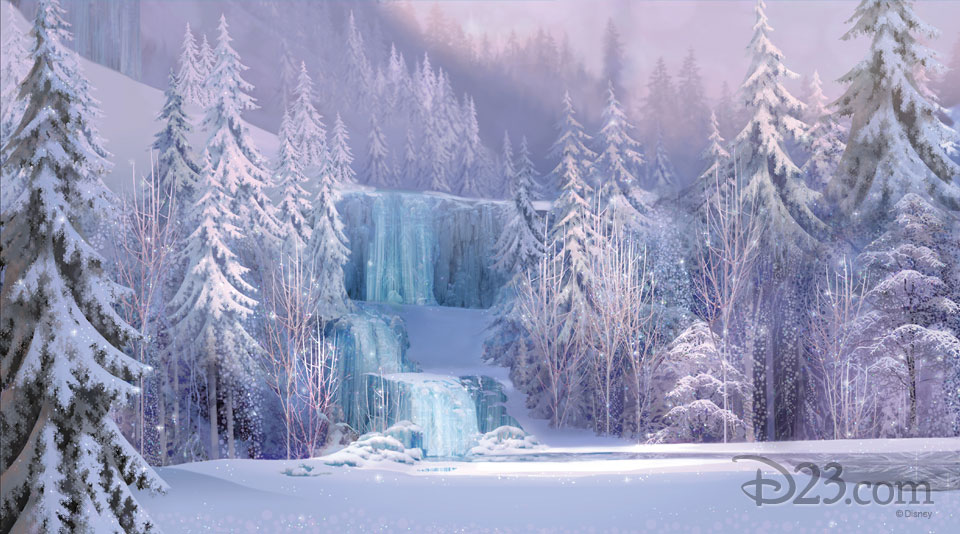
Relationship file: Ryder
Official materials identify Ryder as Honeymaren’s brother. Their shared scenes suggest familiarity and complementary energy: he is openly eager about Kristoff, reindeer, and the outside world, while she approaches Elsa through story and observation. The film does not establish which sibling is older.
Fandom sometimes builds a detailed family structure from their closeness, but the feature supplies no parents or household history. What is clear is that the siblings make Northuldra youth feel less monolithic. They can share a community and still orient themselves toward change through different interests.
Relationship file: Yelena
Yelena leads the Northuldra and carries the burden of judging whether Arendelle’s visitors create another threat. Honeymaren can engage Elsa more personally because Yelena maintains the political boundary. Their different functions should not be flattened into an invented mother-daughter relationship.
The film never confirms blood kinship, succession, or formal mentorship between them. A community elder can guide a younger member without being her parent. Keeping that boundary visible respects the possibility of collective structures rather than forcing every meaningful female relationship into a nuclear family tree.
Relationship file: Elsa
Honeymaren and Elsa share curiosity, elemental knowledge, and a quiet scene that many viewers read as immediate compatibility. Elsa later chooses to remain connected to the forest, making continued friendship likely within the story’s new geography. The films do not explicitly define a romance.
Shipping the pair is a legitimate fandom practice. Reporting the ship as canon is not. The distinction lets queer audiences discuss why their chemistry and Elsa’s outsider narrative resonate without pretending Disney wrote or confirmed a relationship it left open. Ambiguity can carry meaning and still remain ambiguity.

Relationship file: Anna
Honeymaren and Anna have little direct conversation. Anna’s decision to destroy the dam changes Honeymaren’s world more than any casual interaction could. She accepts the risk that Arendelle might be flooded because the structure embodies a crime against Northuldra land and the spirits.
A post-film relationship should begin there. Queen Anna is not merely Elsa’s sister visiting the forest. She becomes the ruler responsible for reparative policy, truthful history, travel, trade, and respect for Northuldra authority. Honeymaren would have material reasons to watch how Anna turns courage into governance.
Relationship file: Kristoff and Sven
Honeymaren’s brother bonds quickly with Kristoff over reindeer, while Sven moves easily among the herd. Honeymaren is present around that expanding social bridge but does not receive a parallel comic subplot. Her narrative attention stays with Elsa and the forest’s history.
The contrast is useful. Ryder’s openness is exuberant and specific. Honeymaren’s is measured and interpretive. Both make contact possible without asking Yelena to abandon caution. The film could have used another sibling exchange to show how they evaluate the newcomers privately.
Relationship file: Iduna
Honeymaren recognizes Northuldra meaning in Iduna’s scarf but does not claim personal memory of her. Depending on their ages, she may know Iduna only through community history or not know her story until Elsa and Anna arrive. The feature leaves the exact chain of knowledge unstated.
Licensed prequel material expands Iduna’s life, but those details should remain labeled by source. Honeymaren’s importance does not depend on having secretly been close to the former queen. Her role is to help the sisters read an inheritance their mother could not safely explain while living in Arendelle.
When the truth arrives
Elsa discovers Runeard’s murder of the Northuldra leader in Ahtohallan and sends the truth to Anna. Honeymaren does not witness the memory firsthand. Like the rest of her community, she receives the consequence of a revelation centered through Arendelle’s royal descendants.
That narrative structure deserves criticism. Northuldra people were correct about betrayal, yet the film lets royal heroines uncover, interpret, and repair the crime. Honeymaren can be grateful for action without becoming supporting applause in a story about damage her people actually survived.
The dam falls
Anna leads the earth giants to destroy the dam, Mattias helps redirect the soldiers, and the released water threatens Arendelle. The act corrects Runeard’s intended control over the forest and allows the mist to lift. Honeymaren’s community regains access to a world withheld for decades.
The destruction is necessary, but it is not a complete reparation plan. Honeymaren’s future includes questions about land, historical records, movement, visitors, environmental management, and whether Northuldra youth want to remain, travel, or build lives across both places.
Elsa stays in the forest
The ending positions Elsa in or near the Enchanted Forest while Anna rules Arendelle. Honeymaren’s earlier conversation helps make that choice emotionally legible. Elsa is not simply escaping responsibility. She is moving toward the place where her power, ancestry, and fifth-spirit role can be understood.
The film does not state that Elsa lives with Honeymaren, joins one household, or becomes Northuldra leader. Those popular assumptions compress geography, culture, politics, and relationship into a neat ending the screenplay never provides. Elsa’s presence should add a bridge, not displace existing community authority.
What freedom changes for Honeymaren
The open mist transforms possibility. Honeymaren can travel, meet people beyond the trapped soldiers, encounter descendants of those lost, and decide what parts of outside life interest her. Freedom also brings risk: tourism, extraction, romanticized attention, official rewriting, and pressure to make culture accessible to Arendelle.
A meaningful continuation would let her hold both curiosity and boundaries. Indigenous-coded characters are often written as either untouched guardians who reject change or helpful guides who welcome outsiders. Honeymaren can want movement, technology, friendship, and privacy without surrendering political judgment.
Queer reading and the Elsa ship
The Elsa-Honeymaren ship grew because the film gives Elsa a new female peer, a soft nighttime conversation, shared attention to identity, and an ending that places them near each other. Elsa has no canonical romantic partner, so viewers read possibility into the emotional space Disney leaves open.
That reading matters culturally even without confirmation. Queer audiences have long built meaning from coded isolation, self-acceptance, chosen place, and relationships that mainstream studios keep deniable. The honest editorial position can recognize the resonance, criticize corporate ambiguity, and still state that the film does not make the pairing canon.
The danger of defining her through a ship
Shipping can increase attention while shrinking the person being shipped. Honeymaren sometimes becomes “Elsa’s possible girlfriend” before she becomes a Northuldra woman with a brother, community, history, labor, knowledge, and a future altered by political repair. That reversal reproduces the underdevelopment fans are trying to correct.
A strong fan reading gives her wants that exist whether Elsa arrives or not. What did she plan under the mist? What knowledge does she practice? What does she disagree with Ryder about? Who are her friends? What does freedom cost? Romance can join a life. It should not manufacture the entire life.
Rachel Matthews’s performance
Rachel Matthews gives Honeymaren a warm, grounded voice that avoids turning exposition into ceremony. Her delivery to Elsa feels conversational rather than prophetic. That choice helps the fifth-spirit story sound like living community knowledge shared with a curious person, not a magical clue dispensed by an archetype.
The role offers limited emotional range because the script gives few scenes. Matthews still distinguishes caution, welcome, interest, and calm certainty. A sequel could test the performance with disagreement, humor, anger, and intimacy instead of asking the character to remain perpetually serene.
Design and silhouette
Honeymaren’s design uses layered cold-weather clothing, dark hair, practical boots, and Northuldra visual motifs to connect her with the community while keeping her readable in group scenes. Her silhouette is less formal than Yelena’s and less comic than Ryder’s, fitting her quiet bridge role.
Design cannot carry cultural depth alone. The production’s Sámi consultation matters, but a respectful-looking costume does not replace interiority or political agency. Viewers should resist treating surface specificity as proof that the screenplay has fully represented a people.
Sámi inspiration and collaboration
Northuldra draw from Sámi inspiration, and Disney entered a formal collaboration framework with Sámi representatives for Frozen II. The production included cultural consultation and musical participation. That work deserves specific acknowledgment instead of vague claims that the film simply borrowed “Nordic tribal” aesthetics.
Northuldra remain fictional. Honeymaren is not a documentary representation of one Sámi woman or of every Sámi community. Editorial coverage should name the living cultures that informed production, avoid pan-Indigenous language, and distinguish the film’s fantasy system from actual spiritual practice.

Indigenous woman or fantasy symbol
Honeymaren risks a familiar screen function: the Indigenous-coded woman who helps a white-coded heroine rediscover an authentic self through land and spirituality. The film complicates that pattern by making Elsa Northuldra through Iduna and by grounding the conflict in Arendellian violence, but the structural risk remains.
The answer is not to deny the character’s warmth or cultural knowledge. It is to demand additional dimensions. Let her make a bad joke, hold a political opinion, pursue a craft, resent a decision, enjoy ordinary pleasure, and disagree with Elsa. Humanity grows through specificity, not through removing the traits that made her meaningful.
The Northuldra are not Elsa’s aesthetic
Elsa’s forest ending is visually satisfying because riding the Nokk and moving through autumn space suit her elemental identity. That satisfaction can tempt viewers to treat Northuldra territory as a mood board for her freedom. Honeymaren’s presence reminds the audience that the forest is already inhabited and historically contested.
Belonging therefore requires relationship. Elsa can be the fifth spirit and Iduna’s daughter while still learning protocols, histories, work, and boundaries. Honeymaren should not exist merely to smile approval at every choice. A bridge who cannot hear “no” is just another route for royal power.
Daily life the camera skips
The feature never follows Honeymaren through an ordinary day. We do not see how she contributes to food preparation, animal care, material production, teaching, healing, storytelling, or watch duties around the soldiers and spirits. The absence makes her seem available whenever Elsa needs information.
A complete profile cannot invent an occupation, but it can name the narrative hole. Communities require labor, and young women do not spend decades waiting beside a campfire for a protagonist. Future writing should give her competence that changes events rather than assigning generic “nature knowledge” as her only skill.
Humor and interiority
Ryder receives a clear comic personality through reindeer enthusiasm and romantic coaching. Honeymaren stays composed. The contrast keeps the siblings distinct, yet it also repeats a pattern where women of color carry cultural dignity while male relatives receive mess, hobbies, and jokes.
Giving Honeymaren humor would not diminish her authority. It would reveal timing, taste, irritation, and intimacy. The film’s warmth comes partly from character comedy, so excluding her from that register quietly marks her as symbol before person.
Leadership potential without invented succession
Honeymaren speaks with confidence and cultural knowledge, which makes future leadership plausible. The movie never calls her Yelena’s heir, deputy, daughter, or council member. Declaring succession as canon would build a political hierarchy from a few camera placements.
She can still be analyzed as part of a generation that will shape post-mist governance. Travel, education, ecological protection, contact with Arendelle, and cultural representation require younger voices. Leadership potential is a thematic reading. It should remain labeled until a story assigns a role.
Licensed books and guide material
Retellings, visual guides, junior novels, and franchise reference material repeat Honeymaren’s relationship to Ryder, the Northuldra, and the fifth-spirit conversation. Some publications add small descriptions or organize events more explicitly than the feature does.
Those details belong in a source-labeled publishing branch. Licensed text can clarify franchise intent, but it should not silently overwrite film canon or become permission to invent emotional history. Every expansion needs its own receipt and certainty label.
Games, shorts, and franchise appearances
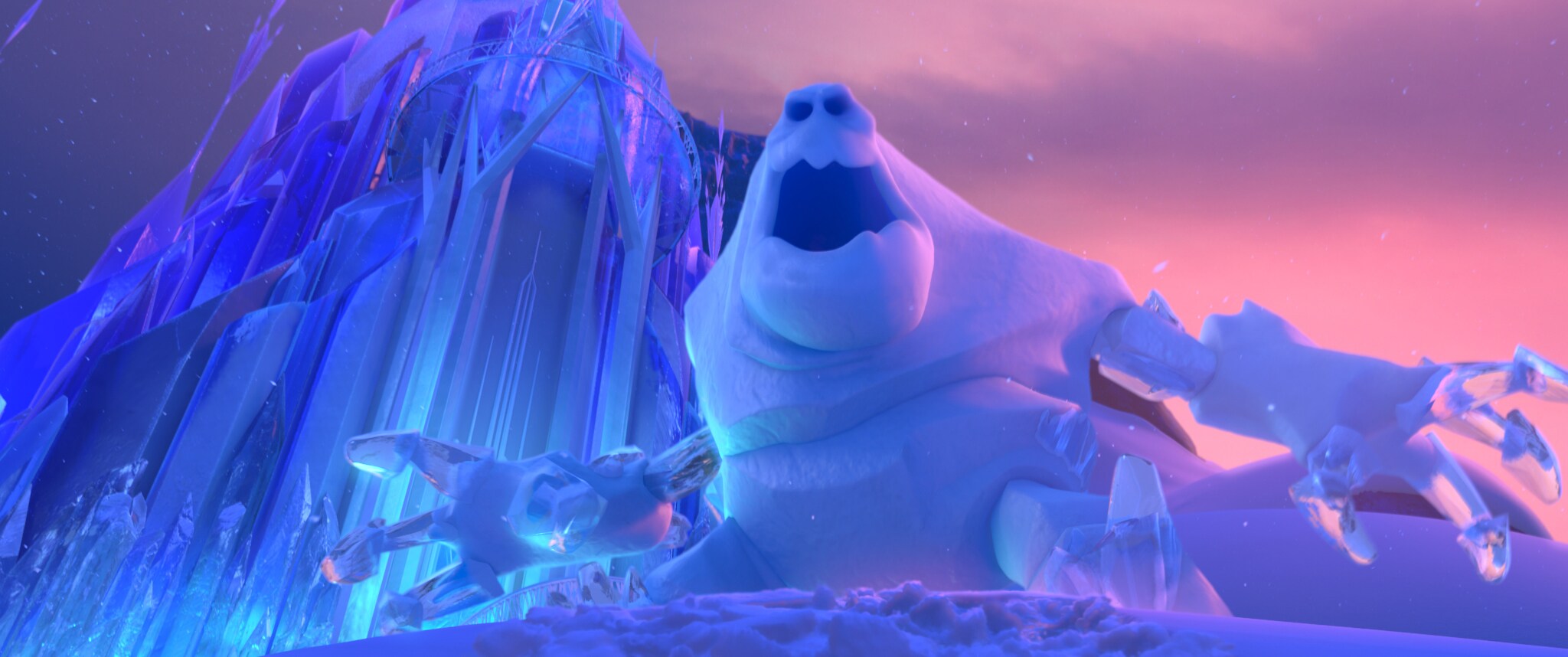
Honeymaren appears far less often in the franchise than Elsa, Anna, Olaf, or Kristoff. Merchandise and game visibility tend to follow market hierarchy, leaving Northuldra characters attached mainly to the second film’s plot rather than the permanent face of Frozen.
That scarcity shapes audience memory. A character can be important to a heroine’s identity and still disappear from the commercial ecosystem. Future appearances should avoid reducing her to one repeated campfire line while giving the central cast new adventures built on the world she helped open.
Reception and fan investment
Fans respond to Honeymaren’s calm presence, design, connection with Elsa, and possibility as a queer or Indigenous-coded character with more story ahead. Criticism focuses on limited screen time, the thin development of Northuldra individuals, and the studio’s preference for suggestive possibility over commitment.
Both reactions are reasonable. Viewers can love what the character offers and resent how little the film risks with her. Affection should not lower the analytical standard. It should raise the demand for writing capable of supporting the meaning audiences already found.
What the screenplay gets right
The screenplay lets Honeymaren hold knowledge Elsa lacks without humiliating either woman. Their scene avoids rivalry, romantic competition, and suspicion manufactured for drama. It presents curiosity as intimacy and treats a quiet exchange as enough to redirect Elsa’s understanding of herself.
It also keeps Honeymaren aligned with her community. She does not abandon Northuldra priorities to become the heroine’s assistant. Even in limited time, that boundary gives the character more integrity than the common guide figure who exists only to escort an outsider through unfamiliar culture.
What the screenplay leaves unfinished
Honeymaren lacks a goal she states for herself, a decision that materially changes the plot, a conflict independent of Elsa, and a relationship scene with Ryder or Yelena that reveals private life. She helps interpret the story but does not get to author much of it.
The omission is especially visible because the film’s moral conflict concerns Northuldra land and historical betrayal. A Northuldra woman should have more to do than explain symbols and welcome one descendant of the people who caused the harm. Representation needs narrative power, not only respectful framing.
What Wikipedia has that this page must exceed
The encyclopedic floor includes Honeymaren’s Northuldra identity, relationship to Ryder, knowledge of the fifth spirit, connection with Elsa, performer, and role in Frozen II. Those facts are necessary but cannot carry an editorial profile by themselves.
CVM Sekai adds the trapped-generation context, boundaries between canon and shipping, material culture, Sámi collaboration, political repair, work, commercial disappearance, representation problems, performance analysis, and specific questions a continuation must answer. Depth comes from accountable connections, not inflated adjectives.
Future file
A continuation should give Honeymaren a goal before Elsa asks anything of her. She might help negotiate travel, protect the forest from exploitation, document community history, challenge how Arendelle teaches Runeard, or decide whether she wants a life moving between places after decades of enclosure.
Her relationship with Elsa can become friendship, disagreement, romance, kinship, or some combination only if Honeymaren remains a full participant. The most interesting version is not the woman who completes Elsa. It is the woman whose own choices force Elsa to practice what being a bridge actually means.
Artwork responsibility
The featured artwork is original CVM Sekai fan art designed for a wide hero and directory crop. It uses a northern autumn landscape, practical fantasy clothing, and the site’s purple visual language without copying a film still or presenting itself as official character art.
The prompt explicitly excluded feathers, fringe, turquoise jewelry, ceremonial claims, Plains-coded motifs, and generic pan-Indigenous shorthand. That does not make the image ethnographic documentation. It is an editorial interpretation, clearly labeled, with local provenance and no Disney endorsement implied.
Sources and certainty
Primary evidence includes Frozen II, its published credits, official Disney and D23 character material, production interviews, and the formal Sámi collaboration framework surrounding the sequel. Licensed guides and novels are useful only when identified as licensed extensions.
Queer readings, political analysis, and criticism of representation are interpretation. They are not disguised as dialogue the movie never speaks. Fan wikis can identify leads, but each factual claim still has to survive comparison with the film or an attributable franchise source.
The final read
Honeymaren works because she offers Elsa something rare: information without control, welcome without ownership, and connection without panic. She stands at the point where family discovery, Indigenous-coded community, elemental mythology, and queer possibility meet. That is a lot of cultural weight for a few minutes of screen time.
The right response is not to pretend those minutes equal completion. It is to take her seriously enough to mark every boundary, credit every source, and demand a future where she acts rather than merely signifies. She deserves a life larger than the possibility other people see in her.
Frozen coverage
Return to the Frozen hub for every character, review, React, rant, and guide.