
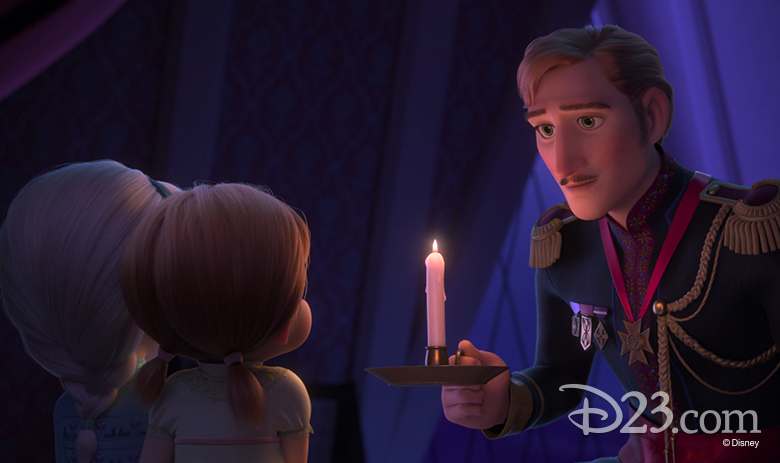
Frozen Character Profile · King of Arendelle · Father · Heir to a Lie
King Agnarr
Love, trauma, inherited propaganda, parenting through fear, and the king who searched for answers after silence had already shaped his daughters.
Profile
| Name | Agnarr |
|---|---|
| Title | King of Arendelle |
| Father | King Runeard |
| Spouse | Queen Iduna |
| Children | Elsa and Anna |
| Adult voices | Maurice LaMarche in Frozen; Alfred Molina in Frozen II |
| Young voice | Jackson Stein |
| Status | Deceased at sea before the events of Frozen |
The constitutional problem after Runeard dies
Agnarr’s statement that he returned home as king hides an enormous institutional transition. A child survivor cannot immediately conduct every duty of state without adults, yet the films never name a regent, council, guardian, or faction that governed during his minority. Whoever occupied that space would have controlled the investigation into Runeard’s death, contact with soldiers lost in the mist, the dam’s public meaning, and the education of the new king.
That missing political childhood matters because Agnarr later repeats a history in which a celebration inexplicably became war. He may have inherited not only Runeard’s crown but an adult system invested in protecting Runeard’s reputation. The absence of a named conspirator does not prove conspiracy. It does show why “he should have known” is less useful than asking what evidence his kingdom preserved and which questions its institutions trained him not to ask.
Why expert advice does not end parental responsibility
Grand Pabbie heals Anna and provides a warning, but the exact long-term isolation plan is enacted by the parents. Seeking expert help is responsible. Treating one emergency encounter as a complete childhood-development program is not. Agnarr remains responsible for observing whether Elsa becomes safer, whether fear grows, whether Anna is suffering, and whether the plan requires revision.
Years pass with the door closed and the sisters’ relationship deteriorating. The film does not show repeated consultation, supervised magical practice, outside teachers, gradual reconnection, or an attempt to explain age-appropriate truth to Anna. A parent can begin with limited information and still be judged by what happens after the first decision. Agnarr’s tragedy includes failing to recognize that the intervention itself has become a continuing source of harm.
A king’s private fear becomes public vulnerability
The concealment system is framed as family protection, but royal families are also governing institutions. Closing the gates, reducing staff, obscuring the heirs’ relationship, and allowing no trusted public understanding of Elsa’s power make Arendelle fragile. When the parents die, the kingdom has no visible plan for magical succession, no informed council, and no practice responding to Elsa outside secrecy.
That institutional weakness shapes the coronation crisis and Hans’s rise. A foreign prince can receive authority because Anna has no experienced network and Elsa has been trained to manage danger alone. Agnarr does not cause Hans’s crimes, but the closed system creates access. Private fear has political consequences when the fearful parent is also the ruler who determines what the kingdom is allowed to know.
What repair might have looked like
The film never presents a perfect alternative, and pretending the parents had an easy manual would weaken the dilemma. Repair could still have included truthful language that separated accident from identity, continued sibling contact under supervision, safe environments for practicing magic, regular consultation with Pabbie, and adults who helped Elsa name fear without treating fear as proof of danger.
It also could have included Iduna’s cultural knowledge, even if she did not understand Elsa’s exact gift. Stories of spirits, the Ahtohallan lullaby, and a history in which magic participated in community could have given Elsa another imagination of herself. None of these measures guarantees safety. They distribute responsibility across relationships instead of placing the entire burden inside one frightened child’s gloves.
The voyage as love and delayed accountability
Traveling toward Ahtohallan is the clearest evidence that Agnarr never stopped caring about Elsa’s future. He and Iduna accept serious risk to find an answer unavailable in Arendelle. The map, ship, and final route turn research into action. Their deaths make the attempt unbearably sincere.
Sincerity does not cancel delay. Elsa has already spent years alone by the time the voyage begins, and the parents apparently leave without first opening the truth to both daughters. They pursue knowledge that might transform the family while preserving the arrangement until they return. The journey therefore becomes both love and delayed accountability: an effort to correct a system whose human cost has already become normal inside the palace.
Bottom line first
Agnarr inherits a throne, a false national history, and terror of magic before he is old enough to understand any of them. He grows into a loving husband and father who mistakes control for safety, teaching Elsa to fear herself while believing he is preventing another catastrophe.
The sequel makes him more sympathetic without making the parenting plan healthy. He is a child survivor rescued by the very people his father attacked, a king who does not uncover that attack, and a parent whose final attempt to find answers comes after years of damage.

Profile and identity
King Agnarr is the son of King Runeard, husband of Queen Iduna, father of Elsa and Anna, and former ruler of Arendelle. As a boy he accompanies Runeard into the Enchanted Forest, survives the battle, and returns home as king after his father’s death.
Maurice LaMarche voices the adult king in Frozen. Alfred Molina performs the expanded adult role in Frozen II, while Jackson Stein voices young Agnarr. The feature films do not give an exact birth year or a detailed coronation record.
Dashboard: confirmed facts and protected unknowns
Confirmed by the features: Agnarr witnesses the forest conflict as a child, is rescued by young Iduna without knowing her identity, inherits the throne, marries her, fathers Elsa and Anna, takes injured Anna to the trolls, participates in separating the sisters, and dies with Iduna while traveling toward Ahtohallan.
Not confirmed by the features: the full extent of his knowledge about Runeard’s crime, the precise date Iduna reveals her ancestry, a complete cabinet or policy record, named siblings, an exact age, survival of the shipwreck, or a deliberate desire to punish Elsa. Licensed books expand several gaps, but expansion is not silent film canon.
Childhood under Runeard
Young Agnarr grows up as the heir of a king who presents fear as protection and colonial control as generosity. The dam is described publicly as a gift while Runeard privately intends it to weaken the forest.
The film does not show how much of that ideology Runeard teaches his son directly. Agnarr remembers a father, a diplomatic celebration, sudden fighting, and loss. He does not witness the private murder that exposes the official story as fraud.
The Enchanted Forest journey
Agnarr accompanies Runeard and Arendellian forces to meet the Northuldra. He sees elemental spirits and a people whose relationship to magic challenges the assumptions of his household.
Because the visit ends in violence, childhood exposure to magic becomes fused with chaos and bereavement. The experience helps explain later fear around Elsa without proving that fear was the only possible response.
The battle and Runeard’s death
Fighting erupts after Runeard murders the Northuldra leader. Agnarr sees confusion and his father falling but not the initiating betrayal.
He inherits the consequence and the kingdom’s preferred interpretation. A child can carry vivid trauma while holding an inaccurate causal story. That combination becomes politically dangerous when the child later controls the archive and the crown.
Iduna’s rescue
Young Iduna calls Gale and moves the unconscious prince to safety. Agnarr remembers a voice, a scarf, and rescue without recognizing the person.
His life and Arendelle’s succession continue because a Northuldra child chooses care during an attack launched by his father. The moral debt exists long before Agnarr knows enough to name it.
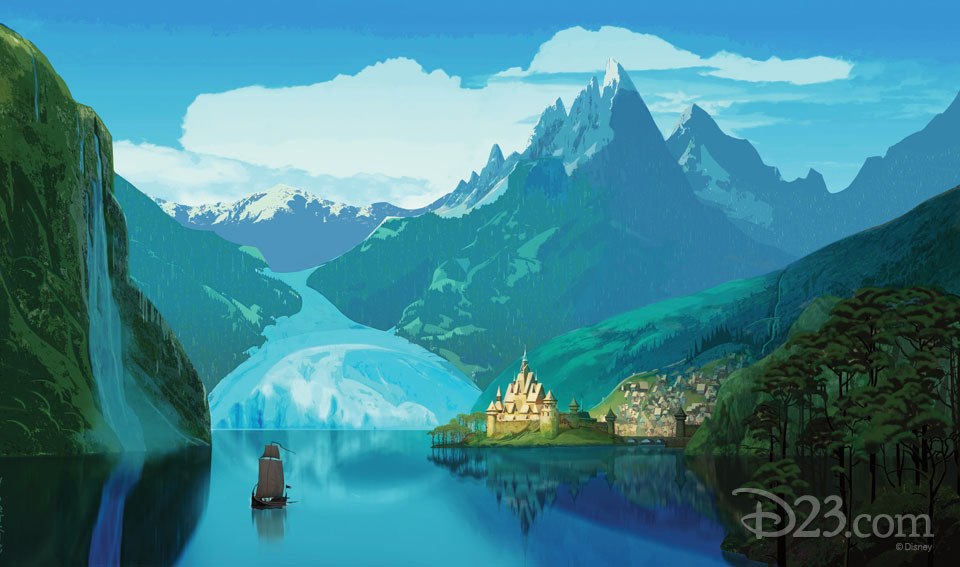
Coming home as king
Agnarr says that he returned home as king that night. The line compresses rescue, grief, transition, and political responsibility into one childhood memory.
A kingdom led by a traumatized child requires regency or adult governance, but the feature does not describe it. The missing years matter because whoever taught Agnarr the official history also shaped what Arendelle would remember about the forest.
The story he tells his daughters
Agnarr recounts the forest as a bedtime story, including magic, conflict, his father’s death, and the mist. He gives the girls real history filtered through incomplete childhood knowledge.
The story is not a calculated lie in the evidence available. It is inherited error told with confidence. That distinction matters because harmful national myths often survive through sincere repetition, not only deliberate deception.
Relationship with Iduna
Agnarr befriends, loves, and marries the person who saved him before he knows or fully understands her history. Ahtohallan later preserves fragments of courtship and affection.
Their marriage joins Northuldra survival to Arendellian rule while leaving the dam’s crime buried. The relationship can be genuine and still exist inside political conditions neither partner successfully repairs.
When he learns who saved him
The features reveal to Elsa that Iduna was the rescuer, but they do not stage one definitive scene establishing when Agnarr learns the full truth.
Licensed publishing supplies versions of disclosure. The film profile keeps the timing open because knowing Iduna’s origin, knowing she saved him, and knowing Runeard’s betrayal are three different discoveries.
Becoming a father
Agnarr and Iduna raise Elsa and Anna in a household that initially includes play, stories, ceremony, and affection. He is not introduced as emotionally indifferent.
Fatherhood becomes organized around risk after Elsa injures Anna. The shift shows how quickly love can become surveillance when a parent believes unpredictability is the central danger.
The accident
Elsa’s childhood magic strikes Anna in the head during play. Agnarr responds immediately, identifies a place to seek help, and carries the family to the trolls.
His urgency is competent crisis behavior. The later problem begins when an emergency response becomes the permanent design of childhood rather than the first step toward learning, support, and repair.
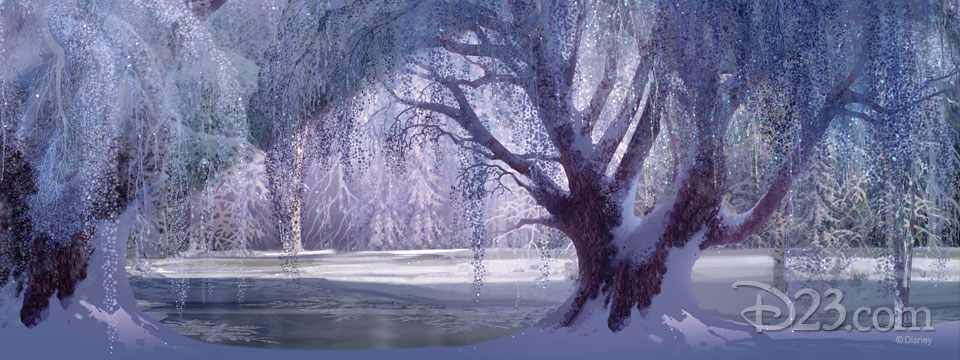
The map and the trolls
Agnarr consults a book or map that leads the family to the trolls. The resource suggests royal knowledge of magic existed even while the kingdom publicly lived at a distance from it.
The archive provides directions but not understanding. Possessing a route to experts is different from building a community capable of helping Elsa live with power over years.
Grand Pabbie’s warning
Pabbie heals Anna and warns that fear will be Elsa’s enemy. Agnarr hears danger and responds by reducing exposure, closing gates, and controlling contact.
The tragedy is interpretive. A warning about fear becomes a system that manufactures fear. The father focuses on what Elsa might do to others while giving less attention to what isolation will do to Elsa.
Conceal, don’t feel
Agnarr teaches Elsa to hide emotion and magic, using gloves and repeated instruction as tools of containment. The phrase becomes the governing rule of her childhood.
He intends self-control, but the lesson fuses feeling with threat. Elsa cannot practice safe power because the household treats evidence of power as failure. Emotional suppression increases the conditions under which magic erupts.
The gloves
Gloves become a physical reminder that Elsa’s body must be managed. They may reduce accidental contact, but they also make shame wearable.
A temporary aid could have been one tool among many. Within isolation, it becomes ritual proof that safety depends on concealment. When Elsa removes a glove at coronation, the gesture carries years of parental fear.
Closing the gates
Agnarr reduces staff and shuts the palace, transforming a family emergency into a kingdom-wide withdrawal. Anna loses community alongside access to Elsa.
The decision protects secrecy more effectively than wellbeing. It also weakens Arendelle’s institutions by making royal family information inaccessible and succession relationships private. Hans later exploits that vacuum.
Separating the sisters
Anna’s memory of magic is removed, and the girls are kept apart. Agnarr believes distance prevents another injury.
The plan denies both children explanation. Elsa experiences herself as danger. Anna experiences rejection without cause. Each daughter is protected from one fact and exposed to a different wound.
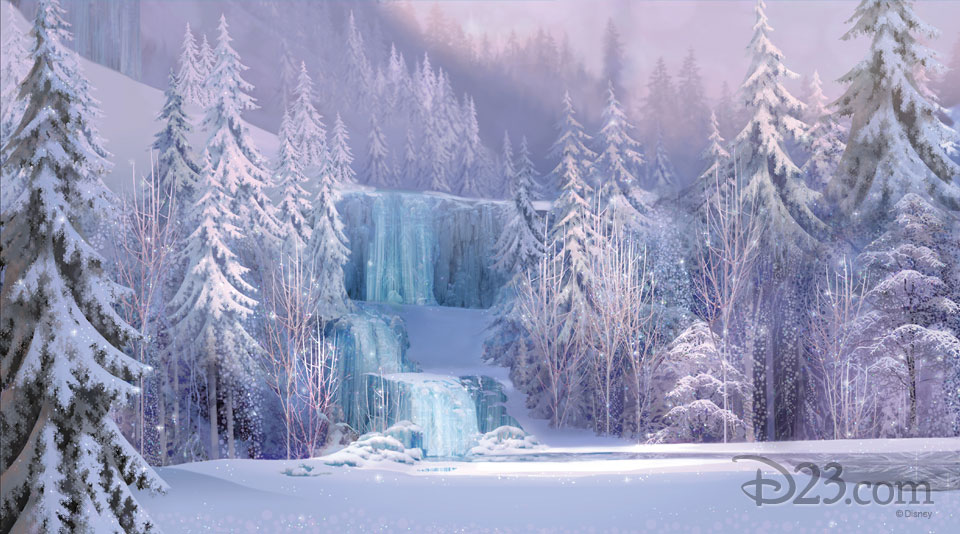
Relationship file: Elsa
Agnarr loves Elsa, fears her power, and tries to make control possible through suppression. He searches for answers late enough to risk his life reaching Ahtohallan.
His love does not neutralize the consequence of teaching self-fear. Elsa remembers his instruction after his death because the rule has become internal voice. Parental intention and psychological legacy diverge.
Relationship file: Anna
Agnarr acts quickly to save Anna and accepts the removal of her magical memories. He then allows her to grow up repeatedly confronting a closed door without truthful explanation.
Anna loses ordinary sisterhood, public childhood, and knowledge necessary to interpret the household. The plan protects her body while underestimating emotional deprivation.
Relationship file: Runeard
Runeard is father, king, model of authority, and source of a crime Agnarr does not know. His death freezes the relationship before the son can challenge the man.
Agnarr inherits both love and propaganda. The sequel asks his daughters to do what he never could: see the father and grandfather clearly enough to break loyalty to a harmful legacy.
Relationship file: Mattias
Lieutenant Mattias protects young Agnarr during the forest conflict and remains trapped behind the mist for decades. Agnarr returns to rule believing the soldiers lost.
Mattias carries memory of the prince before the crown. Their separation leaves Agnarr without a trusted witness who might have helped interrogate the old story, though Mattias also lacks knowledge of Runeard’s private murder.
The Yule Bell tradition
Before family isolation, Agnarr and Iduna ring Arendelle’s Yule Bell with their daughters. The ceremony marks season and household continuity.
Its loss shows how safety policy erases culture inside the family. A closed gate does not isolate only danger. It removes ordinary rituals that tell children where they belong.
Rule and governance
The films show little of Agnarr’s adult policy, diplomacy, economic management, or public relationship with Arendelle. His kingship is more often family context than political record.
That absence limits claims that he was a good or bad ruler overall. It does not erase accountability for keeping the forest history unexamined and structuring the palace so completely around secrecy.
The archive problem
Agnarr possesses maps, magical texts, portraits, and institutional knowledge, yet the truth about Runeard and the dam remains inaccessible.
Archives do not become truthful merely because documents exist. Power determines what is recorded, preserved, interpreted, and taught. The family’s search for Elsa’s answer occurs inside an archive shaped by the man who feared magic.
Deciding to seek Ahtohallan
Agnarr and Iduna eventually identify Ahtohallan as a possible source of answers about Elsa. The voyage proves they did not abandon the problem emotionally.
It also arrives after years of isolation. Research becomes a private expedition rather than shared care around Elsa. The parents seek the origin of power more urgently than a new way for their daughter to live while they search.
The map toward the Dark Sea
Their recovered ship contains a map indicating the route north. Elsa and Anna learn that the journey was about Elsa, not ordinary diplomacy.
The map establishes destination, not certainty. Agnarr does not know whether Ahtohallan will answer, whether the spirits will permit passage, or whether returning with knowledge is possible.
Death at sea
A storm destroys the royal ship before Agnarr and Iduna reach Ahtohallan. Their bodies are not recovered in the feature narrative, but both are treated as dead.
The loss leaves Elsa and Anna to inherit a locked palace, unresolved parenting, a crown, and unanswered magic. Their parents’ attempt to help becomes another source of guilt when the daughters later discover its purpose.
The Nokk question
Viewers often ask whether the water spirit caused the wreck. The film does not show a confirmed intentional attack on the royal ship or identify one conscious agent behind the storm.
The Dark Sea is dangerous and Nokk guards the route when Elsa later arrives. Inference is possible. Declaring the spirit Agnarr’s murderer goes beyond released evidence.
Posthumous presence in Frozen
Agnarr persists through portrait, memory, instructions, royal absence, and the political vacancy Elsa must fill at coronation.
Death does not remove parental influence. Elsa carries “conceal, don’t feel” into adulthood, while Anna carries the habit of seeking connection through any newly opened door.
Posthumous revision in Frozen II
The sequel returns Agnarr through childhood memory, bedtime storytelling, Ahtohallan fragments, the wreck, and the expanded context of Iduna’s identity.
Each addition changes the first film’s father without replacing him. He becomes less simply the authority who chose isolation and more the child of a false history who repeated fear while trying to love.
Trauma is context, not acquittal
Witnessing violence, losing a father, inheriting a crown, and learning to fear magic provide serious context for Agnarr’s choices.
Trauma does not make every choice inevitable or harmless. An accountable reading asks what he knew, what alternatives he sought, how long the policy continued, and who bore the cost.
Parenting under uncertainty
Agnarr faces a child with powers no local human system appears equipped to understand. Parents often make restrictive decisions when the consequence of error feels catastrophic.
The films still show why certainty built through control fails. Elsa needs practice, trust, explanation, and relationships capable of surviving mistakes. Restriction removes the very conditions required for learning.
Fear as inheritance
Runeard fears magic and Northuldra autonomy. Agnarr fears magical catastrophe. Elsa fears herself. Anna fears abandonment. The object changes while the family logic continues.
Breaking the pattern requires more than bravery. Elsa learns power through connection, and Anna corrects the dam’s history through action. The daughters interrupt fear at both personal and political levels.
Maurice LaMarche in Frozen
LaMarche gives the first-film king a compact authority suited to urgent exposition and paternal instruction. The role is brief but foundational because his voice becomes part of Elsa’s internal rule.
The performance has little time for ambivalence. Viewers encounter care, command, fear, and loss through concentrated scenes rather than a developed adult arc.
Alfred Molina in Frozen II
Molina voices the expanded adult Agnarr in the sequel, bringing warmth to bedtime storytelling and weight to recovered family history.
The performer change belongs in the reference file rather than being disguised as continuity. The sequel needs a father capable of carrying more tenderness and historical uncertainty than the first film asks from the role.
Jackson Stein and young Agnarr
Jackson Stein voices Agnarr as a child during the Enchanted Forest events. The performance locates fear and confusion before kingship.
Young Agnarr is not responsible for Runeard’s murder. He is the survivor through whom the false story reaches the next generation. That distinction is central to understanding inherited wrongdoing.
Design across ages
Young Agnarr is designed as a prince inside Runeard’s expedition, while adult clothing and crown signal the authority he inherits. Portraits and memory preserve continuity across the age change.
The design carries royal legitimacy even when the story later challenges the morality of the dynasty. Visual authority and historical innocence are not the same thing.
Dangerous Secrets
The licensed novel Dangerous Secrets expands Agnarr and Iduna’s youth, friendship, courtship, secrets, parenting, and voyage.
It is essential supplementary reading for the publishing branch, not a reason to merge every detail into feature canon without attribution. The profile uses the book to map adaptation rather than overwrite the films.
Conceal, Don’t Feel and alternate family outcomes
The Twisted Tale branch imagines a different curse and more extreme separation of the daughters, changing the parents’ response and the shape of family memory.
Alternate continuity is useful because it exposes which themes remain portable: fear, protection, memory, separation, and the unintended harm of control. It does not establish what happened in the main films.
Broadway and stage Agnarr
The stage musical expands family material through live performance, with James Brown III originating Agnarr on Broadway and other actors in later productions.
Theater can give the father more presence and musical context, but changed scenes belong to that adaptation. Stage dialogue is not deleted film canon.
Books, games, portraits, and franchise memory
Agnarr appears in retellings, illustrated books, games, portraits, reference material, and licensed stories that revisit the royal family.
Many uses reduce him to father, king, or shipwrecked parent. A complete profile restores chronology and accountability without pretending every merchandise appearance adds character development.
Reception and the bad-parent debate
Audience discussion often divides between condemning Agnarr as the architect of Elsa’s trauma and defending him as a loving father following expert advice.
The film supports pieces of both positions. He causes harm, loves his daughters, receives limited guidance, continues the policy for years, and finally risks his life seeking answers. Complexity is the evidence, not a compromise invented to avoid judgment.
What Wikipedia has that this page must exceed
The encyclopedic floor includes title, spouse, children, performers, forest childhood, Runeard, rescue by Iduna, accident response, isolation, Yule tradition, Ahtohallan voyage, shipwreck, and expanded-media appearances.
CVM Sekai adds inherited propaganda, political archives, trauma, parenting ethics, institutional secrecy, the Nokk uncertainty, performer changes, adaptation boundaries, and the difference between explanation and acquittal.
Future file
Agnarr is dead in the feature chronology, but Ahtohallan can preserve memories that Elsa has not yet examined. Any future material should distinguish discovery of a stored moment from resurrection.
The richest unfinished work belongs to the daughters: what they forgive, what they refuse, which policies they reverse, and how they tell Arendelle the truth about the dynasty their father inherited.
Sources and certainty
Primary sources include both feature films, Olaf’s Frozen Adventure, official Disney and D23 materials, published credits, production interviews, stage documentation, and the Into the Unknown documentary.
Licensed novels and alternate stories remain labeled. Encyclopedic and specialist references provide an omission check. Film action, creator statement, interpretation, and uncertainty never share one unlabeled bucket.
Frozen coverage
Return to the Frozen hub for every character, review, React, rant, and guide.