
RaeRae Reacts · Once Upon a Snowman (2020)
Once Upon a Snowman React: Olaf Built a Self While Everybody Else Was Busy Saving the Kingdom
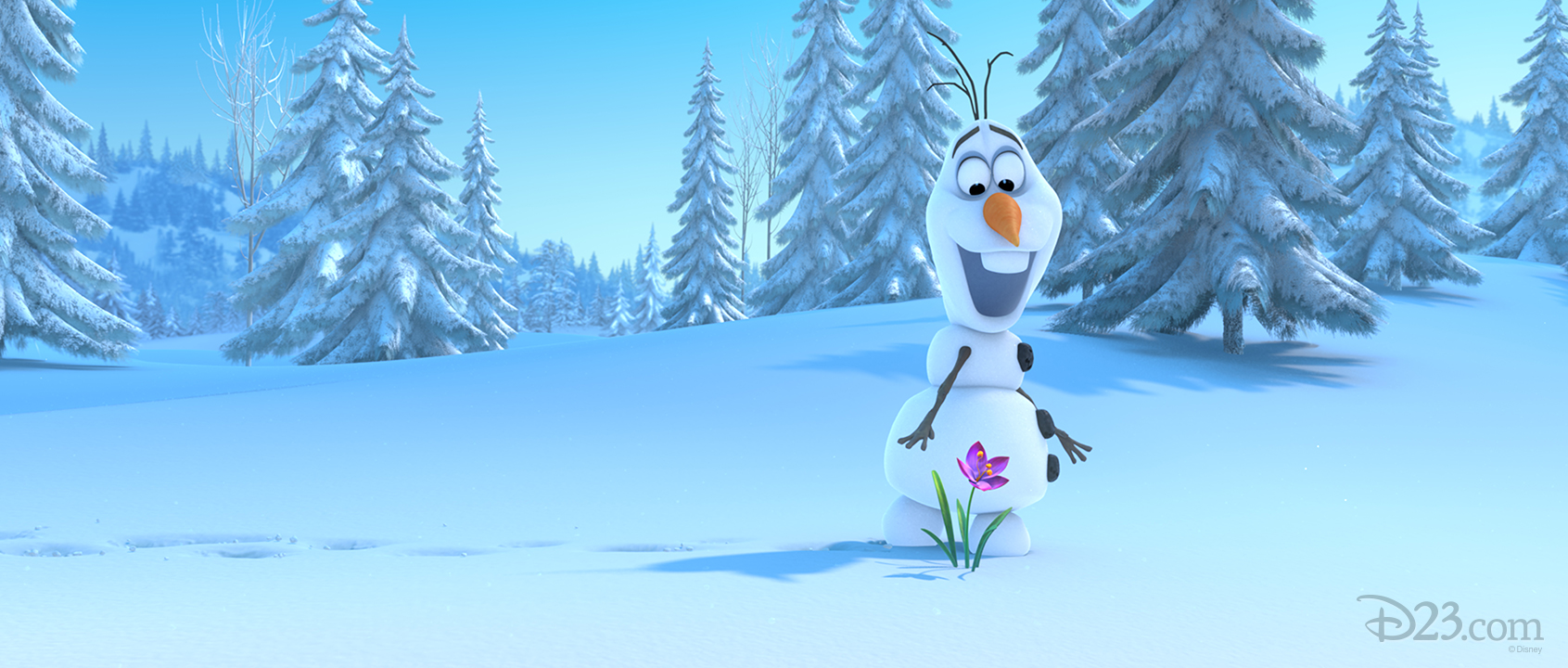
Olaf wakes up without a name, nose, or context and constructs identity from scraps moving just outside the first film’s camera.
Immediate reaction
Olaf enters existence mid-crisis and nobody gives him orientation. Elsa creates him during a song, leaves, and the new person begins walking. That is funny until the short starts asking what a self does before anyone else confirms it is a self.
He experiments with names, bodies, objects, and social responses. Identity arrives through improvisation rather than revelation. The snowman does not uncover one hidden essence. He builds continuity from whatever the world gives back. Each encounter becomes a receipt he can carry into the next choice, so the emerging self feels accumulated instead of installed.
The missing nose
The carrot is a visual requirement audiences already know, so the short turns inevitability into choice. Olaf encounters possible noses and learns that appearance changes how others respond. He keeps searching until the familiar carrot becomes attached to a relationship and a story.
That makes the object more than costume. Sven’s involvement links Olaf’s final form to kindness inside confusion. The body becomes a record of encounter. Olaf’s recognizable appearance is therefore relational, assembled through help, misunderstanding, appetite, and persistence rather than produced by Elsa as a finished design.
Memory and borrowed language
Olaf repeats phrases and desires connected to Elsa and the sisters’ childhood even though he cannot narrate the source. The franchise never gives a clean technical account of how much Elsa’s creations inherit. The ambiguity is better than a database explanation.
He carries emotional residue before he carries biography. Summer, warmth, hugs, and play arrive as attractions. The short treats those impulses as enough to begin, then lets later relationships give them meaning. Desire becomes an early archive, holding traces of the childhood bond that inspired him before he can explain whose memories those traces resemble.
Reusing the first movie
Stories built between existing scenes can feel like franchise tax. This one succeeds because the callbacks function as environment rather than applause signs. Olaf crosses paths with events the audience recognizes, but he remains focused on his own immediate problem.
The best joke is that a kingdom-saving narrative has room for countless private emergencies outside the frame. Anna and Kristoff are racing toward Elsa. Olaf is deciding whether a sausage should be his nose. Both scales matter to the person inside them.
RaeRae verdict
The short is slight and emotionally precise. It gives Olaf an origin without draining the strangeness from him, then returns him to the exact point where the first film can continue. 7.5/10. Existentialism, but make it carrot.
Olaf wakes in the middle of somebody else’s liberation song
Elsa creates Olaf during “Let It Go” and continues up the mountain without noticing a new consciousness behind her. The moment is funny because the first film treated creation as background magic. The short changes camera ownership. A franchise-defining song becomes the first seconds of another person’s life, and that person receives no orientation.
Olaf has movement before identity. He can walk, react, desire, and search without knowing his name or purpose. The sequence separates personhood from biography. He does not need a complete origin explanation before his experience matters.
Fragments of Elsa and the sisters’ childhood survive inside his interests. Warm hugs, summer, play, and recognizable phrasing arrive without a narrated memory. The short suggests emotional inheritance rather than a downloaded archive. Olaf begins with tendencies and builds meaning through encounter.
His creator’s absence is not framed as cruelty. Elsa is in crisis and does not understand the scope of what she made. That does not eliminate responsibility. The franchise quietly creates a future question: what does Elsa owe sentient beings produced by magic during moments she barely registers?
A name is tried on, not uncovered from a secret label
Olaf searches for a name through sound, suggestion, and social response. The process is comic because viewers already know the answer. Dramatically, it lets identity emerge through experimentation. He is not handed a complete self by the creator or an authority figure.
The shop sequence offers objects that could become parts of a body. Each possibility changes how the world sees him and how he sees himself. A nose is practical, aesthetic, social, and symbolic at once. The familiar carrot eventually matters because the choice becomes attached to Sven and kindness.
Oaken treats the walking snowman as unusual without making existence conditional. Commerce continues around wonder. That tone is important in a franchise where adults once responded to magic with fear and confinement. Olaf encounters curiosity, inconvenience, and pursuit, but not an institution deciding he must disappear.
The short never turns self-construction into a solitary achievement. Olaf chooses, but other beings provide language, objects, reactions, and help. Identity is personal and relational. He becomes himself through contact without being reducible to what others call him.
The wolves make the borrowed nose into a question of survival
The chase reconnects Olaf’s tiny journey to the danger already moving through the first film. Wolves are pursuing Kristoff and Anna elsewhere, and this off-camera route gives Olaf his own version of physical threat. His detachable body makes violence comic without removing urgency.
The possible noses become tools and liabilities. The joke tests whether appearance is essence. Olaf remains Olaf before the carrot and while every substitute fails. The final design is recognizable because relationship stabilizes it, not because personhood waited inside one vegetable.
Sven’s involvement is especially effective. He could keep the carrot as food. Instead, encounter becomes exchange. Their later friendship now has a small prehistory. The short adds continuity without forcing the audience to believe the entire first film was secretly choreographed around the missing scene.
Stories inserted into existing timelines often become cameo machines. This one stays focused on Olaf’s immediate need. Recognizable events remain weather around him. The kingdom-saving plot is important, and so is the new person trying to assemble a face.
Summer is inherited longing before it is informed desire
Olaf’s attraction to summer appears before he understands heat. The first feature used that contradiction for dramatic irony. The short places it closer to origin. He carries an image of warmth and togetherness from the emotional material that created him.
Desire does not need correct information to be sincere. Anna desires a prince because she associates access with love. Elsa desires isolation because she associates distance with safety. Olaf desires summer because warmth feels like belonging. Each fantasy contains a real need and a mistaken route.
Later experience does not humiliate him out of the desire. Elsa creates a flurry so Olaf can enjoy warmth without dying. The family adapts environment around a person’s joy. That is a better resolution than declaring he should have wanted something safer.
The short therefore makes summer less random. It is a memory-shaped orientation toward the childhood room where snow magic and warmth once coexisted because the sisters were together. Olaf wants the emotional climate before he knows the physical season.
Final reaction
The short earns its existence by changing point of view rather than changing canon. It gives Olaf agency inside a gap, connects identity to relationship, and preserves mystery around magical consciousness. The explanation adds emotional structure without becoming a technical manual.
The callbacks work because Olaf does not stop to admire the franchise. He is busy. Events recognizable to the audience pass at the edge of his problem. That is how a world feels larger than one protagonist route.
I still want the franchise to confront creator responsibility. Elsa can make life accidentally. Olaf, Marshmallow, and the Snowgies should not exist only when their usefulness or cuteness serves a royal story. The short opens that door and walks away before paperwork arrives.
RaeRae React verdict: 8.5/10. Existentialism with a carrot, a sausage, and absolutely no onboarding department.
Keep exploring Frozen
Return to the Frozen hub for character files, reviews, Reacts, rants, lore, and watch-order guides.
Olaf’s search is funny because he treats tradition like an object somebody forgot to deliver. What he finally learns is gentler: the sisters already built a tradition by continuing to choose one another after years designed to keep them apart.
Olaf builds identity from objects other people discarded
The short follows a newborn consciousness trying on names, noses, voices, and social cues without an instruction manual. A carrot, a summer song, a merchant’s reaction, and a pack of wolves become evidence in an improvised self. That process is funny because Olaf accepts contradictions with extraordinary confidence. It is also recognizable. Identity often begins through available material before a person can distinguish what was chosen, assigned, borrowed, or misunderstood.
Nobody around him understands the scale of the event. To the humans, he is a moving snowman interrupting an already dangerous day. To Olaf, every encounter is foundational. The short honors that gap without making the side character’s experience less real than the feature film happening nearby. Anna and Elsa carry the kingdom plot. Olaf carries the quieter plot of becoming somebody before anybody who loves him has arrived to witness it.
The wolves create danger without becoming his origin story
Olaf survives pursuit through accident, elasticity, optimism, and the physical possibilities of a body that can come apart without ending. The chase teaches him that the world can be hostile, but it does not convince him hostility is the world’s only truth. That matters because origin stories often treat first harm as destiny. Olaf encounters danger early and still remains available for connection.
His resilience is not proof that the chase was harmless. It is proof that a person can develop playfulness without having received safety first. Later affection from Anna, Elsa, Kristoff, and Sven will give that playfulness somewhere to rest. The short does not pretend he raised himself in an emotional vacuum. It shows the unfinished person moving toward the relationships that will help his values become more than emergency improvisation.
Meeting Anna completes a memory neither character fully owns
Olaf recognizes parts of the bond Elsa and Anna created in childhood even though his current consciousness did not experience those years in the same way. He carries design, language, and emotional intention across a rupture. Anna recognizes the snowman as evidence that her sister’s love survived the closed door. Their meeting joins two incomplete archives and turns a childhood symbol into a present relationship.
I keep this React because the short gives a comic character the dignity of interior formation. Olaf does not pop into existence fully assembled for somebody else’s plot. He wanders, misreads, chooses, repairs, and collects enough evidence to greet Anna as himself. The kingdom is busy being saved, but a person becoming real is also an event worth stopping to notice.
A name becomes real when Olaf begins answering from inside it
At first, identity is a scavenger hunt through objects and reactions. By the time Olaf reaches Anna, the pieces have become a point of view. He has preferences, curiosity, a theory about summer, and a stubborn willingness to interpret danger as another problem he can walk through. The name no longer labels a design Elsa made. It belongs to the person who has begun choosing how that design moves through the world.
That ownership matters because created characters are often treated as extensions of their maker. Elsa supplies magic and a childhood memory, but she does not author every decision Olaf will make. Personhood begins where usefulness, intention, and origin stop being the same category. The short gives him enough independent experience that meeting his creator later feels like the beginning of a relationship rather than the completion of an object.
The comedy protects vulnerability without erasing it
Olaf is funny because his confidence outruns his information, not because the story believes his search is meaningless. He can misunderstand a carrot, survive wolves, lose body parts, and keep talking while the audience understands that he is alone. Humor makes the solitude watchable, but the loneliness remains in the structure. Nobody knows to look for him because nobody knows he exists yet.
That condition makes his optimism active rather than empty. He keeps approaching the next encounter without evidence that the world will become safe. When Anna finally responds with recognition and affection, the scene does not create his worth. It gives social confirmation to a self he has already been building. The joke character arrives in the main story carrying an interior life the feature never had time to show.
The short changes how his later sacrifice reads
Once we have watched Olaf struggle toward identity, his willingness to melt for Anna carries more weight. He is not a disposable magical extension returning value to the family that created him. He is a person with a hard-won self choosing what love asks from him. The origin short protects that sacrifice from becoming an object fulfilling its purpose.
It also makes his later resurrection feel less like replacing a broken toy. Elsa restores a specific consciousness held through water, memory, relationship, and magic. Frozen remains inconsistent about the rules, but the emotional claim is clear: Olaf’s experiences belong together. His body can change and reassemble without making the person inside those experiences interchangeable.