
Anime 101 · Cultural Context · Pretty Fjords Are Not the Whole Receipt
Frozen, Norway, and Sámi Influence: What Arendelle Borrows and What the Movies Leave Unnamed
Frozen builds Arendelle from Norwegian landscapes, architecture, rosemaling, clothing, and Sámi-inspired material. This guide separates credited research from fantasy shorthand.
Arendelle is invented; its visual sources are not
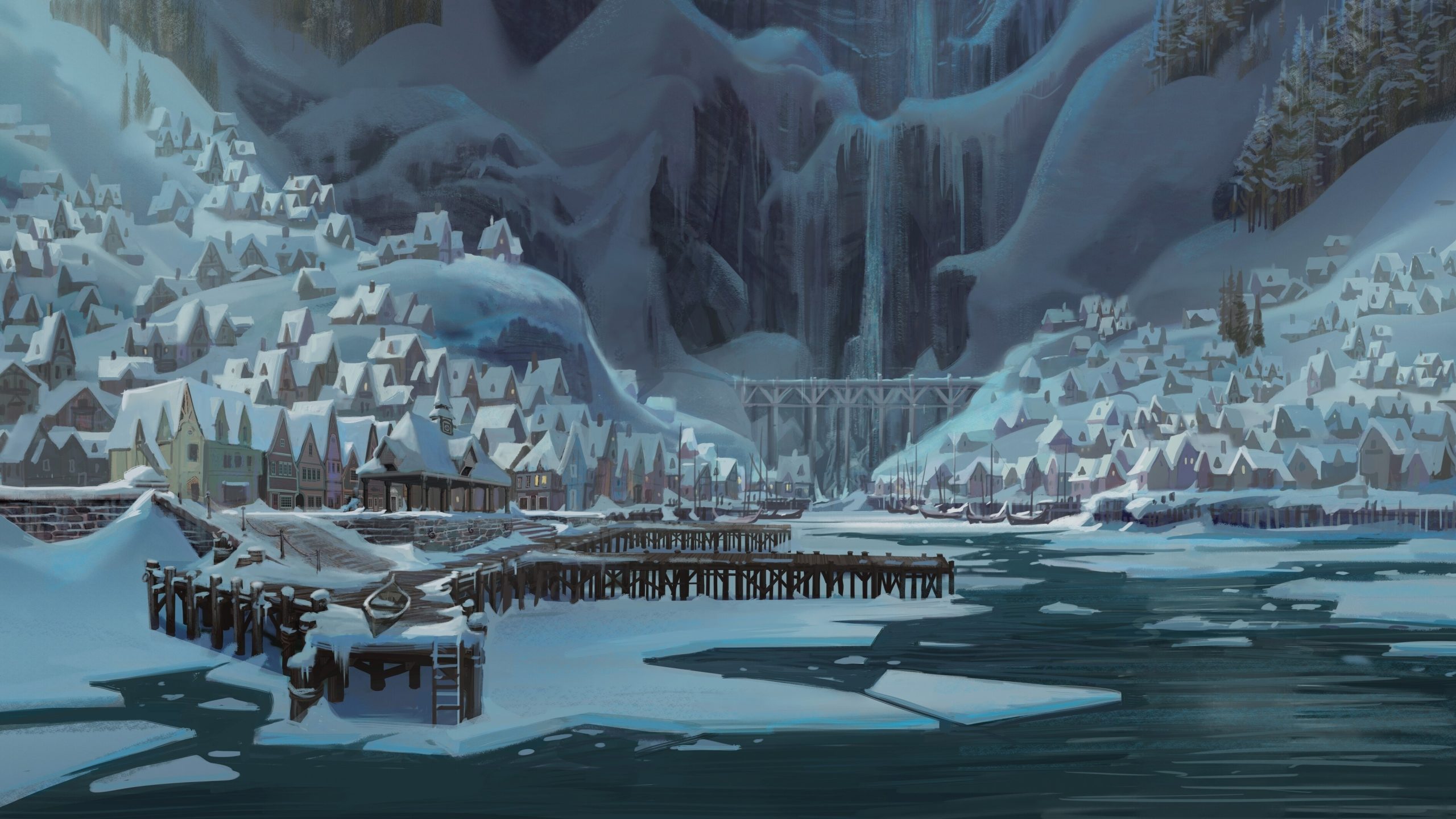
Arendelle is a fictional kingdom, but its fjord geography, stave-church silhouettes, decorative interiors, bunads, and painted floral motifs signal Norway with very little ambiguity. Art director Mike Giaimo described researching Canada and Norway, then realizing most of the material shaping his visual interests came from Norway.
Fantasy does not erase source culture. It changes the responsibility of the adaptation. When a studio turns specific design traditions into a globally marketed kingdom, audiences deserve to know which details came from real communities and which were rearranged for story convenience.
Rosemaling and architecture
Rosemaling is a Norwegian decorative painting tradition built from flowing floral forms, scrolls, line work, and regional styles. Frozen uses related motifs across palace walls, furniture, costumes, and props. The decoration helps Arendelle feel designed from one visual system rather than assembled from generic European princess parts.
The kingdom’s architecture also borrows from stave churches, fortresses, and towns around Norwegian fjords. The result is not a documentary map. Distances, class structures, political systems, and climate behavior serve the musical. Still, the visual specificity is why Arendelle felt different from the anonymous castles animation had used for decades.
Sámi influence and Kristoff
Disney artists visited a Sámi reindeer farm while researching the first film, and Kristoff’s clothing and occupation carry Sámi-inspired elements. The Sámi are Indigenous peoples whose homelands, Sápmi, span parts of Norway, Sweden, Finland, and Russia. Reducing that history to “cute reindeer culture” strips away language, sovereignty, assimilation, and living political reality.
The first film uses inspiration without naming it inside the story. Frozen II worked with Sámi consultants and created the fictional Northuldra, but Northuldra are not a substitute name for Sámi people. They are fantasy characters shaped through consultation. the difference is important because viewers should not leave believing Disney invented the cultural material.
The Northuldra and the consultation agreement
For Frozen II, Disney entered a collaboration with representatives from Sámi organizations through a group often described as the Verddet advisory group. The work included cultural guidance and commitments extending beyond a few costume notes. That process does not make every choice immune from criticism, but it represents a different level of accountability than uncredited extraction.
The Northuldra storyline also links cultural conflict to the kingdom’s buried violence. King Runeard presents a dam as a gift while designing it as control. The plot is fictional, yet the language of development, mistrust, land, and paternalistic intervention echoes real colonial patterns.
How to discuss influence without turning people into trivia
A useful guide names sources, links living communities to the present, and avoids treating resemblance as ownership. It does not call every Nordic-looking object Sámi. It does not use the Northuldra as evidence for claims about all Indigenous peoples. It does not assume consultation ends debate.
Frozen’s design achievements remain worth studying. So do the power relationships that decide which culture becomes universal fantasy, whose name appears in the marketing, and who has to explain that their clothing, land practices, and political history did not begin when an American studio needed texture.
Sources and further reading
This guide draws on D23’s account of the production’s Norway research, Walt Disney Animation Studios material, the Sámi Council’s public information about collaboration, and official Frozen II production coverage. Source links remain attached to the media record and will expand as the Frozen 3 production publishes new cultural and design material.
Arendelle is fictional. Its sources are not.
Arendelle combines Norwegian landscape, architecture, decorative arts, clothing references, food, and royal-fantasy invention. Calling the result “Scandinavian” is too broad to explain what artists studied and too vague to help viewers recognize living traditions. Stave-church forms, fjord geography, carved wood, painted floral ornament, textiles, and regional costume influence give the kingdom visual specificity. The film rearranges them into a fictional monarchy rather than documenting one place.
That distinction protects both analysis and imagination. Viewers can appreciate a coherent fantasy world without claiming every object is an accurate national artifact. Production design selects, exaggerates, combines, and invents. A guide should identify the source where documentation exists, then explain how the film transformed it.
“Nordic” should not become a mood meaning snow, braids, runes, and choral music. The region contains different nations, languages, histories, and Indigenous cultures. Specific naming is not homework pasted over enjoyment. It is how beauty stops floating free of the people whose work and environment made it possible.
The safest habit is source before symbolism. First identify whether a design has a documented Norwegian or Sámi relationship. Then interpret what the film makes it do. Do not assign sacred meanings to decorative shapes because a fan account says they look ancient.
Sámi influence and the limits of Kristoff as representation
Kristoff’s reindeer livelihood, clothing, musical context, and northern coding draw attention toward Sámi culture, but the first film does not identify him as Sámi or place him inside a named Sámi community. Calling him complete representation overstates the text. Pretending the influence is absent erases its source. Both truths have to remain visible.
Frode Fjellheim’s “Eatnemen Vuelie” informs “Vuelie,” the choral opening associated with the franchise. The sound should not be reduced to mystical atmosphere. It enters through an artist and a musical practice with cultural history. Credit belongs near interpretation, not hidden after the magic has been consumed.
Frozen II created the fictional Northuldra through consultation and cooperation with Sámi representatives. That step matters and does not make Northuldra equivalent to Sámi people. Fiction combines sources and serves plot. Real communities contain histories and debates no franchise substitute can represent in full.
Use “Sámi-inspired” or describe the documented influence when discussing the fictional material. Avoid calling the Northuldra a tribe as generic fantasy shorthand. Avoid treating reindeer as proof of one identity. Avoid turning clothing details into costumes available for decontextualized imitation.
The dam, development, and why cultural context changes the plot
Runeard calls the dam a gift. Without historical context, viewers may read the conflict as magic disliking technology. The story is more precise. Infrastructure can be used to alter land, weaken a community’s autonomy, and make control look like progress. The Northuldra leader’s objection is knowledge, not irrational resistance.
Colonial projects often describe affected people as obstacles to modernization and dismiss ecological expertise until harm becomes unavoidable. Frozen II translates that pattern into a family film. Runeard fears the Northuldra relationship with magic because it limits his authority. The dam changes water and provides a structure Arendelle controls.
Anna’s destruction of the dam is therefore not anti-development spectacle. It is removal of an instrument whose public purpose concealed coercion. The film’s decision to save Arendelle from the flood reduces the visible cost, but the ethical distinction remains: a project cannot be a gift when the giver controls the land, terms, and definition of benefit.
Cultural context also prevents Iduna’s ancestry from becoming an easy reconciliation device. One Northuldra woman saving and marrying an Arendellian prince does not repair state violence. Anna and Elsa inherit connection and responsibility, not automatic authority to declare the communities healed.
How to appreciate the design without flattening the people
Name artists, consultants, places, and traditions when reliable sources support the connection. Separate official production claims from visual inference. A rosemaling-like motif can be discussed as design influence without inventing a translation for every curl. A garment can evoke regional bunad traditions without becoming an accurate replica of one community’s formal dress.
Do not use the films as the only source for Norway or Sámi culture. They are gateways created by an American corporation for global entertainment. Follow curiosity outward toward museums, cultural institutions, Sámi organizations, historians, musicians, textile artists, and people speaking from their own communities.
Fan art should preserve the distinction between inspiration and identity. Reimagining a fictional character is different from treating ceremonial or culturally specific clothing as aesthetic inventory. If the artwork makes a historical claim, research it. If it is fantasy, label it as fantasy rather than borrowing authority from a real culture.
The goal is not purity. Cultural exchange is part of art. The goal is accountable attention. Frozen became richer because artists looked beyond generic snow. Audiences can return that respect by learning enough to recognize when the franchise is borrowing, when it is inventing, and when the people behind an influence deserve the center of the sentence.
Common mistakes in Frozen cultural commentary
Do not call every northern vocal sound throat singing, joik, or chant without evidence. Joik is a specific Sámi vocal tradition with diverse contemporary practice. “Vuelie” and its source should be credited through documented creators and descriptions, not reduced to an exotic sound effect. Precision protects the musician from disappearing behind the atmosphere.
Do not describe Northuldra clothing as historically exact Sámi dress. The fictional designs were developed through reference and consultation for an animated world. Real Sámi clothing varies by region, family, purpose, and community. Treating one film design as universal costume flattens that diversity and encourages imitation without context.
Do not turn Iduna into proof that Arendelle and the Northuldra were already reconciled. She concealed identity inside the royal household, and the kingdom continued believing Runeard’s version. Private love across communities can coexist with public injustice. A marriage is not a treaty.
Do not use “both sides” to describe the forest battle after the truth is known. Individuals on both sides experienced fear and loss, but Runeard planned the coercive dam and murdered the Northuldra leader. Moral complexity does not require pretending responsibility was evenly distributed.
A source ladder for responsible fandom research
Begin with the released films and shorts for claims about what happens on screen. Use official credits, production notes, museum or studio exhibitions, and recorded creator interviews for production decisions. Use Sámi institutions, scholars, artists, and community voices for Sámi culture. Disney can document its consultation process. It cannot become the sole authority on the people consulted.
Art books are valuable because they preserve visual development, discarded designs, and research references. They show possibility, not always final canon. A caption written during production can describe an idea that changed. Compare development art to the released scene before stating that the story established the same meaning.
Fan wikis are indexes, not final authorities. Follow their citations. If a cultural claim has no source beyond another fandom page, do not repeat it as fact. If a pattern resembles a known tradition, phrase the resemblance as observation until documentation supports attribution.
Good research should make the world larger. If an article ends with more knowledge about Arendelle and none about Norway or Sámi people beyond what Disney selected, the research remained inside the franchise’s frame. Follow at least one thread outward until the living culture is allowed to speak without the movie standing in front of it.
Keep exploring Frozen
Return to the Frozen hub for films, character files, reviews, rants, and Anime 101 guides.
A respectful reading begins with named people, not decorative influence
The films’ Norwegian architecture, clothing references, food, landscape, and decorative art are easy for audiences to recognize as a general northern European mood. Sámi influence requires more precise language because living Indigenous cultures are not an anonymous design library. Naming duodji, reindeer-herding histories, clothing traditions, language, land relationships, and the particular consultants or artists involved keeps admiration attached to people. “Inspired by Scandinavia” is too broad when a production borrows signs that viewers may read as belonging to one invented magical North. Specific credit is not trivia. It is the difference between treating culture as authorship and treating it as texture.
The Northuldra are fictional, but the associations are not neutral
The Northuldra are not a documentary representation of any single Sámi community. They are fictional people shaped through recognizable Indigenous associations, including reindeer, relationship to land, patterned clothing, oral memory, and conflict with a state that built infrastructure on their territory. That fictional distance gives storytellers flexibility, but it can also let audiences consume historical patterns without learning whose histories made them legible. A careful viewer can appreciate the characters while refusing to collapse Sámi peoples into the Northuldra or to treat one fantasy reconciliation as a solution to real political struggles.
The dam makes colonial harm material
King Runeard’s dam matters because colonial violence is not reduced to personal prejudice. The structure changes water, land, movement, and survival while presenting itself as a gift. That is how power often protects itself: extraction or control arrives wearing the language of improvement. The enchanted forest cannot heal through a nicer royal speech because the harm is built into the landscape. Destroying the dam gives repair a material dimension. The film then softens the cost by sparing Arendelle from the expected flood, which preserves emotional comfort but weakens the argument that restitution may require the benefiting society to surrender something real.
Consultation is a beginning, not an immunity card
Production consultation can improve language, clothing, music, story details, and working relationships. It does not make every resulting choice automatically beyond criticism. Consultation has to be discussed alongside who controls the final script, who owns the characters, who profits, what agreements continue after release, and how marketing describes the culture. The important question is not whether Disney can display a consultant’s name when challenged. It is whether the collaboration changed power, credit, accuracy, and material benefit. Fans can recognize meaningful steps without turning those steps into a shield that ends the conversation.
What fandom should carry forward
The useful fandom habit is curiosity with receipts. Learn which details come from Norwegian history, which draw from Sámi cultures, which belong to the invented Northuldra, and which were created for the needs of a fantasy sequel. Avoid using film costumes as if they were interchangeable with living ceremonial or everyday clothing. Follow Sámi writers, artists, museums, and institutions beyond Disney’s framing. Most of all, remember that the film’s best political idea is not mystical: a beautiful kingdom can be built on a buried wrong, and love for the kingdom does not require protecting the lie. Repair begins when inherited comfort stops outranking somebody else’s history.
Architecture can make an invented kingdom feel historically innocent
Arendelle’s visual charm comes from buildings, carved surfaces, painted ornament, textiles, ships, and mountain geography that suggest a specific past without requiring the story to name one country. That selective specificity is powerful. Viewers feel history even when the screenplay avoids its conflicts. The sequel interrupts that innocence by revealing that royal architecture and prosperity exist beside a forest trapped by an earlier king. Production design therefore does political work before dialogue catches up. The kingdom looks worth loving, which makes the demand to question its foundation emotionally difficult instead of abstract.
Iduna carries the cost of cultural translation
Iduna moves from the Northuldra community into Arendelle, conceals her origin, becomes queen, and raises daughters who do not know the history connecting their family to the forest. Her silence protects her inside one system while transferring confusion to the next generation. The film gives that silence tenderness and fear, but not enough ordinary detail about what she lost, practiced privately, or hoped to tell her children. A cultural reading should resist turning Iduna into a mystical bloodline delivery system for Elsa. She is a person navigating assimilation, safety, love, and the consequences of a truth made dangerous by royal power.
Credit should remain visible after the promotional cycle ends
Cultural collaboration often receives attention during release interviews and then disappears when audiences repeat simplified trivia. A durable guide keeps names, agreements, and community perspectives attached to the work after the marketing window closes. It also updates when better sources become available. The point is not to build a purity score for a fantasy film. The point is to prevent a global corporation from becoming the only narrator of cultures it borrowed from. Fans already know how to track animators, composers, and voice performers. We can bring the same energy to historians, language workers, cultural advisors, and the communities whose knowledge made the fictional world readable.
Fantasy does not cancel responsibility
Invented kingdoms need freedom to combine references, simplify geography, and create new traditions. That freedom does not make every cultural choice consequence-free. When millions of viewers encounter a visual or musical tradition first through Arendelle, the fantasy may shape what they later assume about real people. Responsible fandom does not demand that one movie become a textbook. It asks the movie to name its sources honestly and asks viewers to keep learning after the credits. Wonder survives context. In fact, context usually makes the craft more interesting because borrowed details stop looking like generic decoration and begin carrying histories, makers, and living communities.
Cultural credit has to remain visible after the costume leaves the screen
The consultation and later Sámi-language version matter because they acknowledge that inspiration came from living communities rather than a fantasy warehouse labeled “northern.” Credit should keep traveling with the imagery when audiences discuss the films, merchandise, tourism, and franchise identity. Otherwise specificity becomes profitable at the point of design and strangely anonymous at the point of public memory.
A useful guide cannot resolve that tension by declaring the collaboration either perfect or meaningless. It can name the sources, distinguish Norwegian national imagery from Sámi cultural elements, track what the films combine, and leave room for Sámi writers and institutions to describe their own experience of the relationship. The goal is better attribution and sharper viewing, not borrowing somebody else’s authority to certify Disney’s choices.
The names belong beside the images
When a design cue can be named, naming it is part of responsible fandom. The point is not to build a purity test around every embroidery line or musical phrase. It is to keep real communities visible after a global franchise turns selected cultural details into familiar fantasy language. Attribution gives audiences a route toward deeper learning instead of letting aesthetic recognition become the end of the conversation.