
Frozen Character Profile · Living Snowman · Memory Keeper · Professional Overexplainer
Olaf
Memory, mortality, comedy, created personhood, warm hugs, and the snowman who understands more than the adults expect.
Profile
| Name | Olaf |
|---|---|
| Nature | Sentient snowman created by Elsa’s magic |
| Creator | Elsa of Arendelle |
| Principal English voice | Josh Gad |
| First feature appearance | Frozen (2013) |
| Known abilities | Detachable body, magical reassembly, heat survival after Elsa’s protection, memory restoration |
| Family | Elsa, Anna, Kristoff, Sven, and Elsa’s other magical creations |
| Current state | Restored after the events of Frozen II |
Name, age, and canon limits
Olaf has a clear creation event but no human age. Counting calendar years from the eternal winter can describe how long his current consciousness has existed, but it does not translate cleanly into childhood or adulthood. His vocabulary, emotional needs, factual knowledge, and social judgment develop at different speeds because he was created speaking and reasoning rather than born as an infant.
The films do not provide a surname, legal status, citizenship process, or a complete account of whether other people regard Elsa’s magical creations as persons under Arendelle’s law. Those gaps matter. Calling him a citizen, prince, pet, child, or immortal as settled canon would move beyond the evidence. The profile can analyze those possibilities while keeping the factual record honest.
Power file and practical limits
Olaf can remove and rearrange his own pieces, survive separation, manipulate sticks as arms, and continue speaking through physical disruptions that would be fatal to an organic body. Elsa’s magic maintains his consciousness and structure. Her personal flurry first protects him from warmth, and later permafrost allows greater environmental independence.
He is not invulnerable. Heat originally melts him, magical interruption dissolves him, wind can scatter him, and detachable pieces can be misplaced or assembled incorrectly. His low weight and flexible body help with comedy but limit force. The most important power is continuity through water memory after Elsa returns, though the films do not define whether that restoration would work without her intention and magic.
Bottom line first
Olaf is not merely the joke delivery system standing between the sisters and the next plot point. He is Elsa’s childhood memory given a body, Anna’s lost playmate returned without the history of being lost, and a created person who has to learn that permanence was never included in the miracle that made him conscious.
His comedy works because innocence keeps colliding with information. He understands love before he understands heat. He can identify emotional avoidance before he understands aging. By the sequel, the snowman who once wanted summer is worried about change, mortality, family separation, and whether facts can protect him from fear.
Profile and identity
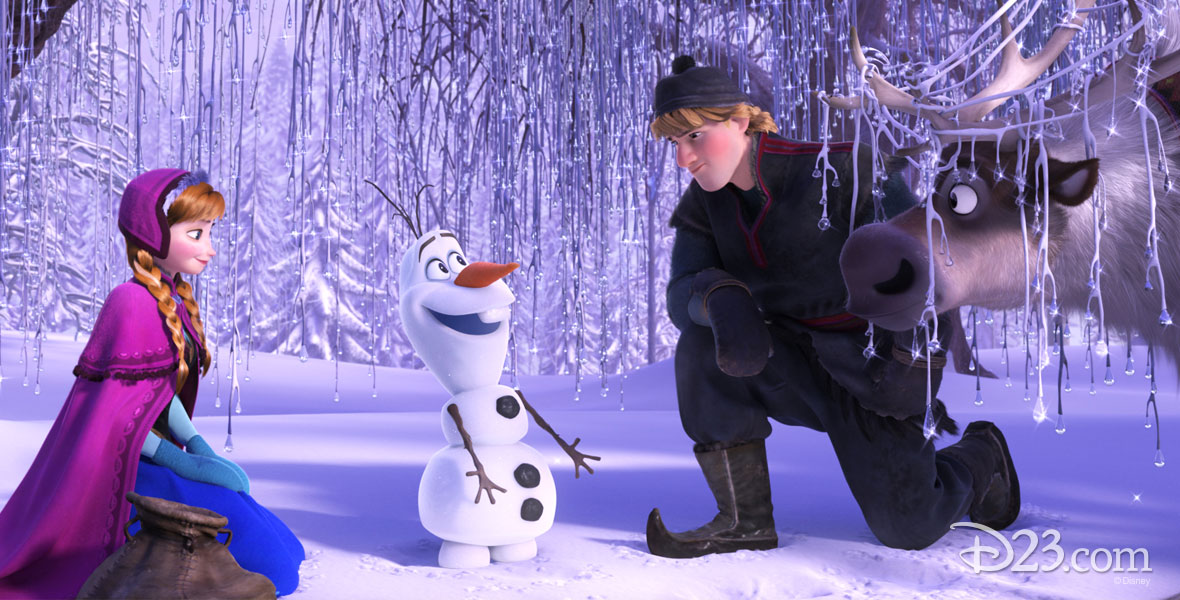
Olaf is a living snowman created by Elsa’s magic during the eternal winter in Frozen. His body is made from snow, coal, sticks, a carrot nose, and an uneven arrangement of pieces he can detach and reassemble. Elsa later gives him a personal flurry so he can survive warm weather.
Josh Gad provides Olaf’s principal English voice across the feature films and major animated continuations. The character first appears physically in the 2013 film, but his shape and name begin in Anna and Elsa’s childhood play. That distinction matters because the adult Olaf inherits an emotional history he does not consciously remember.

Before consciousness: the childhood snowman
Young Anna and Elsa build a snowman while playing in the ballroom, and Elsa gives their creation the name Olaf. The little figure becomes shorthand for intimacy before fear separates the sisters. Anna later repeats “Do you want to build a snowman?” because the activity represents access to Elsa, not simply a toy made of snow.
When Elsa creates a living Olaf years later, the magic restores the shared symbol without restoring the childhood itself. He resembles the old snowman and repeats some of Elsa’s language, but he begins as a new consciousness. The franchise uses him as evidence that memory can survive inside gestures even when the people involved cannot return to the moment that created them.
Creation during the eternal winter
Olaf comes to life while Elsa is releasing years of restraint on the North Mountain. The film does not show her deliberately designing a sentient being. His life appears as an unplanned consequence of power moving through an emotionally charged memory.
That origin makes him different from Marshmallow, the Snowgies, and the elemental manifestations around Elsa. All are magical creations, but Olaf carries language, curiosity, autobiographical development, durable relationships, and a recognizable fear of ceasing to exist. The story increasingly treats him as a person rather than an animated object.
Meeting Anna, Kristoff, and Sven
Anna recognizes the name and shape before Olaf understands why she matters to him. He joins the journey with immediate trust, supplies the route to Elsa’s palace, and treats the impossible winter as a social opportunity.
Kristoff responds with suspicion and dry disbelief, while Sven engages him through physical comedy. The group dynamic gives Olaf three functions at once: guide, emotional reminder, and disruptive childlike voice. His questions force adults to state assumptions they would rather leave buried.
In Summer and dramatic irony
“In Summer” builds an entire fantasy from Olaf’s ignorance of heat. The audience understands that his dream would destroy the body having it, while Kristoff repeatedly prepares to explain and Anna repeatedly stops him.
The joke is not simply that Olaf is stupid. He reasons creatively from incomplete information and treats other people’s pleasure as evidence that warmth must be wonderful. The song establishes a pattern for his worldview: desire reaches the answer first, knowledge arrives later, and affection from the group delays the cruelest version of the lesson.
The fireplace and the first definition of love
Olaf finds Anna freezing near the palace and lights a fire even though the heat begins melting him. When Anna warns him, he answers through action and explains that love means putting someone else’s needs before one’s own.
The moment gives the film’s clearest definition of love to the character with the least social experience. He understands sacrifice because his body makes the cost visible. He also clarifies that love is behavior rather than romantic intensity, preparing the story to reject Hans and recognize Anna’s choice to save Elsa.
Elsa’s personal flurry
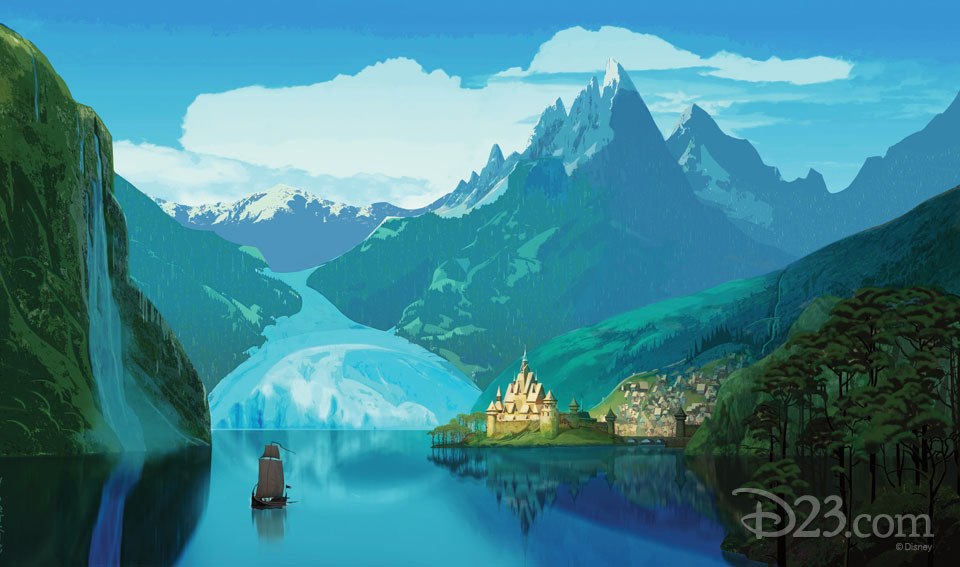
After the thaw, Elsa creates a small cloud of snow that follows Olaf and protects him from heat. The gift solves the immediate body problem without removing his dependence on magic.
The flurry is care made environmental. Elsa does not ask Olaf to avoid the world he loves. She changes the conditions so he can enter it. Later films revise the mechanics, but the emotional principle remains important: inclusion sometimes requires altering the environment rather than demanding that a vulnerable body become less vulnerable.
Frozen Fever and the Snowgies
During Anna’s birthday, Elsa’s magical cold produces tiny Snowgies with each sneeze. Olaf quickly accepts them, helps manage the chaos, and gains a group of smaller magical relatives.
The short broadens the category of Elsa’s creations without giving every one Olaf’s language or psychological depth. Olaf’s response is familial rather than territorial. His identity is secure enough to welcome beings who share his magical origin without treating consciousness as a competition.
Olaf’s Frozen Adventure
The holiday featurette places Olaf at the center of a search for family tradition. When Anna and Elsa realize the palace lacks the customs other households take for granted, he visits Arendelle’s homes and attempts to collect practices that might repair the absence.
His plan goes badly because traditions cannot be detached from context and transported like objects. The emotional answer is that Olaf himself became the sisters’ tradition through Anna’s yearly gifts and memories. The story turns him from researcher into evidence that the family created continuity while believing it had none.
Once Upon a Snowman
The short retells the interval after Olaf’s creation and before his meeting with Anna. It follows his search for identity, his acquisition and loss of possible noses, his encounter with Oaken’s shop, and the wolves that later cross Anna and Kristoff’s route.
Retelling familiar chronology from Olaf’s position gives agency to a character who originally appeared as if he had wandered in fully formed. It also confirms that identity is one of his earliest questions. The carrot matters because he chooses and receives it through a chain of encounters, not because the audience expects every snowman to have one.
Frozen II: permafrost and security
At the start of the sequel, Elsa explains that Olaf now has permafrost. He no longer needs the visible personal flurry, and his body can persist beyond ordinary seasonal conditions.
Physical stability does not create emotional stability. The upgrade arrives in the same film that makes Olaf afraid of change. His body is safer while his household is preparing to transform. The contrast turns immortality from a simple solution into a new question about what it means to endure when relationships and places do not remain fixed.
When I Am Older
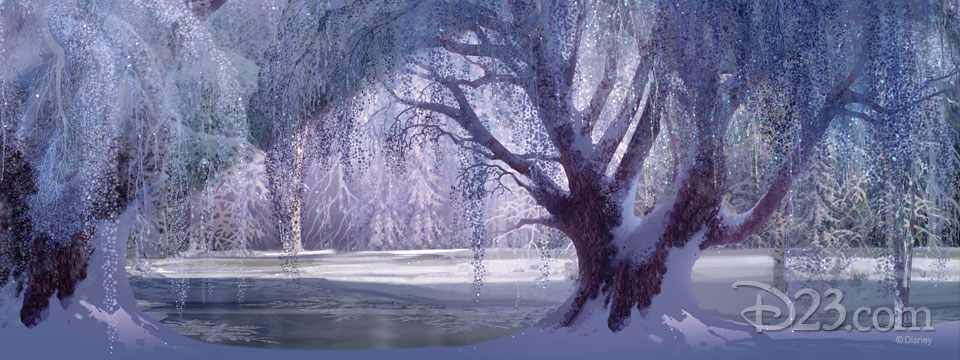
Olaf walks through the Enchanted Forest interpreting frightening magical events as experiences that adulthood will eventually make reasonable. The song is funny because every reassurance is contradicted by something visibly dangerous.
The coping strategy is painfully recognizable. He treats maturity as future certainty and knowledge as protection from fear. The film later refuses that promise. Adults can understand a threat and still be terrified. Growth does not eliminate uncertainty. It gives a person more ways to name it.
Samantha and the limits of explanation
Calling for Samantha, then admitting he does not know anyone by that name, became one of the sequel’s most portable jokes. The moment captures how Olaf uses language to keep panic moving.
Nonsense does not mean emptiness. A random name fills silence, creates a temporary imaginary social presence, and lets him laugh at his own confusion. The gag is memorable because it is structurally honest about anxiety: sometimes the mind produces noise because stillness would force it to feel the danger.
The water-memory exposition
Olaf explains the film’s rule that water retains memory, condensing a major piece of mythology into a comic lecture. He also summarizes the first movie with aggressive speed and selective emphasis for the Northuldra and Arendellian soldiers.
The exposition works because Olaf loves facts and performance but does not rank information the way a historian would. He turns trauma into entertainment without intending disrespect. That tension makes him useful and risky as a narrator. He remembers what happened, but the shape of his retelling reveals personality rather than neutral record.
Charades and social intelligence
The family charades scene lets Olaf perform words with a body that can separate, stretch, and rearrange. Elsa’s distraction disrupts the game, and Olaf notices the emotional weather even when he cannot identify its cause.
His social intelligence is uneven rather than absent. He misses convention, invades space, and says the uncomfortable part aloud. He also reads loneliness, fear, affection, and avoidance with surprising precision. The contrast keeps innocence from becoming a synonym for stupidity.
The cave, truth, and Anna
Inside the cave, Olaf accompanies Anna after Elsa pushes them away in an attempt to protect them. His presence gives Anna someone to care for while she confronts the possibility that Elsa is moving beyond reach.
He shares facts, jokes, and concern until the magic supporting him begins to fail. Anna cannot solve the collapse through optimism. The scene strips away the franchise’s most dependable comic relief and forces her to experience loss without a distraction capable of softening it.
Death in Anna’s arms
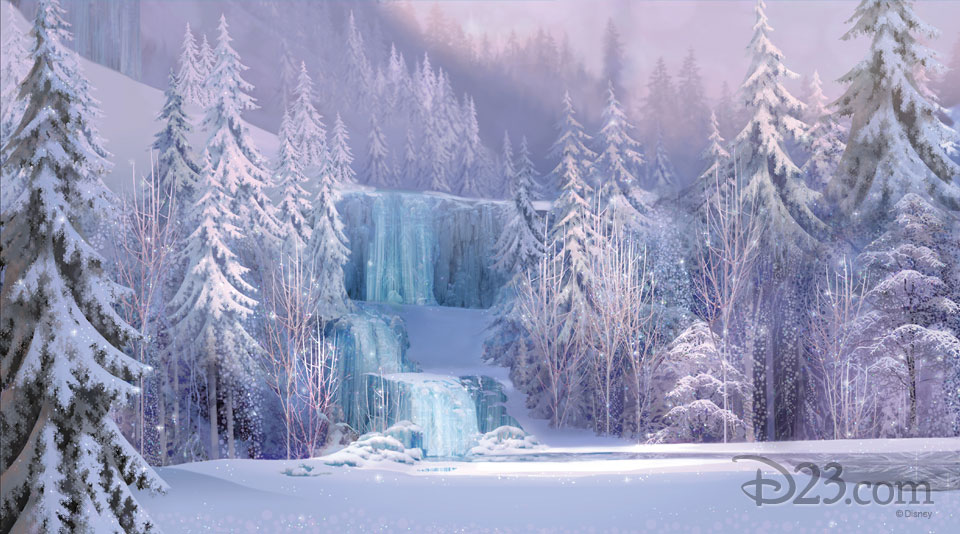
When Elsa freezes after reaching Ahtohallan’s deepest truth, Olaf’s magic disappears. He tells Anna that he thinks Elsa may not be okay and asks for a warm hug as his body breaks into loose snow.
The scene treats his death as personal, conscious, and relational. He understands enough to name the cause and choose closeness. The snowman who once endangered himself beside a fire now needs warmth as emotional comfort even while physical warmth cannot preserve him.
Recreation and continuity of self
After Elsa returns, she recreates Olaf from water memory and says that water has memory. He recognizes the family and resumes his personality, which the film presents as restoration rather than replacement.
The metaphysics remain open. Is identity the arrangement of remembered water, Elsa’s intention, a magical soul, or the relationships that recognize him? The film offers an emotional answer before a philosophical one. Olaf returns because memory and love can reassemble what grief experienced as scattered beyond recovery.
Relationship file: Elsa
Elsa creates Olaf unintentionally, later protects his body, and eventually restores him after death. He carries her childhood joy, her magical signature, and some language connected to her memories.
Their relationship can resemble parent and child, creator and creation, sibling, or magical extension, but none of those labels completely fits. Olaf becomes independent evidence that Elsa’s power can create life and care, not only danger.
Relationship file: Anna
Anna recognizes Olaf as part of the childhood she lost. He returns that symbol to her without remembering the closed door, allowing affection to form without the burden of blame.
Olaf defines love for Anna, supports her search, gathers traditions for the sisters, dies in her arms, and returns to the family she helps rebuild. Their bond is one of the franchise’s quietest proofs that chosen family can carry childhood meaning into a future that looks nothing like childhood.
Relationship file: Kristoff and Sven
Kristoff supplies skepticism and irritated realism, while Olaf supplies impossible optimism. Over time the friction becomes family banter rather than rejection.
Sven often meets Olaf through physical play and practical response. Both characters exist partly outside human speech conventions, but Sven’s quiet agency and Olaf’s verbal overflow make them useful opposites. Neither should be reduced to the pet or mascot of the human leads.
Relationship file: the Snowgies and Marshmallow
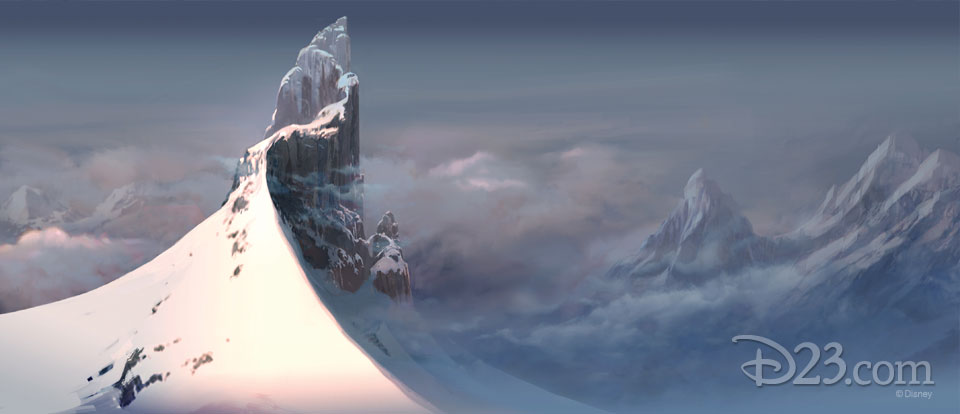
The Snowgies and Marshmallow are also created through Elsa’s power and later live around the ice palace. Olaf treats them as kin, coworkers, and fellow chaos rather than lesser copies.
The franchise has not given these beings his degree of interior narration. Their existence still complicates the world. If Elsa can repeatedly create durable magical life, Arendelle has ethical questions about personhood, responsibility, habitat, and whether creation produces obligations that extend beyond affection.
Body, disability, and accommodation
Olaf’s body can detach, melt, freeze, rearrange, and survive impacts that would end a human life. Comedy often comes from pieces being out of place, yet the films also take environmental vulnerability seriously.
The personal flurry is an accommodation, not a cure. Permafrost later changes his conditions without making him human. Reading the body carefully means avoiding a simple disability allegory while recognizing the real thematic value of access, dependence, difference, and environments designed around only one kind of body.
Memory and personhood
Olaf begins with traces of a childhood snowman he cannot consciously recall. He later gains experiences, fears, relationships, and a personal narrative. Water memory allows those experiences to be restored after physical dissolution.
The franchise therefore treats memory as material and relational. A person is not only the snow currently holding shape. Olaf persists through remembered pattern, magical cause, and recognition by others. The idea is emotionally generous and philosophically messy, which is exactly why it deserves more than a mascot paragraph.
Mortality and the promise that things make sense
The sequel gives Olaf something the first film barely permits him to consider: an ending. He jokes about danger until he feels his own magic failing, then accepts comfort without pretending the event is harmless.
His return does not erase the death scene. He now has evidence that existence can stop and resume through forces outside his control. Future stories should allow that knowledge to matter rather than resetting him to an innocent who has never confronted impermanence.
Comedy mechanics
Josh Gad uses speed, breath, sudden volume, sincerity, and tiny shifts in confidence to move Olaf between lecture, confession, panic, and nonsense. The animation supports him with detachable anatomy and expressions that can remain open even while the body does something alarming.
The strongest jokes reveal character or theme. “Samantha” externalizes fear. The summer fantasy exposes incomplete knowledge. The rapid recap shows narrative vanity. Comedy weakens when Olaf is used only to interrupt feeling. His best material lets the joke and the emotional problem arrive together.
Josh Gad and vocal authorship
Gad’s performance became central to Olaf’s identity through improvisational energy and an ability to make naïveté sound active rather than vacant. The voice can be bright without losing the small tremor that appears when Olaf recognizes abandonment or danger.
Performance credit belongs beside plot because characterization is made through delivery. A transcript of Olaf’s lines cannot reproduce the timing that turns an obvious statement into affection, irritation, or grief. The role also demonstrates how a supporting voice performance can become one of a franchise’s most recognizable sounds.
Design and visual readability
Olaf’s three uneven snow sections, stick limbs, coal buttons, large eyes, expressive brows, buck tooth, twig hair, and carrot nose create a silhouette legible at toy size or across a theater. He looks homemade because the childhood version was homemade.
The design avoids perfect circles and polished symmetry. Pieces can rotate, swap position, and separate without making the character unreadable. That flexibility supports slapstick while preserving vulnerability. The body always looks as though a hug could deform it, which makes his eagerness for hugs both funny and tender.
Songs and musical function
Olaf’s principal songs include “In Summer,” ensemble material across the films, and “When I Am Older.” Olaf’s Frozen Adventure gives him additional musical responsibility while searching for tradition.
His songs usually organize a gap between belief and reality. The orchestration commits to the belief while images expose the gap. That structure allows the audience to laugh with more knowledge than Olaf has, then reconsider whether his emotional conclusion may be wiser than the facts used to ridicule him.
Books, comics, games, parks, and alternate continuity
Olaf appears throughout picture books, chapter books, comics, games, attractions, shorts, specials, and promotional stories. Those branches often amplify curiosity, appetite for experience, detachable-body comedy, and affection for the royal family.
Not every licensed adventure occupies one clean canon. A reference profile records the branch and labels its medium rather than flattening every event into the film chronology. The recurring traits are still useful because they show what creators believe must remain for an alternate Olaf to be recognizable.
Merchandise and mascot pressure
Olaf became one of the franchise’s most merchandised figures because his silhouette is simple, his humor travels, and his friendliness works for young audiences. That success creates pressure to keep him harmless and repeatable.
Mascot status can flatten the exact qualities that made him resonate. Mortality, memory, loneliness, created personhood, and emotional insight are harder to package than a warm hug. A serious profile keeps the market history without allowing the market version to replace the character.
Reception and audience split
Many viewers love Olaf as comic relief and emotional innocence. Others find the volume, interruption, or merchandising presence exhausting. Both reactions arise from real parts of the text.
The useful question is not whether somebody is correct to find him funny. It is when the screenplay earns his interruption and when it uses him to escape a scene that needed silence. His death in Frozen II works partly because the film finally withholds the usual escape.
What criticism gets right
Olaf can overexplain themes that the drama has already made visible, and franchise material sometimes treats his popularity as permission to extend a joke past its natural ending. His innocence can also let writers simplify cultural or political material into recap.
Those criticisms do not cancel his depth. They identify a tension between character and function. Olaf is strongest when his private questions drive the comedy. He is weakest when the screenplay parks him beside somebody else’s emotion and asks recognizability to do the work.
The encyclopedia floor
A complete factual profile must include creators, voice performer, origin, physical design, abilities, film and short chronology, songs, relationships, games, alternate media, reception, and major production development. If a general encyclopedia covers those facts and this page does not, this page fails.
CVM Sekai adds the next layer after meeting that floor: childhood symbolism, created personhood, body and accommodation, memory theory, mortality, comedy mechanics, vocal authorship, adaptation boundaries, mascot pressure, and criticism tied to scenes rather than generic praise.
Future file
Olaf’s next meaningful development should begin with what he now knows. He has died, returned, watched Elsa leave the palace, and seen Anna become queen. He cannot honestly remain the same consciousness with none of those events shaping him.
Future stories can explore independence from Elsa, responsibility toward other magical creations, fear of another dissolution, and the difference between remembering facts and living with their consequences. Growth does not require making him cynical. It requires letting innocence become informed without treating information as the death of wonder.
Sources and certainty
Primary evidence comes from the feature films, shorts, specials, official Disney and Walt Disney Animation material, published credits, D23 records, Disney press assets, and the production documentary for Frozen II.
Encyclopedic and specialist references supply an omission check. Film canon, licensed adaptations, production statements, interpretation, and unknown information remain labeled separately. That sourcing discipline allows the profile to exceed a wiki summary without becoming a pile of confident guesses.
Frozen coverage
Return to the Frozen hub for every character, review, React, rant, and guide.