
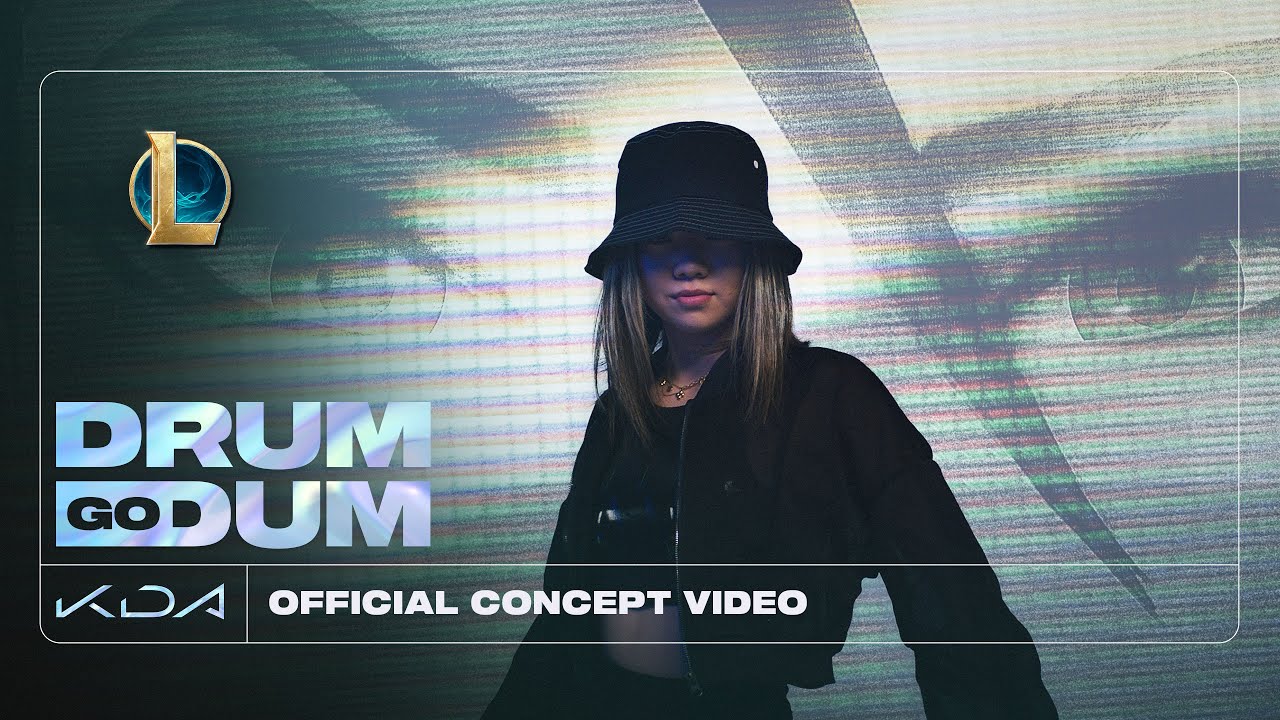
DRUM GO DUM: Bailey Sok Danced the Kai’Sa Video Riot Forgot to Animate
Bailey Sok is excellent. The beat is filthy. Aluna, Wolftyla and Bekuh BOOM sound ready to kick a club door off its hinges. I still want to know why Kai’Sa received a slideshow in her own concept video.
RaeRae verdict: bottom line
“DRUM GO DUM” is a kinetic K/DA track built for Kai’Sa’s identity as the group’s main dancer. Riot’s production snaps, rattles and drops with enough rhythmic detail to keep bodies guessing. Aluna brings club authority, Wolftyla adds a relaxed flex and Bekuh BOOM attacks the denser bars. Bailey Sok translates that changing pulse with frightening control.
The concept video is also a missed opportunity. Bailey does not fail Kai’Sa. Riot fails to give Bailey and Kai’Sa a real relationship on screen. After Evelynn received a fully imagined “VILLAIN” mansion, Kai’Sa gets brief graphics and still images around a human dancer doing nearly all the storytelling. The dance deserves praise. The character treatment deserves side-eye.
Release file
Song: “DRUM GO DUM” from K/DA’s ALL OUT EP
Featured vocalists: Aluna, Wolftyla and Bekuh BOOM
Character focus: Kai’Sa
Concept video released: November 20, 2020
Exact reviewed upload: E_PbH5y70Tc
Runtime: 3:22
Label / channel trail: Riot Games, League of Legends Music and League of Legends
Sound: bass-heavy electronic dance-pop with rapid percussion, elastic drops and three contrasting vocal attacks
Written by: Riot Music Team and Bekuh BOOM
Produced, mixed and mastered by: Riot Music Team
Vocal production: Riot Music Team, with additional vocal production by Oscar Free
Choreography: Bailey Sok, Kiel Tutin for NZX Studios and the Hiplet Ballerinas
Editing: Luis Caraza for London Alley
Sources: exact Riot concept video and production credits, official League of Legends release note and Ubisoft’s Just Dance collaboration record cited below
Lyrics and meaning: the percussion keeps moving the floor
The title sounds stupid until the drums arrive and make further discussion unnecessary. Riot’s production does not settle into one polite four-count. Kicks, metallic hits, rattling subdivisions and bass drops keep changing which part of the body receives the command. The groove is repetitive enough for a hook and unstable enough for choreography.
That instability matters. A conventional club beat could support dancing, but it would not reveal Kai’Sa’s supposed obsession with precision and movement. “DRUM GO DUM” gives a dancer accents to catch, gaps to suspend and low-end impacts to resist. Every few bars, the floor seems to tilt.
Aluna owns the club language
Aluna’s voice sits comfortably inside electronic production because she knows how little force a good groove needs. She can sound cool without becoming passive, clipping a phrase so the beat keeps its teeth. Her sections establish the party as a place she controls rather than a room she hopes will approve of her.
The production leaves air around that delivery, then crowds the frame when momentum rises. Aluna’s ease becomes the baseline from which Wolftyla and Bekuh BOOM can change the temperature. Without her, the track might spend all three minutes trying to prove it is intense.
Wolftyla turns freedom into a flex
Wolftyla’s section loosens the attack without lowering the confidence. Her tone is smoother, and the lines about freedom and refusing restraint land because she sounds amused by the idea that anybody could stop her. The contrast gives the track breathing room before the rhythm tightens again.
This is also where the fictional and human layers need honest labels. Wolftyla is one of the people giving Kai’Sa a voice on ALL OUT. Kai’Sa is not secretly singing through a computer. A performer made choices about timing, tone and attitude, and those choices shape what fans believe the character sounds like.
Bekuh BOOM attacks the crowded bars
Bekuh BOOM brings a sharper rhythmic edge and co-writing authority. Her denser phrases push against the percussion instead of floating above it. The best moments feel like a race where voice and beat keep switching the lead.
The lyrics are not deep, and they do not need to be. Pulse over one hundred, no summit, nobody holding her down: the words function as movement cues and character posture. The danger is generic empowerment language. BOOM’s attack and the production’s weird little rhythmic traps keep the slogans from becoming gym-wall vinyl.
Bailey Sok hears details the edit barely deserves
Bailey Sok changes texture with the track. She can hit an accent as if somebody pulled a wire through her torso, then release into a smaller groove before the next impact. Her isolation is precise, but precision never becomes stiffness. Weight travels through shoulders, ribs, hips and feet instead of stopping at a sequence of poses.
I especially like the moments when she delays a hit by a fraction. The beat says now; Bailey lets expectation tighten, then lands. That choice gives a prerecorded track live tension. She is not demonstrating choreography at the camera. She is arguing with the rhythm and winning often enough to make the argument fun.
Three choreography credits, not one magic teenager
The official file credits Bailey Sok, Kiel Tutin for NZX Studios and the Hiplet Ballerinas. That matters because dance videos love collapsing collaborative construction into the star standing in front of the lens. Bailey is both a choreographer and performer here, but the vocabulary has more than one source.
The Hiplet contribution is especially useful in a Kai’Sa framework because it brings ballet-derived line into conversation with club and commercial movement. The concept talks about an unconventional lesson from a new instructor. The choreography actually behaves like learning across forms, even when the visual story barely develops that idea.
Where is Kai’Sa?
Kai’Sa appears through flashes, graphics and still imagery while Bailey carries the living body of the video. I understand the concept: a real dancer receives instruction from a virtual pop star, and human motion proves the character’s influence. The execution does not give enough screen evidence for that relationship.
After “VILLAIN” built Evelynn an entire animated psychological mansion, the resource gap is impossible to ignore. Kai’Sa is K/DA’s main dancer. Her solo-focused file should have shown her dancing, trading movement with Bailey or visibly transforming the routine. Fans were not unreasonable for expecting the fictional woman named on the assignment to do more than haunt the monitor.
The rough digital room helps and hurts
Glitches, projected textures and a stripped rehearsal space keep focus on Bailey’s body. Luis Caraza’s edit catches enough musical accents to make the song visible without chopping every phrase into confetti. The roughness also separates this file from Evelynn’s luxury horror.
Still, minimalism is not a free pass for thin character storytelling. The room often feels like a stylish dance reel with K/DA branding added afterward. Replace the song and several sections would still function. A stronger Kai’Sa-specific movement exchange or visual motif could have made the concept inseparable from its fictional subject.
What changed every time I replayed it
First pass, I was annoyed about the missing animated Kai’Sa. Second pass, Bailey’s delayed accents and weight changes pulled focus back to the choreography. Third pass, I separated the vocalists and heard how Aluna’s ease, Wolftyla’s glide and Bekuh BOOM’s attack divide the track into useful movement zones.
On headphones, the percussion proved more detailed than the title’s “dum” joke suggests. My final replay held both verdicts at once: this is a very good dance performance and an underwritten Kai’Sa concept video. Praising Bailey does not require pretending Riot gave her the visual world she deserved.
Exact-file and image trail
This React covers exact official concept video E_PbH5y70Tc, not the separate audio or Just Dance routine. The featured image, hero, landing-page card and social image use the same unique local Bailey Sok frame, stored in WordPress with descriptive metadata and the official source URL.