
Day That I Died: Woosung Burns the Piano and Leaves the Grief Breathing
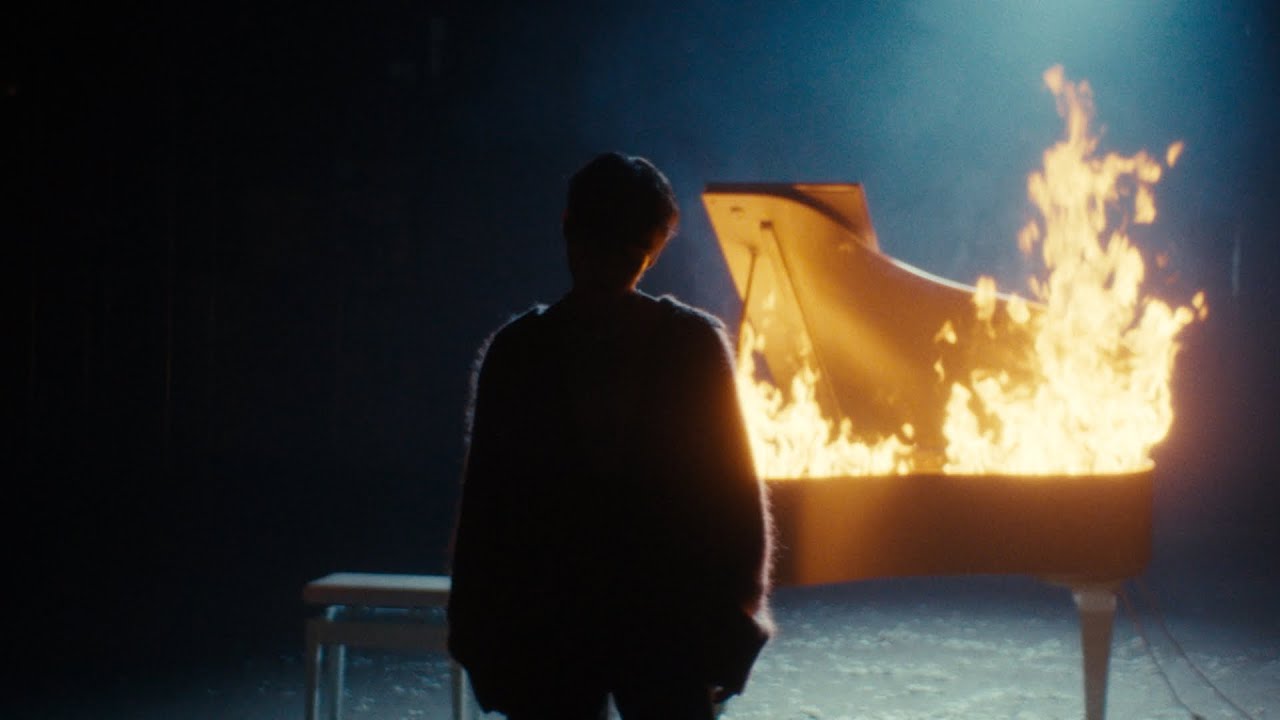
A piano is on fire, Woosung is standing close enough to feel the heat and the song still refuses the easy drama of one grand breakdown. Grief has already happened. The body is catching up.
RaeRae verdict: bottom line
“Day That I Died” is not interested in death only as a literal ending. Woosung sings the moment a bond, feeling or former self becomes unreachable, and he lets that emotional death remain beautiful without making it painless. His voice is perfectly built for the contradiction. The familiar grain and elastic vowel bends make every note sound slightly unstable, while his control keeps the song from collapsing into grief cosplay.
I expected the burning piano to be the video’s bluntest symbol. It is. I also think it works because the song has already earned it. The image does not manufacture heartbreak from an empty ballad. It gives physical consequence to something Woosung has been carrying in his throat for three minutes.
Release file
Song: “Day That I Died”
Artist: WOOSUNG
Released: August 28, 2024
Exact reviewed upload: 4vLS0K3TcLw
Runtime: 3:27 song inside the official MV file
Label / channel trail: WOOSUNG; Transparent Arts / Woolfpack
Sound: restrained alternative-pop grief, exposed piano space, atmospheric lift and a vocal that frays without losing pitch
Written by: Woosung, David Pramik, Sara Davis and Michael Gerow
Produced by: David Pramik
Director: Christian Haahs
Creative direction: Rachel Lee
Sources: exact official upload, official video credits and commercial album credits linked below
Lyrics and meaning: the song understands delayed grief
The arrangement does not begin by announcing devastation. Space around the piano and vocal lets the feeling arrive as recognition. That is how many losses behave. The practical world keeps moving, and then one ordinary sound opens the room where the body stored everything it could not process on schedule.
David Pramik’s production gives Woosung room to make small changes matter. A consonant can catch. A vowel can narrow before opening. Background atmosphere rises without turning the track into a cinematic trailer for sadness. The music respects the voice enough not to underline every emotion twice.
Woosung’s voice carries damage without sounding damaged
Woosung has one of those voices people describe with texture words before technique words: raspy, cracked, smoky, aching. Texture is not an accident he happens to survive. He chooses how much grain enters a phrase, where the pitch bends and when a cleaner tone will make the next rough edge hurt more.
His vibrato and sliding attacks can become mannerisms in weaker material. Here, they match the subject. Grief does not move from one clean note to the next. The line reaches, recoils and arrives changed. Woosung keeps enough discipline underneath that instability for the song to remain legible.
Death is more than one event here
Woosung has introduced the song live by talking about beauty inside death and the possibility that death can also mean moving forward and cherishing what existed. That framing keeps the song wider than one biographical answer. A relationship can die. Trust can die. A version of the self can become impossible to return to.
I prefer that openness to a video that explains exactly who was lost and tells me where to cry. The song offers emotional architecture rather than a case file. Listeners can enter with different dead things and still hear the same ache.
The burning piano is obvious because fire is obvious
Christian Haahs puts Woosung in front of a piano being consumed by flame. A piano already carries memory: lessons, writing, family rooms, rehearsal and the physical mechanism that turns touch into sound. Burning it destroys an instrument and an archive at the same time.
The image could have been laughably oversized if Woosung performed against it with equal volume. He does not. His silhouette, stillness and proximity make the fire feel like something he is witnessing rather than a special effect he ordered. The restraint lets the destruction stay dangerous.
Color carries the emotional argument
Cold blue darkness surrounds the warm orange piano. The contrast is familiar, but the placement makes it useful. Fire can mean destruction, warmth, memory and release in the same frame. Woosung stands between those readings. The video never has to choose one.
The special-effects team gives the blaze physical weight rather than a clean digital glow. Light catches the surrounding atmosphere and turns the room into a place changed by the event. The piano is not burning in a vacuum. Everything nearby has to exist in its heat.
Where the video nearly says too much
The central metaphor is so readable that additional symbolic emphasis risks redundancy. Once the piano burns, I do not need every shot to reassure me that a past has been destroyed. The quieter images are more valuable because they let uncertainty return.
I also wanted one longer unbroken shot on Woosung before the final visual escalation. His face is not the only instrument here, but giving the performance more uninterrupted time would make the fire feel like an intrusion into private stillness.
4444 gives the song another life
“Day That I Died” became part of Woosung’s 2024 album 4444. The album context matters because death and rebirth are not isolated decorations around one single. Woosung built a solo chapter concerned with endings, memory and what remains after a former life stops fitting.
His independence through Woolfpack and partnership with Transparent Arts also sit behind the work. The Rose remains part of his artistic identity, but the solo page should not treat every Woosung song as a side quest from the band. This recording has its own collaborators, visual team and emotional logic.
The Rose is present without being used as a crutch
Listeners know Woosung as The Rose’s vocalist and guitarist, and years of band performance shaped how he inhabits a lyric. He understands breath across a live phrase and how silence functions when other instruments are waiting. “Day That I Died” uses that history without imitating a full-band The Rose arrangement.
The sparse solo construction exposes him differently. There is less collective swell to carry emotion on his behalf. When his voice recedes, the empty space remains empty. That vulnerability is one reason the song feels intimate even when the piano is literally on fire.
What changed every time I replayed it
First replay: burning piano. Second replay: I stop watching the flame and listen for when Woosung chooses a clean tone. Third replay: the pauses become the song. The absence after a phrase feels like the person or self the lyric can no longer reach.
Audio-only, the track becomes less dramatic and more painful. The video gives grief a visible event. The recording gives it duration. My last replay convinced me the duration is the stronger part. Fire creates one unforgettable image; Woosung’s suspended phrasing makes the loss keep happening after the screen goes dark.
Exact-file and image trail
This React covers exact official MV 4vLS0K3TcLw. Live versions, album audio and future reinterpretations remain separate artifacts. The featured image, hero, landing-page card and social image use the same unique local burning-piano frame.