
RAERAE REACTS · EXACT PLAYLIST VIDEO
YOU AND I
In-depth Dreamcatcher React for exact playlist video Xb4gDOOhEls: music, performance, concept and replay guide.
Song / video
YOU AND I
Released
January 31, 2024
Runtime
03:18
Exact uploadXb4gDOOhEls
Verdict: “YOU AND I” makes performance objects feel unstable: a staff, cloth, rooms and cuts keep changing who appears to control the illusion. Dreamcatcher’s rock-pop pressure gives the tricks consequence, while seven members make pursuit feel like a system closing in.
Artist: Dreamcatcher — JiU, SuA, Siyeon, Handong, Yoohyeon, Dami and Gahyun
Exact video ID: Xb4gDOOhEls
Release file
Official upload: [MV] Dreamcatcher(드림캐쳐) _ YOU AND I.
Released: January 31, 2024 · Runtime: 03:18.
Label / channel trail: 1theK (원더케이).
Sound: The beat, arrangement, vocal color and production choices are reviewed below alongside the exact visual or performance file.
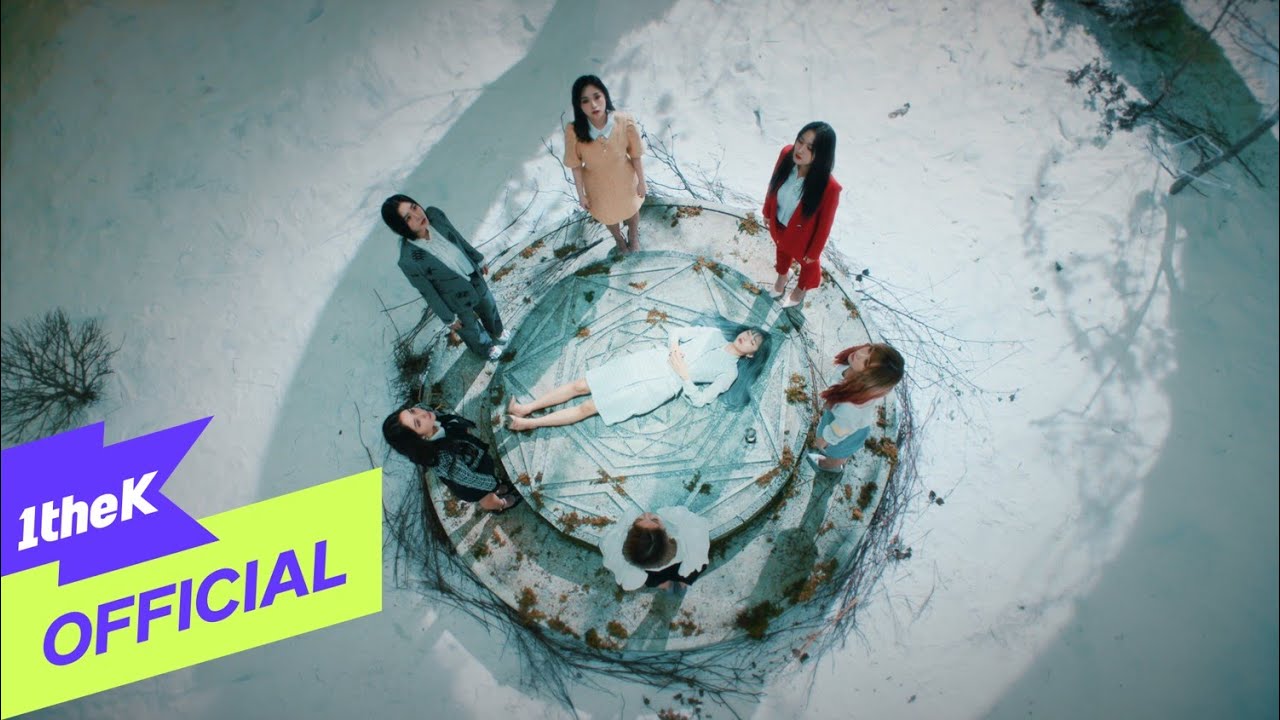
Video: Exact YouTube ID Xb4gDOOhEls. This page uses one official player and one local canonical image for that upload.
Sources: official exact YouTube uploadDaily+5Total views300.9K; artist and participant links route to the site’s current profiles and video trackers.
The staff becomes choreography, not decoration
Dami’s staff sequence remains memorable because preparation, rotation and recovery belong to the musical count. The object extends the body instead of arriving as a prop held up for recognition.
A dangerous-looking object cannot create tension alone. Timing and the surrounding members’ attention make it feel capable of changing the room.
Illusion controls the edit
Appearances, disappearances and spatial discontinuity give the camera a narrative job. Cuts do not merely accelerate the chorus; they make certainty impossible.
The strongest transitions answer a movement or lyric. A random glitch can advertise mystery, but a repeated rule makes the viewer participate in it.
Seven voices keep the darkness dimensional
Siyeon and Yoohyeon lift melodic pressure, Dami changes its floor, and JiU, SuA, Handong and Gahyun alter temperature across the relay.
The song avoids one-note menace because each entrance brings a different relationship to the same unstable world.
Nightmare lore works through consequence
The video belongs to Dreamcatcher’s Nightmare-era development, yet lore is useful only when it changes what a viewer can infer from the frame.
This exact React studies the object in front of us. It does not use later theories as permission to invent actions the upload never shows.
Credits and receipts: exact-version note
This exact upload remains independent because its frame, edit, source and audience purpose cannot be borrowed from a neighboring version.
Accurate archives preserve those boundaries.
What changed every time I replayed it: three passes, three questions
On the first replay, hide the screen and map the recording. Note where percussion drops out, where the voice changes weight and whether the final section adds information or only volume. This pass protects the song from receiving compliments that belong to styling, celebrity or editing. Listen through headphones once and ordinary speakers once; a production choice that only survives ideal equipment may still be beautiful, but it is not doing the same job for every listener. Exact versions remain separate whenever their published evidence differs.
On the second replay, follow the body outside the obvious focal beat. Watch preparation, recovery, distance and the way an entrance is built before the camera rewards it. On the third, study the edit itself: which cuts complete a thought, which images answer the music and which interruptions merely manufacture urgency. A durable release offers a different discovery on each pass. The goal is not to turn pleasure into homework. It is to locate why the pleasure survived after surprise stopped doing free promotional labor. Finally, return to the opening frame after the ending. If nothing about that first image has changed in meaning, the concept may have delivered atmosphere without completing an argument.
The first test happens with the screen off
A music-video review cannot outsource the song to the wardrobe department. I listen first for pulse, melodic shape, vocal weight, section contrast and whether the ending changes the emotional information. The recording must make a case before a beautiful person looks into an expensive lens.
When the image returns, it receives its own questions. Does the visual translate the rhythm, complicate the lyric or reveal a performance choice? A luxury set can be successful craft without becoming the reason a flat musical section suddenly works.
Camera movement needs a musical job
Motion can follow a body, answer percussion, alter distance or reveal a new relationship. It becomes noise when every push and cut merely announces that a camera operator remained employed.
The best passages let framing change because the song changed. A held close-up can be more dangerous than six angles when the performer knows exactly what thought must cross the face before the next line arrives.
Performance lives between the obvious moments
The headline gesture is only the visible result. Breath preparation, weight transfer, eye-line control and the exit from a phrase tell us whether the performer owns the material continuously.
Replay the recovery after a turn and the beat before a close-up. Those supposedly empty counts expose discipline. They also show where editing supports performance and where it interrupts before a movement has to resolve.
Concept is a system, not a noun
Calling an MV “sexy,” “cinematic” or “summer” identifies a mood, not an argument. A concept becomes legible through repeated rules: who controls the gaze, how spaces connect, what color or prop changes and whether the ending pays off the opening image.
This video is strongest when its details belong to one system. It weakens wherever a fashionable insert could be moved into another idol release without changing either story.
The exact version owns this page
This video ID, edit and locally stored frame define the evidence. A choreography video, visualizer or second official cut may share audio while answering different questions. None should quietly replace the other.
Exact routing keeps the playlist honest and makes the static card useful. The hero, featured image and social previews use the same unique attachment, so readers know which object they are opening everywhere the link appears.
Replay is where structure stops bluffing
First-watch charisma can make repetition feel like development. On replay, I mark what actually changes: percussion, harmony, vocal allocation, framing, movement scale or narrative consequence.
A simple chorus can survive that audit if its returns accumulate meaning. A busy chorus can fail if every layer restates the same fact. Quantity is not development, and volume is not automatically a climax.
The profile route stays current
This React links back to the canonical artist or member profile and, where relevant, the group hub. Those pages hold current status, biography and the official-video tracker; this page contributes one exact work.
The relationship also runs back from profile to React. Readers can move from a career timeline into deep analysis without the profile becoming an endless stack of duplicated essays.
Readable cards are part of editorial accuracy
A landing card cannot communicate if its headline vanishes into a nearby shade. Color remains part of the design, but text contrast has to survive ordinary displays and tired eyes.
The same-image rule prevents a second failure: a card implying one video while the hero opens another. Visual polish counts only after the route, title and attachment agree.
What I would preserve
Preserve the choice that gives the work its clearest identity, whether that is an exposed vocal phrase, an unhurried shot or choreography allowed to finish its thought.
Preserve contrast as well. The most memorable release is rarely the one that keeps every instrument, light and performer at maximum intensity for the full runtime.
What I would push further
Make the final return pay a visible or musical debt from the opening. Change a texture, reverse a gaze, damage a perfect space or let a performer deliver the same line with newly earned knowledge.
I would also hold one decisive phrase longer. Trust is an aesthetic choice. If the artist owns the moment, the edit does not need to rescue it every half second.
RaeRae verdict
Replay the prop choreography and every cut that changes location. The trick matters because the edit keeps asking who is performing it on whom.
Bottom line
In-depth Dreamcatcher React for exact playlist video Xb4gDOOhEls: music, performance, concept and replay guide.