
RAERAE REACTS · EXACT PLAYLIST VIDEO
MATZ
In-depth ATEEZ MATZ React for exact playlist video 3PA5FG1NX9U: song, performance, concept, evidence boundaries and replay guide.
Song / video
MATZ
Released
January 2, 2024
Runtime
04:13
Exact upload3PA5FG1NX9U
Verdict: “MATZ” works because Hongjoong and Seonghwa do not chase identical swagger. One attacks rhythm like a producer rearranging the room; the other turns theatrical control into threat. The beat gives both enough space to make contrast feel like partnership.
Artist: ATEEZ unit MATZ — Hongjoong and Seonghwa
Exact video ID: 3PA5FG1NX9U
Method: song first, then performance, visual argument, evidence boundary and replay
Release file
Official upload: ATEEZ(에이티즈) – 'MATZ (홍중, 성화)' Official MV.
Released: January 2, 2024 · Runtime: 04:13.
Label / channel trail: KQ ENTERTAINMENT.
Sound: The beat, arrangement, vocal color and production choices are reviewed below alongside the exact visual or performance file.
Video: Exact YouTube ID 3PA5FG1NX9U. This page uses one official player and one local canonical image for that upload.
Sources: official exact YouTube uploadDaily+3.7KTotal views21.8M; artist and participant links route to the site’s current profiles and video trackers.
Lyrics and meaning: a unit needs contrast, not subtraction
Removing six members does not automatically create a unit identity. “MATZ” earns one through the difference between Hongjoong’s wiry rhythmic attack and Seonghwa’s controlled theatrical weight.
They do not meet in the middle and become generic tough men. The track lets each performer keep a distinct temperature, then uses their exchanges as the arrangement’s engine.
Hongjoong performs like an editor
His phrasing often cuts into the beat, changes its perceived shape and redirects attention before a section formally ends. Producer awareness becomes performance instinct.
Small gestures land because he places them where the rhythm has left room. The result feels restless without becoming sloppy.
Seonghwa makes restraint look dangerous
Seonghwa’s strongest choices arrive before full release: held gaze, measured posture and the sense that the larger gesture is available but not yet necessary.
That control gives the MV’s darker imagery credibility. He does not need to imitate Hongjoong’s attack; he lets pressure accumulate differently.
The visual turns partnership into conspiracy
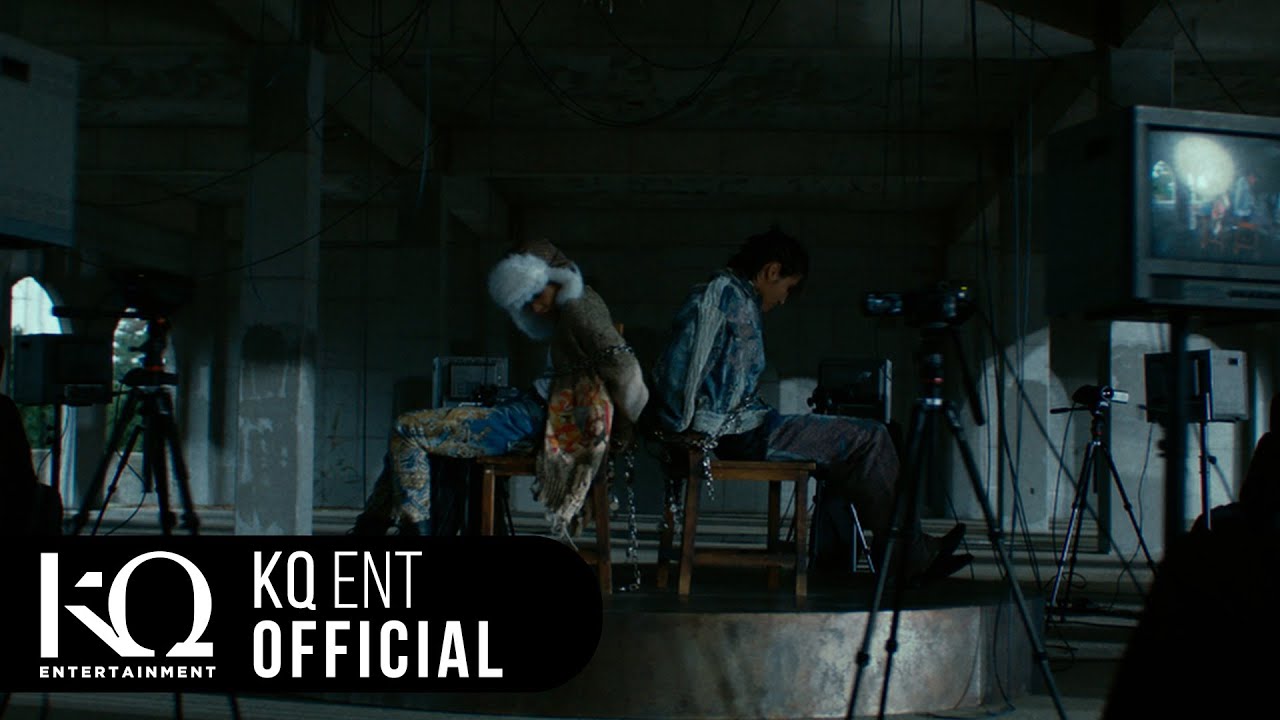
Fire, confinement and confrontational framing make the unit look less like a side project and more like two people who agreed on a terrible plan. The imagery supports the track’s shared threat.
The concept weakens only when spectacle begins repeating the same message. Once the room is burning, another flame needs to change the power—not simply confirm that fire remains hot.
What worked
The unit has an audible identity, both performers retain specificity and the MV commits to their chemistry. Handoffs feel composed rather than divided by fairness.
The song also expands ATEEZ’s internal map. Unit work reveals relationships that a full-group title track cannot hold at the same scale.
What I would push further
Give them one uninterrupted face-to-face exchange over reduced percussion. Let timing and physical response carry the confrontation without props.
The final section could swap their established functions briefly—Seonghwa attacking the beat while Hongjoong holds still—to prove the partnership changed both performers.
What changed every time I replayed it: follow the answer
First replay, listen for how one phrase prepares the other performer’s entrance. Second, watch the person who is not delivering the line.
Final replay: identify whether each visual escalation changes their relationship. Chemistry lives in response, not in two solo clips sharing a title.
The song-first test
Turn the screen off and the recording still needs a reason to exist. A costume cannot write a bridge, a close-up cannot repair a flat hook and expensive lighting cannot give two sections a meaningful relationship. Rhythm, melody, texture and vocal decisions make the first case.
This track survives that test for specific reasons discussed above. The visual earns separate credit when it extends the musical idea instead of collecting compliments that belong to the bass, arrangement or performers’ phrasing.
What one official upload can prove
The exact video establishes its own shot order, soundtrack, visible lineup, effects, staging fragments and release route. It cannot prove untouched live vocals, a continuous dance take or activity outside the published frame. Those claims need a different source.
That boundary makes criticism stronger. Editing is not evidence of fraud; it is material to analyze. Cuts may clarify rhythm, join spaces, conceal a transition or create activity where the frame had none. Replay tells us which job they are doing.
Performance labor lives outside center
The person holding the lyric is only part of the picture. Members at the edges open lanes, preserve rhythm and prepare the next entrance. A clean exit can make the following center look inevitable; a lazy recovery can make an expensive formation feel assembled at the last second.
Follow those in-between counts. They reveal whether choreography distributes labor intelligently and whether members remain inside the song after the camera stops offering them an obvious reward.
Editing should clarify, not perform CPR
Fast cutting is not automatically musical. A useful edit answers a beat, completes a gesture or turns one image into another idea. Random speed treats attention like an emergency patient.
The strongest passages let the arrangement motivate the lens. When the MV becomes busier, ask whether another layer has appeared or whether the editor simply became nervous that a shot might last long enough to be evaluated.
Exact-ID and image discipline
This page owns one real local frame from this exact video. Hero, featured image, landing card, Open Graph and Twitter use the same attachment. Alternate versions, remixes and performance videos keep distinct IDs, articles and images.
That precision preserves the evidence behind every claim. A reader can distinguish versions before clicking, and future maintenance does not have to guess which attractive thumbnail belonged to which published object.
The second-watch standard
First-watch novelty is generous. A reveal, new styling or famous collaborator can make a release feel important before the composition proves it. Replay removes that subsidy and asks whether the chorus develops, the verses move and the ending changes what came before.
Simple decisions can pass. Excess can pass. The choice must remain legible after surprise fades and give the next part of the song or visual somewhere purposeful to go.
What the ending owes the beginning
A final chorus should do more than confirm that the file has not ended. It can redistribute voices, alter texture, damage a formation, reveal a visual consequence or make earlier restraint suddenly useful. Enlargement is only one option.
The ending here can be judged against promises made in the opening minute. Where it fulfills them, repetition feels earned. Where it merely restates them, the performers carry momentum that the structure could have developed more boldly.
Why this route stays separate
Another version may share the song while changing camera logic, arrangement, visible participants or audience purpose. That makes it related evidence, not interchangeable evidence.
Keeping this route separate preserves the exact object the playlist saved and prevents future cards, profiles or citations from quietly pointing readers toward a different performance.
A profile link is not a participation shortcut
Group membership supplies context, but the exact visible or credited lineup controls relationships for this video. A solo or unit upload does not gain every member merely because they share a hub.
That distinction keeps historical lineups, hiatuses, departures and unit credits accurate. Readers can still reach the complete ecosystem without the article inventing participation that the source never shows.
Receipts and profile routes
The embedded exact upload is the primary evidence. Linked canonical hubs and profiles hold current status, dated chronology, participant boundaries and the broader official-video tracker.
Song pages and profiles link both directions so a reader can move from a specific performance to the people and catalog around it without duplicating biography or silently merging versions.
RaeRae verdict
Replay it for the handoffs. The fire and restraints get attention, but the unit survives because two different performance logics keep answering each other.
Bottom line
In-depth ATEEZ MATZ React for exact playlist video 3PA5FG1NX9U: song, performance, concept, evidence boundaries and replay guide.