
Separation
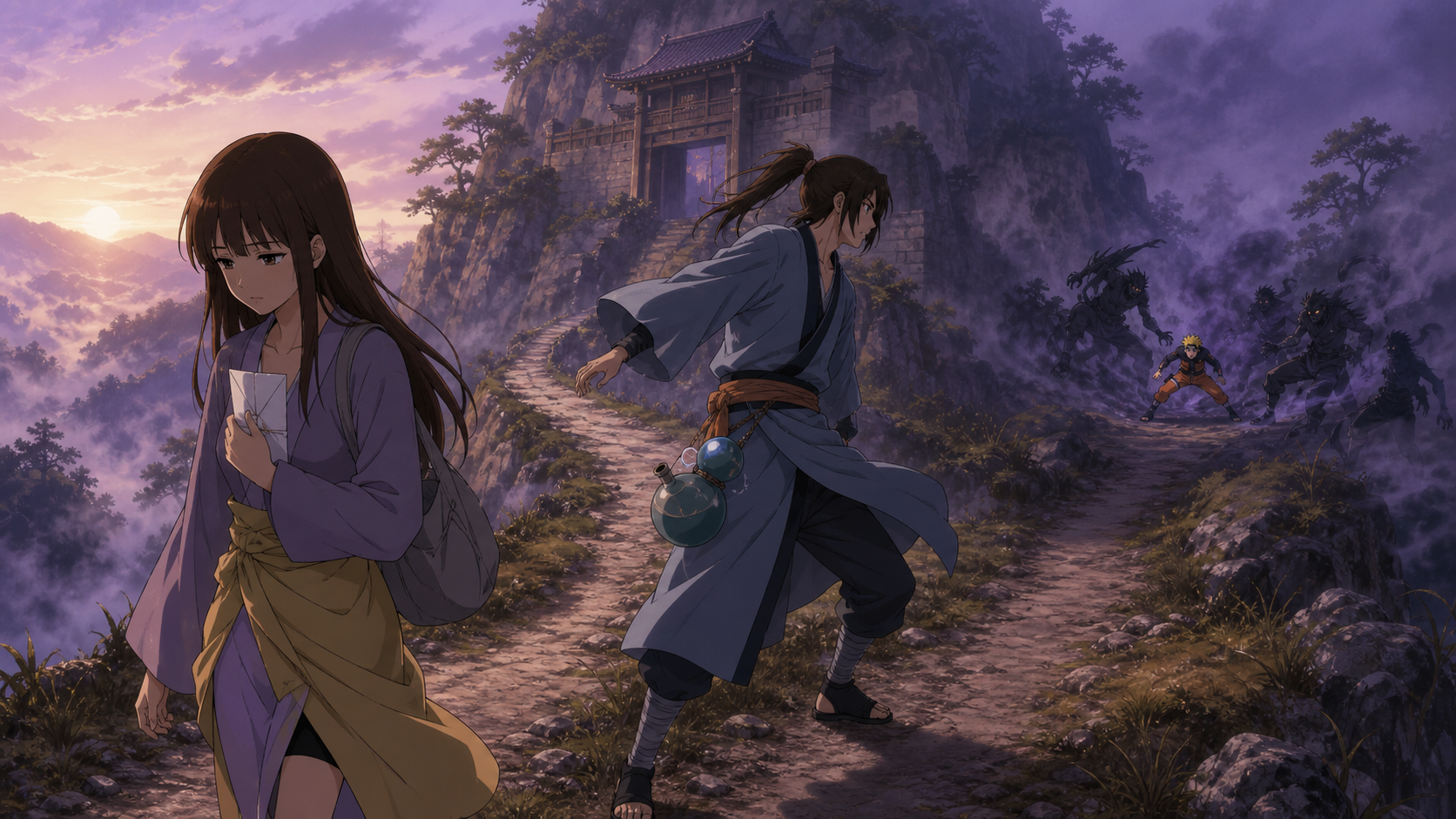
Hotaru leaves with a farewell letter while Utakata turns back toward danger, exposing how separation can feel chosen even when an enemy shapes every path.
What happens
Hotaru accepts Shiranami's account of the Tsuchigumo clan's past and decides she should leave Mount Katsuragi. Before going, she writes Utakata a farewell letter. It is an attempt to end their unfinished teacher-student relationship without asking him to choose her again.
Naruto is still searching for Shiranami when the Magaki Troops lure him into a trap. Their attack turns his investigation into immediate survival, but Utakata arrives in time to help him escape.
The two movements give “Separation” its shape. Hotaru walks away because she believes she has received an answer. Utakata moves back toward danger because his actions keep contradicting the distance he insists on maintaining.
Hotaru makes leaving look like a decision
Hotaru's departure is active rather than passive. She writes the letter, leaves the fort, and tries to determine the next step of her own life. After so many people have treated her as the container for a forbidden technique, that initiative matters.
The problem is that her decision rests on Shiranami's story. He offers the kind of explanation she is primed to trust: one that speaks to clan history, rejection, and the pain of inherited status. He does not need to order her away if he can make leaving feel like the conclusion she reached herself.
Agency remains real even when someone manipulates the information around it. That is what makes the departure more troubling than a simple abduction.
The letter protects Utakata from a request
Hotaru has repeatedly asked Utakata to become her master. A farewell letter changes the form of that request. She no longer asks him to stay, but she still needs him to understand why she is going.
Writing lets her control the moment because she does not have to watch him hesitate. She can give him freedom before he explicitly chooses it, protecting herself from another rejection while presenting the choice as generosity.
The letter is therefore both communication and retreat. Hotaru says goodbye because the relationship matters, not because it has become emotionally finished.
Utakata's actions answer before his words do
Utakata resists the title of master because it carries memories of control, betrayal, and obligation. He is careful about any role that might allow another institution to claim him.
Yet when Naruto is trapped, Utakata intervenes. The rescue is not a formal promise to Hotaru, but it reveals a pattern. He does not remain detached when someone connected to her is in danger, and he cannot make indifference true merely by refusing a title.
His actions keep placing him inside the community he claims to avoid. That does not erase his fear. It shows that care has already created responsibility before he has found language he can tolerate for it.
Naruto is caught by the story he is chasing
Naruto searches for Shiranami because he believes the missing man may help resolve the danger surrounding Hotaru. The Magaki Troops exploit that pursuit and turn his urgency into an opening.
This is not simply Naruto being careless. His determination is one of his strengths, but determination can narrow attention when an enemy understands exactly what answer he wants.
The trap also exposes the cost of fragmented trust. Naruto, Utakata, Hotaru, and Tonbei possess different parts of the situation. Because they are not moving with a shared understanding, Shiranami and the attackers can direct each person separately.
Shiranami offers belonging at the vulnerable moment
Hotaru has just learned that the forbidden jutsu inside her carries consequences larger than personal ambition. She wants a way to honor her grandfather without remaining a hunted object at the fort.
Shiranami appears to understand the clan history and the isolation attached to it. That apparent recognition gives his words unusual force. Advice feels safer when it comes from someone who seems to share the wound.
The episode uses that vulnerability carefully. Manipulation does not always begin with an obvious lie. It can begin with accurate pain arranged toward a false conclusion.
Separation is a tactic as well as a feeling
The title applies to more than Hotaru and Utakata. Naruto is separated from his team while searching. Hotaru is separated from the people able to challenge Shiranami's version of events. Utakata remains separated from the role his behavior is already beginning to perform.
Each gap creates leverage for the antagonists. A farewell letter, a mountain path, and an ambush may look like unrelated events, but together they prevent the characters from comparing what they know.
The danger grows because the episode keeps everyone moving alone. Emotional distance becomes operational vulnerability.
A rescue can become an argument for trust
Naruto and Utakata have reasons to distrust one another. Naruto sees a rogue ninja who refuses clarity; Utakata sees a village shinobi whose optimism may conceal the same institutional control he escaped.
When Utakata helps Naruto survive the Magaki trap, the relationship gains evidence that conversation alone could not provide. He chooses a person's safety without demanding obedience or repayment.
Naruto can recognize that choice. It does not settle every dispute between them, but it makes cooperation possible on firmer ground than assumption.
Hotaru is most endangered when she feels understood
The obvious threat is the forbidden jutsu sealed inside Hotaru. The subtler threat is her need for someone to understand why she chose to carry it.
Naruto responds with protective anger. Tonbei responds with loyalty to her grandfather's legacy. Utakata responds with care complicated by withdrawal. Shiranami appears to respond with recognition.
That appearance gives him access the others have failed to earn. Protecting Hotaru therefore requires more than guarding her body. It requires taking her history, pride, grief, and desire for purpose seriously enough that a manipulator cannot monopolize them.
Hotaru’s farewell is agency performed inside manipulated conditions
She chooses words, timing, and departure. Shiranami has already shaped the information making that departure appear necessary.
Calling her choice fake would erase her participation. Calling it free without qualification would erase the person arranging the available path.
A convincing manipulator lets the target supply the conclusion
Shiranami does not need to drag Hotaru from the fort. He speaks to clan history and the isolation she already feels, then waits for her to decide movement proves responsibility.
The technique is effective because obedience can be experienced as self-direction when the surrounding story has been controlled.
The letter lets Hotaru leave before Utakata can reject her again
Writing creates a protected space where she controls the final sentence. No pause, grimace, or refusal can interrupt it.
The goodbye offers him freedom while shielding her from hearing that freedom chosen aloud. Generosity and self-defense share the page.
Communication without conversation can preserve misunderstanding
The letter tells Utakata what Hotaru has decided. It cannot test Shiranami’s claims, ask what Utakata wants, or allow new information to change the departure.
A message may be sincere and complete as expression while remaining dangerously incomplete as negotiation.
Utakata turns toward danger because separation is not indifference
He continues refusing stable roles, yet Naruto’s capture pulls him back. The people connected to Hotaru have become part of his field of responsibility.
Care can survive distance, but repeated return reveals that distance is no longer preventing attachment. It only prevents attachment from being discussed.
Naruto’s search repeats his vulnerability to promised answers
He pursues Shiranami because one informed person might explain the crisis. Enemies understand that Naruto moves directly toward hope.
The trap exploits determination rather than stupidity. A strength becomes predictable when urgency narrows the number of routes the person will consider.
Fragmented information is the enemy’s strongest terrain
Hotaru knows her choice and Shiranami’s story. Utakata knows his past. Tonbei knows the clan arrangement. Naruto knows the external threat. Nobody holds the combined account.
Attackers win space between those fragments, steering each person through a different absence.
Shiranami offers identity before he asks for access
He appears to recognize Hotaru as part of clan history rather than treating her as a sealed weapon. That recognition reaches a need the village neglected.
Once he becomes the person who understands, requests that would otherwise look suspicious can feel like proof of shared purpose.
Belonging is the leverage beneath the forbidden jutsu
The technique motivates the plot, but Hotaru’s loneliness creates the opening. A securely supported successor would have more people with whom to compare Shiranami’s account.
Community is therefore a safety mechanism, not sentimental decoration around the real mission.
Separation works because everyone thinks they are protecting someone
Hotaru leaves to release Utakata and serve the legacy. Utakata keeps distance to avoid repeating harmful mentorship. Naruto searches to protect Hotaru. Each motive contains care.
The antagonist benefits by arranging care into isolated movements that cannot correct one another.
RaeRae reaction
The farewell letter hurt because Hotaru is trying to make rejection painless for both of them. She frames departure as something settled, but every part of writing to Utakata proves the bond is not settled at all.
I also like the episode's refusal to make Utakata's emotional position depend on a speech. He can deny the master role, yet his first instinct when Naruto is trapped is to move toward the danger connected to Hotaru. That choice says more than another argument about whether he cares.
Shiranami's influence is effective because he meets Hotaru at the exact point where inherited pride and loneliness overlap. She is not foolish for wanting someone who understands the clan. The adults and protectors around her have left a gap, and he knows how to stand inside it.
“Separation” makes distance feel dangerous without pretending every distance is voluntary. Hotaru leaves, Naruto searches alone, and Utakata resists attachment, but each choice has been shaped by missing information and old wounds. The episode's tension comes from watching people call those movements freedom while an enemy quietly benefits from every divided path.
Hotaru cannot consent to a story she cannot verify
She may genuinely agree with Shiranami’s claims. Verification requires access to other witnesses, records, and enough safety to disagree without losing the promised belonging.
Trust becomes coercive when the storyteller controls every route to confirmation.
The fort failed to become a place where doubt was safe
If Hotaru had felt able to question Tonbei, Utakata, or the village without being reduced to the seal, outside recognition would hold less exclusive power.
Silence leaves manipulative certainty looking kinder than complicated care.
Utakata’s rescue of Naruto builds reciprocal evidence
Naruto defended Utakata from being reduced to a bingo-book label. Utakata now protects Naruto without demanding trust first.
Their relationship gains a record of action capable of supporting harder conversation about villages, masters, and sealed power.
Rescue does not automatically resolve the disagreement
Utakata helping Naruto proves concern and competence. It does not prove every suspicion about him false or make Naruto’s impulsiveness harmless.
Trust grows through evidence without requiring either character to become perfect.
The episode distinguishes physical and informational capture
Naruto is trapped bodily by the Magaki Troops. Hotaru remains mobile while Shiranami’s account directs her path.
The quieter capture may be more dangerous because it feels like freedom and produces cooperation from the person being controlled.
Hotaru’s goodbye attempts to control an uncontrollable loss
If Utakata will eventually leave, choosing the moment can preserve dignity. Writing the letter turns abandonment into a decision she participates in.
The strategy is understandable and painful. It cannot make the relationship emotionally finished.
Utakata needs to see what silence taught Hotaru to do
His refusal and unexplained departures encouraged her to solve uncertainty alone. Shiranami enters that solitary process with an answer.
Utakata did not cause the manipulation, but clearer communication could have reduced the opening it used.
Naruto needs to share information instead of carrying pursuit alone
His instinct to move first repeatedly isolates him from teammates whose skills could test the route and protect against ambush.
Devotion becomes more effective when he trusts the group enough to distribute urgency.
A farewell can be sincere and still based on false conditions
Hotaru means the care in her letter. Shiranami’s influence does not contaminate every feeling expressed on the page.
The manipulation changes why departure appears necessary, not whether affection exists. That distinction protects her emotional truth while exposing the engineered conclusion.
Leaving first gives Hotaru control over anticipated abandonment
Utakata’s pattern teaches her that connection may disappear without warning. Choosing goodbye turns waiting into action.
The strategy reduces one kind of vulnerability while creating another: she moves away from people who might challenge the story guiding her.
Shiranami exploits the credibility institutions failed to build
Tonbei kept dangerous secrets. The village offered weak belonging. Utakata withheld his history. Naruto arrived with empathy but incomplete context.
Shiranami enters those gaps sounding coherent. Manipulation gains authority when trustworthy people make truth difficult to access.
Naruto’s ambush shows why urgency needs companionship
He believes finding Shiranami will protect Hotaru and moves toward the lead. The Magaki Troops isolate him because his route becomes readable.
Sharing the search would slow the first step and strengthen every step after it. Teamwork protects attention as well as bodies.
Utakata rescues the person most likely to challenge his distance
Naruto openly questions how he treats Hotaru and refuses easy deference to his rogue status. Saving him does not remove that pressure.
Utakata chooses the difficult relationship over convenient silence, even if he has not admitted that choice to himself.
The title describes an antagonist’s method
Separating the group is not only an emotional theme. It is operational design. Each isolated person receives different evidence and makes a decision nobody else can correct in time.
The enemy does not defeat their combined strength. He prevents combination.
Hotaru needs a community that can survive disagreement
If questioning clan history threatens belonging, she will seek certainty from whoever validates the questions. If questioning Utakata feels like betrayal, she cannot evaluate that bond honestly either.
Secure care allows doubt without punishment. That freedom is one of the strongest defenses against recruitment.
The letter should become the beginning of conversation
Utakata can read it as evidence of what silence cost rather than accepting goodbye as Hotaru’s settled wish.
Responding does not require promising permanent mentorship. It requires meeting her account with enough truth that the next decision is shared rather than staged by absence.
Hotaru’s letter deserves to be read as more than a plot device moving her into danger. It is the document of someone trying to behave responsibly with incomplete information. She believes leaving will reduce the burden on Utakata and perhaps honor what Shiranami told her about the clan. The tragedy is not that she feels too much. It is that the people who care for her have not built a shared account sturdy enough to test the conclusion before she acts.
Utakata’s return to save Naruto carries an answer he still avoids speaking. He is willing to risk himself for people connected to Hotaru, which means the relationship has already expanded beyond an accidental rescue. Refusing the master title may remain valid. Pretending his choices create no expectations does not.
Naruto needs this lesson as much as Utakata does. Charging toward the person with answers feels heroic because waiting resembles abandonment. Yet solitary urgency gives enemies control over where and when the confrontation occurs. Trusting Sakura, Sai, Yamato, and Utakata with pieces of the search would not weaken his commitment. It would make that commitment harder to manipulate.
Shiranami’s advantage comes from understanding that emotional neglect is usable infrastructure. Hotaru wants clan recognition, truthful history, and a mentor who stays. He supplies an explanation touching all three needs, then benefits when she calls the resulting path her own. The response cannot be telling Hotaru never to trust herself again. It must be creating conditions where trust includes comparison, questions, and people who remain present when her answer is inconvenient.
Separation ends only when the characters stop treating private protection as sufficient. Tonbei must share history. Utakata must explain limits. Naruto must share pursuit. Hotaru must retain the right to revise her decision. Until then, every individual act of care leaves another gap an enemy can occupy.
Hotaru believes goodbye proves maturity. She makes herself smaller, removes the request Utakata finds frightening, and walks toward the person who validates her inheritance. A community worthy of her would not reward that disappearance. It would notice the letter as a sign that protection failed before it failed tactically. Someone should reach her with questions instead of orders: What did Shiranami tell you? What do you believe? What are you afraid will happen if you stay? What do you want from Utakata besides the title? Those questions return authorship without pretending manipulation never happened. They make reunion a chance to choose again, not a command to undo the choice she made.
RaeRae’s final word on separation
The farewell letter hurts because it is thoughtful, loving, and built on a manipulated premise. Hotaru is trying to give Utakata the freedom he keeps requesting while quietly protecting herself from another rejection.
Shiranami succeeds by respecting her pain more visibly than the people claiming to protect her. That does not make the respect sincere. It shows how dangerous neglected emotional truth becomes.
Utakata rescuing Naruto proves he is already connected to this community of people, however temporary it feels. He does not have to accept the master title, but his actions keep creating responsibilities silence cannot manage.
The enemy wins whenever care travels alone. Hotaru leaves, Naruto searches, and Utakata returns on separate paths. Their next chance depends on sharing enough truth that separation stops looking like the only responsible choice.
RaeRae’s call
Hotaru’s departure is a real decision made inside a story Shiranami controls. The answer is not denying her agency; it is restoring the people, evidence, and safety required for that agency to become informed.