Leeteuk of SUPER JUNIOR: Member and Artist Profile, Music, Career and 2026 Guide
Park Jeong-su (박정수), known professionally as Leeteuk, is a current SUPER JUNIOR member and individual entertainer. This canonical page serves the member and artist routes together, tracks the exact nine-member “Express Mode” comeback, and keeps company, unit and solo work from being mistaken for group departure.
Quick profile
- Born: July 1, 1983
- Current group: SUPER JUNIOR
- Primary working file: leader; SUPER JUNIOR-L.S.S. and SUPER JUNIOR-83z
- Exact local React: “Express Mode”
The active 2026 lineup is nine
The active lineup is Leeteuk, Heechul, Yesung, Shindong, Eunhyuk, Donghae, Siwon, Ryeowook and Kyuhyun. All nine participated in the 2025 Super Junior25 album and “Express Mode” video. Sungmin has not promoted with the group for years and ended his SM contract in April 2025; Hangeng, Kibum and Kangin are former members. Exact status matters because a thirteen-member peak, a ten-name legacy list and a nine-person comeback can all be historically true without being interchangeable.
The group was designed to change
SUPER JUNIOR debuted in November 2005 as Super Junior05, a twelve-member rotational project whose name advertised a year. Kyuhyun joined in 2006, and the graduation idea was abandoned. What looked like instability became permanence: the group survived because the members learned to treat replacement-era logic, military gaps, contract differences and unit work as organizational problems rather than proof that a collective must end.
Thirteen is history, not the current headcount
The 2006 addition of Kyuhyun brought the lineup to thirteen, the number embedded in much early fandom memory. Hangeng later left through a contract dispute, Kibum’s acting-focused inactivity became an official departure, and Kangin left after serious conduct controversies. Recording those outcomes is not erasure. It protects the actual work of the thirteen-member era while stopping archival photographs from masquerading as a 2026 roster.
Sorry Sorry changed the scale
The 2009 single “Sorry, Sorry” converted a veteran Korean idol group into a wider Asian pop reference point. Its repeated hook, hand-rubbing choreography and tightly framed suits made the concept portable across television, dance covers and international fandom. The song is important not because one hit explains twenty years, but because it demonstrated the group’s core skill: turning a simple rhythmic idea into personality without breaking ensemble precision.
Units are infrastructure
K.R.Y. centered Yesung, Ryeowook and Kyuhyun as a vocal unit; D&E gave Donghae and Eunhyuk a durable dance-pop partnership; L.S.S. formalized Leeteuk, Shindong and Siwon’s comic-performance chemistry; T, M, Happy and later 83z opened other routes. Units are not side quests that dilute the group. They distribute labor, let different strengths lead, and keep members musically active when a nine-person schedule cannot move as one block.
Different companies do not mean former members
Eunhyuk and Donghae established ODE Entertainment, and Kyuhyun moved individual management to Antenna, while continuing SUPER JUNIOR activities. The group’s coordinated work remains connected to SM’s SUPER JUNIOR operation. A profile must name both relationships because “left SM” is frequently shortened into “left the group,” even when official releases show the opposite. Contract architecture is part of the current music story.
Heechul participation needs a body-aware rule
Heechul’s lasting leg injury can limit choreography and touring even when he records vocals, films an official video or appears in anniversary content. Participation should be checked object by object instead of measured against the most physically demanding stage. Accessibility here means believing the evidence of what he did, not declaring him absent for protecting his body or demanding identical movement as the price of membership.
Express Mode is a twentieth-anniversary title track
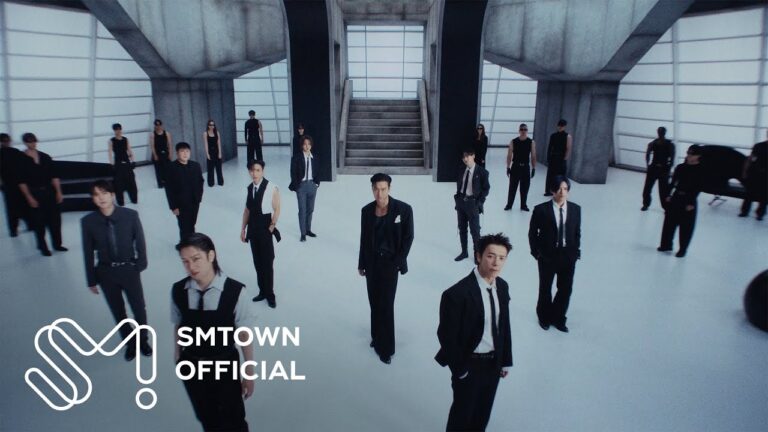
Released July 8, 2025, “Express Mode” leads the nine-track twelfth album Super Junior25. Its club-pop drive and airport/departure imagery turn longevity into motion rather than a museum display. The exact local React follows how the video makes nine established personalities look coordinated without sanding away age, humor or individual timing. Every profile here links that exact official object because every current member participates.
The choreography is built for character
SUPER JUNIOR do not sell synchronized anonymity. Their best formations create a stable frame, then let a glance, shoulder accent or delayed comic reaction identify the person inside it. Twenty years of variety and touring mean the members understand where cameras are likely to cut. The useful test for Leeteuk is not whether every angle matches; it is whether personal timing adds information without dissolving the chorus shape.
Live performance is a conversation
A SUPER SHOW stage includes music, talking, parody, costume decisions and audience negotiation. Those pieces are sometimes treated as distractions from vocal credibility, but the group’s career argues the opposite. Variety instinct allows recovery from mistakes, rebalances energy after a ballad, and gives repeated tour songs new stakes. Professionalism is not pretending accidents never happen; it is making the room feel included when they do.
Vocals depend on contrast
The group’s vocal identity is not one standardized SM tone. Yesung brings grain and pressure, Ryeowook brings high clarity, Kyuhyun brings rounded resonance, and the remaining members supply colors shaped by rap, acting, softer melody and rhythmic delivery. Large arrangements work when those contrasts are assigned deliberately. A profile should discuss recognizable function while resisting unofficial line-distribution certainty where official credits do not identify each moment.
Dance history cannot stop at a meme
“Sorry, Sorry” is an obvious landmark, but the movement story includes Eunhyuk’s detailed technique, Shindong’s power and visual direction, changing formation sizes, Heechul’s physical boundary and the group’s adjustment to age. Longevity changes what virtuosity looks like. Efficient weight transfer, intelligent blocking and the confidence to simplify can carry more authority than exhausting every member for a claim of unchanged youth.
Comedy is precision work
SUPER JUNIOR’s humor works because the members understand hierarchy, interruption and reaction. A joke lands when one person commits, another resists, and a third lets silence expose both. That ensemble timing also affects music videos: a straight face can sharpen an absurd set, and a deliberately overplayed gesture can release tension before a chorus. Calling them chaotic without describing structure misses the professional skill underneath.
Controversy needs accountable boundaries
A twenty-year group history includes member departures, public mistakes and behavior that cannot be cleaned into a triumph montage. This profile names verified structural consequences when relevant and does not convert rumor, fan punishment or private relationships into entertainment. Accountability requires precision: who did what, what official action followed, and whether that person is part of the present object. Collective longevity does not erase individual responsibility.
E.L.F. is part of the touring system
The official fandom name, E.L.F., became infrastructure across long military gaps, country-specific releases, subunits and company changes. Fan endurance should not be romanticized into ownership over marriages, bodies or private decisions. Its defensible power is cultural memory: recognizing callbacks, carrying chants, sustaining tours and helping new listeners navigate a catalog too large for one recommendation list.
Japanese releases require a parallel chronology
SUPER JUNIOR’s Japanese discography, tours and Avex infrastructure cannot be reduced to translated Korean promotions. Regional versions, original Japanese material and country-specific campaigns are separate objects. The profile links the current Japanese official site as a roster and release source, while the tracker uses exact video IDs so similar titles do not collapse across channels.
Solo careers strengthen the member file
Acting, musicals, variety, directing, songwriting and solo albums create evidence that a group position grid cannot contain. Leeteuk must be readable as an individual worker and as one part of the ensemble. The canonical page serves both member and artist directories when solo music exists, avoiding duplicate biographies that drift into contradictory dates or reuse the same image across separate cards.
Image parity is exact
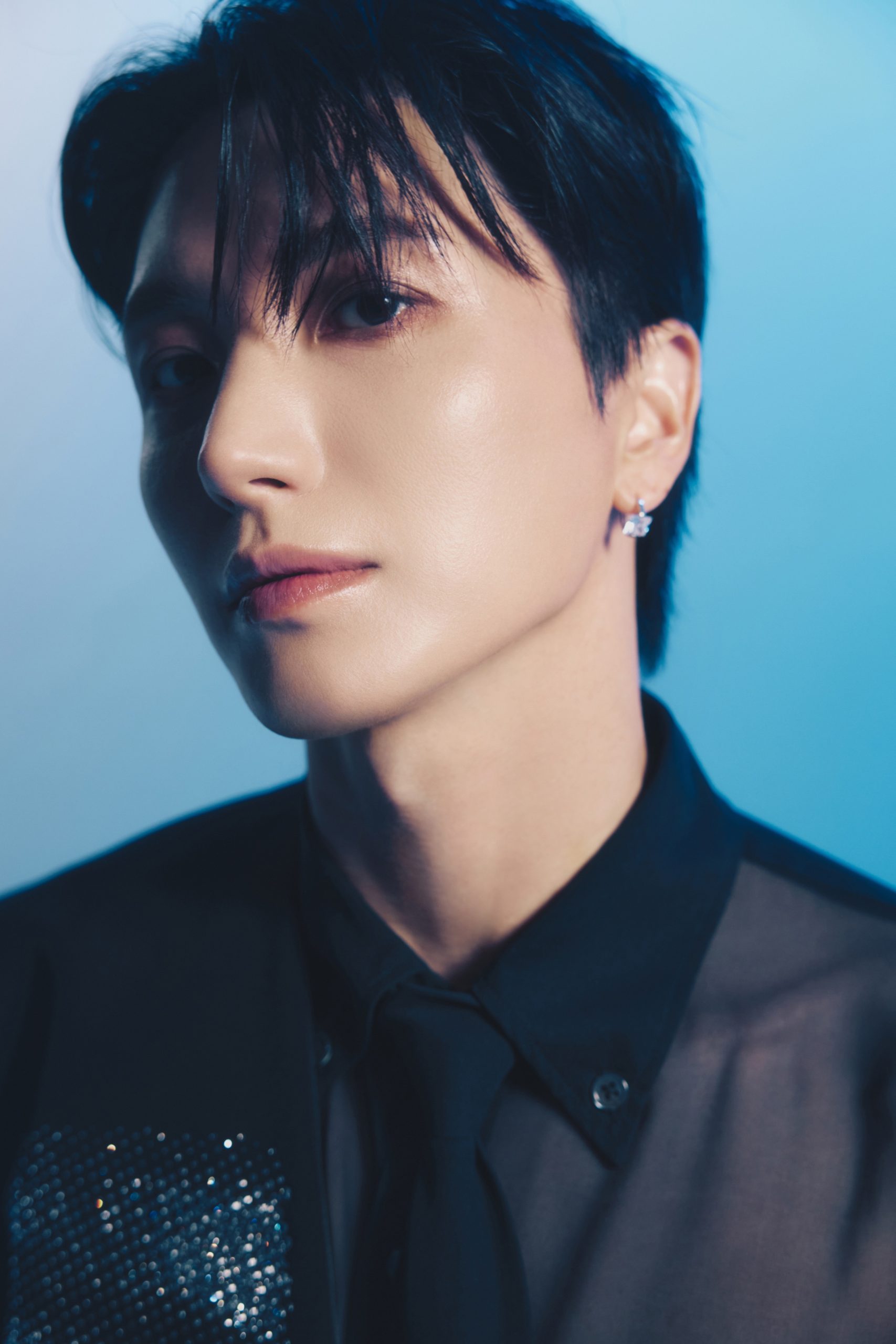
This page uses one real Super Junior25 portrait unique to Leeteuk. The featured image, opening hero, landing card, Open Graph and Twitter preview must match within the page, while every sibling profile uses a different photograph. That rule makes the static card directory readable and prevents nine people from being represented by one recycled group shot. Source and attachment metadata remain stored locally.
International discovery starts with exact names
Use SUPER JUNIOR in full, the member stage name, Korean name when needed, and the exact upload ID. “SJ” alone collides with unrelated subjects, while romanization varies. Official Weverse notices establish schedules, the Japanese official profile confirms names and dates, and exact SM uploads establish release participation. Fan databases can suggest a lead; they do not replace the primary object.
The tracker follows participation, not nostalgia
Every current profile can carry “Express Mode” because all nine appear and record for it. Earlier releases require their own checks: Kyuhyun did not participate before joining, later-former members belong only to the eras they completed, and Heechul’s presence can differ between recording, video and stage. A green tracker is a statement about an exact object, not a blanket claim that every person appears in every version.
What twenty years actually proves
Longevity does not prove every release is excellent or every decision was fair. It proves the organization repeatedly found ways to make another object together despite a debut model built for rotation, long enlistment cycles and divergent careers. The artistic question remains current: can the next song use the members as they are now rather than asking them to impersonate 2009? “Express Mode” succeeds when motion looks chosen, not compulsory.
The next update rule
A random new SUPER JUNIOR song receives an exact React, playlist row and participation check. The group hub and only the profiles of actual participants are updated. Solo songs attach to the same canonical member/artist page, while unit work attaches only to that unit’s members. Tea or Rant coverage needs a sourced story; it is never manufactured merely because a veteran group has complicated history.
K.R.Y. changed what an idol unit could prove
When Yesung, Ryeowook and Kyuhyun formed K.R.Y. in 2006, the point was not a smaller dance formation. It was sustained vocal storytelling: drama soundtracks, concert stages and ballad material that allowed harmony, breath and phrasing to lead. The unit became a template other large groups could understand immediately. Even members outside K.R.Y. benefit because the full group can deploy those voices as anchors while assigning rap, texture and theatrical interruption elsewhere.
D&E built continuity outside the album cycle
Donghae and Eunhyuk turned complementary strengths into one of the group’s most durable units. Donghae supplies melody, songwriting and emotional directness; Eunhyuk supplies rhythmic design and movement architecture. Their later ODE Entertainment structure proves that member-led management can coexist with group participation. It also gives the archive a clean rule: D&E objects belong to those two profiles, while SUPER JUNIOR objects require an exact main-lineup check.
L.S.S. makes performance intelligence visible
Leeteuk, Shindong and Siwon formalized a unit around hosting control, dance power, straight-faced absurdity and audience exchange. L.S.S. can look unserious if comedy is treated as the absence of craft. In practice, the songs and stages demand exact cueing. Each member must know when to exaggerate, when to hold still and when to let the crowd complete the joke. That intelligence has always existed inside the full group; the unit puts it in the foreground.
83z is a current 2026 chapter
Leeteuk and Heechul debuted SUPER JUNIOR-83z in 2026, using their shared birth year and long relationship as the organizing concept. The unit is important because it does not pretend physical capacity, personality or career routes are identical. It builds around conversation, memory and two-person tension. A new unit after the twentieth anniversary is evidence that the group’s system is still generating formats, not merely replaying the roster combinations established in its first decade.
Military service changed the calendar, not the identity
With a large Korean male lineup, enlistment created years in which the complete roster could not promote together. Units, solo work and staggered returns kept the name active, while the eventual completion of service removed one recurring structural obstacle. The lesson is not that waiting was romantic. It is that continuity required planning: audiences learned to recognize partial formations, and members learned that absence for public service did not automatically sever the relationship to the next album.
Super Show is an archive performed live
The concert series preserves hits, rearranges familiar material and records how bodies and voices change over time. A rock version, comic interlude or redistributed line is not an inferior copy of the studio master. It is a dated solution for the people present on that tour. For Leeteuk, live evidence is especially useful because it shows stamina, recovery, audience command and the difference between a heavily edited close-up and a complete performance decision.
The group should be allowed to sound its age
Veteran status becomes empty when every comeback is praised for looking unchanged. Twenty years should create audible and visual difference: more deliberate pacing, deeper knowledge of contrast, and the confidence to leave space where a younger group might fill every count. “Express Mode” is strongest when the members look like adults choosing speed, not artists trapped in a demand to recreate youth. The next music should keep using history as technique rather than costume.
How to update this page without duplicating it
New solo albums, acting credits, units and company changes belong on the existing canonical profile. The page date and current-status language should change, but the URL and identity remain stable. If Leeteuk releases an individual song, the static artist card, featured image and hero must still resolve to one unique local image for that post. A separate “new version” would split authority, confuse search and eventually contradict this group relationship.
Why Leeteuk changes the group
He is the structural host of the group: he manages transitions, speaks for the collective without pretending every member has the same company, and turns live unpredictability into a readable show. In 2026, the 83z unit with Heechul made their shared 1983 identity an official music route.
The profile will judge the next chapter through released evidence: audible responsibility, credited creation, repeatable performance decisions and current official status. A familiar face is not automatically a musical contribution, but longevity also should not make practiced skill invisible. The standard is whether Leeteuk changes the sound, camera, movement or audience relationship in a way another member would not reproduce.
Official starting points
- Express Mode — exact official MVDaily+10.7KTotal views21.6M
- Canonical SUPER JUNIOR group guide
- CVM Sekai in-depth Express Mode React
- SUPER JUNIOR official Weverse media
Sources
- SUPER JUNIOR Japan official profile
- Super Junior25 official-image and participation release record
- Official 2026 media chronology
- Avex Super Junior25 release notice
React image cards
Static cards route each exact official upload to its own in-depth React. Every card repeats that React’s featured and hero image so the archive stays visually traceable.