
RAERAE REACTS · EXACT VIDEO FILE
MORE & MORE: TWICE Planted Desire in a Neon Garden and Let It Eat the Fence
TWICE walked into an artificial Eden, admitted wanting does not become polite just because the flowers are beautiful and let a tropical-house dance break show what desire does after the garden stops pretending to be innocent.
Release file
Released: June 1, 2020
Runtime: 04:01
Artist / channel: JYP Entertainment · TWICE
Exact-file focus: The exact official music video, not the dance-break video, choreography version, stage, or English version.
First watch: Eden has a saturation problem
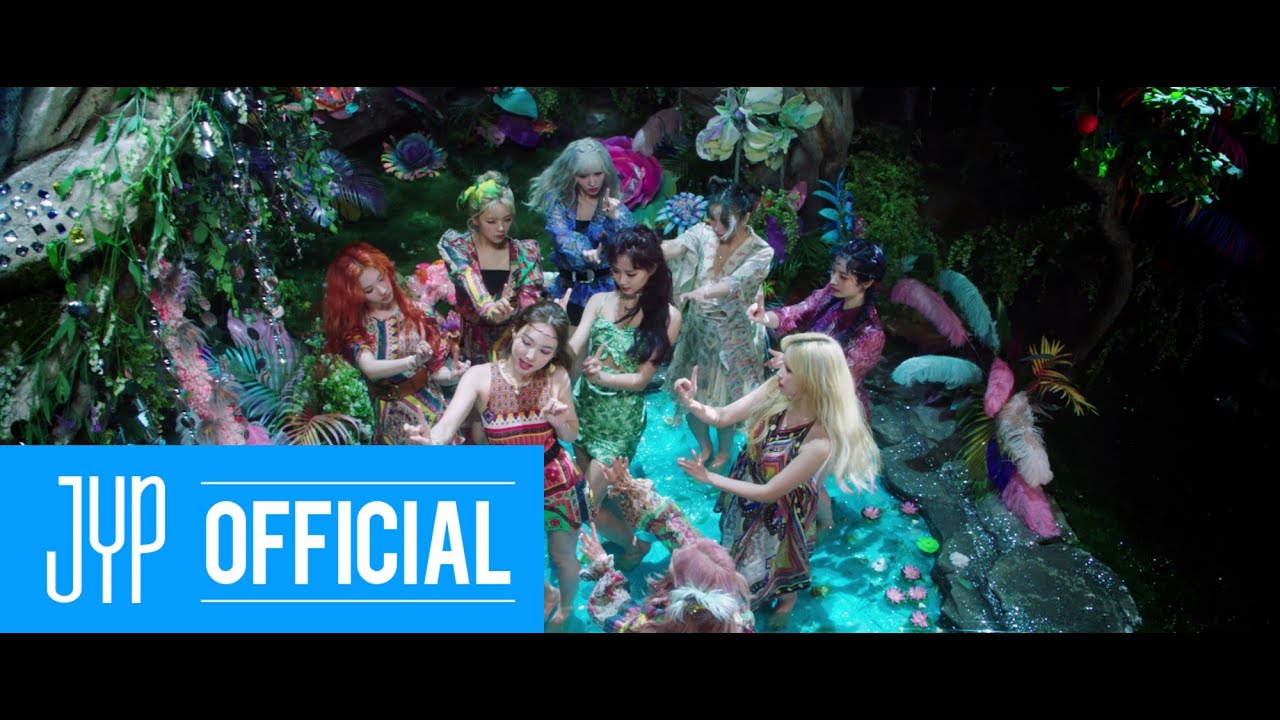
The garden is too vivid to be natural and too beautiful to be trusted. Flowers, fruit, animals and color create a paradise that already looks altered by appetite. TWICE enter a world where desire is not an interruption to innocence; desire is the force revealing that innocence was staged.
That reading saves the video from becoming a decorative garden tour. The members are not merely placed among symbols of temptation. They move through a space changing under the pressure of wanting. Beauty becomes unstable because more is never satisfied with the first perfect image.
Tropical house returns with sharper teeth
The production uses the familiar pulse and airy textures of tropical house, but the chorus carries insistence rather than vacation ease. Repetition is thematic. “More and more” has to feel like a loop because desire does not make one request and retire politely.
The arrangement builds toward a dance break that changes the body’s relationship to the track. What begins as melodic wanting becomes percussion and movement. The song stops describing appetite and lets rhythm enact it. That transition is one reason the exact MV needs performance analysis, not only a lyric summary.
Lyrics and meaning: wanting is not a moral failure
The lyric refuses the performance of modest desire. The speaker wants more attention, more closeness and more certainty. That can become possessive, but the first honesty matters: pretending to need nothing does not make a relationship healthier. It only makes the negotiation dishonest.
The garden imagery complicates the confession by invoking temptation and consequences. Wanting is natural; entitlement is not. The song is strongest when it lives in that unstable space, where appetite can be acknowledged without turning the desired person into property.
The fruit is obvious because the argument is not hiding
Forbidden fruit has been used so often that subtlety is no longer available. The video leans into recognition. Fruit, serpent-like imagery and Eden color let viewers understand temptation immediately, freeing the edit to focus on how the members respond rather than explaining the symbol.
What interests me is that the women are not framed only as temptresses designed for somebody else’s fall. They are also the people experiencing desire. Agency belongs inside the garden. The concept becomes less about women causing temptation and more about women naming appetite in a culture that prefers it styled but silent.
The dance break is the appetite escaping the metaphor
The extended performance section shifts emphasis from storybook symbolism to stamina, precision and attack. Momo’s movement leads attention, but the group formation makes the break feel like collective escalation. Desire is no longer represented by fruit; it has entered the muscles.
The camera has to prove the choreography rather than hide it. Wider frames and sustained phrases are essential because the technical claim is part of the song’s identity. When the edit respects that labor, the break earns its scale. When it cuts too quickly, the concept loses evidence.
Vocal contrast keeps repetition alive
A title built from the same words risks emotional flatness. TWICE use tone to change what “more” means. Bright lines can sound delighted, grounded entrances sound determined and softer phrases briefly expose insecurity beneath the demand.
Those shifts prevent the hook from becoming a slogan printed across every member equally. Nine voices make appetite social and contradictory. One person’s confidence can sit beside another person’s fear that the feeling will not be returned. The repetition remains the same; the emotional cost changes.
Color behaves like temptation, not background paint
The saturation is almost chemically bright. Pink, green, blue and gold do not politely support the members; they compete for attention the way desire competes with judgment. The visual excess makes the garden feel active, as if the environment is participating in the request for more.
Readability mostly survives because styling and framing give each member a clear silhouette. That matters on smaller screens, where elaborate fantasy can collapse into color noise. The best shots preserve both abundance and focus: paradise remains overwhelming, but the woman experiencing it does not disappear.
The artificial palette also stops the Eden reference from pretending this is untouched nature. This garden has already been designed, lit and edited. Desire is moving through a constructed world, which quietly mirrors pop itself: appetite staged with enormous discipline and sold as spontaneous bloom.
Where the garden grows one symbol too many
The MV sometimes adds imagery faster than it develops what is already present. Another color, another animal, another impossible landscape: abundance is the concept, but abundance can still blur emphasis. I wanted one symbol to remain long enough for a member’s performance to change its meaning.
The song’s transition into the dance break is exciting, though the sections around it can feel assembled for impact rather than inevitable. A stronger musical bridge between melodic longing and percussive release would make the appetite feel as if it broke the arrangement instead of waiting for its scheduled cue.
What changed every time I replayed it
The first replay belonged to the garden. The second belonged to the vocal changes inside the repeated hook. By the third, the dance break looked less like a bonus showcase and more like the moment metaphor became physical consequence.
Audio-only, repetition exposes how much work the members do to vary pressure. Muted, the garden and choreography map desire from image to body. Together, they make this exact file distinct from the separate dance-break video. One stages temptation; the other isolates performance evidence.
RaeRae verdict
“MORE & MORE” is excessive because appetite is excessive. TWICE use artificial Eden imagery, insistent tropical-house repetition and a demanding dance break to make wanting visible without pretending every desire is automatically wise.
I wanted fewer symbols, longer visual development and a more inevitable route into the performance break. The core still holds. The garden was never innocent; it was simply waiting for somebody to admit that beauty makes people want things and wanting changes the landscape.
Bottom line
TWICE planted desire in a neon Eden and let the dance break show what happened after the fruit stopped being a metaphor. “MORE & MORE” works because appetite moves from lyric to landscape to body, refusing to stay decorative once the rhythm takes control.
Credits and receipts
The exact file reviewed here is JYP Entertainment’s official “MORE & MORE” music video, video ID mH0_XpSHkZo, released June 1, 2020. This React is dated June 3, two days later. The stale 04:00 page runtime is corrected to the exact playlist duration of 04:01.
Continue with the TWICE group hub, all nine member profiles and the exact official MVDaily+17.6KTotal views379M. Dance-break, choreography, stage and English-language versions remain separate objects.