
RAERAE REACTS · EXACT VIDEO FILE
Talk that Talk: TWICE Built a Retro Love Machine and Hid the Answer in a QR Code
TWICE filled a love confession with interfaces, spy-team timing and a QR code that reached backward through the group’s history instead of treating nostalgia like a display case.
Release file
Released: August 26, 2022
Runtime: 02:55
Artist / channel: JYP Entertainment · TWICE
Exact-file focus: The exact official music video, not the choreography version, stage, audio upload, or concert performance.
First watch: the love machine needs a clear answer
The video surrounds a simple request with an absurd amount of communication technology. Screens, codes, devices and mission-style movement keep asking how many interfaces are required before somebody says the feeling plainly. TWICE understand the comedy: information can multiply while honesty remains delayed.
That tension gives the retro design purpose. The gadgets are not only aesthetic nostalgia. They represent every method people use to circle a confession: hints, signals, indirect messages and evidence collected from behavior. The chorus finally wants speech. Talk that talk. Stop making the other person debug the relationship.
The production moves like a machine with human timing
The track is compact, bright and rhythmically disciplined. Bass, percussion and sparkling electronic details keep the verses moving toward a chorus that feels immediate without becoming simplistic. At under three minutes, the song does not waste time pretending restraint is the same as absence.
Member handoffs make the machinery feel social. A phrase can begin teasing, become urgent and land as a command because another voice takes it over. The arrangement uses nine vocal colors as switches inside one device. Every entrance changes the signal without breaking the circuit.
Lyrics and meaning: clarity is romantic labor
The lyric asks for direct communication, which sounds obvious until a relationship requires it. People often treat ambiguity as protection: if nothing is said clearly, rejection cannot attach to a formal statement. The cost is making the other person perform endless interpretation.
“Talk that Talk” frames honesty as participation. Attraction is not complete because one person sends enough signs. The other person has to speak, answer and risk being understood. That is less cinematic than a fated glance and much more useful. Love cannot run forever on notification badges.
Retro interfaces make history feel active
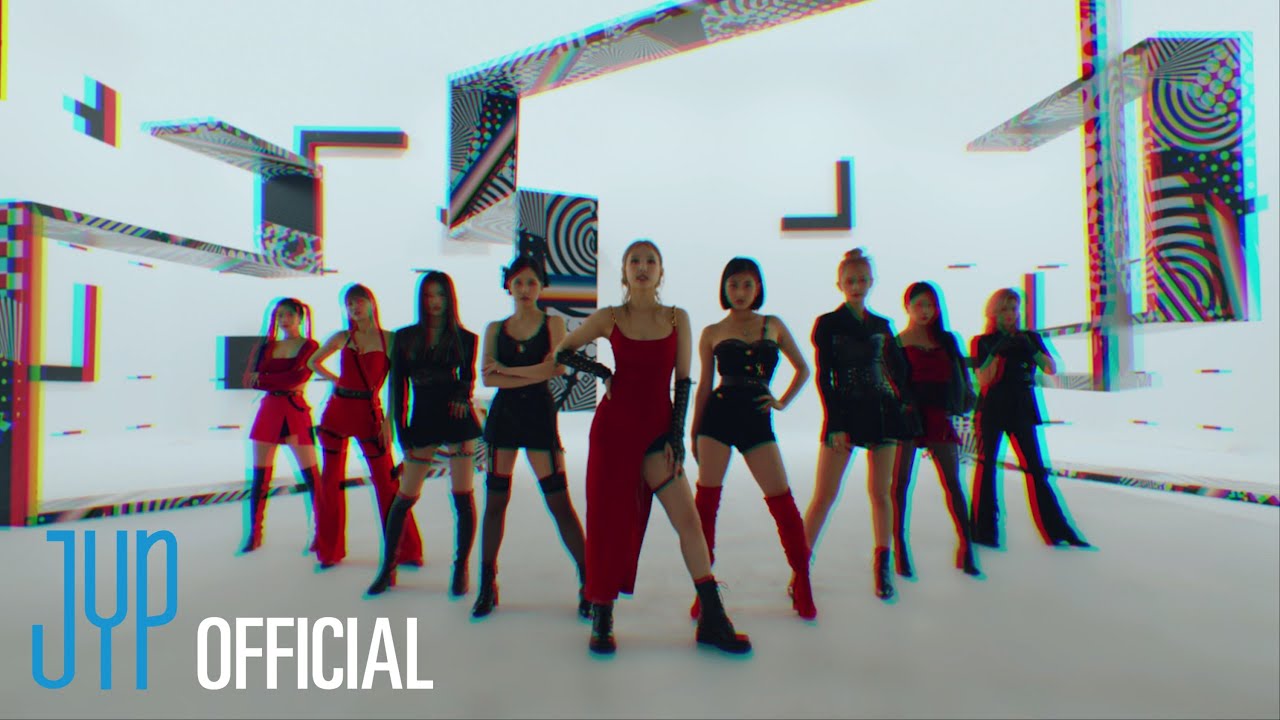
The visual language pulls from older computers, broadcast graphics and spy-media interfaces without freezing them into museum nostalgia. The members touch, move and perform through the systems. Past technology becomes a playground for present communication rather than a lecture about how charming obsolete screens used to be.
TWICE’s own career history sits underneath that choice. By 2022, nostalgia for their earlier eras already existed, but the group was not finished. The video treats history as material they can operate, remix and point toward the next message. Longevity becomes a tool, not a retirement speech.
The QR code is a receipt, not an Easter egg tax
The closing code leads viewers back toward the group’s early relationship with ONCE, making the final image an archival link rather than a random puzzle demanding unpaid detective work. The gesture connects a direct-love song to years of fan communication without pretending fandom and romance are identical.
I like that the payoff is accessible. Scan the code and the reference opens; ignore it and the video still makes sense. Good Easter eggs reward attention without holding the main argument hostage. The song already said what it needed. The code adds history after clarity instead of replacing clarity.
Choreography makes communication directional
Gestures point, frame and pass focus as if messages are traveling through the formation. The chorus has the memorable directness expected from TWICE, while transitions show how much labor makes nine people read as one conversation. Nobody simply waits for her line to become relevant.
The camera works best when it respects those routes. Medium and wide shots allow the eye to see information move from member to member. Close-ups identify the speaker, but formation proves the answer is being built collectively. That balance keeps the video from becoming nine separate transmissions.
Member voices act like different communication settings
Some lines arrive as teasing hints, some as impatient commands and others as invitations soft enough to leave room for an answer. The vocal arrangement lets those approaches coexist. Directness is not one volume. A whisper can be clearer than a paragraph if the speaker finally stops hiding the subject.
The rap and rhythmic passages are especially useful because they interrupt the melodic glide with sharper syntax. Then the chorus gathers the fragments into one request. TWICE’s nine-person structure becomes the point: communication can change tone without losing its destination, provided every voice is actually willing to name where the message is going.
That is why the compact runtime does not feel emotionally empty. The song spends little time repeating one speaker’s position. It keeps changing who carries the request. Compression becomes conversation: another tone arrives before the message can harden into a lecture, and the chorus remains an invitation even while demanding clarity.
Where the machine needs one dropped signal
Everything functions beautifully, which slightly weakens a song about the frustration of unclear communication. I wanted one visual failure: a message lost, a screen frozen or a formation briefly unable to connect. Repair would make the final demand for honesty feel earned through consequence.
The arrangement could also let the bridge breathe longer. Compact pop is not required to explain itself, but a quieter vocal exchange would show what remains after the interfaces shut down. Direct talk sounds different when the beat stops helping.
What changed every time I replayed it
The first replay belonged to the chorus. The second belonged to interface details and the routes created by choreography. By the third, the QR code felt less like a clever ending and more like the thesis: communication becomes meaningful when it connects the present message to an actual relationship history.
Audio-only, the song’s compact structure feels efficient rather than rushed. Muted, the devices and directional movement still make communication visible. Together, they prove the exact MV is not interchangeable with a stage. The film asks what happens around the words before and after somebody finally says them.
RaeRae verdict
“Talk that Talk” is TWICE using retro technology to argue for a very current skill: say the thing clearly. The compact production, directional choreography and archival QR payoff turn communication into both a hook and a history lesson that never becomes homework.
I wanted one failed signal and a longer quiet exchange. Machines that never malfunction make clarity look too easy. Still, the final message lands. Hints can be cute, interfaces can be gorgeous and love still needs somebody willing to stop coding around the answer.
Bottom line
TWICE built a retro love machine, loaded it with nine voices and ended by linking the present confession to their own archive. “Talk that Talk” works because the technology decorates clarity instead of replacing it.
Credits and receipts
The exact file reviewed here is JYP Entertainment’s official “Talk that Talk” music video, video ID k6jqx9kZgPM, released August 26, 2022. This React is dated August 28, two days later, with the exact playlist runtime of 02:55.
Continue with the TWICE group hub, all nine member profiles and the exact official MVDaily+27.6KTotal views221.9M. Choreography, stage and audio files remain separate objects.