
Mamiya: Fist of the North Star Character Profile
Mamiya is a fighter, survivor, and village leader whose work continues after the heroic duel. Her agency cannot be reduced to Rei’s love or Juda’s violence.
Profile at a Glance
Mamiya is a village leader, fighter, survivor of Juda’s violence, and one of the clearest examples of practical authority in the franchise. She organizes people before Kenshiro and Rei arrive. Her competence is not borrowed from either man.
Her story becomes deeper when survival is treated as ongoing political work rather than a test she passes so a male hero can feel protective.
The Village Already Had a Leader
Mamiya evaluates threats, coordinates defenses, secures supplies, and accepts the consequences of public decisions. The wandering fighters change what is possible, but they do not invent her community.
That distinction matters. A savior narrative can erase the labor that kept people alive long enough to be saved. Mamiya’s leadership restores the missing before.
Kou and the Cost of Ordinary Hope
Kou’s death is cruel because he is gathering strawberries for Mamiya’s birthday, an ordinary act of affection in a world that treats ordinary life as weakness. His murder attacks the possibility that family can celebrate anything safely.
Mamiya’s grief should not be reduced to fuel for retaliation. She must continue leading people who are grieving too, while her own private loss receives almost no protected space.
Rei’s Love and the Danger of a Beautiful Future
Rei’s devotion grows from respect and becomes one of the franchise’s most affecting relationships. Yet his imagined gift to Mamiya is often a future defined for her: peace, femininity, and a life outside combat.
She does not owe him a transformed identity as proof that his sacrifice mattered. Love should expand her choices, not assign the ending that makes his death look complete.
Juda, Captivity, and the Lie About Womanhood
Juda’s violence is designed to make Mamiya believe survival altered her worth. The Death Omen Star and the story around her supposed lost womanhood turn trauma into an identity other people interpret.
Her body and future remain hers. Captivity does not revoke femininity, leadership, desire, or the right to choose a life unrelated to the person who caused harm.
Medicine City and Practical Courage
Mamiya goes to Medicine City seeking relief for Rei while Raoh’s forces control access. The mission shows courage as logistics: obtaining medicine, moving through occupied territory, and deciding which danger may produce actual care.
It also shows why healers and supplies are political. A ruler who controls treatment governs through pain even when no soldier is visibly attacking.
Airi, Lin, and Women’s Survival Networks
Mamiya’s world includes women and girls whose experiences should not be isolated into separate rescue plots. Airi’s recovery, Lin’s growing agency, and village women’s labor create possibilities for shared knowledge.
Friendship and coordination are not secondary to combat. They are how food, warning, medicine, memory, and boundary-setting survive between battles.
Leadership After the Hero Leaves
Kenshiro cannot remain in every settlement. Mamiya’s authority matters most after the dramatic victory, when water routes, defense, disability, grief, and disputes still require decisions.
Rebuilding is not a quiet epilogue. It is the political test that determines whether the village becomes free or merely waits for another strong man.
Japanese Voice Performances Across Eras
Toshiko Fujita voices Mamiya in the classic television series. Ruriko Aoki voices her in the Remake. Each credit belongs to its production, with later animated branches recorded separately where applicable.
Performance must hold leadership, anger, tenderness, and exhaustion without turning trauma into permanent fragility. A strong Mamiya does not need to sound invulnerable.
Design Across Eras
Classic imagery often balances warrior equipment with exposed skin in ways shaped by its era. A modern design can preserve athleticism, beauty, and recognizable silhouette while dressing leadership for the work being done.
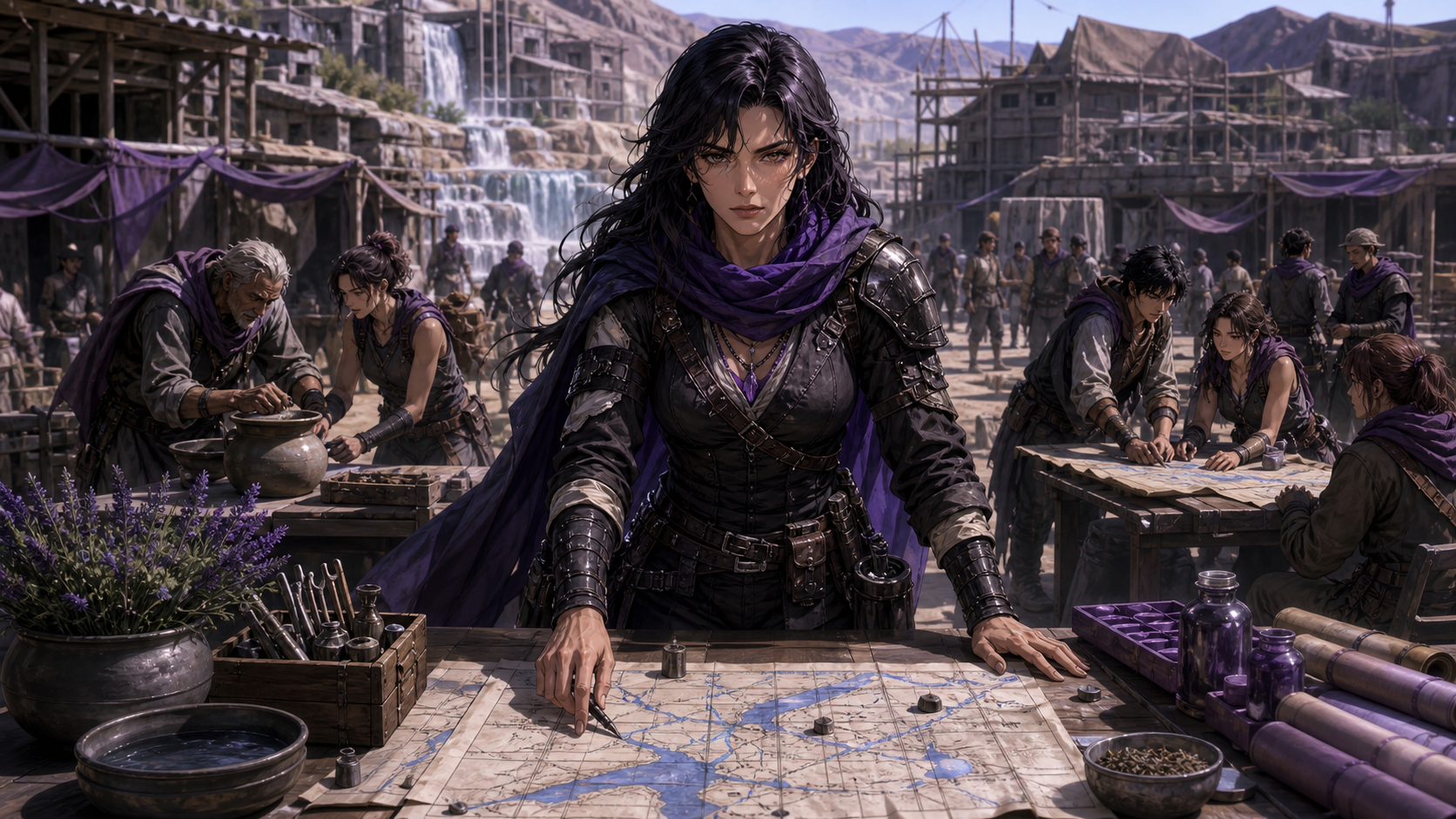
CVM Sekai’s canonical art puts maps, medicine, tools, water, and community inside the frame. Mamiya is not posing after survival. She is directing it.
RaeRae’s Verdict
Mamiya does not need a man to return her womanhood, retire her from danger, or explain why she kept fighting. She needs room to decide what power, rest, love, and responsibility mean after violence.
The franchise already gave her the skills of a civic leader. The deeper reading simply refuses to look away when the duel ends and her real work begins again.
Weapons, Clothing, and the Right to Self-Definition
Mamiya’s equipment is often discussed as evidence of toughness or as fan service. The more important question is whether design supports the work the scene says she performs. A leader moving through raids, supply runs, and construction needs mobility, protection, storage, and visible authority.
She can be beautiful without being staged for ownership. Styling becomes character when it reflects choices, repairs, local materials, and the difference between ceremonial appearance and field labor.
Grief Does Not Suspend Administration
After Kou and Rei die, people still need meals, watches, medicine, burials, and decisions about risk. Leadership can force grief into narrow hours because crisis keeps demanding competence.
A deeper story would let Mamiya delegate, fail, become angry, and receive care. Resilience should not mean she is the one person whose collapse the community never prepares to hold.
Consent After Captivity
Trauma can change how safety is negotiated without making survivors incapable of desire or judgment. Mamiya should decide what touch, romance, privacy, and public knowledge mean for her, with room for decisions that do not produce a neat recovery narrative.
Rei’s kindness matters because he sees her worth. The ethical next step is allowing her to define the terms rather than making his recognition the source of that worth.
Mamiya as a Model for Civilian Power
The franchise often organizes legitimacy around inherited martial schools. Mamiya offers another model: authority earned through local knowledge, repeated service, and accountability to people who can see the result of her decisions.
That power is imperfect and vulnerable, but it can be shared. A village council, healer network, guard rotation, and food plan are less mythic than succession and much harder for one tyrant to capture.