
Yuria: Fist of the North Star Character Profile
Yuria is more than the woman men cross a wasteland to possess or recover. Her compassion, Last General authority, illness, choices, and boundaries define a political life of her own.
Profile at a Glance
Yuria is Kenshiro’s beloved, the compassionate center claimed by several men, and the Last General of Nanto. Those roles have often made her feel like a destination. Her fuller character appears when compassion becomes judgment, political influence, and the ability to imagine life after conquest.
She is not powerful because violent men feel more deeply around her. She is powerful when her own understanding of suffering changes what a community chooses to protect.
Before the Wasteland Became a Romance Quest
Yuria and Kenshiro’s bond begins before nuclear collapse reorganizes every relationship around survival. Their promise matters, but the story too easily lets that prior intimacy function as permanent authorization.
Love survives only if both people remain capable of choosing it under changed conditions. Memory can guide a future; it cannot make consent unnecessary.
Shin and the City Built as a Cage
Shin takes Yuria and constructs Southern Cross as proof that possession can imitate provision. The city offers luxury surrounded by coercion, labor, and the knowledge that departure is not safely available.
Her rejection exposes the central lie: a beautiful environment is not care when the person inside it cannot leave. Shin’s grief makes the failure tragic. It does not make captivity romantic.
Kenshiro and the Burden of Being a Horizon
Kenshiro crosses the wasteland with Yuria as purpose, memory, and symbol. His devotion is sincere, yet the narrative sometimes lets his longing occupy more space than her daily experience.
A consolidated profile returns the camera to Yuria. What does she know, decide, conceal, fear, and refuse while men travel in her name? Those questions keep love from swallowing personhood.
Raoh and Love as Political Claim
Raoh recognizes Yuria’s compassion and the legitimacy attached to the Last General. His feeling cannot be separated from a ruler’s desire to absorb every competing source of authority.
When affection arrives with armies, the beloved cannot negotiate on equal ground. Yuria’s empathy may recognize his pain, but empathy is not surrender and it is not a pardon issued for everyone his empire harmed.
The Last General of Nanto
Yuria’s identity as the Last General places her inside Nanto’s political and spiritual structure. The Five Chariot Stars protect her because her survival represents continuity larger than one romance.
That role becomes meaningful only when she exercises judgment. Guardianship should expand her agency, share intelligence, and answer to her decisions rather than turning sacred protection into another locked room.
Compassion Is Not Passivity
Yuria’s sensitivity to suffering is often treated as an aura. Compassion is more demanding than gentleness. It requires accurate attention, boundaries, resource choices, and the willingness to tell a powerful person that his feeling does not justify his behavior.
Her best future is not sainthood. It is leadership in which care becomes systems: shelter, medicine, food, listening, and protection that does not reproduce ownership.
Illness, Secrecy, and the Right to Know
Yuria’s illness becomes another fact men manage around her. Secrecy may be motivated by protection, but withholding information about a person’s body and future always carries ethical cost.
She deserves honest options and the authority to decide how remaining time is spent. Tragedy should not convert her into a fragile object whose silence keeps everyone else emotionally functional.
Japanese Voice Performances Across Eras
Yuriko Yamamoto voices Yuria in the classic 1984 television series and 1986 film. Saori Hayami voices her in the Remake. Other branches must retain their own verified credits rather than inheriting one name by familiarity.
The performances should be read within their productions. Soft vocal direction can hold certainty, anger, and withheld knowledge; it must not be mistaken for lack of interior life.
Design Across Eras
Classic Yuria uses softness, light clothing, and visual stillness against an angular violent world. Modern design can add facial detail, movement, and authority without turning her into ornamental purity.
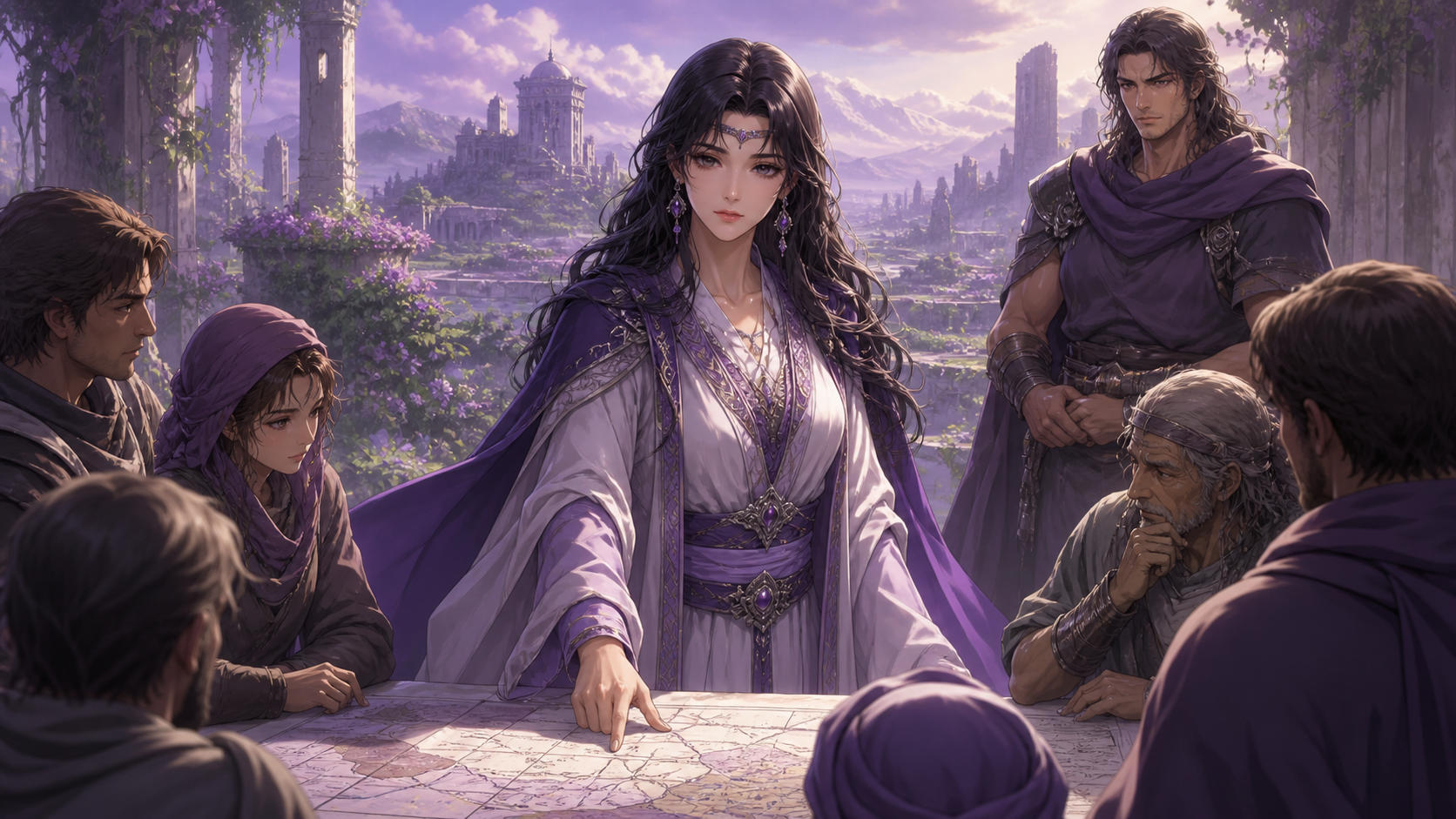
CVM Sekai’s canonical art places her at a map with a community. Beauty remains, but the image asks what she is planning rather than which man is looking at her.
RaeRae’s Verdict
Yuria is most interesting when she stops functioning as the emotional weather report for men. Her compassion is not evidence that everybody deserves access to her. Her love is not a throne awarded to the strongest survivor.
Let her lead, refuse, grieve, change her mind, and participate in repair. The Last General should be more than the final woman everybody agrees is precious.
What Yuria Notices That Warriors Miss
Fighters read threats through posture, weapons, and rank. Yuria’s attention moves toward exhaustion, fear, and the person whose quietness has been mistaken for agreement. That is not supernatural feminine intuition. It is a practiced refusal to let power define which evidence matters.
Her insight becomes politically useful when it changes allocation and strategy. A village cannot call itself protected if frightened people have no safe way to contradict the protector.
Children, Memory, and the Future Her Symbol Represents
Yuria becomes associated with continuity because she can imagine more than surviving the next raid. Children need food and defense, but they also need truthful memory, play, education, and adults who do not treat trauma as their inheritance.
The Last General’s legitimacy should be judged by whether young people receive choices wider than the ones war gave their parents. Hope is not an aura around her body. It is a budget and a plan.
The Difference Between Mercy and Avoided Accountability
Yuria may understand why Shin or Raoh became who they are. Understanding motive can interrupt cycles of dehumanization, but it cannot let powerful men bypass the people harmed under their command.
Mercy protects the possibility of human change. Accountability protects everyone else from being used as the price of that change. Her compassion is strongest when it insists on both.
What a Yuria-Led Reconstruction Could Build
A postwar role for Yuria should include councils, health networks, protected water, conflict mediation, and limits on martial authority. The work is less visually explosive than a duel and more decisive for whether violence returns under a new name.
She does not need to become a flawless queen. Disagreement, incomplete information, and the need to share power would finally let her leadership exist as action rather than reverence.