
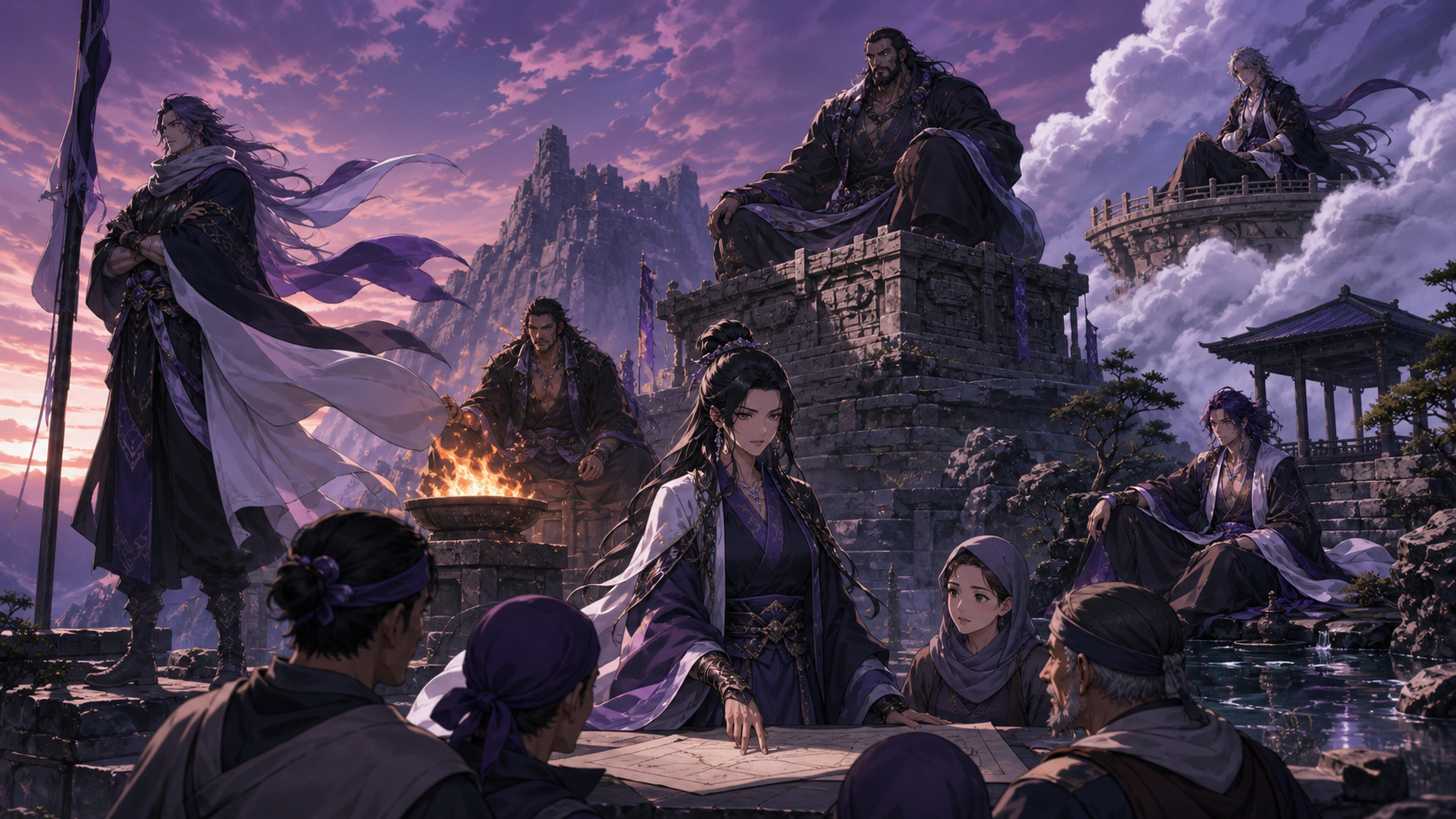
The Five Chariot Stars Explained: Yuria, the Last General, and the Cost of Guardianship
Wind, Flame, Mountain, Clouds, and Ocean protect Yuria as Nanto’s Last General. Their elemental beauty cannot hide the strategic cost of serial sacrifice.
Who the Five Chariot Stars Are
The Five Chariot Stars serve the Last General of Nanto. Hyui represents Wind, Shuren Flame, Fudo Mountain, Juza Clouds, and Rihaku Ocean. The elemental names create an immediate symbolic system, but each guardian’s decisions matter more than the label.
Their collective purpose is protection. That makes them an institution with strategy, hierarchy, information, and people affected by every delay or sacrifice.
The Last General Is Yuria
Yuria’s position reorganizes how the franchise frames her. She is not only Kenshiro’s lost love or a symbol men pursue. She occupies a political and spiritual role surrounded by guardians who understand her survival as larger than romance.
The role becomes meaningful when Yuria participates in judgment and planning rather than functioning as sacred cargo.
Hyui of the Wind
Wind suggests speed, movement, information, and the ability to reach danger before heavier forces arrive. Hyui’s role shows the value and risk of a fast vanguard.
Speed without coordinated intelligence can become expendability. A guardian should not be praised merely because the organization spent him first.
Shuren of the Flame
Flame carries passion, destructive commitment, and the willingness to consume oneself for a cause. Shuren embodies a form of loyalty that can be inspiring and strategically dangerous.
Self-sacrifice may slow an enemy, but an institution that depends on beautiful deaths has failed to build enough living options.
Fudo of the Mountain
Fudo represents endurance, shelter, and strength that creates space for vulnerable people. His history and relationship with children make protection material rather than ceremonial.
A mountain does not need to dominate everything below it. Fudo’s best strength is stability that lets other lives continue.
Juza of the Clouds
Juza resists fixed obligation and moves according to personal freedom. Clouds suit a fighter who refuses to be easily contained by hierarchy, even when love and loyalty eventually draw him into the conflict.
His arc asks whether freedom means avoiding responsibility or choosing responsibility without surrendering the self.
Rihaku of the Ocean
Rihaku functions as strategist and elder. Ocean symbolism suggests depth, patience, and wide perspective, but strategic authority must still answer for what happens to people treated as pieces.
A plan should be judged by survival, informed consent, and whether subordinates understood the risks assigned to them.
Five Elements Do Not Guarantee Coordination
A symbolic team can still suffer from fragmented information, timing failures, and a hierarchy that reveals too little. Complementary strengths matter only when communication turns them into collective capacity.
The Last General’s protection cannot depend on each guardian meeting Raoh alone in sequence. Mythic sacrifice is not the same as good defense.
Yuria and the Ethics of Guardianship
Guardianship becomes possession when the protected person loses voice, movement, or information. Yuria’s role should include authority over the risks others take in her name.
Protection is strongest when it expands agency. The guardian’s identity cannot become more important than the life supposedly being guarded.
RaeRae’s Verdict
The Five Chariot Stars give the franchise one of its richest ensemble structures: nature, temperament, loyalty, and strategy bound to one threatened future.
The tragedy is not only that powerful men die. It is that the system too often confuses serial sacrifice with a plan. Yuria deserves guardians who can live, coordinate, and hear her.