
Seven moments that got me
Not the most important scenes. The ones that would not leave. Two bro moments, one dog, one elderly woman committing social terrorism, and one joke that comes back four hundred pages later as a knife.
The paintings nobody looks at
Feeling: quiet devastationHe offers to send a carriage for their first proper meeting and she refuses it, tells him to come to her house instead, and calls it home court advantage out loud, to his face, like a woman announcing the rules of a game she has already decided she will win. Which is the single most Judith sentence in the novel and I would like it embroidered on something.
But that is not the bit that got me. The bit that got me is the walls.
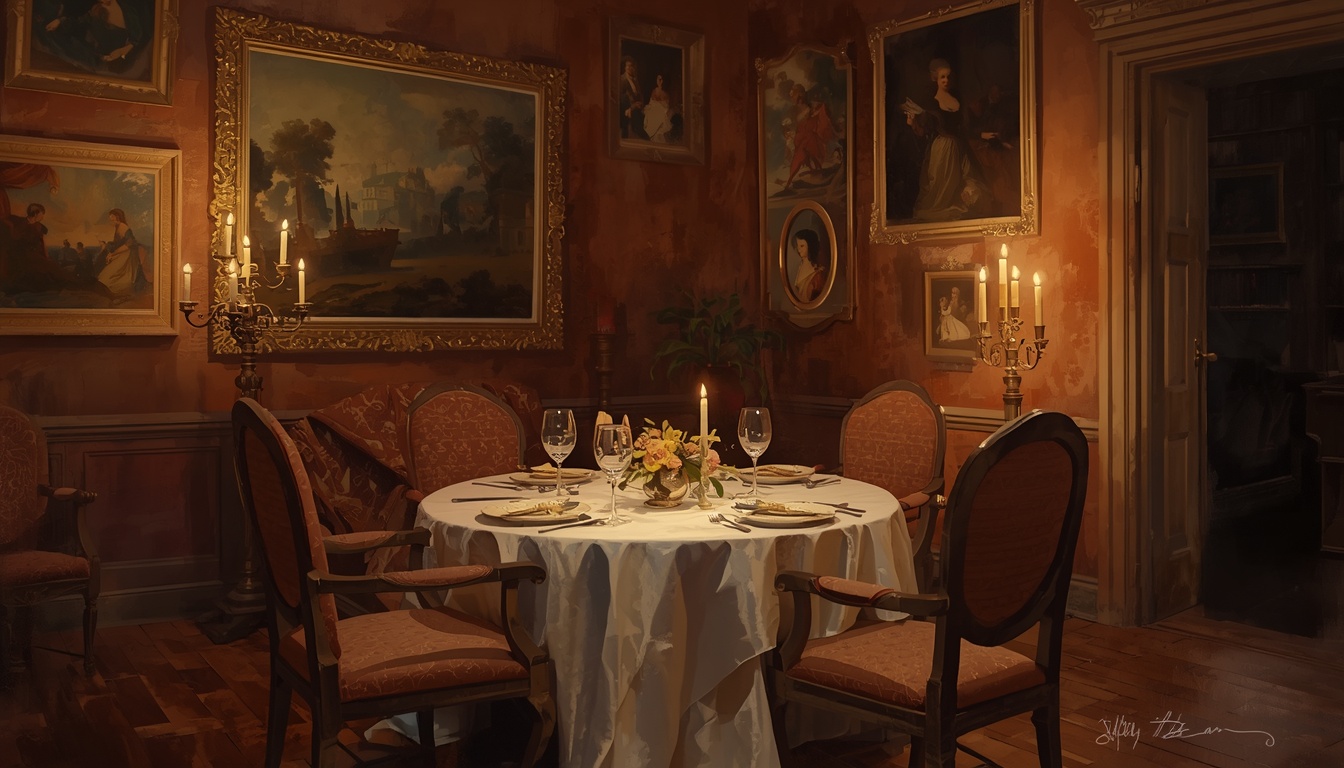
Gideon arrives early and does what anyone does in a room they are nervous in: he walks the perimeter and looks at things. And what he finds is that her house is hung floor to ceiling with paintings, and the collection is a very particular mix. Light, frivolous, pretty pieces from an earlier and more decadent era, hung right alongside much darker, heavier, more sombre later work. He clocks it. He actually notices, and thinks something along the lines of what an interesting selection, and moves on to look at the furniture.
Reader. It is not a selection. It is a self-portrait.
This woman has taken the two halves of her entire interior life, the glittering surface everyone is invited to enjoy and the very dark thing sitting underneath it, and she has hung them on the walls of the room where she receives guests. Every single person who has ever come to her house for supper has walked directly past the most honest thing she owns while thinking how lovely, is that a Fragonard.
She is not hiding. She has never been hiding. She has been in plain sight for nine years and not one person has read the room, in the most literal sense available.
The orchid joke, planted
Feeling: I did not see it comingEarly on, at that ghastly poetry evening, there is a conversation about orchids. Judith is being deliberately outrageous about them, the way you are when you have decided to see whether a man will flinch, and Gideon does not flinch, and something in the exchange gets away from both of them.
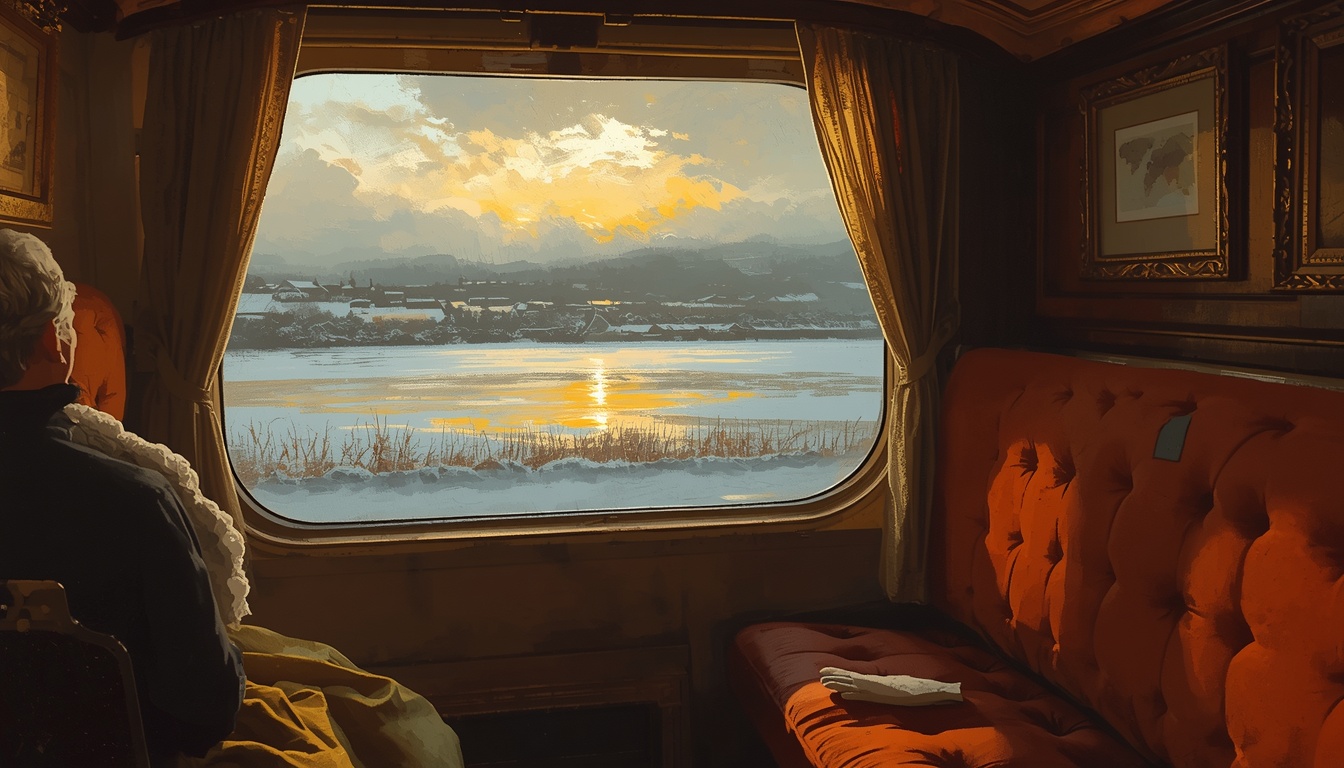
Later, in a carriage going somewhere he refuses to name, she demands to know where they are headed and he tells her, entirely deadpan, that he is kidnapping her to the south of Spain where they will spend the remainder of their lives on sun-drenched beaches wearing very few clothes. He says it like he is proposing a drive in the country. And somewhere in the same stretch he says the other thing, the throwaway line, the one about how he will never hunt orchids in South America or go exploring jungles, because that is not the kind of man he is, but he fully intends to explore whatever this is between them.
It is charming. It is a joke. It goes past you at speed and you laugh and you keep reading.
And she lets herself picture the beach. For one second. White sand, water bluer than water is, him in it looking like nothing that ever came out of England. One second of a future she has spent nine years refusing to allow herself, and then she puts it away, because that is what she does.
Hold that thought for three hundred pages.
cvm-sekai-albw-react-helmsley.jpg
After the party, after the guest list, after standing in a room full of men who have slept with the woman he is in love with while everyone behaved impeccably, Gideon does not go home. He goes to Helmsley’s house, in the small hours, and gets let in.
And here is the detail that turns a scene into a react. Helmsley takes one look at him and says he looks terrible, and assumes, reasonably, that he is drunk. And Gideon says no. He has not had a drink since he left the party.
Which means he walked out of the worst night of his adult life, stayed completely sober through all of it, and came here. Not to a bottle. To his friend’s house.
Helmsley’s response is perfect and I will defend it forever. He does not get solemn. He does not ask if Gideon wants to talk about it. He observes drily that this explains a great deal, because if his friend had drunk appropriately he would be past caring by now and Helmsley himself would still be in bed. Then he calls for the brandy anyway, sits him down by the fire, and asks a question sideways so that Gideon can answer it without having to volunteer anything.
That is what it looks like when a man who is married and settled and has absolutely no personal stake gets out of bed at three in the morning to be lightly sarcastic at a friend until the friend can breathe again. Nobody says anything about feelings. It is the most emotionally competent thing in the entire novel.
The guest list
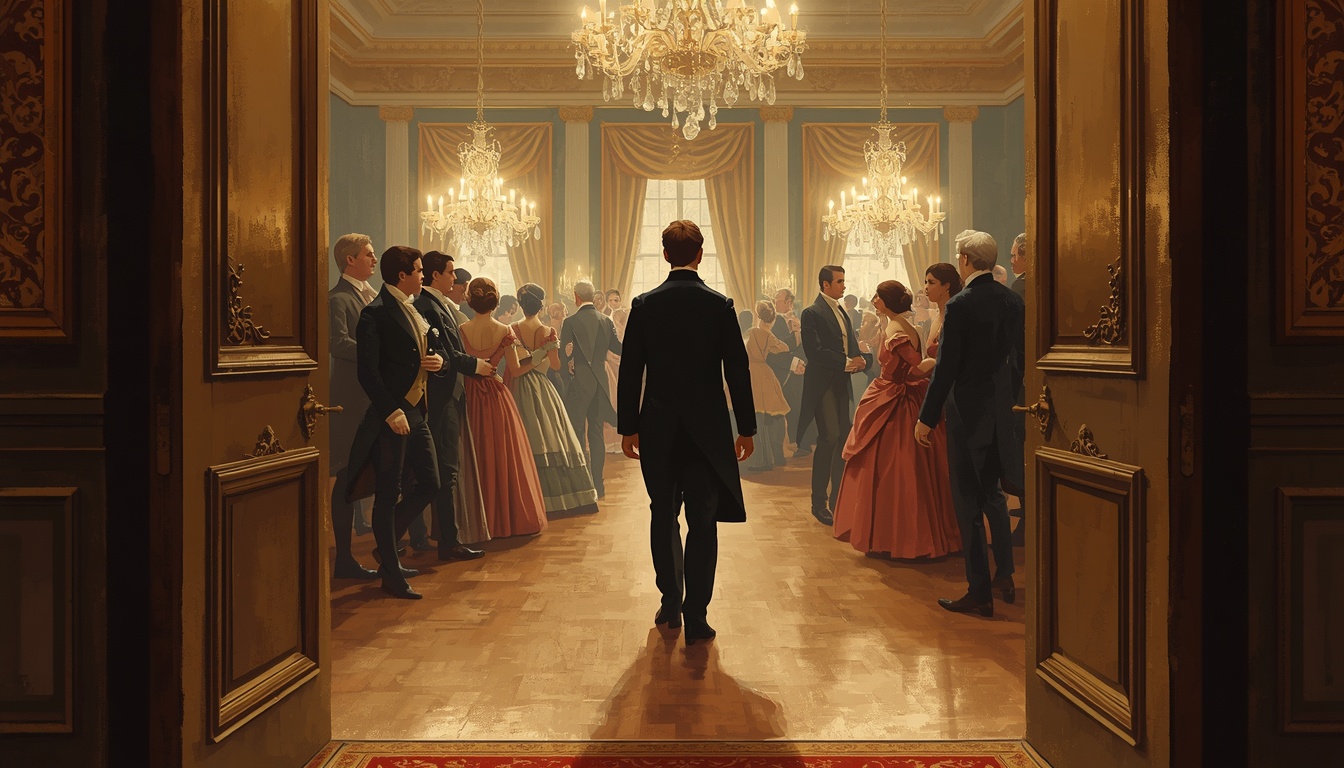
Feeling: I cannot believe she did thatLady Braxton invites a man she has no real connection to, to a party. He accepts, because why would he not. And then, slowly, over the course of an evening in which every single person behaves with flawless courtesy, it becomes apparent that the other guests have been chosen.
Several of them are Judith’s former lovers. He is being introduced to them, in sequence, by a smiling hostess, in a blazing room full of people who have no idea.
There is no accusation. Nobody raises their voice. Nobody says a single impolite word all night. That is precisely what makes it the cruellest thing in the book: you cannot defend yourself against a seating plan. There is nothing to rebut. If he reacts at all, he is the one making a scene, and the entire architecture of that society is built to ensure he knows it.
Later she frames it privately as an attempt to show him the error of his ways regarding Judith, which is the kind of sentence people use when they have done something appalling and would like it filed under concern.

She tells the dog
Feeling: oh. oh no.Arthur is Judith’s dog. He sleeps at the foot of her bed, ignores instructions, and is in general a very good boy with no particular plot function.
Except that late one night, pacing her room, unable to settle, Judith talks to him. Properly. Out loud. She tells him she does not want to talk about Lucian, not to Gideon, not to anyone, and then she keeps talking, and complains that every male in her life has apparently decided to disregard her wishes entirely, which includes the dog, who has just got onto the bed after being told not to.
It is funny. It is meant to be funny. And then it lands, because you realize this is the only conversation about her first marriage that this woman has had in ten years, and she is having it with an animal, at night, alone, because there is nobody else.
Not Susanna, who is her closest friend and does not know the details. Not Gideon, who is in her bed. A dog.
cvm-sekai-albw-react-aunt-louisa.jpg
Gideon is at his club with Cavendish, Sinclair and Norcroft, doing what men in this genre do at clubs, when a voice rings across a room that has never in its history contained a woman.
His aunt has walked in. Straight in. Past the steward, who is having something close to a religious crisis and keeps insisting that a lady has never set foot in this room before. Cavendish stares. Sinclair chokes on a laugh. Norcroft, to his credit, shoots Gideon a look of solidarity. Every man in the room is on his feet, and Gideon cannot work out whether that is respect or spectatorship.
And Gideon, faced with an unfolding scandal that will almost certainly cost him his membership, observes mildly that he will do what he can but can make no guarantees, because the lady is a force of nature unto herself who has rarely been deterred from a goal. Which at the moment appears to be him.
She waves off the objection that women are not allowed. Of course she understands, she says, though now she is standing in it she cannot see why, and by the way the room is nowhere near as grand as she had been led to believe.
Then she tells him. Judith is leaving London.
Nobody asked this woman to do this. She is elderly, she is the only living relative he has, and she has calculated that her nephew is about to lose the first thing he has wanted in ten years, and that the cost of telling him is a scandal she will personally absorb. So she absorbs it. In a room where she is not allowed to stand.
Alexandra at the window
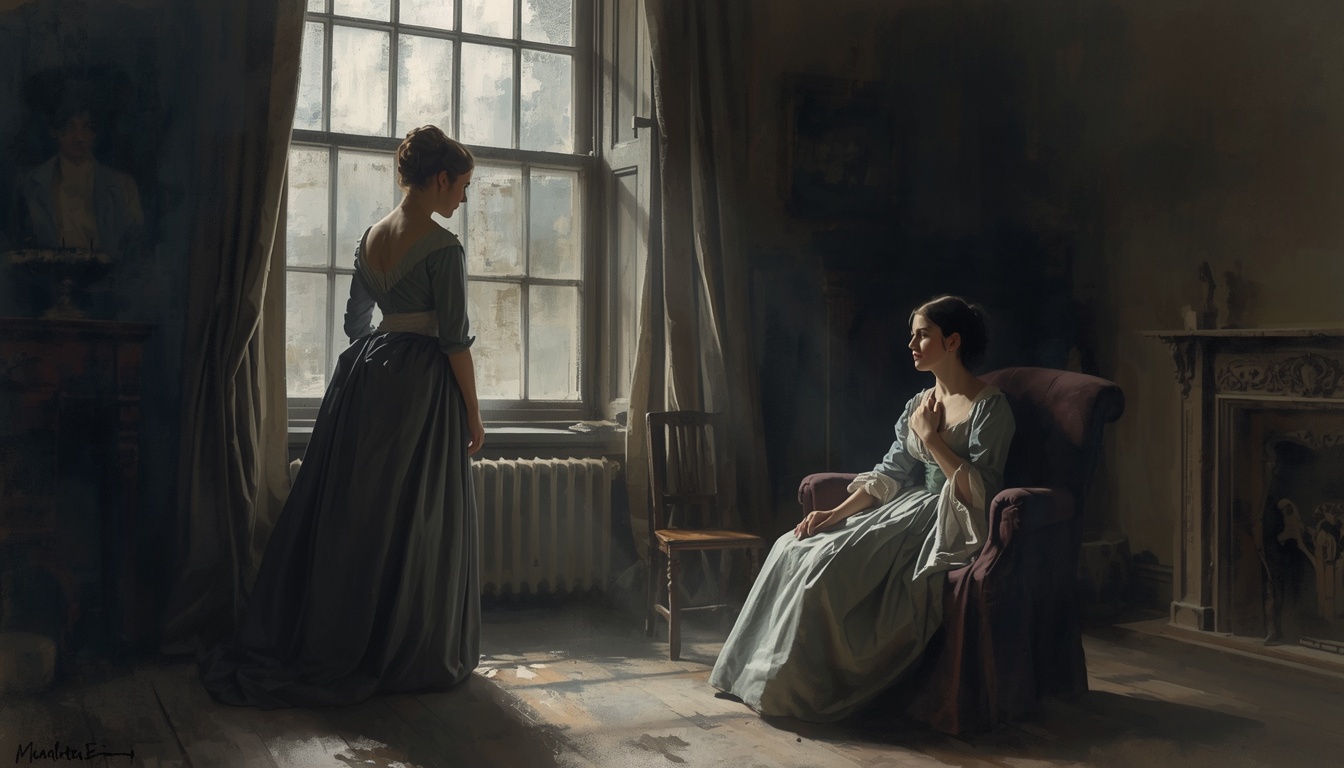
Feeling: windedA grim house. A cold room. No fire lit, which the book mentions and which is doing a lot of work. Alexandra stands at a tall window with her back to Judith, because she cannot do this facing another person, and dismantles ten years of a woman’s life in the flattest possible voice.
Their father was cruel for the pleasure of it. Violent, vicious, a man whose wife and children were possessions rather than family. Lucian grew up in genuine fear of becoming him. And he had cast Judith, at seventeen, as the person who was going to save him from that, which is a job nobody could have done and certainly not a girl who was barely out of the schoolroom.
And then the rest of it. That his death was never Judith’s doing. That Alexandra has known this the entire time. That she not only failed to correct it but actively encouraged the belief, for a decade, deliberately.
Judith does not scream. Does not throw anything. Does not tell her to get out. She stands very still and takes it, because taking it is what she has been trained to do by every single relationship in her life, and that is somehow the worst part of the whole scene.
No music swells. Nobody weeps attractively. It is short, cold and administrative, a woman receiving her own life back in the wrong shape from someone who had it in a drawer the whole time.
And then the orchids come back
Remember chapter seven. He will never chase orchids in South America. He is not that man.
At the end of the book, when Judith decides she is not going to sit in London waiting to be chosen by anybody, she books passage to go and hunt orchids in a jungle. His joke. His exact throwaway line, the one he made to charm her, handed back to him as the thing that takes her out of his reach. She is going to do the thing he said he would never do, and she is going to do it without him.
And he goes after her. Of course he does. The last scene of the novel is not the wedding, is not a reunion, is not an epilogue with a nursery in it. It is his friends at the club, raising a glass to Lord and Lady Warton, wherever they happen to be, and then immediately drinking to whichever of them falls next.
The couple never comes back on the page. They are off somewhere warm looking for flowers, and the book simply lets them go.
Read directly from the novel and described in our own words. Artwork is original fan art. Two scenes above are waiting on art. · Book hub · The full plot · The review