
To Each His Own Battle
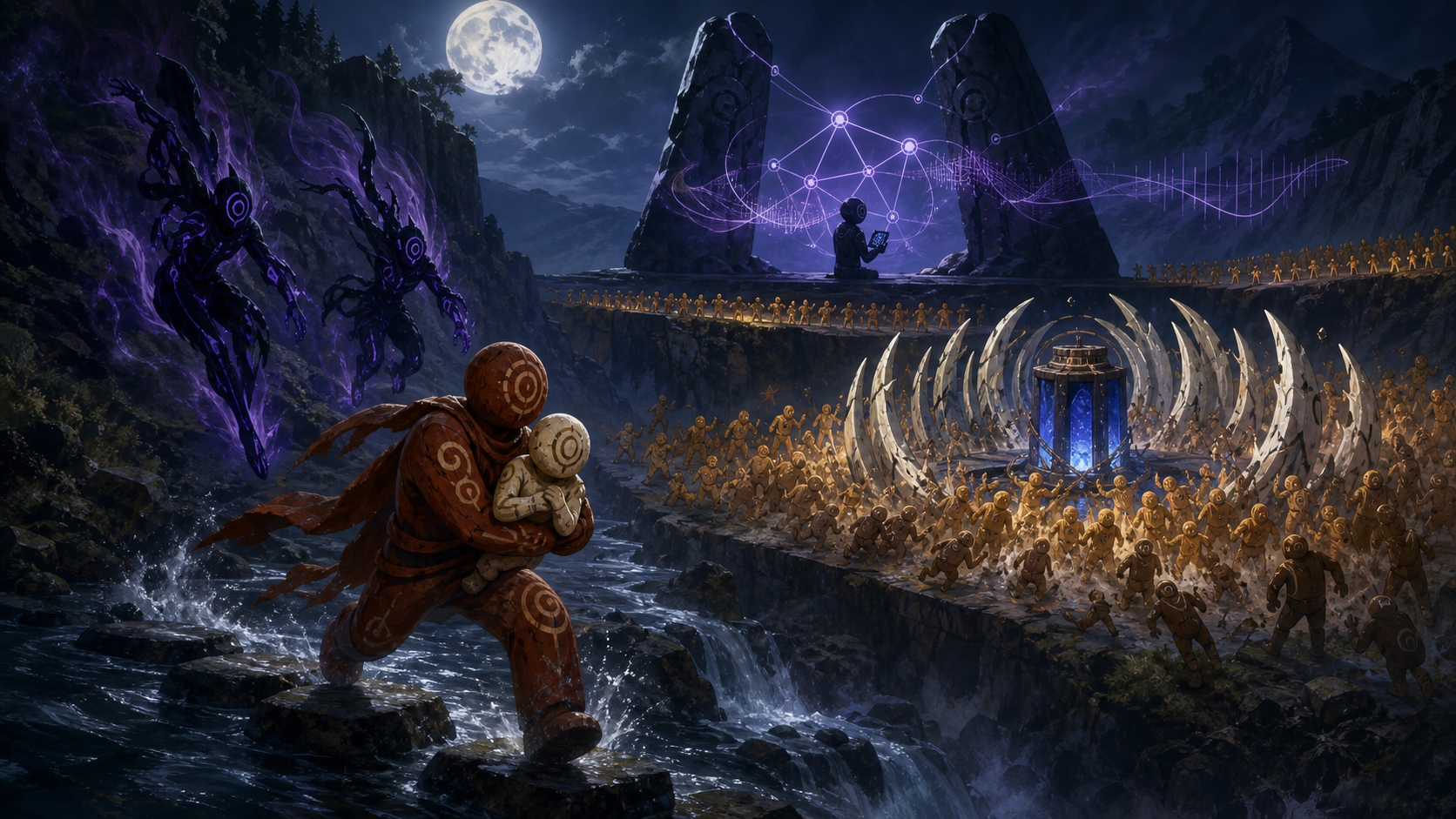
Kiba carries Akamaru toward the river, Naruto’s clone pressure breaks on Kimimaro, and Shikamaru begins translating Tayuya’s music into a plan.
RaeRae Reacts
Episode 121 leaves Kiba, Naruto and Shikamaru in three separate fights with the same ugly realization.
The first plan is dead.
Kiba cannot overpower Sakon and Ukon while carrying an injured Akamaru.
Naruto cannot bury Kimimaro under enough shadow clones to reach Sasuke.
Shikamaru cannot hold off three Doki forever while Tayuya controls the whole field through her flute.
Nobody gets backup.
Nobody gets time to complain.
Each fighter has to stop repeating the move that failed and find a different way to survive.
That is what “To Each His Own Battle” actually means. The retrieval team still shares one mission, but teamwork now exists as faith across distance.
Everybody left behind has to believe the next person is still moving.
Ukon Learns Kiba Is a Terrible Host
Ukon merged with Kiba because he expected the human body to become a prison.
Kiba turned it into a trap.
By stabbing himself, Kiba made Ukon share the wound and proved that bodily access does not equal control. Ukon can join Kiba's cells, but he cannot stop Kiba from deciding what happens to his own flesh.
That distinction ruins the technique's easy finish.
Ukon has no interest in remaining inside a host willing to hurt both of them. He separates before Kiba can make the arrangement even more expensive.
Kiba does not win the fight with that move.
He wins back the right to have a next move.
Sometimes survival is not a clean reversal. Sometimes it is making yourself too dangerous to consume.
Ukon Returns to Sakon
After leaving Kiba, Ukon returns to Sakon's body to recover.
That makes them difficult to finish separately.
Kiba injured Ukon, but Sakon remains able to move. Sakon took damage, but Ukon can still attack when the opening appears. Their bodies redistribute risk while their opponent has nowhere similar to retreat.
Akamaru cannot absorb Kiba into safety.
Kiba cannot vanish into Akamaru while his wound closes.
Their partnership offers trust, coordination and shared technique, not an escape from consequences.
That makes the Inuzuka bond more human and the brothers' advantage more vicious.
Kiba Changes the Objective
Kiba stops trying to defeat Sakon and Ukon in a direct exchange.
That is not cowardice. It is competent mission judgment arriving after a brutal lesson.
Akamaru is badly injured. Kiba has stabbed himself. The enemy has survived Fang Wolf Fang, protected itself with Rashomon and revealed a bloodline technique that can invade Kiba's body.
Continuing the same fight would not be courage.
It would be volunteering to die without improving Naruto's chance of reaching Sasuke.
Kiba retrieves Akamaru and moves through the ravine toward the river. Escape protects his partner and may still pull Sakon and Ukon away from the main pursuit.
The mission does not require every Leaf ninja to collect a dramatic victory.
It requires them to keep the Sound fighters from reinforcing Kimimaro.
Akamaru Is Not Cargo
Kiba carries Akamaru because the dog can no longer maintain the pace alone.
Minutes ago, both partners tore across the battlefield as a two-headed wolf. Now Kiba supports Akamaru's injured body while staying ahead of two killers.
The bond remains the same in both states.
Akamaru does not become less valuable because he can no longer attack. Kiba does not measure whether carrying him reduces speed enough to justify abandonment.
That calculation belongs to Orochimaru's world, where a body matters only while it performs its assigned function.
Kiba's answer is simpler.
Akamaru is his partner.
Partners come home together if either one can still move.
The River Offers Movement, Not Safety
The ravine and river give Kiba a possible route away from the brothers.
Kiba does not have a good option.
He has the option least likely to kill Akamaru immediately.
The chase continues, but the terms have changed.
Kiba no longer needs to stand where they want him.
He needs to make them follow where he chooses.
Naruto's Army Keeps Losing
Naruto continues throwing shadow clones at Kimimaro.
The technique creates bodies, angles and pressure, but it does not create access.
Kimimaro's taijutsu and bone-based defense dismantle the clones before Naruto can reach Sasuke's container. Every rush repeats the same question and receives the same answer.
No.
Naruto's refusal to quit is one of his greatest strengths. It becomes a liability when persistence means reproducing a failed attack at larger scale.
Kimimaro does not need to defeat Naruto permanently. He only needs to delay him while keeping the container moving toward Orochimaru.
Every clone Kimimaro destroys spends Naruto's chakra and time.
Naruto is fighting like the person who must win the battlefield.
Kimimaro is fighting like the courier who only needs to complete delivery.
Kimimaro's Body Is the Weapon
Naruto begins to understand why ordinary close-range pressure cannot break Kimimaro.
Kimimaro's kekkei genkai lets him manipulate his own skeleton. Bone can reinforce his defense, emerge as a weapon and turn the space around his body into a threat.
Punching him is not just difficult.
It can become a terrible decision.
Naruto usually accepts contact because his stamina lets him survive trades others avoid. Kimimaro changes the math. A block can cut. An approach can impale.
The bloodline also matches Kimimaro's psychology in a deeply unpleasant way.
He has reduced his whole dying body to a tool for Orochimaru.
Now that body literally produces weapons to protect Orochimaru's next vessel.
Devotion Makes Kimimaro Patient
Kimimaro does not fight with Naruto's emotional urgency.
He believes delivering Sasuke will justify the remainder of his life. That conviction makes him patient where Naruto is frantic.
Naruto sees a friend inside the container.
Kimimaro sees the future body of the person he worships.
Both care about what the barrel contains, but only Naruto cares what Sasuke wants.
Kimimaro's devotion erased that question long ago. Orochimaru gave his life purpose, so anything that extends Orochimaru's plans becomes righteous by definition.
Naruto cannot argue with that belief while a forest of clones gets cut down.
He has to create an opening first.
The problem is that rage keeps telling him to make more of the same attack.
Shikamaru Starts Reading the Music
Shikamaru remains trapped between Tayuya and the three Doki.
He cannot match their raw strength, and his shadow cannot solve a battlefield he does not understand. So he watches.
Tayuya's flute does not produce random noise. Different patterns direct the Doki's movements. Their attacks have order because the music functions as a command language.
That gives Shikamaru something he can use.
If the creatures respond to specific phrases, then Tayuya's choices are not unlimited. She must play the instruction that matches the movement she wants. A system that looks chaotic from outside becomes predictable once its grammar appears.
Shikamaru still has to survive long enough to learn it.
Every observation costs space, stamina and another near miss from a summoned giant.
This is analysis under pressure, not genius magic arriving for free.
Tayuya Knows He Is Thinking
Tayuya sees Shikamaru watching rather than attacking blindly. The battle becomes a contest over information as much as position.
Tayuya wants to overwhelm him before the pattern becomes useful.
Shikamaru wants her confidence to keep the commands consistent.
If she believes the Doki have already trapped him, she has less reason to hide the relationship between melody and movement. Every attack teaches him something, even when it nearly breaks him.
He cannot afford many lessons.
That is the tension. Shikamaru's best weapon needs time, while Tayuya controls three bodies designed to deny it.
He must turn her system against her before the system reaches him.
What Changes After Episode 121
Ukon abandons Kiba's injured body and returns to Sakon.
The brothers use their shared-body bloodline to recover and continue pursuit.
Kiba retrieves the wounded Akamaru and changes his immediate objective from victory to escape.
He moves through the ravine toward the river while Sakon and Ukon follow.
Naruto's shadow-clone pressure continues failing against Kimimaro.
Kimimaro's skeletal bloodline makes his body both armor and weapon.
Naruto still cannot reach Sasuke's container.
Shikamaru studies the relationship between Tayuya's flute patterns and the Doki's movements.
Tayuya presses the attack before he can complete the analysis.
All three Leaf fighters remain alone, wounded or outmatched.
The rescue continues because each one refuses to let his opponent return to the main route.
Ukon discovers that entering Kiba does not mean controlling him
Ukon merges with Kiba’s body expecting the invasion to create helplessness. Kiba can no longer attack the enemy without sharing damage, but he still controls what he is willing to do with his own body.
The technique captures tissue and misreads agency. Occupation is not ownership while the invaded person can still alter the cost.
Kiba’s self-inflicted wound forces the invader to experience the same body
Kiba drives a kunai into himself because Ukon shares the injury. The act is brutal, calculated, and born from the absence of a safer counter.
He turns the imposed connection against the attacker. Ukon wanted access without mutual consequence and learns that bodily merger can carry pain in both directions.
Calling the act suicide hides Kiba’s actual objective
Kiba threatens further injury to make remaining inside untenable. He is not surrendering his life as the desired outcome. He is using credible self-harm to regain bodily separation.
The distinction does not make the choice healthy or safe. It shows a child improvising emergency control under violation.
Ukon returns to Sakon because the target changes the terms
The brothers expected Kiba to prioritize preservation enough to leave Ukon protected. Once Kiba demonstrates otherwise, the invasion loses its advantage.
Predatory control depends on assumptions about what the target cannot bear. Resistance becomes possible when those assumptions fail.
Kiba changes the mission from victory to escape
He and Akamaru are badly injured. Defeating both brothers in a clean fight is no longer realistic. Kiba prioritizes distance, treatment, and keeping Akamaru alive.
Changing objectives is not cowardice. It is the judgment required when the original goal would spend lives the mission cannot recover.
Akamaru is a wounded teammate, not cargo
Kiba carries him because Akamaru cannot continue under his own power. The image may resemble transport, but the relationship is mutual. Akamaru already tracked, fought, transformed, and protected Kiba.
Care after contribution is part of partnership. Nobody earns less dignity because injury changes who carries whom.
The river offers movement without guaranteeing safety
Water can obscure scent, increase distance, and create a route away from Sakon and Ukon. It can also slow an injured body, expose wounds, and make protecting Akamaru harder.
Terrain rarely becomes pure rescue. Kiba chooses the conditions with the best remaining chance.
Using scent after blood loss becomes harder and more necessary
Kiba depends on smell to track danger and navigate escape. Injury, water, and environmental noise interfere with the sense that normally gives him certainty.
A specialized strength can remain useful while degraded. Adaptation means working with reduced capacity instead of pretending nothing changed.
Naruto’s clone army keeps disappearing against Kimimaro
Naruto fills the field with bodies and attacks from every direction. Kimimaro cuts through them with bone weapons and precise movement. Quantity fails to create meaningful contact.
The repeated loss is information. Naruto struggles to use it because urgency makes producing more clones feel like the only available pressure.
Persistence becomes repetition when the method never changes
Naruto’s refusal to stop is one of his greatest strengths. Against Kimimaro, that refusal risks trapping him inside the same ineffective approach.
Determination needs reflection. Continuing the mission does not require continuing the identical attack.
Kimimaro’s body is the weapon and the prison
His kekkei genkai lets him grow, harden, and manipulate bone for offense and defense. The ability makes separation between fighter and weapon impossible.
Illness is also inside that body. The same physical inheritance Orochimaru valued now limits Kimimaro’s remaining life and disqualifies him as a vessel.
Orochimaru taught Kimimaro that usefulness creates meaning
Kimimaro was isolated by his clan and later given a role by Orochimaru. Service became the structure holding identity together.
When someone first experiences recognition through exploitation, leaving can feel like returning to meaninglessness rather than gaining freedom.
Being replaced by Sasuke does not loosen his devotion
Kimimaro carries the new vessel toward the person who no longer wants his body. He interprets replacement as another duty instead of evidence that Orochimaru’s care was conditional.
The belief protects him from confronting abandonment and allows the exploiter’s objective to remain his purpose.
His patience comes from certainty about his assigned role
Kimimaro does not need Naruto to recognize him or feel intimidated. He needs to delay pursuit and deliver Sasuke. That clarity makes Naruto’s emotional attacks ineffective.
A fighter organized around service can ignore provocations that target personal pride. The vulnerability sits in the belief system, not the taunt.
Shikamaru begins reading Tayuya’s music as a command language
The flute does not merely create atmosphere. Changes in melody and rhythm correspond to movement from the Doki. Shikamaru listens for rules connecting sound to attack.
Once the commands become patterned, he can predict behavior before the summoned creatures complete it.
Pattern recognition gives him an opening without removing the monsters
Understanding the music lets Shikamaru anticipate positions. He still has limited chakra, physical exhaustion, and several enemies occupying space.
Knowledge changes odds. It does not erase the body’s remaining limits.
Tayuya recognizes that he is thinking and changes the problem
She sees Shikamaru withdrawing, testing, and refusing random attacks. Her awareness prevents analysis from remaining private advantage.
Combat between strategists becomes recursive. Each person studies how the other studies and begins feeding misleading information into the process.
Sound gives Tayuya control and reveals her dependence
The Doki respond through flute patterns. If Shikamaru interrupts her breathing, hands, instrument, or concentration, the distributed attack loses coordination.
Every control system has a point where authority enters it. Finding that point turns many threats back into one opponent.
Three battles require three definitions of success
Kiba needs escape with Akamaru. Naruto needs to pass Kimimaro and reach Sasuke. Shikamaru needs to neutralize Tayuya long enough for pursuit to continue.
Applying one heroic standard to all three would be foolish. Mission judgment changes with capability, injury, terrain, and objective.
Isolation makes every fighter responsible for updating alone
No teammate can tell Naruto his clones are wasting time, help Kiba carry Akamaru, or confirm Shikamaru’s reading of the flute. The formation no longer offers corrective feedback.
Solo courage therefore includes the risk of remaining inside a bad assumption too long.
Each battle centers a different kind of bodily control
Ukon invades Kiba’s cells. Kimimaro weaponizes his skeleton under Orochimaru’s purpose. Tayuya directs summoned bodies through music. Every fight asks who decides how a body moves and what price that movement carries.
Power becomes morally legible through consent and responsibility, not spectacle alone.
Kiba and Akamaru preserve mutuality under injury
Kiba does not abandon Akamaru when carrying him costs speed. Akamaru has never treated Kiba as disposable either. Their partnership survives the moment when efficiency would recommend separation.
That mutual care distinguishes them from the hierarchies surrounding Orochimaru’s operatives.
Naruto is chasing a person while Kimimaro protects a vessel
Naruto insists Sasuke remains his friend and capable of another choice. Kimimaro treats the container as Orochimaru’s future body.
The conflict is therefore about definition before it is about technique. One side sees relationship; the other sees utility.
Shikamaru leads even when nobody can see him
He continues trying to remove Tayuya from Naruto’s route while carrying responsibility for every separated teammate. Formal command persists after direct communication ends.
Leadership becomes trust distributed across people making independent decisions in line with the shared objective.
RaeRae’s full take
Episode 121 earns its title by refusing one battle rhythm. Kiba escapes because survival with Akamaru is victory. Shikamaru decodes music because thinking is his weapon. Naruto keeps producing clones because he has not yet accepted that persistence needs a new method.
Ukon’s invasion gives the episode its ugliest intimacy. He enters Kiba expecting unilateral control, and Kiba makes shared pain the price of staying.
Across all three fights, bodies become contested territory. The moral difference sits in relationship: Kiba carries Akamaru as a partner, while Orochimaru’s system turns Kimimaro, the Sound Four, and Sasuke into bodies valued for what another person can extract.
RaeRae checkpoint: Each fighter needs a different win: Kiba escapes with Akamaru, Shikamaru decodes control, and Naruto must stop mistaking more clones for a new plan.
Survival keeps the promise moving
Kiba protecting Akamaru does not abandon Sasuke. It preserves two members of the community the mission exists to defend.
A rescue that demands every rescuer become disposable has copied Orochimaru’s arithmetic. The squad’s bonds matter because nobody should be reduced to the usefulness left in an injured body.
RaeRae's Verdict
“To Each His Own Battle” understands that changing plans is not the same as giving up.
Kiba stops chasing a glorious finish and carries Akamaru toward survival.
Naruto keeps attacking, but the episode makes it clear that effort without adaptation will not crack Kimimaro.
Shikamaru does what he does best and starts turning Tayuya's music from an impossible threat into a pattern he might exploit.
Nobody wins yet.
That is the point.
The Leaf squad's teamwork no longer looks like people standing shoulder to shoulder. It looks like three isolated fighters trusting that their suffering still protects somebody farther up the road.
Each has his own battle.
Every battle still belongs to the same promise.
Receipts and official routes
- Episode number and licensed title: Naruto Official Site.
- Japanese title, synopsis, and February 9, 2005 broadcast record: TV Tokyo.
- Streaming availability varies by region; use the licensed route maintained in the episode directory.