
BIGBANG LOSER React: Five Rooms, One Brutal Chorus
BIGBANG turn isolation, shame and self-sabotage into five different rooms, then make the chorus communal without pretending the wounds match.
Release file
Released: April 30, 2015
Runtime: 3:47
Artist / channel: BIGBANG / BIGBANG
Exact-file focus: The exact official LOSER music video, not a stage, audio, short or fan upload.
Bottom line
LOSER is BIGBANG refusing the protective glass around celebrity. The 2015 video does not ask viewers to admire five damaged men from a safe distance; it turns isolation, shame and self-sabotage into five different rooms, then makes the chorus communal without pretending the wounds match.
What changed on replay
Replay one reveals how little the chorus needs to move. The production opens emotionally while the visual characters remain trapped. Replay two follows the handoffs: G-DRAGON’s brittle detachment, T.O.P’s alienation, TAEYANG’s implosion, DAESUNG’s concealed injury and Seungri’s volatile loneliness do not form a clean morality tale. Replay three catches the city itself acting as an accomplice—beautiful enough to photograph, indifferent enough to leave everybody alone.
Why the chorus still lands
The central melody is blunt because the verses carry the specificity. “Loser” becomes a shared word only after each performer has shown a different reason to believe it. TAEYANG and DAESUNG give the hook lift without turning pain into a vocal Olympics event. G-DRAGON and T.O.P keep the verses texturally unstable. The arrangement trusts contrast more than climax.
The uncomfortable historical layer
A current React cannot pretend the 2015 lineup is the 2026 lineup. T.O.P and Seungri appear because they performed in the work; G-DRAGON, TAEYANG and DAESUNG are the present group. Historical accuracy is not endorsement, and current status should not be back-edited into old footage. The responsible approach is to identify the participants, keep later legal and departure histories out of a song analysis unless directly relevant, and link readers to the current hub for the boundary.
The counterargument
Some viewers read the video as misery styled too beautifully to challenge anything. That criticism has weight: expensive cinematography can make collapse look collectible. The defense is that the performances resist glamour. DAESUNG’s concealment, TAEYANG’s exhaustion and G-DRAGON’s hollow stillness repeatedly interrupt the pretty frame. The video aestheticizes pain, but it does not make pain aspirational.
What I would change
I would shorten one of the violence-adjacent narrative beats and spend those seconds on the transition into the final chorus. The song’s emotional intelligence is strongest when the members occupy separate spaces but sound briefly connected. One more visual echo between those rooms would make the collective refrain feel earned rather than merely iconic.
Current BIGBANG file
Read the current three-member BIGBANG profile, BiiiG update and complete lineup boundary.
Official video
BIGBANG — LOSER Official MVDaily+74.2KTotal views306.3M
Receipts
YG’s official LOSER music videoDaily+74.2KTotal views306.3M is the primary performance and visual record. YG’s official discography supplies the catalog chronology.
Scene by scene: five performances, not five diagnoses
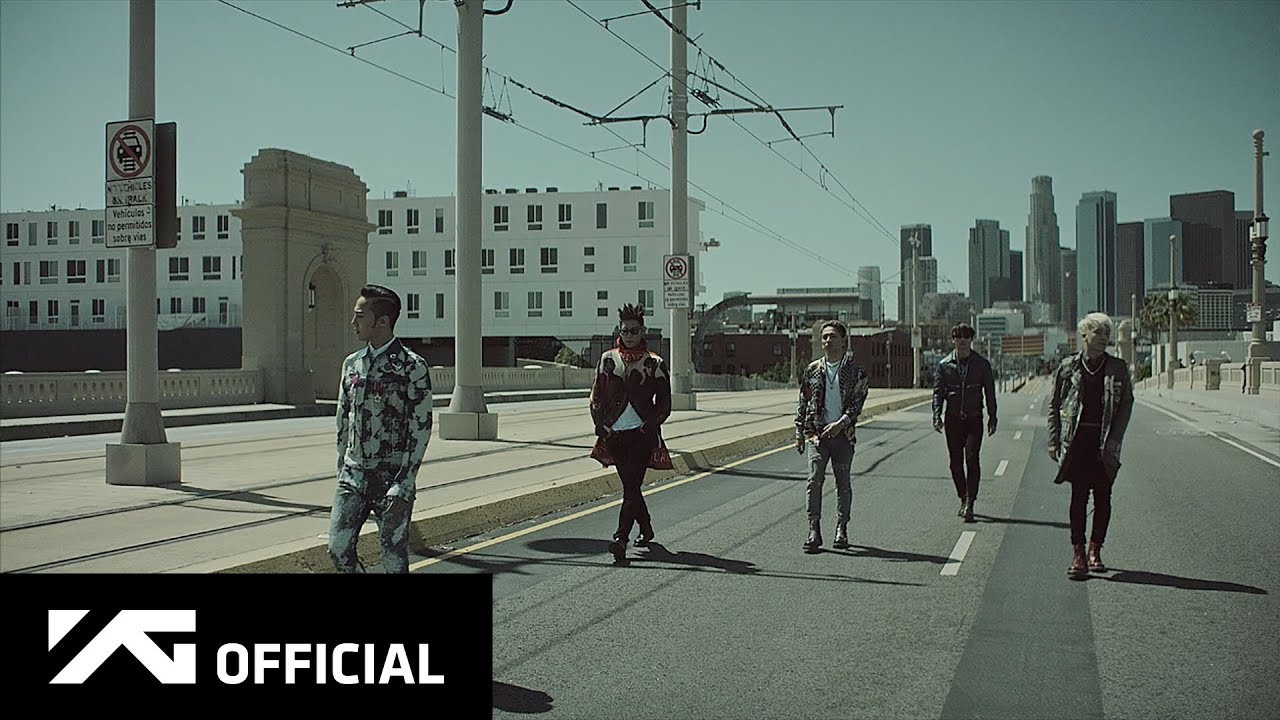
G-DRAGON wanders through a landscape that feels emptied after a party nobody enjoyed. The body language is smaller than his styling, which is the point: the clothes announce a star while the person inside them looks unable to receive the message. T.O.P’s sequence uses distance and destructive impulse, pairing physical isolation with a character who cannot convert feeling into ordinary contact. TAEYANG’s religious imagery places longing beside guilt rather than offering easy salvation. DAESUNG hides injury under performance-ready surfaces. Seungri’s storyline turns romantic rejection into volatility. The video offers character fragments, not clinical files, and viewers should resist diagnosing real people through fiction.
The production makes shame singable
The instrumental is restrained by BIGBANG standards. A soft guitar figure, steady percussion and electronic atmosphere leave the vocal grain exposed. That matters because a maximal drop would turn the chorus into triumph, and LOSER is not interested in winning its way out of self-contempt. The hook rises just enough to invite a crowd, then the descending feeling in the phrasing pulls it back toward resignation. Tens of thousands of people can sing it together while the lyric continues to insist each voice is alone.
G-DRAGON and T.O.P use rap less as a showcase than as competing methods of avoidance. One sounds brittle and observational; the other carries more physical weight. TAEYANG’s clean line can feel like a plea for order. DAESUNG introduces abrasion, the sound of emotion scraping against an image built to withstand cameras. Even before the video assigns stories, the timbres have already divided the emotional labor.
The title is an accusation turned inward
Calling yourself a loser can be confession, defense mechanism or pre-emptive strike. If the speaker says the cruel word first, nobody else can surprise him with it. The song keeps sliding between those functions. That ambiguity prevents the chorus from becoming a wellness slogan in disguise. Nobody announces that admitting pain has healed it. The most the track offers is recognition: other voices know the word, and for four minutes isolation has a harmony part.
Visual beauty versus emotional ugliness
The cinematography is carefully composed, which creates an ethical tension. Bruises, loneliness and destruction become beautiful images inside a commercial product. The video partly answers that problem through duration. Expressions linger after the glamorous pose has failed, and environments dwarf the performers instead of crowning them. Still, viewers are right to notice that pop often packages distress in ways ordinary suffering never receives. The appropriate response is critical attention, not the claim that beauty automatically invalidates the emotion.
Why it belongs in the current tracker
LOSER remains essential to understanding how BIGBANG’s past informs the trio’s present. BiiiG performs survival through scale and celebration; LOSER performed fragility when the group was commercially enormous. Putting both in the hub prevents the anniversary narrative from becoming a straight line of conquest. The catalog contains confidence, damage, reinvention and consequences. A useful tracker preserves that contradiction instead of sorting songs into “iconic” and “uncomfortable” boxes.
Replay verdict
On replay, the song feels less like five biographies and more like one carefully distributed emotional system. The video gives each member a private failure, but the arrangement keeps passing breath between them. That is why the chorus has lasted beyond its release cycle. It does not solve shame. It gives shame a melody sturdy enough for another person to recognize.
The performances do not ask for equal sympathy
One strength of the anthology structure is that it does not claim every character has been harmed in the same way or deserves the same response. Some sequences emphasize vulnerability; others show men exporting pain into aggression. The chorus links their self-contempt without excusing behavior. That is a more honest dramatic choice than using sadness as a universal pardon. Feeling broken can explain an action, but it does not erase the person who receives the damage.
DAESUNG’s sequence is especially effective because concealment is the action. Makeup, mirrors and a carefully managed exterior turn idol presentation into part of the story. The character does not merely hurt; he has to perform not hurting. The video therefore makes a familiar celebrity mechanism legible without claiming access to the real performer’s private mind. Fiction creates the frame, and his restraint gives it emotional consequence.
TAEYANG’s material uses religious symbols that can be read as guilt, judgment or a failed search for protection. The image is less interesting as a puzzle with one correct answer than as a contrast with his physical stillness. Sacred architecture promises order while the character cannot make his emotional life orderly. The tension remains unresolved, which fits a song that recognizes pain without designing a recovery program.
Why the song did not need a bigger ending
A conventional arrangement might add drums, a key change or an extended ad-lib climax. LOSER keeps its emotional ceiling low enough that the final chorus feels like recurrence instead of breakthrough. That choice is essential. The characters have not earned resolution in four minutes, and the audience is not asked to mistake volume for healing. The track ends with recognition still incomplete, which is precisely why listeners return to finish the feeling themselves.
Verdict
BIGBANG LOSER React examining the five narratives, communal chorus, production, current lineup boundary, replay changes and verdict.
What changed every time I replayed it
The second replay follows how G-DRAGON, T.O.P, TAEYANG, DAESUNG and Seungri pass breath without sharing one moral story. The third makes the city feel like an accomplice. The fourth clarifies that the restrained ending is recurrence, not failed escalation; nobody has earned a four-minute recovery program.
Lyrics and meaning
The title works as confession, defense mechanism and pre-emptive strike. Saying the cruel word first prevents surprise but does not heal it. The larger argument is that recognition can become communal without making every failure equivalent or turning pain into a pardon for whoever receives the damage.
RaeRae verdict
LOSER lasts because it does not solve shame. Five separate performances distribute one emotional system, and the chorus gives that system a melody sturdy enough for another person to recognize without pretending recognition is recovery.