
My Neighbor Totoro
Two sisters move into an old rural house while their mother remains in hospital. The forest does not remove that fear. It gives childhood somewhere to breathe while the adults do the hard work of waiting.
Story Overview
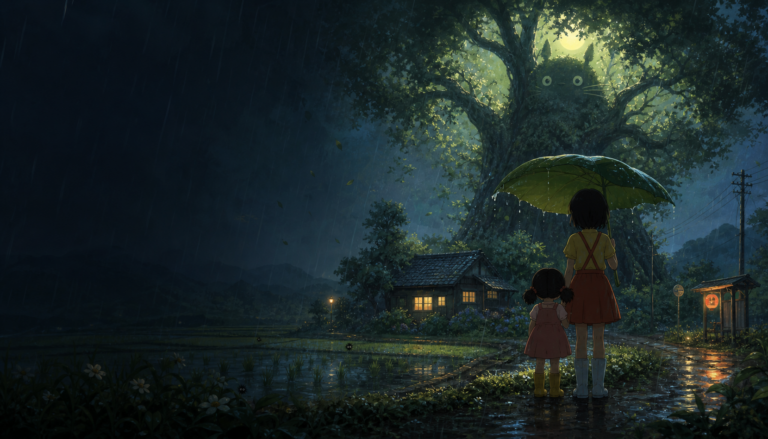
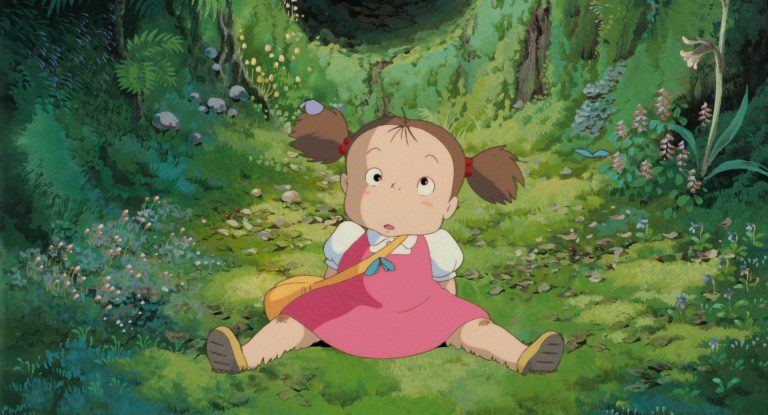
Satsuki and Mei arrive with their father in a countryside full of dust, insects, neighbors, fieldwork, unreliable buses, and an enormous camphor tree. Mei finds Totoro first because she follows the small strange thing instead of asking whether discovery is efficient. Satsuki meets him later at a rainy bus stop, where wonder arrives beside exhaustion and an absent parent.
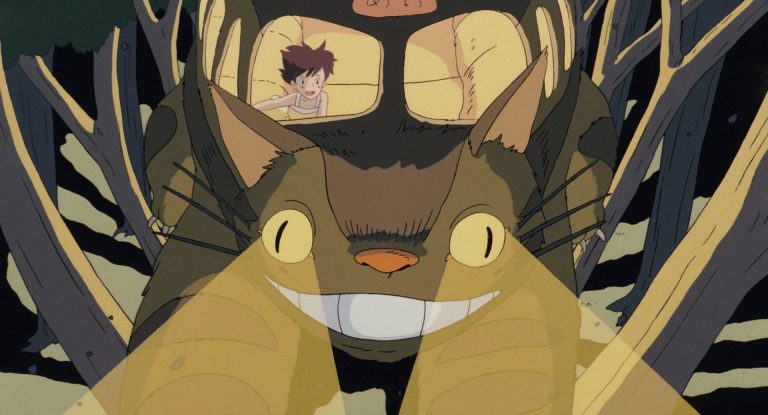
The crisis stays human. A delayed hospital visit makes Mei panic. Satsuki snaps because she is a child carrying adult responsibility badly, which is another way of saying she is carrying too much. The search that follows turns neighbors, fields, spirits, and the Catbus into one temporary network of care.
Begin with the film
Wonder does not cancel fear
Totoro is not a doctor, an explanation, or a reward for being brave. The film gives the girls wonder without promising that their mother will never be sick again. That honesty keeps the fantasy from becoming emotional wallpaper.
This hub expands through character records, Japanese performances, rural housing and community lore, family-care editorials, and sourced news.
Meet the family and forest


Rural life and family strain
RaeRae editorials
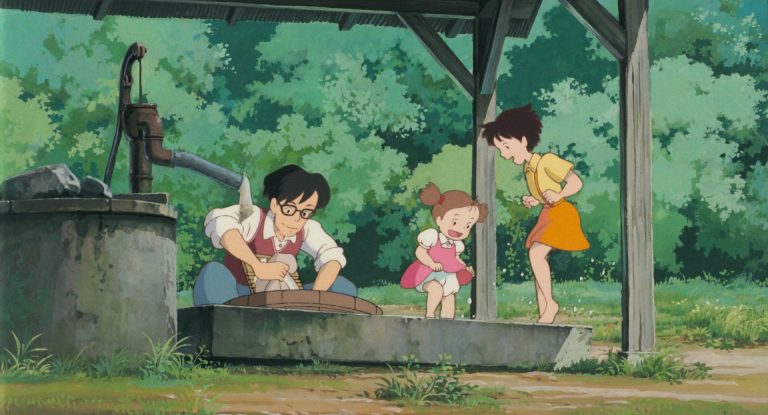
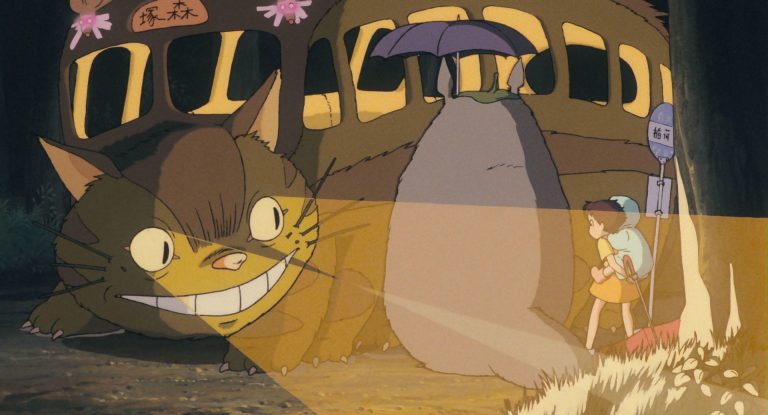
RaeRae take
My Neighbor Totoro is often sold as comfort, and it is comforting, but the comfort has bones. Two children are living beside a parent’s illness, an overworked father, a new house, an unfamiliar community, and the terror that one delayed message can turn into catastrophe. The film does not remove that fear. It gives the girls a world large enough to hold fear alongside play, weather, chores, neighbors, arguments, and a creature nobody can force into an explanation.
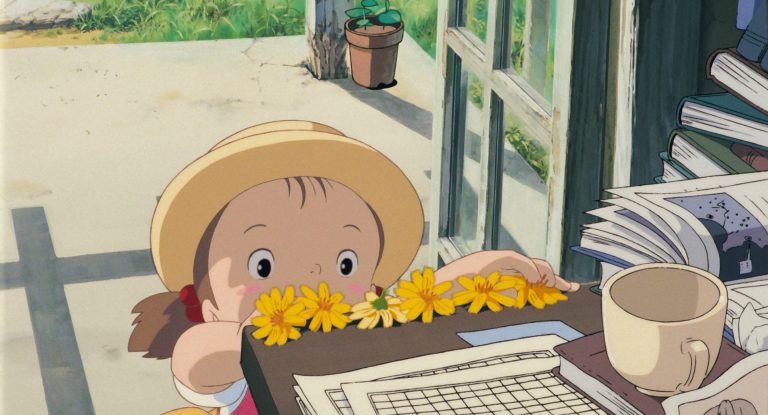
What moves me is how seriously the movie treats a child’s incomplete knowledge. Satsuki and Mei do not receive the adult file on every danger. They build meaning from fragments, tone, absence, and imagination. Sometimes they misunderstand. Sometimes adults misunderstand them. The film’s morality begins with the idea that a small person’s fear remains real even when the feared outcome has not happened.
Totoro at a glance
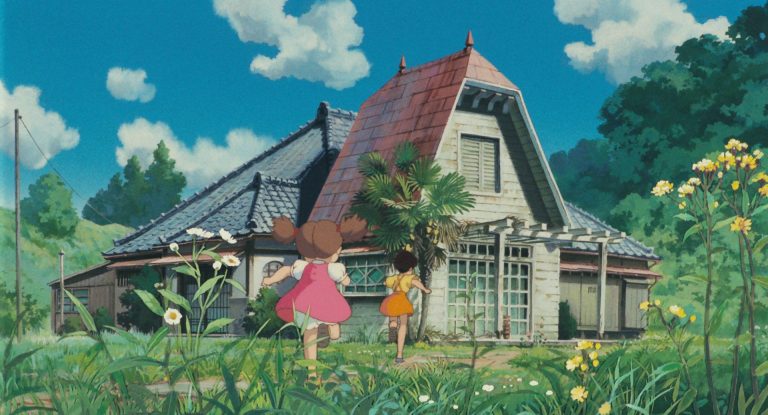
The Kusakabe family moves to the countryside so Satsuki and Mei can live closer to their hospitalized mother. Their father is affectionate and distracted, the new house is old enough to feel alive, and the surrounding satoyama landscape offers both ordinary work and unexplained presence. Mei encounters small forest spirits before finding Totoro asleep inside a massive tree. Satsuki later meets him at a rainy bus stop, where waiting becomes one of animation’s great scenes of attention.
The story’s crisis arrives through family strain rather than a villain. Satsuki carries too much responsibility, Mei reacts with the full force of a four-year-old, and one cruel sentence helps send the younger girl down the road alone. The search that follows reveals what the whole film has been building: care is not a private feeling. It is a network of bodies willing to stop, look, ask, run, and carry.
Why the quiet structure works
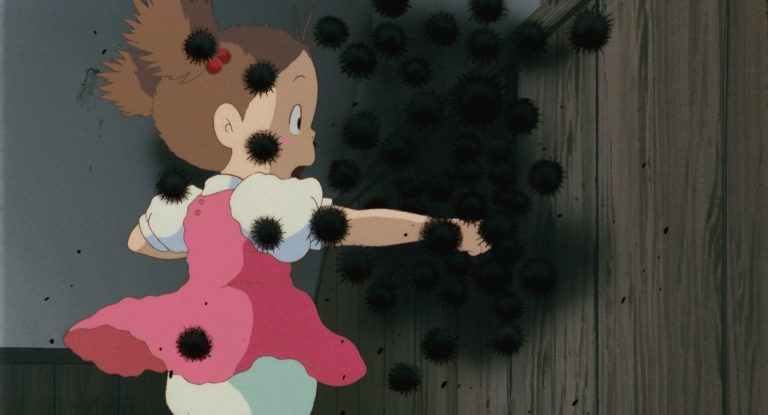
The movie spends time on soot, laundry, vegetables, sandals, bicycles, puddles, bus schedules, and the sound of a house settling. Those details are not pauses before the plot. They are the plot’s moral scale. By teaching us how the family moves through ordinary life, the film makes every absence and disruption legible. We know what it costs when Satsuki has to leave school, when Mei cannot stay quiet, or when a telegram changes the temperature of the room.
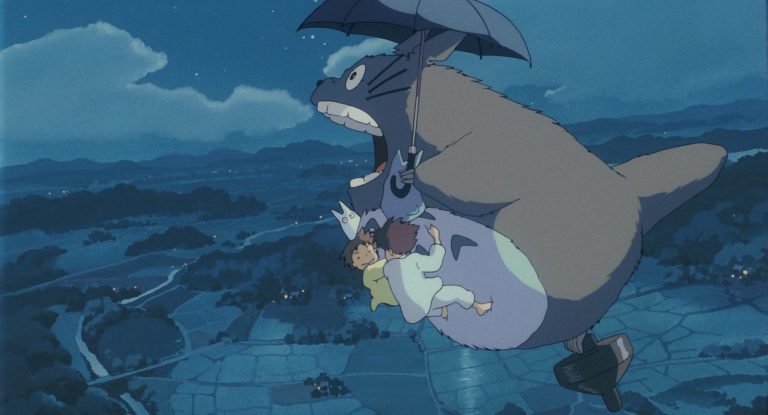
Totoro enters that material world without replacing it. Seeds still need time. Illness still requires treatment. Adults still need help. The catbus can make one impossible journey possible, but it does not become a cure for grief, poverty, exhaustion, or mortality. Wonder matters because it shares the world with limits, not because it erases them.
Childhood imagination does not deny reality. Sometimes it is how a child survives reality without becoming smaller.
Wonder does not cancel what the family is carrying
My Neighbor Totoro is remembered as a refuge because its forest spirits, soot sprites, rain, wind, and impossible transportation make the world feel generous. The generosity matters, but the film never uses it to claim that fear is imaginary. Yasuko remains hospitalized. Satsuki is asked to function beyond her age. Mei understands absence without having the language to explain it. The household’s joy and danger occupy the same rooms.
This hub is organized around that coexistence. The film review examines the complete emotional and formal argument. Character profiles stay with the choices of Satsuki, Mei, Totoro, and Catbus without turning the spirits into simple solutions. Japanese performer profiles examine how childhood, restraint, panic, and play are carried through voice. The lore and guide sections follow the rural house, satoyama ecology, child-height framing, rain, waiting, and sound.
The characters should be read together. Satsuki’s apparent maturity depends partly on Mei being allowed to remain visibly little. Mei’s intensity reveals feelings Satsuki has learned to contain. Totoro offers an encounter outside adult explanation, while Catbus turns the landscape into a route when ordinary systems cannot move quickly enough. No figure stands alone as a mascot or moral.
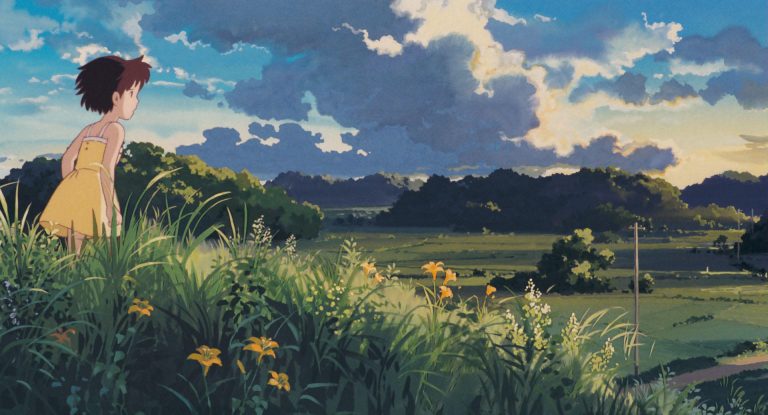
The film’s rural setting is not empty countryside waiting for fantasy. Farmers, neighbors, schoolmates, roads, shrines, fields, insects, trees, and household repair create a social and ecological network. The Kusakabe family can begin again because place contains people who notice, lend, feed, guide, and search. Wonder becomes believable inside material community rather than replacing it.
Use the cards below as doors into connected questions. Start with Satsuki if the burden of being “the responsible one” stayed with you. Start with Mei if you remember how childhood fear becomes action before language. Follow the sound guide for the bus stop, or the satoyama lore for the relationship between cultivated land and forest presence. Every route returns to the film’s refusal to separate enchantment from care.
The artwork follows the same continuity rule as every CVM animation property: the locally stored featured image is also the hero and landing-card image for that post. CVM purple, black, white, and lavender remain in control regardless of the source image palette. Non-profile cards say Read More; character and Japanese performer profiles say Open Profile.
A map for getting lost in the film
The deepest route through Totoro is not a debate over whether the spirits are “real.” The film has already made their effects real within the sisters’ lives. A more productive question asks what becomes possible when a family and community allow experiences to remain meaningful before they are fully explained.
That permission does not excuse adults from practical responsibility. Tatsuo’s openness is valuable, but Satsuki still carries too much household work and Mei still reaches a crisis point without adequate containment. The profiles and guides preserve both truths so wonder never becomes an alibi for neglect.
Return to the hub after each article and follow the thread that changed your reading. Satsuki leads into parentification and Japanese vocal restraint. Mei leads into child-height space and embodied fear. Totoro leads into satoyama ecology. Catbus leads into mobility, search, and the infrastructure of care. The property is built as a connected fandom library rather than a row of lonely posts.