
Ninja Scroll Anime 101
World, Lore & Guides
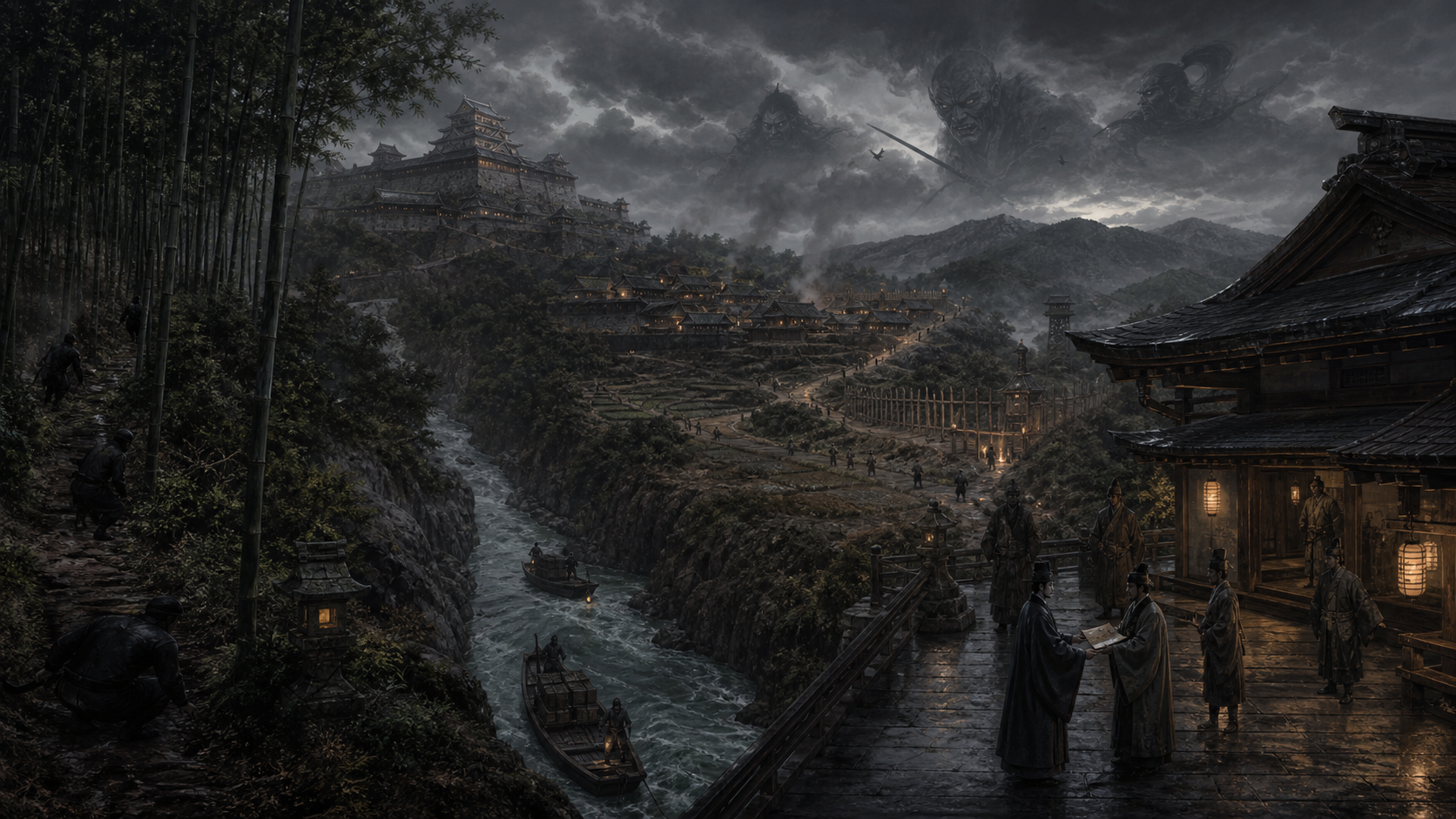
The movie looks like a supernatural tour through feudal Japan, but every strange body and sealed road serves a political system. This directory separates historical language, genre tradition, and Kawajiri’s inventions so fans can understand the machinery without pretending the film is a documentary.
The plague is not background decoration
Shimoda Village becomes useful to the conspiracy because people believe disease can explain silence. A plague warning tells nearby communities not to visit, tells officials that isolation is responsible, and gives armed men a public reason to close roads. Gold can move while the village’s dead become proof of the cover story. The plan works because fear does not need every citizen to understand the lie. Fear only needs enough people to stay away.
Dakuan enters as a government investigator, yet the movie does not present government knowledge as automatic safety. He knows more than Jubei and Kagero, shares information when leverage requires, and poisons a reluctant recruit to secure labor. Gemma’s organization wants national power through stolen gold. Dakuan’s side wants to stop that transfer. Both sides treat bodies as resources, which is why the story’s moral line cannot be reduced to government versus rebels.
The Eight Devils turn specialization into government hardware
The Eight Devils of Kimon
Gemma’s unit is built around specialized bodies rather than one shared magic system. Each Devil controls a different problem: mass, electricity, infestation, explosives, disguise, shadow, sensory combat, or regeneration.
Gemma’s Regeneration
Gemma can reconnect and restore a body after fatal damage. His immortality matters politically because a commander who cannot be removed by ordinary violence can outlast clans, witnesses, and failed operations.
Kagero’s Poison Body
Kagero survives toxins because her clan exposed her body to poison until immunity became part of her function. The ability protects missions while making intimacy dangerous, proving that a useful enhancement can still be an injury.
Tessai’s Stone Skin
Tessai hardens his body until blades and ordinary force barely matter. The power is not permanent invulnerability. Jubei survives by noticing when Tessai’s own actions make the stone body vulnerable.
Mujuro’s Blind Swordsmanship
Utsutsu Mujuro does not fight as if sight were missing information. Sound, timing, distance, and discipline create a complete combat method, which is why his duel feels different from the Devils’ ambushes.
Shijima’s Shadows and Wires
Shijima turns darkness, puppetry, and controlled bodies into false evidence. His fights ask whether a familiar face or visible wound can be trusted when perception has become part of the weapon.
Mushizo’s Wasp Colony
Mushizo houses and directs a swarm from within his body. The wasps expand his attack beyond arm’s reach and make the landscape dangerous even when the assassin cannot be seen.
Zakuro’s Corpse Explosives
Zakuro uses the dead as concealed bombs. Her ability turns recovery, mourning, and the assumption that a body is no longer dangerous into openings for the next attack.
Yurimaru’s Electric Wire
Yurimaru conducts electricity through nearly invisible strands. The technique combines precision and distance, while his emotional attachment to Gemma shows how private possessiveness can damage command discipline.
Every sword fight sits on top of an economic plan
The Manufactured Epidemic
The plague story is social engineering. Fear clears the region, explains corpses, and turns curiosity into a public danger while the Devils retrieve gold.
The Gold Shipment
Gemma’s group is not collecting treasure for luxury. Gold can fund armies, buy officials, move loyalties, and convert a supernatural strike team into a durable political threat.
Tokugawa Intelligence
Dakuan represents a state that depends on covert knowledge and disposable operatives. His humor softens the presentation, but the poison pellet reveals how quickly intelligence work can treat consent as inefficient.
Koga Service
Kagero’s Koga identity comes with training, orders, and bodily alteration. The clan protects a collective mission by assigning one member the cost of poison, isolation, and obedience.
Yamashiro Betrayal
Jubei’s break with his former clan explains why he distrusts masters. Service failed when Gemma’s ambition turned comrades and orders into tools for personal power.
Kimon as an Organization
Kimon is more than eight memorable villains. Gemma combines unusual specialists, secrecy, transportation, and money into an organization designed to survive the loss of individual fighters.
Feudal texture does not make every detail historical fact
The movie uses recognizable Japanese political language, ninja traditions, mountain roads, clan service, shogunate authority, and sword-film rhythm. The result feels grounded because the institutions are legible, not because every Devil or mission reconstructs a documented event. Calling the film historical fantasy protects both sides of that sentence. History shapes the pressure. Fantasy determines how the pressure becomes spectacle.
What “Ninja” Means Here
The film combines covert service, reconnaissance, poison, disguise, assassination, and fictional superhuman techniques. Ninja identity describes labor and loyalty as much as clothing or combat.
Chanbara and Road-Movie Structure
Jubei’s journey moves through encounters rather than remaining inside one fortress. Each new location changes the combat rules and reveals another layer of the conspiracy.
Yoshiaki Kawajiri’s Original Story
Madhouse identifies the movie as a completely original work. The film was not compressing a long manga arc, which helps explain the tight procession of Devils and the closed ending.
Adult Animation in the VHS Era
Western marketing often used violence and sexual content to prove animation was not only for children. That pitch increased curiosity while encouraging distributors and viewers to overlook craft, politics, and character.
Body Horror and Supernatural Anatomy
The Devils’ bodies reject ordinary limits, but the movie keeps powers physical. Skin cracks, wires cut, insects emerge, blood carries poison, and regeneration looks like labor rather than clean magic.
The Meaning of the Ending
Jubei survives without accepting permanent service. Kagero’s death makes the cost of clan utility impossible to ignore, and Dakuan’s closing presence reminds fans that the state continues after individual victories.
The Dragon Stone belongs to a different continuity
The television story returns to Jubei but does not require fans to treat every movie event as setup. Shigure, the Priestess of Light, becomes the person rival factions seek to define and control. The Hiruko Clan and Kimon Clan compete around the Dragon Stone, expanding the franchise from one conspiracy into a thirteen-episode conflict with recurring pursuers and sacred inheritance.
The Dragon Stone
The central object links political pursuit, inherited identity, and claims about who has the right to decide Shigure’s route.
Priestess of Light
Shigure’s title gives factions a story about her importance before she has enough information to define herself. Sacred status becomes another form of public ownership.
Hiruko and Kimon Clans
The rival organizations give the series more room to compare belief, loyalty, leadership, and the way specialized fighters become symbols of faction identity.
Return to the franchise: Open the Ninja Scroll hub for the movie, animated-series route, characters, review, rants, voice actors, viewing information, and restoration news.