Zhou Jieqiong
the Chinese performer whose 2026 absence keeps exposing whether a profile understands the difference between “not on this schedule” and “not in this group”. This page follows the complete career, not only the nine months when eleven agencies temporarily shared custody.

Profile
| Stage name | Zhou Jieqiong (Kyulkyung) |
|---|---|
| Born | December 16, 1998 |
| From | Taizhou, Zhejiang, China |
| I.O.I role | Vocalist, dancer and pipa player |
| Produce 101 rank | 6 |
| Group history | I.O.I and PRISTIN |
| Current status | Active solo artist and actor; did not join the 2026 LOOP schedule because of prior commitments |
Early life and Produce 101
JIEQIONG, also known in Korea as Kyulkyung, moved from China to train under Pledis Entertainment and studied at the School of Performing Arts Seoul. She finished sixth on Produce 101. Her dance lines, visual presence and instrumental skill – especially the pipa – made her one of the season’s most immediately recognizable trainees.
I.O.I career
May 2016 · Debut
I.O.I debuted with “Dream Girls” and Chrysalis. ZHOU JIEQIONG entered an eleven-member lineup that had immediate national recognition and almost no time to develop privately.
August 2016 · Split schedules
October 2016 · Full-group peak
January 2017 · Planned ending
“Downpour” and the final concert closed the original contract. The ending was administrative, public and emotionally real. ZHOU JIEQIONG returned to a separate agency path with the I.O.I name still attached to every future introduction.
Career after 2017
After I.O.I, she debuted in PRISTIN and its unit PRISTIN V. Following the group’s disbandment, she developed a career in China as a solo singer, variety personality and actor, appearing in projects including Miss Truth and Legend of Fei.
Skills and stage identity
Her dance is elegant without becoming fragile, and her pipa performance gives her an identity that cannot be reduced to “visual.” She understands both idol precision and the longer line of classical presentation.
What to listen for
On an eleven-member recording, raw line count can be misleading. Listen for how ZHOU JIEQIONG changes the texture: weight, brightness, rhythmic bite, vocal lift or the emotional temperature around the next member.
What to watch
2026 reunion
She did not join the 2026 LOOP recording and promotions because of prior commitments. No official statement removed her from I.O.I. The complete lineup remains eleven, and the 2016 archive track on LOOP preserves her voice.
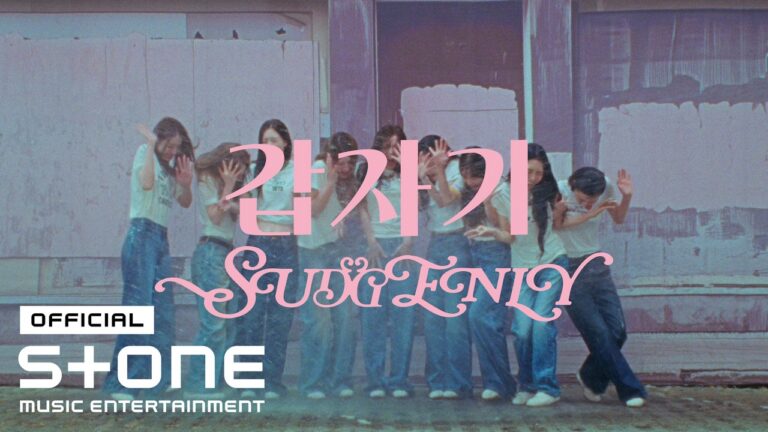
Read the connected review: “Suddenly” – song meaning, MV, credits, member moments and reunion tea.
Fandom file
JIEQIONG often looks composed enough to make chaos bounce off her. Fans know the more playful version: competitive, affectionate and entirely capable of abandoning elegance when a game becomes personal.
Original-group shorthand
Post-I.O.I identity
ZHOU JIEQIONG should not be introduced as if life paused after the farewell concert. The I.O.I origin explains the audience; the later work explains the artist.
The RaeRae take
ZHOU JIEQIONG matters because the Chinese performer whose 2026 absence keeps exposing whether a profile understands the difference between “not on this schedule” and “not in this group”. That is more useful than a bias score, a zodiac sign pretending to be analysis, or twenty facts copied from the same fan profile.
Official Socials
YouTube tracking history
Zhou Jieqiong does not currently have a qualifying standalone official YouTube music-video upload registered for tracking. I.O.I and PRISTIN group releases remain attached to their group catalogs; a verified solo upload will be added here when available.
Sources
Two markets, one member record
Jieqiong’s absence from the nine-member LOOP promotions needs a clean sentence, not a conspiracy novel. She remains part of I.O.I’s eleven-member history while her active career has been centered in China. Participation and membership are related facts, not interchangeable ones.
Her I.O.I and PRISTIN work established a bright, technically neat stage presence; Chinese solo music, television and acting expanded the file in another industry. Calling that disappearance would be Korea-centered bookkeeping. The work did not stop because one audience stopped receiving it automatically.
For an international listener, follow verified artist accounts, licensed streaming pages and credited drama listings rather than waiting for Korean comeback channels to summarize everything. Search both Zhou Jieqiong and her Chinese stage name, 周洁琼. Cross-market careers become much easier to follow when the search language travels with the artist.
The instrument behind the image
Jieqiong’s pipa training is more than a charming profile fact. It signals years of fine motor control, rhythmic discipline and performance practice before idol choreography entered the story. That background helps explain the crisp upper-body placement and musical phrasing visible in her strongest stages.
Cross-border coverage also requires humility about gaps. If a project lacks an accessible official English source, label what is verified and leave uncertain translation alone. A shorter accurate update respects her career more than a confident paragraph assembled from repost accounts.
A useful starter route is “Whatta Man,” PRISTIN’s “Wee Woo,” her solo song “Why,” and a credited drama role. That route keeps the Korean group chapter, Chinese solo work and acting chapter in view without forcing them into one genre. It also makes the participation gap in LOOP understandable as scheduling and career geography, not a verdict on the original bond.
A Korean profile cannot contain the whole career
Zhou Jieqiong’s page breaks if it treats Korean promotions as the only clock that counts. Produce 101, I.O.I and PRISTIN made her familiar to Korean viewers, but her later work in China is not an epilogue happening offscreen. It is the active career: solo music, television appearances, acting and public performance in a different industry with different platforms. The gap many international fans feel is often a distribution problem, not an employment problem.
That distinction matters because “where did she go?” can quietly become “why did she stop?” when the evidence says neither. Search habits built around Korean music shows will miss Chinese drama credits and locally licensed video platforms. A useful profile therefore keeps both Zhou Jieqiong and 周洁琼 in the record, labels translations carefully and refuses to use an inaccessible clip as proof of a claim it cannot independently verify.
Why the pipa belongs in the performance analysis
The pipa is sometimes filed under charming trivia, as if an instrument were equivalent to a favorite snack. It belongs in the skills section. Training on a plucked string instrument develops rhythmic subdivision, finger independence, posture and an instinct for how a melodic phrase breathes. None of that makes idol choreography automatic, but it provides a serious physical and musical foundation for the precision viewers noticed during Produce 101.
Watch Jieqiong’s hands and shoulders in group choreography. Her upper body tends to finish a shape cleanly instead of dissolving between counts. That clarity can read as elegance in a bright concept and as authority in a sharper one. It also explains why instrumental performance does not feel pasted onto her idol résumé. The body already understands that technique must disappear into phrasing before an audience experiences it as music.
The visual label did not do all the work
Jieqiong’s beauty made her instantly marketable, but “visual” is an incomplete job description. In I.O.I she could sell a close-up without dropping the choreography’s line, and in PRISTIN she helped bridge playful group energy with a cleaner, more composed frame. The difference is important. Looking striking in a still photograph and controlling a moving camera are related skills, not identical ones.
Her best moments often begin before the lens reaches her. She sets the angle, finishes the previous count and lets the expression arrive with the lyric. That preparation is why the close-up looks effortless. The camera catches the result, not the calculation. When a profile calls that only “natural beauty,” it erases the performance work hiding under the image.
PRISTIN and the cost of a shortened second chapter
PRISTIN should have been the place where Jieqiong’s post-I.O.I identity developed in public over several eras. Instead, the group’s short run left fans trying to infer a long-term arc from a handful of releases. That is an agency-history problem, not proof that the members lacked direction. “Wee Woo” and “We Like” show a performer learning how to distribute attention inside a larger permanent lineup; PRISTIN V shows how easily she could move into a more controlled concept.
The ending also shaped the way later Chinese activity was narrated. Some coverage treated the market change as departure from a successful Korean path, when the Korean group itself had already been denied the continuity required to become that path. A clean timeline keeps cause and sequence visible. It does not turn cross-border work into betrayal, nor does it invent a triumphant master plan after the fact.
Why she was absent from LOOP
The 2026 I.O.I reunion promoted with nine members. Jieqiong and Mina were unable to participate because of prior schedules. That is the useful fact. It does not remove either woman from the original lineup, and it does not authorize fans to manufacture private conflict from an empty place in a formation. An anniversary project has to coordinate careers that no longer answer to one temporary contract. Sometimes the calendar wins.
Her absence changes the visual and vocal balance of “Suddenly,” so it is fair to notice it. The responsible next move is to describe what the nine-member version does, not to write imaginary dialogue for the two people who are missing. Membership is historical fact; participation is event-specific fact. Mixing them produces bad archives and worse fandom arguments.
My Jieqiong replay map
Begin with an early Produce 101 stage to see the technical baseline, then I.O.I’s “Whatta Man” for sharper group framing. Continue with PRISTIN’s “Wee Woo” and PRISTIN V’s “Get It” to hear and see the concept shift. Add her solo song “Why,” an official pipa performance when available, and a credited acting project. That path follows the work across language and format instead of stopping when Korean promotions stop.
The RaeRae answer to “where is she now?” is therefore not one neat link. It is a method: search both names, favor official or licensed sources, date every claim and accept that translation access may lag behind the career. Jieqiong did not become less legible as an artist. The international pipeline became less convenient, and those are not the same thing.
Translation is part of the archive
Cross-market profiles can become confident nonsense when machine-translated titles, character names and platform descriptions are copied without context. Jieqiong’s archive should keep the original title beside a verified English rendering whenever possible, name the platform or broadcaster, and mark an uncertain romanization as uncertain. That may look fussy, but it prevents three spellings of one project from turning into three imaginary credits.
Dates also need a declared meaning. A drama announcement, production start, first broadcast and international streaming release are four different events. The same is true for music uploaded to one regional platform before another. The tracker should use the official video’s own release date while the career timeline explains other milestones. One precise date column cannot carry every kind of availability.
This care is not clerical decoration. It determines whether an international fan can actually find the work. Keeping Chinese characters, verified platform names and source dates turns the profile into a bridge instead of another summary that ends at PRISTIN. Jieqiong’s career asks the archive to travel farther; the archive should answer by becoming more exact, not more speculative.
One final boundary matters: an official absence notice proves only that a schedule prevented participation in that project. It does not prove the nature of private negotiations, personal relationships or future plans. The page will update if Jieqiong or an official I.O.I channel adds new information. Until then, the honest archive keeps the eleven-member identity, the nine-member LOOP lineup and the cross-market career visible without writing fan fiction between them.
That accuracy is the respect she deserves now.
The archive follows the work across borders and leaves rumor behind.
How this Jieqiong archive is organized
Jieqiong’s record uses both Zhou Jieqiong and 周洁琼 because a Korean-only search leaves the active Chinese career artificially blank. I.O.I and PRISTIN releases stay with their groups; credited Chinese solo music, acting and television work belong here. Titles retain their original-language form beside a verified English rendering when one is available, and uncertain romanization is labeled instead of promoted into fact.
Official or licensed regional platforms carry more weight than translated reposts. Upload date, first broadcast and international availability are recorded as different events when necessary. A React card appears only when an exact official music-video upload receives a full review, and its local image remains unique to that React. This approach may leave temporary gaps, but those gaps are more honest than a complete-looking timeline built from untraceable clips.
Jieqiong did not participate in LOOP because of prior schedules; that notice documents one anniversary project, not a private relationship or membership change. She remains one of I.O.I’s original eleven, and U&I remains the fandom name attached to that group history. The page follows the work across markets without using reunion attendance as a loyalty test or Korean visibility as the definition of whether a career exists.
Future Jieqiong updates should preserve original-language titles, verified regional platforms and the difference between announcement and release. If international distribution arrives months later, both dates may matter, but they should not be collapsed. The same rule applies to names: Zhou Jieqiong helps English-language readers, 周洁琼 helps them locate the work where it actually appears. This is how the profile remains practical across markets instead of merely declaring that a cross-border career exists.
The same care applies to performance interpretation. A translated caption may establish the event but not the artistic intention behind every gesture. When direct commentary is unavailable, the page describes what the camera and credited work show, labels inference as inference and avoids speaking for her. Cross-border coverage becomes trustworthy when uncertainty is visible instead of quietly edited out.