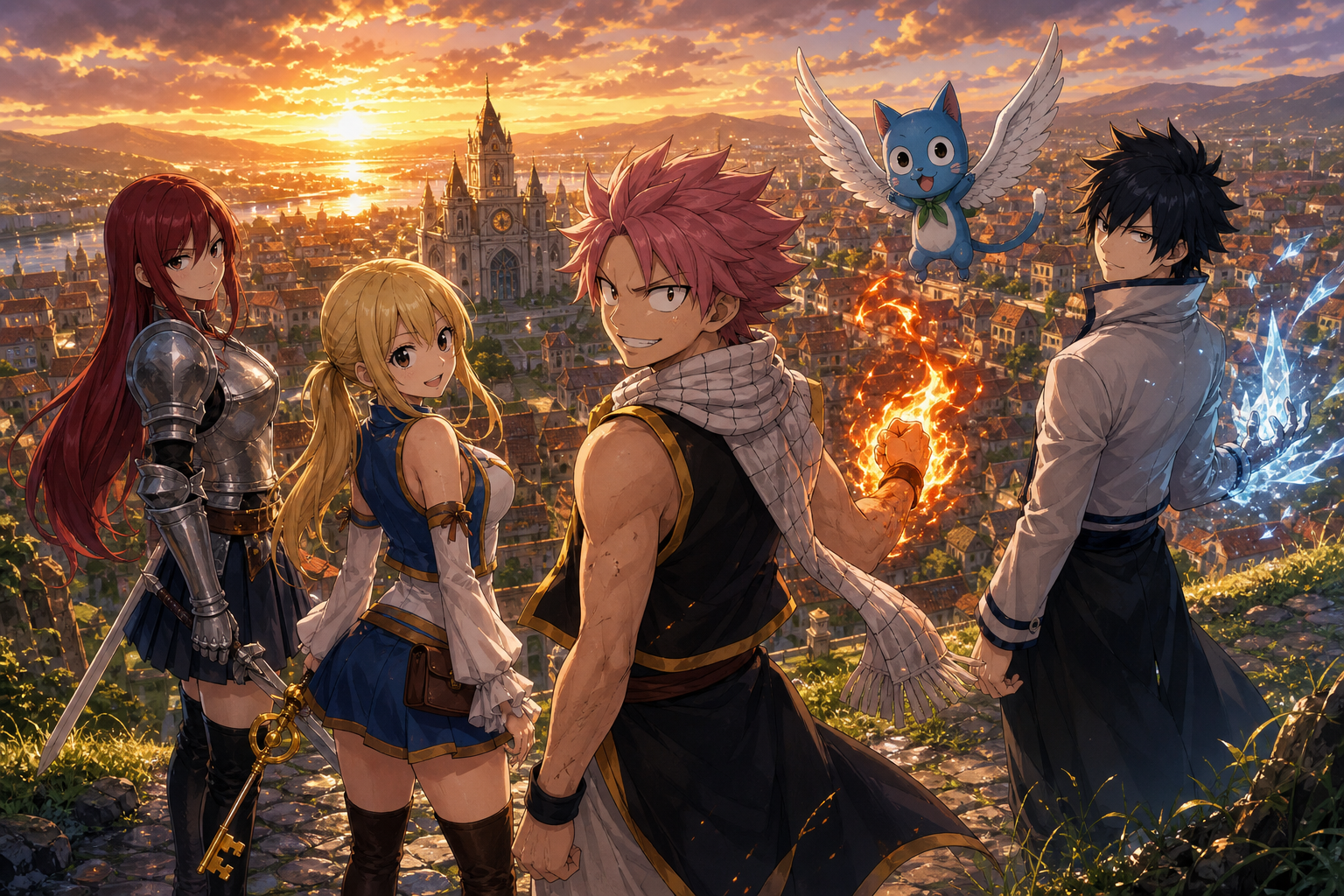
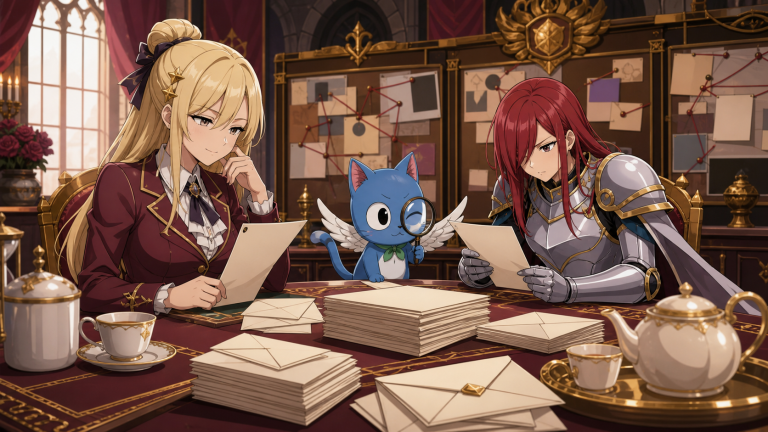
Fairy Tail is a guild story before it is a power-scaling argument. Magnolia gives its wizards a workplace, a home, a public-liability crisis, and a family structure held together by loyalty strong enough to be beautiful and dangerous at the same time. The anime stretches across multiple television eras, films, OVAs, specials, 100 Years Quest, and enough magical bureaucracy to make “start at Episode 1” technically correct but emotionally unhelpful.
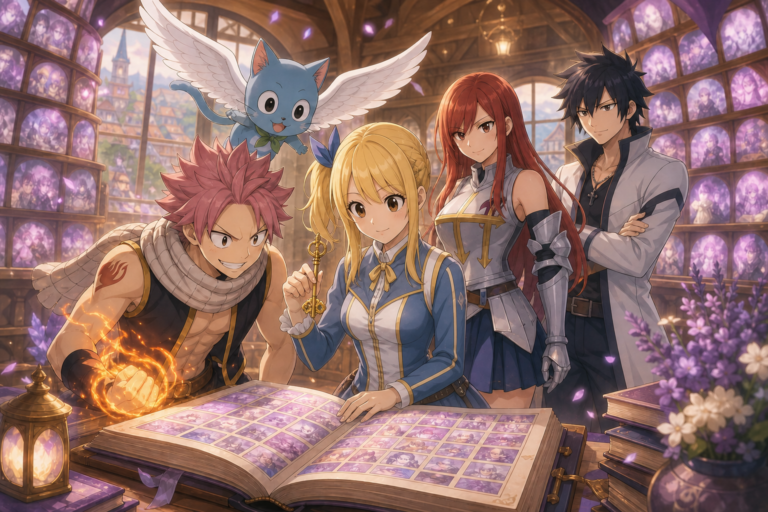
This hub is the front door. Story arcs explain what changes and why. Episode directories keep the broadcast eras in order. Character files follow the people carrying the damage. Episode Reacts stay close to the weekly experience, while Reviews, Rants, Tea, and lore step back far enough to question the systems underneath the friendship speeches.
Choose your route through the guild
Use these four directories when you already know what kind of answer you need. The arc route follows the story’s major movements. The episode route handles numbering and broadcast eras. Characters keep personal histories out of giant ensemble summaries. Reacts connect individual episodes to RaeRae’s complete editorial response.
All 328 television episodes have a complete RaeRae React with an original local image, verified metadata, and a direct verdict grounded in what the episode actually does.
Fairy Tail does not stop at one television listing. The format guide separates the main series, sequel era, theatrical films, OVAs, and specials so a reader can choose completeness without mistaking bonus material for a numbered season. Each film or OVA keeps its own image and destination inside the larger franchise route.
Follow every Fairy Tail animated route beyond the core episode directories with image-led guides for 100 Years Quest, both theatrical films, all nine OVAs, and specials.
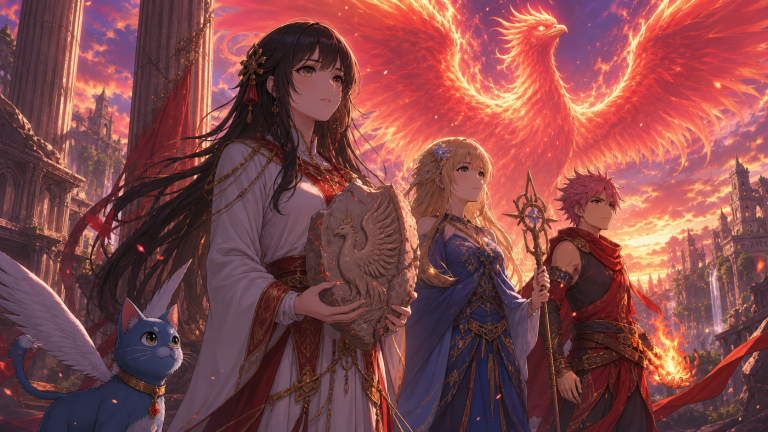
A complete continuity-labeled guide to Fairy Tail the Movie: Phoenix Priestess, Éclair, the Phoenix Stone, memory, exploitation, and the limits of sacrificial spectacle.
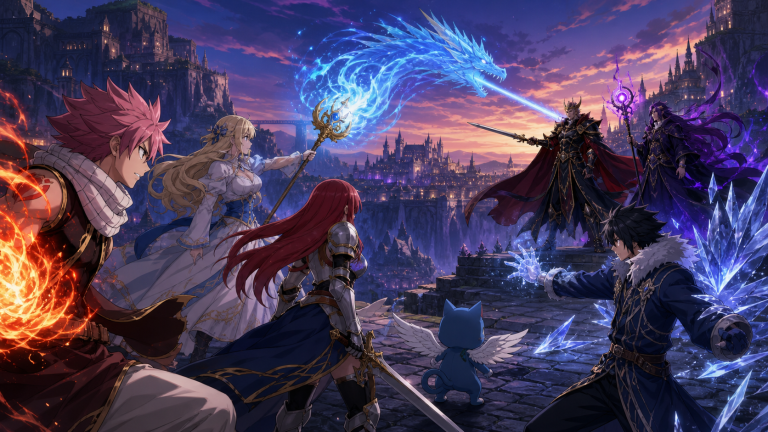
A complete continuity-labeled guide to Fairy Tail: Dragon Cry, the kingdom of Stella, Animus, Sonya, Natsu’s identity, and a weapon built from dragon grief.
Browse all nine Fairy Tail original animation releases and major television specials with honest continuity labels, image-led routes, and RaeRae’s critical viewing notes.
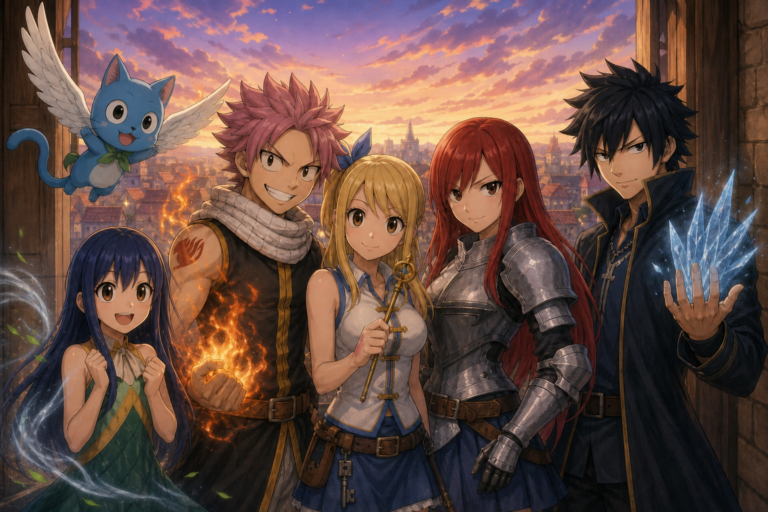
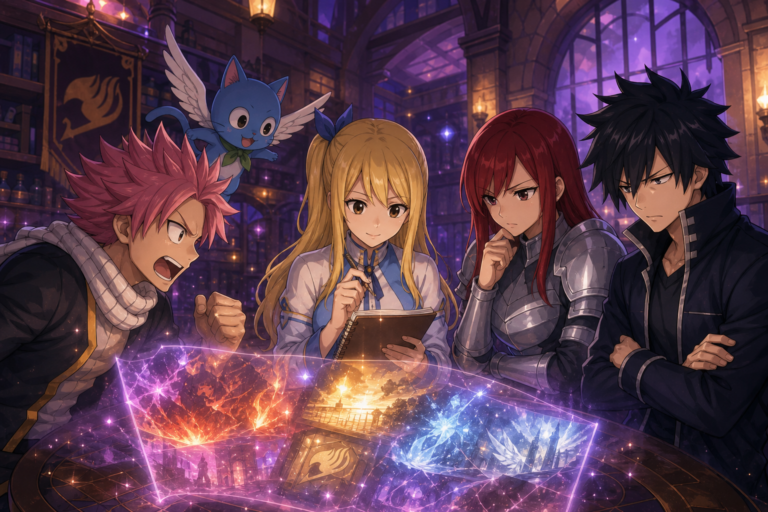
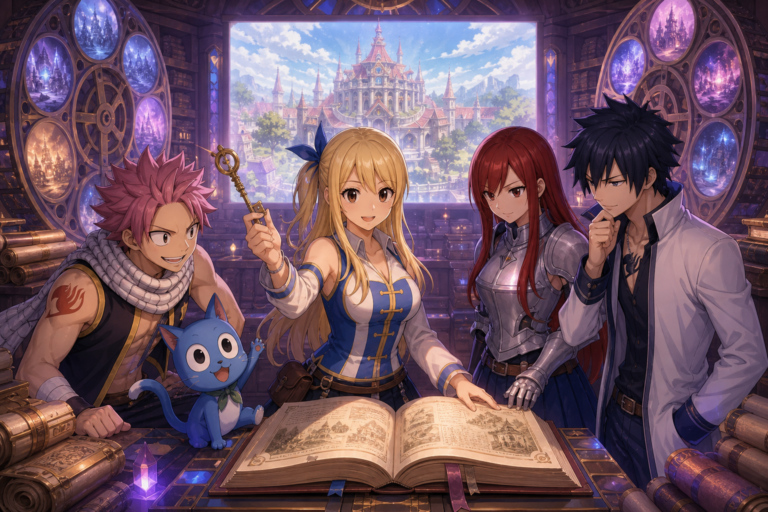
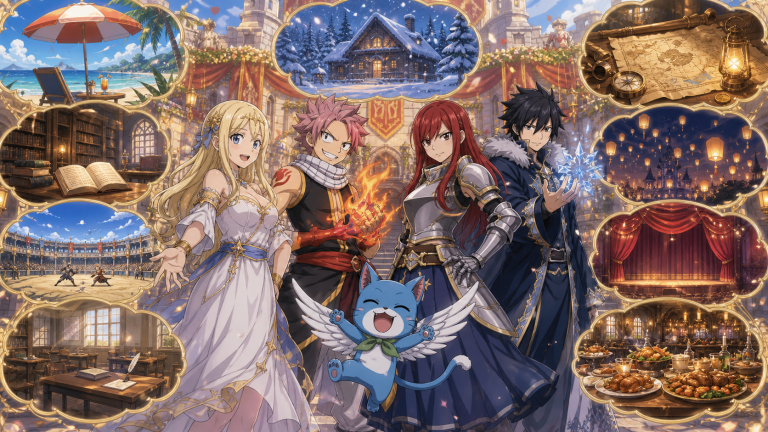
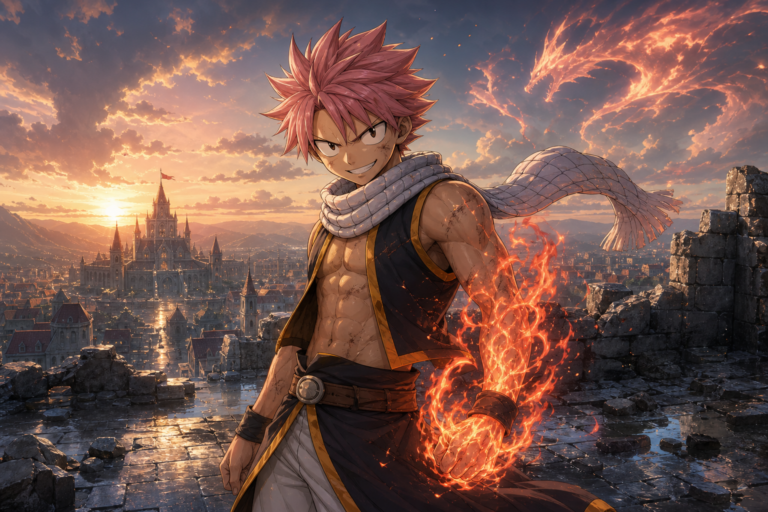
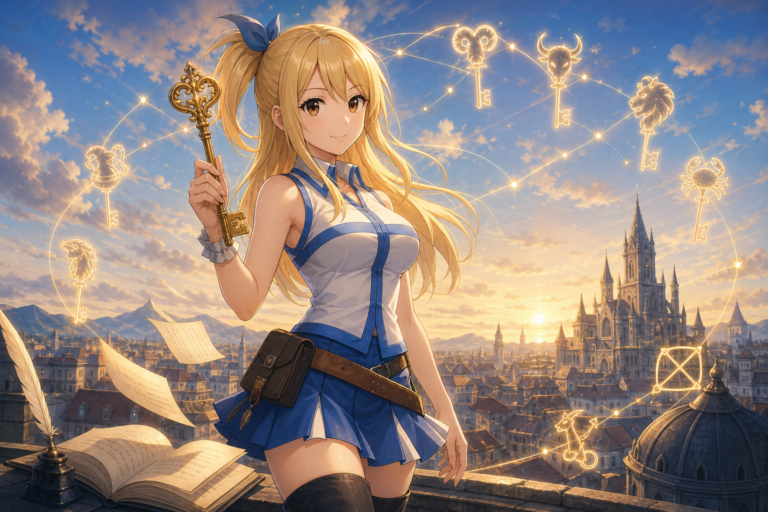
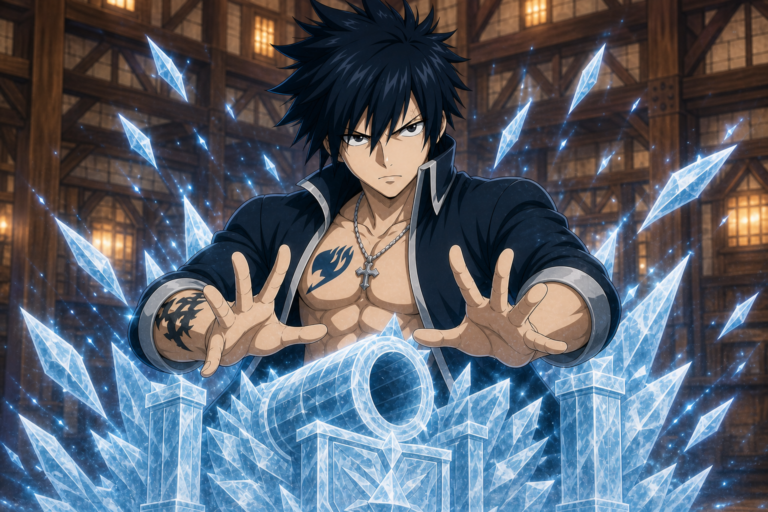
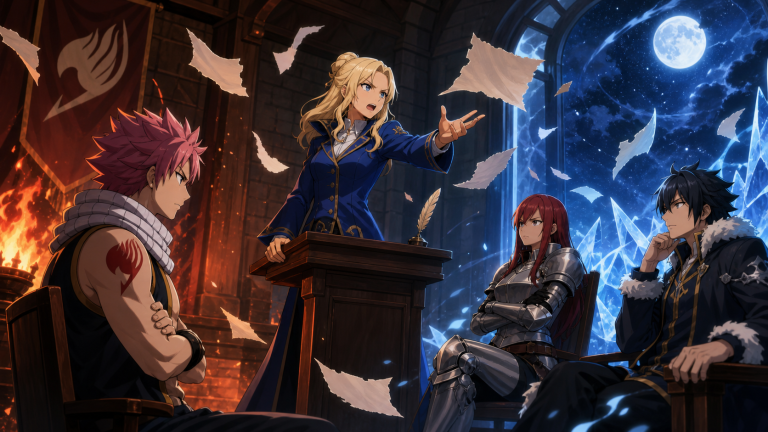
Natsu, Lucy, Gray, and Erza establish four different relationships to Fairy Tail: inherited belonging, chosen belonging, grief hidden inside rivalry, and responsibility hardened into armor. They are the beginning of the character shelf, not the whole guild.
A complete Natsu Dragneel character profile covering his Fire Dragon Slayer magic, E.N.D. origin, Igneel, Zeref, relationships, battles and 100 Years Quest journey.
A complete Lucy Heartfilia character profile covering her Celestial Spirit Magic, Star Dress, Aquarius, Heartfilia family, relationships and 100 Years Quest journey.
Gray Fullbuster’s ice magic, grief, rivalries, inherited power, self-sacrifice pattern, and Fairy Tail relationships explained in one grounded character profile.
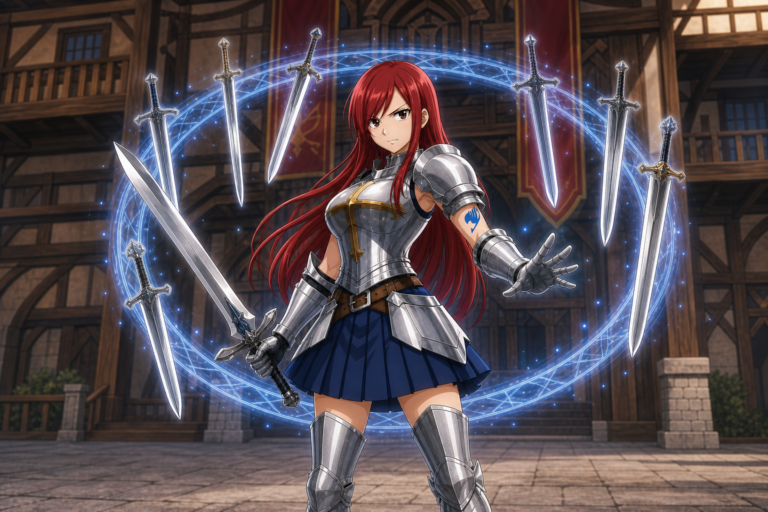
Erza Scarlet is Fairy Tail’s Titania, an S-Class Requip mage whose armor, leadership, Tower of Heaven trauma, relationships and 100 Years Quest story reveal strength as survival without emotional erasure.
Reviews judge complete seasons, films, and larger routes. Editorials and lore explain the magic, institutions, history, labor, and cultural questions the story cannot fit inside a recap. Rants take the argument seriously when the guild’s emotional logic causes real harm. Tea stays evidence-based and separates confirmed production news from fandom wishful thinking.
Browse long-form Fairy Tail reviews covering the original anime, Final Series, films, OVAs, and 100 Years Quest with static image cards and RaeRae verdicts.
Explore Fairy Tail editorials and lore guides about guild politics, found family, dragons, celestial spirits, magic, institutions, and historical accountability.
Read Fairy Tail Rants about friendship power, fan-service, accountability, leadership, forgiveness, gender, and fandom arguments with receipts behind the heat.
Fairy Tail understands why damaged people choose a loud, chaotic room and call it home. The series is at its best when friendship becomes mutual responsibility rather than a magic coupon redeemed at the end of a fight. The guild can save people because it notices them. It can also fail them when loyalty becomes an excuse to avoid boundaries, accountability, or an honest conversation before somebody destroys another building.
That contradiction is the reason this world deserves a complete hub. Fairy Tail is not shallow because it believes in love. The interesting question is whether its institutions know how to practice that love after the victory music stops.