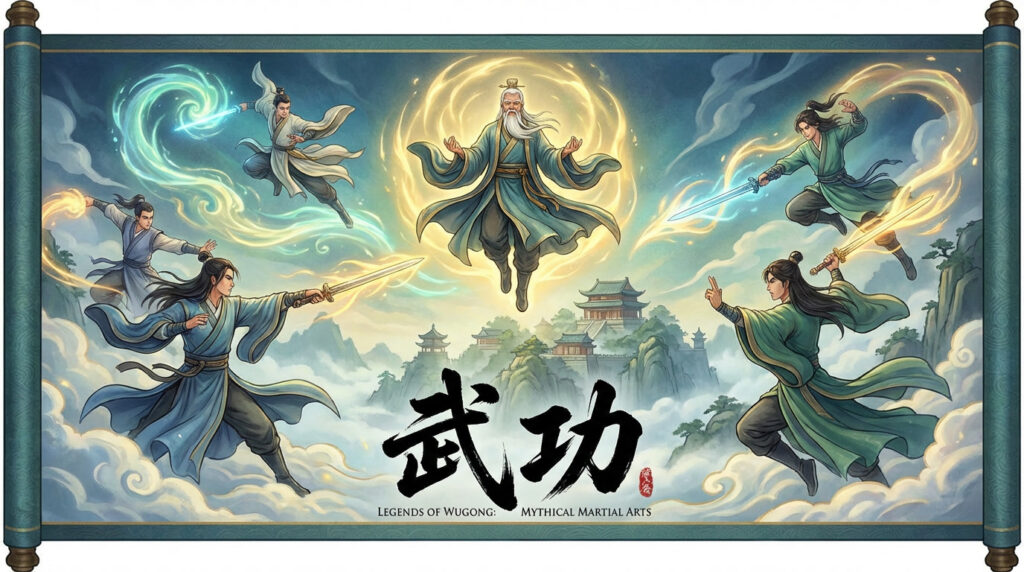
Wugong (武功)
Martial Skill • Technique • Form • Practical Combat Ability
Wugong (武功) is one of those terms everyone thinks they understand… until they try to define it. It shows up in wuxia, xianxia, dramas, novels, and every “ancient martial arts” story — but Western translations mix it up with inner power, magic, and even cultivation levels.
Let’s clean this up.
Wugong is simple. Wugong is grounded. Wugong is physical.
Let’s break it down properly.
What Is Wugong (武功)?
Wugong literally means:
“Martial skill” —or— “Combat ability earned through practice.”
It focuses on:
Strikes, blocks, kicks
Weapon forms
Footwork and stance work
Timing, rhythm, precision
Actual technique mastery
Real-world martial structure
Discipline that builds muscle memory
In wuxia, Wugong describes the practical, physical side of martial arts. It’s what your body can do — not what your inner energy can power.
Characters with strong Wugong:
execute clean forms
have sharp control
can fight effectively even without inner energy
rely on experience and technique, not magic
Wugong is the foundation of all martial training.
❌ What Wugong Is NOT
This part matters.
✔ Wugong is NOT cultivation.
It doesn’t measure spiritual progress. It measures skill.
✔ Wugong is NOT Neigong.
Neigong = internal energy work. Different term, different concept.
✔ Wugong is NOT qinggong.
Qinggong = mobility skill (see our Qinggong post)
✔ Wugong is NOT magic or supernatural.
No spells. No energy beams. Just martial skill — expressed physically.
✔ Wugong is NOT a realm or stage.
You cannot “break through your wugong.” You can only train it.
Wugong is practical, physical, and grounded.
How Wugong Works (Wuxia Logic)
In classical wuxia:
Wugong builds through:
endless drilling
repetition
form practice
teacher-to-student transmission
manuals teaching stances and techniques
sparring
conditioning (endurance, strength, flexibility)
A character’s Wugong reflects:
how well they execute technique
how adaptable they are in combat
how controlled their weapon work is
how disciplined their training has been
how much real-world experience they have fighting
Wugong is the skill expression of a character.
Wugong in Combat
Strong Wugong gives a fighter:
clean technique
stable footwork
power from proper alignment
precise timing
weapon control
the ability to read an opponent
efficiency in movement
practical, reliable fighting ability
Wugong is not flashy. It’s not magical. It’s not exaggerated.
It is the realistic martial base everything else builds from.
If Qinggong makes you move gracefully… Wugong is the reason your hits land.
Wugong vs Neigong
This distinction is CRITICAL.
Wugong (武功)
physical technique
martial skill
footwork, forms, weapons
grounded in real-world methods
no magic
no supernatural force
Neigong (内功)
internal energy
breathing, qi circulation, body strengthening
invisible power
supports endurance, power, resilience
foundation for supernatural effects (in xianxia)
People mix these up because of bad translations. But they are different pillars.
Why Western Sources Get Wugong Wrong
Two reasons:
1. Early kung-fu movies blended skills
Wirework + martial arts = instant confusion.
Audiences couldn’t tell what was skill vs what was cinematic enhancement.
2. Wikipedia and fan forums oversimplified
They merged Wugong, Neigong, Qinggong, and Xianxia powers into one big “martial arts” blob.
Words like:
- “enhanced strength”
- “superhuman martial arts”
- “chi techniques”
…blurred what Wugong actually means… which is: the training part. The technique part. The grounded part.
Wugong in CVM Sekai
In CVM Sekai, Wugong follows strict rules:
✔ Wugong = physical discipline + technique
No supernatural effects. Ever.
✔ It works with Neigong, not as a replacement
A character with strong Neigong but poor Wugong is powerful but sloppy.
A character with strong Wugong but no Neigong is skilled but limited.
✔ Wugong stays grounded
No flying. No energy blasts. No bending physics.
✔ Wugong reveals character
Discipline = personality.
Training method = mindset.
Forms = worldview.
Wugong is the martial language of your world.
Types of Wugong (Fiction-Friendly)
Different sects, schools, and authors define styles differently, but common Wugong categories include:
Weapon Wugong (兵器武功)
Sword arts, spear arts, staff forms, dual weapons.
Barehand Wugong (拳脚武功)
Striking, grappling, stances, kicks.
Soft-Style Wugong (柔功)
Redirection, joint manipulation, balance control.
Hard-Style Wugong (刚功)
Power-focused strikes, direct force, rigid structure.
Defensive Wugong
Blocking, evasion, counter-technique.
Traditional School Styles
Shaolin, Wudang, Emei, etc. Each with distinct flavor and philosophy.
These are grounded forms that belong in Wuxia, not Xianxia magic.
Final Takeaway
Wugong (武功) is:
technique
discipline
martial structure
training
physical mastery
the root of all combat ability
It is the realistic martial foundation of wuxia — frequently misunderstood online, but impossible to forget once you learn the real meaning.