Fist of the North Star spans two original television runs, theatrical retellings, three New Fist OVAs, five Legends of the True Savior releases, spinoff anime, and the Remake route. This directory keeps those verdicts separate so a compressed movie is not judged as though it had 109 episodes to make its case.
Each visual card opens a complete Review of a finished series, season, film, OVA collection, or larger route. Reviews examine adaptation, masculinity, governance, grief, violence, performance, and whether the work understands the human cost hidden underneath its own legend.
Explore the complete shelf
Reviews are separated by branch so a television season, movie, OVA project, retelling cycle, and comedy spinoff can be judged on the structure each actually uses. Every entry has a unique local image card and a Read More route.
These are long-form editorial reviews, not plot summaries. They examine humanity, power, grief, gender, disability, care, governance, adaptation choices, and what remains after the final fight.
Read by branch or publication order; every review remains independent enough to enter without finishing the entire franchise first.
Fist of the North Star 2 turns Bat and Lin into resistance leaders, then asks whether Kenshiro can end an empire without replacing the generation that learned to fight before he returned.
The first Legends film gives Raoh private tenderness while Souther builds a monument from children. Feeling love is not the same thing as practicing justice.
Between Shin’s defeat and meeting Bat and Lin, Kenshiro enters slavery, political terror, and the choice that turns inherited technique into public responsibility.
Across three films and two OVAs, Legends of the True Savior revises Raoh, Yuria, Toki, and Kenshiro while testing whether added humanity becomes accountability or prestige.
The 26-episode 2006 prequel follows Kenshiro Kasumi through 1930s Shanghai. This review examines inheritance, colonial power, organized crime, friendship, adaptation compression, and the danger of treating history as exotic scenery.
The 24-episode 2018 CG anime becomes an alternate Blue Sky route. This review examines adaptation rupture, colonial geography, migration, inherited ideology, protection, digital bodies, and what “regeneration” asks viewers to forgive.
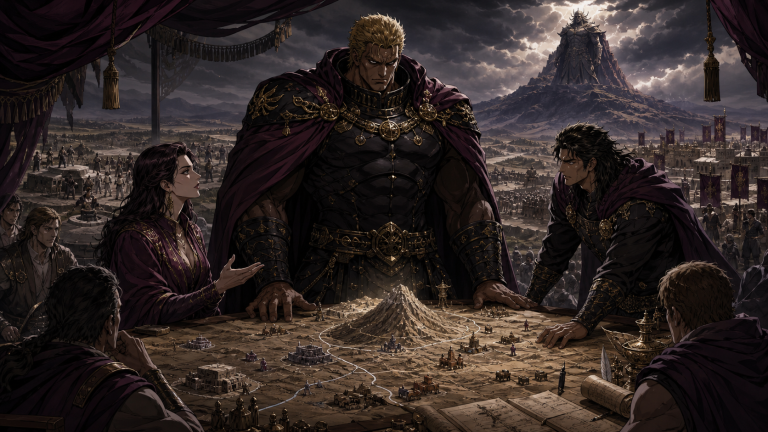
The 13-episode Raoh gaiden follows conquest before Kenshiro’s central journey. This review examines charisma, administration, loyalty, Reina and Souga, resource control, fear, and the difference between winning territory and governing people.
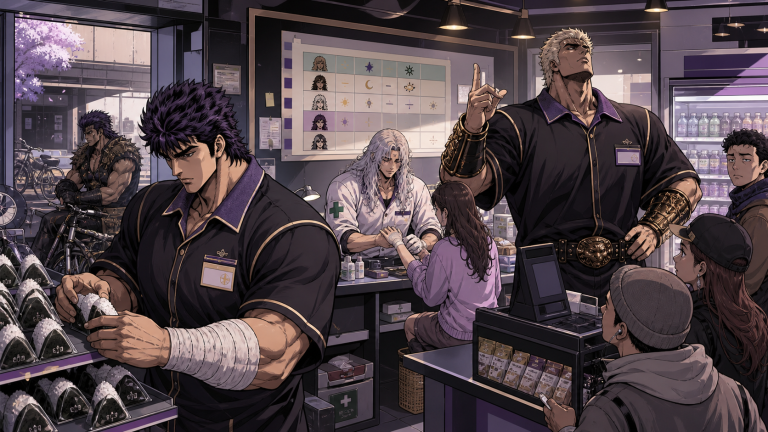
DD Fist of the North Star relocates legendary fighters into modern precarious work. This review examines parody, masculinity, convenience-store labor, unemployment, adaptation, repetition, and what remains when violence stops guaranteeing status.
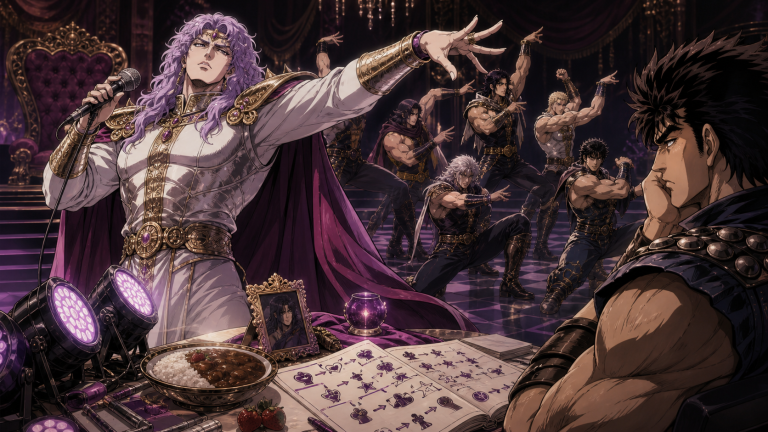
The twelve short Strawberry Flavor episodes turn Souther into a lonely imperial performer. This review examines parody, friendship, camp, masculinity, idol spectacle, copyright excess, and why affection can expose a tyrant without forgiving him.