RaeRae Reacts · One Piece Episode 343
Gecko Moria Turns Stolen Shadows Into a Warlord’s Private Army
One Piece Episode 343 React reunites the landing party with Thriller Bark’s victims and identifies Gecko Moria as the pirate controlling their shadows.
What happens
Luffy, Zoro, Sanji, Robin, and Franky land to follow the separated trio. They flatten graveyard zombies with ease before meeting a badly injured old man who belongs to the many victims trapped by Gecko Moria’s stolen-shadow operation.
RaeRae reacts
The zombies are not the real reveal. The living victims are. Moria’s power forces people to organize every future around what he removed, turning sunlight and escape into weapons. A Warlord title gives the operation political shelter without making the theft less personal.
Canon note
Episode 343 continues the manga-canon Thriller Bark Arc.
The second landing party enters with overwhelming force
Luffy, Zoro, Sanji, Robin, and Franky reach Thriller Bark after Nami, Usopp, and Chopper. Their group contains enough combat power to make the graveyard zombies look almost trivial.
The quick victory creates confidence while the island’s real machinery continues working outside the visible fight.
Graveyard zombies rise as an army built from unmarked histories
The creatures emerge from soil like generic horror obstacles, but Episode 342 has already taught viewers that animated bodies carry stolen materials. Every zombie implies a corpse, a shadow, and at least one identity stripped of context.
Defeating the body does not automatically repair the people used to construct the enemy.
Luffy treats the dead rising from graves like a physical inconvenience
His refusal to honor horror conventions produces immediate comedy. A zombie can be pushed back into the ground because Luffy responds to the problem in front of him, not to the symbolism surrounding the problem.
The joke also demonstrates why theatrical intimidation will not control this captain for long.
Zoro reads the zombies through durability rather than superstition
He asks what makes an opponent stay down and whether cutting power can solve the mechanism. The graveyard aesthetic does not replace combat analysis.
That practical focus becomes important once Thriller Bark reveals enemies who rise repeatedly and bodies whose animating source exists elsewhere.
Sanji’s attention remains divided by the missing trio
Nami’s absence sharpens his urgency, but the entire separated group needs recovery. His emotional volume can be played for comedy while still expressing an accurate fact: the crew does not know what has happened inside the mansion.
Strength has arrived on the island after the vulnerable route was already established.
Robin watches for the system behind the spectacle
She has survived organizations that hide violence behind titles and procedure. A cemetery full of coordinated bodies suggests command rather than random haunting.
Robin’s calm makes room for evidence that a louder fighter might miss after an easy win.
Franky understands that assembled bodies require a builder
His own body contains deliberate reconstruction, but Franky’s modifications belong to his survival and agency. Thriller Bark’s stitched army presents engineering without the same consent.
The contrast separates bodily transformation from bodily exploitation. Construction itself is not the moral failure; ownership is.
The injured old man interrupts the victory lap
After the zombies fall, a human voice reaches Luffy. The old man looks damaged, frightened, and materially affected by the island. His body carries a consequence that combat comedy cannot dismiss.
Thriller Bark becomes morally legible when a survivor explains what the monsters cost living people.
He is not a zombie, and the distinction matters
The crew must stop sorting every unfamiliar figure into enemy categories. A person can look frightening because violence has already happened to him.
Recognition prevents the victim from being attacked as part of the system that harmed him.
Moria’s name gives the trap an owner
Gecko Moria is not a rumor or atmospheric force. The Warlord controls the shadow operation inside Thriller Bark. Naming him converts scattered clues into an organized crime with leadership.
The barrel, gate, zombies, laboratory, and restricted victims belong to one hierarchy rather than separate accidents.
A Warlord title turns private violence into protected infrastructure
Moria holds government recognition while stealing shadows and building an army. Institutional legitimacy does not make the acts lawful in any moral sense. The title increases his capacity to operate without ordinary challenge.
One Piece again asks what “order” means when states outsource power to pirates useful enough to tolerate.
Shadow theft changes the victim’s relationship with daylight
A stolen shadow makes sunlight fatal, forcing survivors to hide while ordinary life proceeds outside. The harm follows them beyond Thriller Bark and governs where escape could lead.
Moria does not merely take strength. He redraws the world into places a victim may and may not exist.
Survival in darkness should not be mistaken for freedom
The injured people may remain alive by avoiding the sun, but every day becomes structured around Moria’s violence. Adaptation proves endurance, not consent to the condition.
A person can build routines inside coercion without making coercion less real.
The victims’ bodies serve as evidence even when shadows cannot be seen
Absence is difficult to display. Their injuries, fear, hiding places, and warnings give material shape to what was stolen.
The episode asks the crew to believe consequences that cannot be reduced to one visible wound.
Luffy listens because the request concerns stolen freedom
He may ignore warnings about personal danger, but he responds differently when somebody describes a powerful figure controlling other people’s futures. Adventure becomes rescue once oppression receives a voice.
The injured man’s testimony gives Luffy a reason deeper than curiosity to confront the island.
The survivors need shadows restored, not sympathy alone
Listening matters, but the material condition will remain until Moria’s system is broken. The old man does not exist merely to inspire the heroes. His request identifies the outcome victims actually need.
Compassion becomes meaningful when action follows the terms named by harmed people.
Moria turns personality into military inventory
A shadow carries habits and skills into a corpse prepared by Hogback. The Warlord extracts part of a living person, attaches that part to another body, and grades the result by usefulness.
Individual identity becomes a supply chain for somebody else’s ambition.
Hogback and Moria divide the labor of dehumanization
Hogback prepares bodies. Moria provides stolen shadows. The resulting zombies require medical technique and supernatural power working together.
Shared responsibility matters because neither participant can hide behind being only one part of the process.
The operation produces victims on both sides of death
Living people lose shadows, daylight, and freedom. Dead bodies lose rest and become instruments. Any consciousness inside the zombie enters a role chosen by Moria.
The army expands through harm no matter which side of mortality viewers examine.
Easy combat cannot dismantle an extraction system
Luffy’s group can flatten graveyard zombies, yet more bodies can rise while Moria retains shadows and Hogback retains production. Strength answers the immediate attack without reaching the source.
The arc requires the crew to understand relationships between villains, victims, and materials before victory can last.
The old man’s injury rebukes the island’s comedy
Thriller Bark loves theatrical designs and slapstick reactions. The survivor’s condition keeps viewers from treating the attraction like a harmless haunted park.
Somebody pays for every amusing zombie assembled to decorate Moria’s night.
The crew now has separate rescue obligations
Nami, Usopp, and Chopper remain missing. Brook needs his shadow. The injured survivors need the entire operation undone. Sunny remains trapped behind the gate.
These goals connect through Moria’s control, turning multiple personal crises into one structural confrontation.
Robin and Franky embody why altered bodies cannot be read as lesser bodies
Robin was branded monstrous by propaganda. Franky rebuilt himself into a cyborg. Both remain full persons whose unusual abilities do not reduce autonomy.
Their presence helps expose the specific wrong of zombies: not difference, but transformation and use without consent.
The episode moves from gothic rumor to political fact
A foggy island and living skeleton could be isolated mysteries. A government-recognized pirate operating a shadow economy creates a political reality.
Thriller Bark is not outside the world. The world’s power arrangements helped create room for the island to continue.
Moria’s trap depends on victims disappearing from ordinary visibility
People who cannot enter sunlight struggle to travel, testify, or return to public life. The condition hides evidence by hiding the people carrying evidence.
Isolation protects the offender while making every survivor look like a rumor from haunted water.
The injured man restores community to the missing-shadow story
Brook first made shadow theft feel singular and intimate. Meeting more victims reveals pattern and scale. His suffering belongs to a population without becoming less personal.
One testimony opens the door for others whose names the crew may never learn.
This remains an episode React rather than a Review
The page responds to Episode 343’s landing, graveyard fight, injured survivor, Moria identification, and shadow system. A full Thriller Bark Review must judge the completed arc and resolution.
Precise content type keeps broadcast reactions visible in Reacts without crowding the Reviews directory.
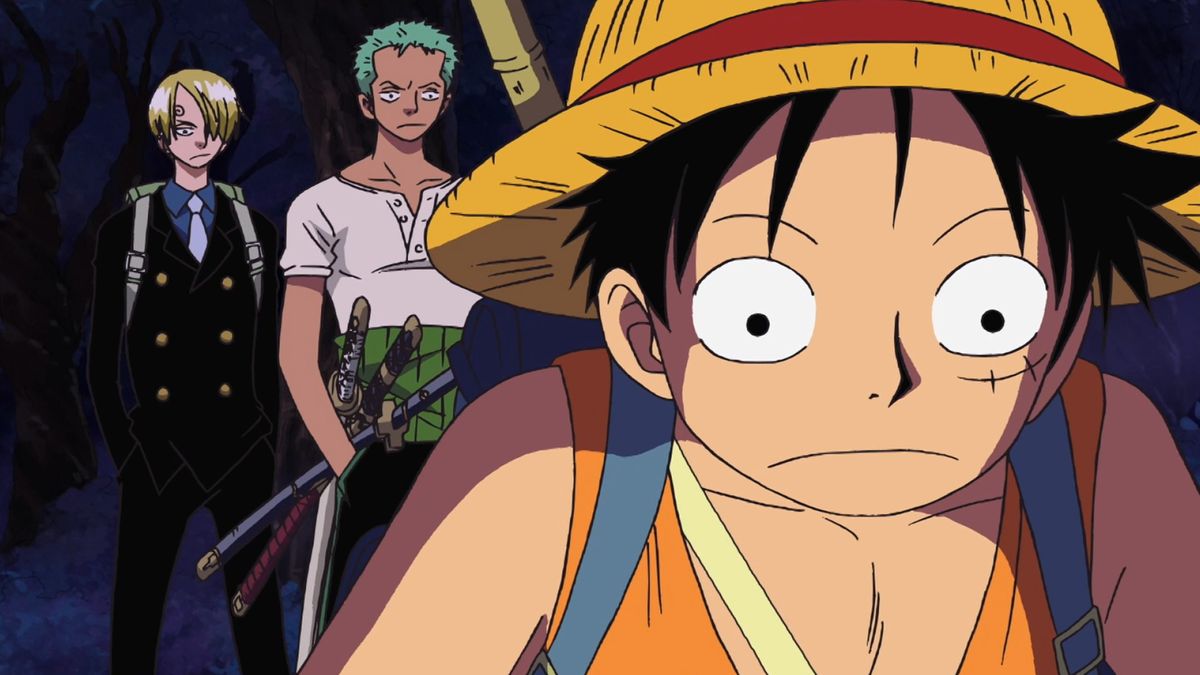
The local official image is the visual receipt
The Episode 343 story image serves as featured image, hero, directory card, and social preview. Readers see one consistent episode identity across every entry point.
The asset has complete metadata and remains unique to this post.
RaeRae’s final receipt
Episode 343 lets the Straw Hats flatten a cemetery full of zombies and then reminds us that beating the bodies in front of them is not the same as defeating the machine that made those bodies useful. Luffy’s group has outrageous strength. The injured old man has the truth. His missing shadow means daylight can kill him, escape cannot restore ordinary life, and Gecko Moria’s violence follows long after the original theft.
Naming Moria changes everything. Thriller Bark is not random haunted nonsense. A government-recognized pirate runs an extraction system, Hogback prepares bodies for that system, and living victims are pushed into darkness where the wider world is less likely to see them. Brook was not one strange exception. He belongs to a community of people whose freedom was converted into military inventory. Luffy listens because the request is not “please feel sorry for us.” The request is restoration. Return what was taken. Give people the sun back. Episode 343 turns the arc from spooky exploration into collective rescue, and the old man’s testimony carries more force than every zombie Luffy shoved into the ground.
Government recognition changes the risk carried by witnesses
Accusing an ordinary pirate already invites retaliation. Accusing a Warlord means challenging somebody whose usefulness has been formally recognized by the state. Victims cannot assume authorities will treat Moria’s power as a problem when the system has decided his power is strategically convenient.
The injured man therefore takes a political risk by naming the offender. Testimony contests both the theft and the legitimacy shielding the thief.
The sun becomes a public space from which victims are excluded
Daylight is not merely weather. Daylight contains work, travel, community, and ordinary visibility. Moria’s theft removes survivors from those spaces without building a physical prison around them.
The condition demonstrates how control can operate through environment. A person appears free to walk away while the consequences make most destinations lethal.
Restoration must include more than defeating Moria
A villain’s fall matters, but victims need their own shadows returned and the conditions governing their lives reversed. The episode keeps the desired outcome concrete. Heroic victory is incomplete if harmed people remain unable to stand in daylight.
That standard forces the crew to measure success from the survivor’s body outward rather than from the enemy’s defeat inward.
The survivors transform Brook’s invitation into a larger promise
Luffy wanted one skeleton musician to join the crew. Learning that many people share Brook’s condition expands the obligation without diluting his bond. Restoring Brook and restoring the unnamed victims become parts of the same refusal.
Thriller Bark gives friendship political scale: caring about one person opens the door to recognizing the structure harming others.
Witnessing changes the crew’s definition of the enemy
The zombies can attack, but the larger enemy is a system that turns stolen lives into renewable force. The injured man gives the crew enough knowledge to stop treating every encounter as an isolated battle.
From this point forward, a responsible victory must restore people who may never appear in the final fight.
The crew now knows that returning every stolen shadow is the minimum standard for calling anybody rescued.
That promise gives every later battle a survivor-defined purpose.