RaeRae Reacts · One Piece Episode 342
Cindry’s Death Certificate Exposes the Nightmare Inside Hogback’s Laboratory
One Piece Episode 342 React follows Nami, Usopp, and Chopper through attacking portraits and taxidermy before Cindry’s death record exposes Hogback’s secret.
What happens
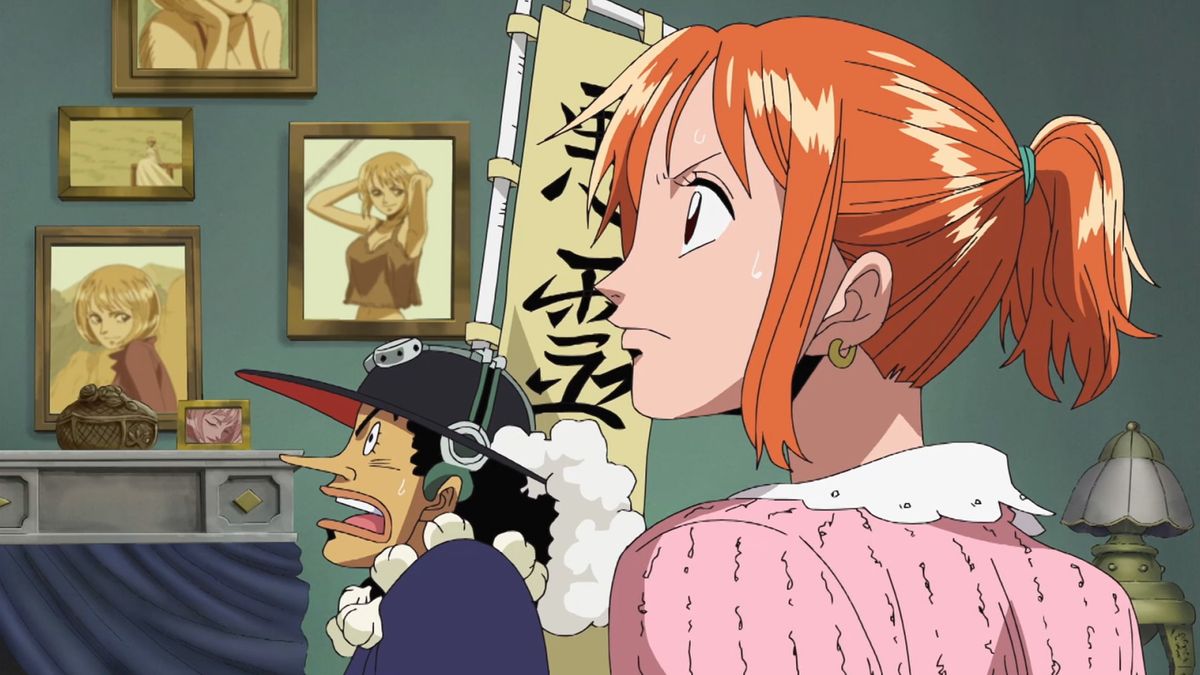
Nami, Usopp, and Chopper discover that Hogback’s mansion is crowded with zombies hiding as portraits, mounted animals, and rugs. Their escape leads into a room covered with photographs of Cindry, where the record shows that the woman serving Hogback died ten years earlier.
RaeRae reacts
The death record changes the mansion from a strange doctor’s home into a crime scene. Hogback has not conquered grief if the person moving through his rooms has no clear authority over her own body. Medicine without consent is possession wearing a white coat.
Canon note
Episode 342 continues the manga-canon Thriller Bark Arc.
The mansion stops pretending the decor is harmless
Portraits, mounted animals, and rugs begin speaking and attacking because Hogback’s house has been populated through concealment. The trio cannot distinguish furniture from an observing body until the body moves.
Thriller Bark turns domestic space into surveillance. Every object may have been listening while guests assumed the room was empty.
Surprise Zombies weaponize the expectation that objects stay objects
A visitor normally reads a painting as representation and a rug as material. Hogback’s creatures exploit that basic trust. The attack begins when the category suddenly changes.
The gag lands because the reveal is ridiculous, but the horror underneath concerns bodies altered until personhood can be hidden as decoration.
Nami’s suspicion receives physical confirmation
She sensed that the mansion was wrong before the evidence became visible. Episode 342 does not treat her intuition as irrational panic waiting for a man to correct her. The house proves her concern was materially grounded.
Trusting that perception helps the trio survive long enough to discover what the rooms conceal.
Usopp’s fear becomes useful pattern recognition
Usopp expects every surface to betray them, and this time nearly every surface can. His imagination creates noise, yet the constant scanning also keeps him responsive when taxidermy stops behaving like taxidermy.
The episode lets cowardice and vigilance share one body without reducing him to either label.
Chopper enters a medical nightmare through the language of anatomy
Mounted creatures, stitched bodies, and animated remains all point toward somebody handling flesh as material. Chopper sees the biological impossibility alongside the moral question.
His admiration for Hogback now occupies the same rooms as evidence that a famous doctor may have violated the purpose of medicine.
Running deeper into the house does not produce safety
Every escape from one attacking room delivers the trio into another controlled space. The mansion offers motion without meaningful choice, repeating the carriage’s deceptive promise of rescue.
Hogback’s architecture lets frightened guests select among routes he already owns.
Cindry’s photographs convert the servant into a documented person
The wall records a public life beyond plates, orders, and Hogback’s household. Cindry had a face, career, history, and identity before viewers met the body serving dinner.
Those photographs resist the reduction imposed by her current role. A person existed before becoming somebody else’s project.
The room full of images looks less like remembrance than fixation
Grief may preserve photographs, but scale and secrecy change the emotional reading. Hogback has arranged Cindry’s image around private space while the woman presented as Cindry works under his authority.
The collection centers his attachment instead of clarifying her wishes.
A death date turns suspicion into a receipt
The evidence says Cindry died ten years ago. The servant walking through the mansion cannot be accepted as ordinary continuity after that fact. Either death has been reversed, identity has been copied, or a body has been made to perform a life no longer available for consent.
Every possibility requires ethical scrutiny before admiration.
Resurrection does not automatically restore the person who died
Movement, speech, and recognizable appearance can persuade observers that a miracle succeeded. Those signs do not prove the returned body possesses the original person’s memory, autonomy, or desires.
A medical achievement cannot be measured only by whether a corpse stands up.
Cindry’s present behavior cannot be separated from power
She serves the doctor who controls the mansion and the research surrounding her body. Any claim that she chose this arrangement would need evidence free from coercion. Hogback’s authority makes easy assumptions irresponsible.
Consent must belong to Cindry, not to the man most invested in calling the result success.
Hogback’s reputation now competes with the physical archive
Chopper entered knowing celebrated stories about impossible surgeries. The mansion supplies another archive: stitched creatures, concealed zombies, obsessive photographs, and a woman documented as dead.
Professional judgment begins when the public legend no longer gets to edit contradictory evidence.
Chopper does not become foolish because a hero disappointed him
He admired a doctor through the information available to him. That admiration reflected Chopper’s commitment to saving lives, not a moral defect. Responsibility begins with how he responds once the evidence changes.
Disillusionment can become growth when compassion remains stronger than prestige.
The discovery threatens Chopper’s idea of medicine
Hiriluk and Kureha taught him that treatment concerns the whole person. Hogback appears to pursue mastery over bodies. The difference is not a minor professional disagreement.
One practice accepts vulnerability as a trust; the other risks converting vulnerability into access.
Nami reads the photographs as a warning about possession
After Absalom’s assault, a room devoted to one dead woman’s image cannot feel romantically neutral. The mansion keeps revealing men who confuse desire with permission to claim a woman.
Cindry’s archive and Nami’s experience place ownership language at the center of the horror.
The episode makes domestic labor part of the mystery
Cindry is introduced through service, especially the running plate joke. The death record forces viewers to ask who benefits from her labor and whether she can refuse.
Comedy about broken dishes sits beside a much harsher question about a body compelled to maintain somebody else’s home.
Broken plates may be one surviving form of refusal
Cindry’s hostility toward plates can read as an eccentric gag. Inside a controlled existence, repeated rejection of an assigned household object may also suggest personality pressing against the role.
The episode does not supply a complete answer yet, but the resistance deserves attention rather than dismissal.
Photographs preserve appearance while the zombie system steals context
A picture can show who Cindry looked like without explaining who now speaks through her body. Moria’s shadow operation and Hogback’s surgical work divide identity across separate materials.
The result imitates continuity while depending on theft from more than one person.
The laboratory converts grief into infrastructure
Hogback’s fixation is not confined to private mourning. His medical skill supports an army of bodies animated for Thriller Bark’s hierarchy. Personal obsession becomes organized harm once resources, rooms, and subordinates sustain the practice.
The scale removes any possibility of describing the problem as one desperate exception.
Every animated object expands the list of possible victims
The trio cannot know whose body, shadow, or remains produced each creature. Comedy crowds the screen with designs, while the system behind those designs implies many stolen histories.
A zombie army is also an archive whose labels have been deliberately removed.
The mansion hides evidence in plain sight
Visitors saw Cindry, portraits, rugs, and mounted animals before understanding what any of them meant. Hogback relies on disbelief and reputation to make visible facts seem impossible.
Power often survives by convincing witnesses that the correct interpretation is too outrageous to say aloud.
Naming Cindry as dead does not erase the being present now
The death record proves discontinuity. The moving body still demands ethical consideration. Treating the zombie as mere property would reproduce Hogback’s reduction even while criticizing his method.
The arc must hold grief for the original life alongside responsibility toward whatever consciousness now occupies the body.
Episode 342 deepens Thriller Bark’s consent theme
Brook’s shadow was taken. Nami’s privacy was invaded. Cindry’s body appears to have been repurposed after death. Each storyline concerns control separated from the person whose choice should govern that control.
The gothic imagery keeps changing, but the moral violation remains recognizable.
The reveal works because evidence arrives through the victims’ route
The audience does not receive a villain monologue explaining the process first. Nami, Usopp, and Chopper run, observe, compare, and find a record. Knowledge is earned from inside danger.
That perspective keeps discovery attached to the people most vulnerable to the mansion’s system.
This page remains an episode React
The article follows Episode 342’s Surprise Zombies, Cindry photographs, death record, and Hogback laboratory implications. A completed Thriller Bark Review must wait until the arc resolves what happens to its victims.
Correct classification keeps individual reactions in the Reacts directory and whole-work judgment in Reviews.
The canonical image remains one local visual identity
The official Episode 342 story still serves as featured image, hero, directory card, and social preview. Readers receive the same episode-specific signal before and after opening the card.
The local asset has complete title, alt text, caption, description, source, and no reuse by neighboring posts.
RaeRae’s final receipt
Episode 342 walks into Hogback’s mansion and finds the receipt hanging on the wall. The portraits talk, the mounted animals attack, and the rugs refuse to remain rugs, but the most frightening object is a record saying Cindry died ten years ago. Suddenly the woman serving Hogback is not proof that he defeated death. She is evidence that his miracle may have separated a body from every ordinary protection we attach to personhood.
Chopper’s admiration deserves compassion because he came here believing medicine could do something beautiful. Now his hero’s house is crowded with bodies made useful to somebody else’s plan. Nami and Usopp help keep evidence louder than reputation. Cindry’s photographs restore a life beyond service, while her hatred of plates may be one small refusal surviving inside a role imposed on her. Thriller Bark keeps asking the same question through shadows, showers, laboratories, and corpses: who gets to decide what happens to a body? Hogback’s title cannot answer for Cindry. His skill cannot answer for her. If the person at the center cannot choose, resurrection is not rescue. The body stood up, but medicine still failed.
Grief does not authorize reconstruction of the person who died
Hogback may describe devotion, loss, or inability to accept Cindry’s death. Those feelings can explain obsession without granting permission. Grief belongs to the survivor experiencing grief. The dead person’s body and identity do not become compensation owed to him.
Love measured by possession becomes indistinguishable from control once the beloved person’s wishes disappear from the decision.
The Cindry record creates two victims rather than one successful copy
The original Cindry lost the dignity of resting beyond somebody else’s demands. The shadow placed inside her body was taken from another living person whose sunlight and future were restricted. Hogback’s “resurrection” depends on joining two violations and presenting the composite as an achievement.
The system hides both victims by giving the finished zombie only one convenient label.
Chopper’s medical ethics have always begun with listening
He learned medicine from people who saw his pain, challenged his assumptions, and treated him as more than an unusual body. Hogback’s laboratory moves in the opposite direction. Bodies are handled first and personhood is treated as an optional explanation afterward.
Chopper can admire extraordinary technique while recognizing that technique has betrayed the profession’s purpose.
The photographs also ask who controls memory
Hogback has collected Cindry’s image so completely that his version of mourning fills a room. Yet the archive tells viewers almost nothing about how Cindry understood herself, whom she loved, or what future she wanted. His memory crowds out her interior life.
Recovering her humanity requires looking beyond the devotion claimed by the man who now controls her body.
A miracle should expand agency rather than narrow agency
If medicine returns somebody to life but places that life in compulsory service, the result cannot be called healing without qualification. Rescue should restore choices, relationships, and the ability to refuse. Cindry’s condition appears designed around Hogback’s needs.
Episode 342 turns resurrection from a fantasy of power into an audit of who receives the future being created.
The death certificate matters because documentation interrupts the fantasy Hogback controls. A date, a name, and a public record restore sequence to a house built on blurred categories. Cindry lived before this laboratory, died outside Hogback’s authority, and deserves an identity larger than the body he displays as proof.