RaeRae Reacts · One Piece Episode 317
Abi’s Yagara Search Makes Water 7 Recovery Personal
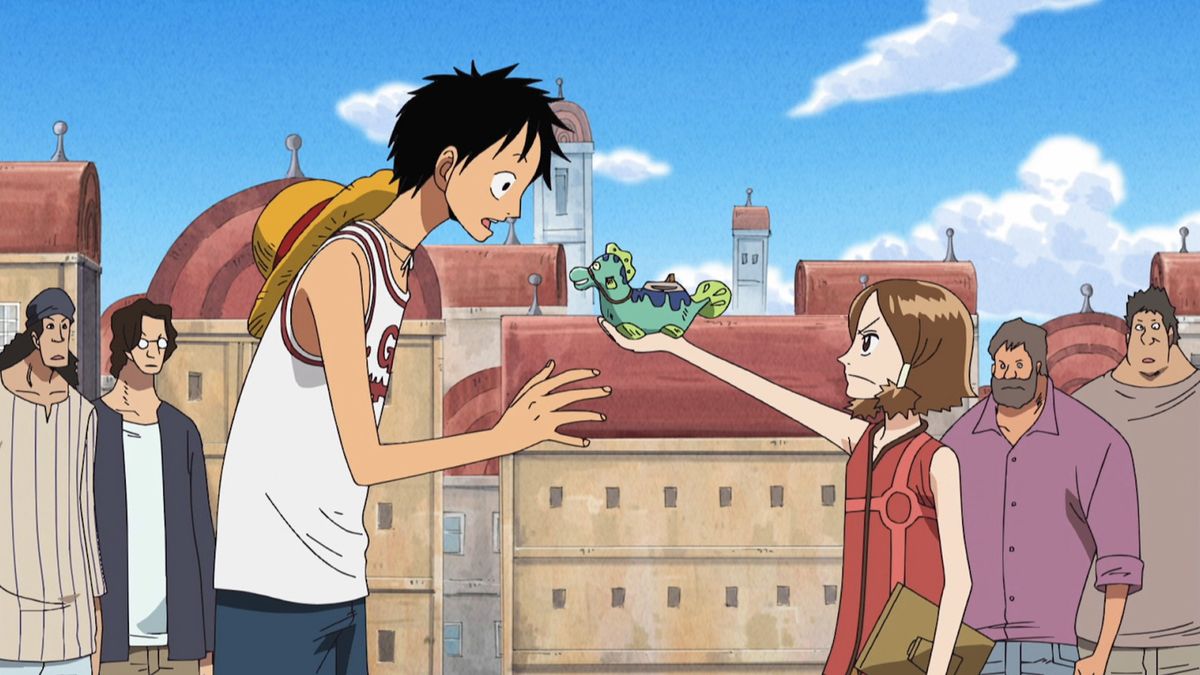
One Piece Episode 317 follows Luffy, Chopper, and Abi through Water 7 as they search for her missing elderly Yagara, Aobire.
The short version
Episode 317 turns Water 7 recovery into a neighborhood search when Abi asks Luffy to find her missing elderly Yagara, Aobire. Luffy and Chopper answer grief with movement, while the city reveals what Aqua Laguna left behind.
Abi refuses to call love finished
Adults can treat disappearance as an ending because probability looks cruel. Abi keeps searching because relationship deserves evidence, not convenient surrender.
Luffy recognizes a promise without needing a speech
He responds to urgency carried honestly. The request is small beside Enies Lobby, but emotional scale has never decided whose pain deserves his attention.
Chopper makes care practical
His ability to understand animals turns sympathy into investigation. Compassion gains direction through expertise instead of remaining a warm feeling.
Water 7 keeps living after catastrophe
Canals, neighbors, and working streets show a city repairing daily life. Recovery includes missing companions and private losses beyond the heroes’ central battle.
RaeRae’s receipt
I love that Luffy can challenge the world one week and help a child search the canals the next. Heroism remains available when nobody offers glory.
Episode facts and receipts
Episode 317 aired July 8, 2007. ONE PIECE.com credits Hirohiko Uesaka, Yoshihiro Ueda, Kenji Yokoyama, Takeo Ide, Masahiro Shimanuki, Katsumi Ishizuka, Miyuki Sato, and Hiromitsu Shiozaki.
Classification: numbered anime-original Water 7 television episode and RaeRae React. Anime, Anime Series, Japanese Anime, and Anime Reacts, not Anime Reviews.
Abi brings the city a loss nobody can solve with a bounty
Water 7 knows how to repair walls, tracks, docks, and damaged businesses after Aqua Laguna. Abi’s missing Aobire belongs to a harder category. No blueprint can guarantee that a beloved living companion returns. Her request pulls Luffy away from grand political aftermath and toward the intimate uncertainty ordinary residents carry after disaster.
The shift in scale never makes the story smaller. One child waiting for one elderly Yagara contains a complete emotional world. One Piece understands that catastrophe is counted through individual absences long after public danger passes.
Luffy accepts because desperation speaks a language he trusts
Abi does not arrive with status, payment, or a strategic reason for pirate involvement. She arrives with urgent belief that Aobire may still be found. Luffy recognizes conviction before he understands every detail. His response follows the same instinct that carried him toward Robin, only the current mission asks for searching rather than war.
That consistency protects his heroism from becoming addicted to spectacle. He does not need a government flag to burn before somebody’s pain matters. Honest need is enough to make him move.
Chopper turns empathy into actual investigative power
Luffy can supply momentum, but Chopper can communicate across the boundary separating Abi from the creatures who may know what happened. His gift prevents the search from becoming random wandering. Listening becomes a tool as concrete as navigation or medicine.
The episode values specialized care. Chopper’s contribution grows from attention to nonhuman voices other people might dismiss as background noise. Compassion becomes effective because he has spent a lifetime understanding bodies and speech outside ordinary human assumptions.
Aobire’s age makes hope more complicated
An elderly Yagara disappearing during a massive storm invites the adults’ grim conclusion. Age is treated as evidence that survival became less likely, not proof that relationship stopped deserving effort. Abi rejects the quiet cruelty of deciding an older life is already expendable.
Her insistence carries respect. Aobire is not a replaceable animal in a city full of Yagara. Shared time created a singular bond. The search argues that age increases the history at stake rather than reducing value.
Water 7’s canals become an archive of the storm
Bright water and moving traffic can make the city look recovered from a distance. Following Abi through canals reveals places where Aqua Laguna left debris, fear, and unanswered questions. Geography remembers the disaster even as residents resume daily movement.
The search lets viewers revisit Water 7 without repeating the earlier conspiracy. Streets once shaped by pursuit now hold neighborhood testimony. A city becomes fuller when stories belong to residents beyond the central conflict.
The episode gives local children agency after adult catastrophe
Abi could have been written as a passive victim waiting for heroes. Instead, she initiates the mission and supplies the emotional knowledge keeping the group focused. Luffy and Chopper bring abilities; Abi brings the reason and refuses surrender when probability turns discouraging.
That partnership respects a child’s understanding of her own relationship. Adults may possess broader experience, but they do not automatically know Aobire’s habits, signals, or importance better than the person who loved him daily.
Anime-original does not have to mean emotionally disposable
Episode 317 pauses manga progression, yet the pause explores consequences the main plot has little room to hold. Aqua Laguna affected thousands of private routines. A neighborhood search makes the storm’s aftermath tangible without rewriting canon or pretending a new global villain suddenly existed.
The strongest expansion episodes inhabit available emotional space. This story asks what recovery looks like for a child and an aging working animal, then lets established character values answer. That is a meaningful use of extra time.
Luffy’s attention refuses the hierarchy of important problems
He has just defeated Lucci, rescued Robin, lost Merry, met Garp, and learned Dragon’s identity. A missing Yagara might seem trivial beside those events to anybody managing a franchise outline. Luffy does not live according to outline priority. The person standing in front of him defines the current emergency.
That trait can create chaos, but the same trait makes his care radical. Institutions rank lives through usefulness and scale. Luffy responds to connection happening now.
Chopper and Abi share the experience of loving across species
Chopper’s entire life sits between animal and human categories. He understands that communication, memory, grief, and loyalty do not become lesser because bodies differ. Abi never needs to defend why Aobire counts as family around him.
Their connection gives the search tenderness without requiring sentimental speeches. Chopper takes the bond seriously from the beginning. Recognition is sometimes the first form of help.
The old Yagara represents labor that cities forget to thank
Water 7’s famous shipwrights receive deserved admiration, but Yagara carry people and goods through the canals every day. Aobire belongs to the living infrastructure making the city function. Age exposes how easily dependable labor can become invisible until the worker disappears.
Abi’s love restores individuality to a creature residents might otherwise treat as transport. A working life deserves more than replacement when strength fades.
Searching becomes a ritual against premature grief
Abi cannot control the outcome. She can control whether Aobire’s disappearance receives her full effort. The search gives love somewhere to travel while uncertainty remains unresolved. Movement prevents adult resignation from writing the ending before evidence arrives.
Even if hope had failed, the effort would still matter. Grief changes when people know they honored the relationship instead of abandoning the question for convenience.
Water 7’s heroic welcome changes how Luffy can move through town
The city once hunted the Straw Hats under a false accusation. Now residents know who protected Iceburg and exposed CP9. Luffy’s changed public position makes a neighborhood request possible. Trust created through the central arc flows outward into smaller acts of mutual aid.
Reputation becomes useful without becoming the reason he helps. The city opens doors because residents believe him; he enters because Abi needs him.
Comedy keeps the search from exploiting a child’s fear
Luffy’s impulsiveness and Chopper’s reactions bring buoyancy to material that could become manipulative. The episode allows Abi to worry without turning every moment into a demand for tears. Humor gives the child room to remain a complete person rather than a vessel for audience sadness.
That tonal choice matches Water 7’s recovery. Pain remains present, but ordinary absurdity has returned. Life is beginning to contain more than crisis.
The search reveals Luffy as a listener through action
He often appears inattentive during explanations, especially when details become abstract. Abi’s request proves that his listening operates through emotional selection. He may miss formal context while catching the conviction that matters most.
Once he understands the heart of the request, his body commits before strategy is complete. This is not conventional patience, but the result can feel deeply attentive to somebody who feared adults had stopped believing.
Aobire’s survival does not erase the danger of Aqua Laguna
A hopeful outcome could have weakened the storm by suggesting every feared loss was temporary. Instead, the episode positions reunion as one hard-won exception discovered through effort, knowledge, and a little faith. Water 7 still carries damage everywhere.
Relief works because loss remained possible. The city is not magically restored when one companion comes home. Abi simply receives the answer her relationship deserved.
Reunion honors recognition more than rescue spectacle
The emotional payoff rests on Abi and Aobire knowing each other. No massive attack or villain defeat is required. A familiar response across the water becomes enough. The scene trusts accumulated affection to carry weight.
That restraint suits a recovery episode. After Enies Lobby’s enormous declarations, love can speak through an elderly creature answering the child who refused to stop looking.
The Straw Hats remain connected to places after the main battle
Adventure stories can treat islands as stages discarded once the boss falls. Episode 317 lets Luffy and Chopper participate in Water 7 as a community. They are guests, heroes, troublemakers, and temporary neighbors all at once.
The extra time makes departure matter more. Leaving a place feels different after ordinary residents have names, worries, jobs, and relationships beyond the plot machinery.
Abi’s faith challenges the adults without humiliating them
Adult resignation grows from experience with storms and aging. The episode does not portray every cautious conclusion as cruelty. Abi still sees something their calculations miss: accepting uncertainty is not the same as proving death.
Her challenge restores possibility. Wisdom should help hope become practical, not automatically silence hope before a search begins.
RaeRae’s final receipt
I know Episode 317 sits outside the manga path, and I am still giving Abi her full receipt. A child asks the crew to find an old Yagara after a storm, and Luffy responds as though no problem could be more legitimate. That is not fluff when the choice reveals what his freedom looks like in ordinary community life.
Chopper makes the episode work for me. He listens where other people hear animal noise, and that ability turns Abi’s faith into a real search. Water 7 survived government violence and Aqua Laguna, but recovery happens one returned companion at a time. Aobire matters because Abi loves him. The episode never needs a grander excuse.
The city search turns strangers into a temporary crew
Abi begins with a private fear, but every useful observation expands the circle carrying that fear. Luffy supplies stubborn movement. Chopper opens communication. Residents contribute memory of the canals. Nobody replaces Abi as the person who knows Aobire’s meaning; they simply make sure she does not carry uncertainty alone.
That structure mirrors the Straw Hats on a smaller scale. People with different knowledge gather around one person’s urgent need, then turn separate abilities toward a shared return.
Finding Aobire gives age dignity rather than miraculous youth
The reunion does not require the elderly Yagara to become suddenly powerful or young. Aobire matters in the body he already has, with years visible and limitations real. Survival is not treated as valuable only when strength can be restored.
That choice completes Abi’s argument. She never searched for a more useful companion. She searched for this companion, whose age belongs to the history they shared.
Recovery becomes believable when joy remains specific
Water 7 cannot celebrate one reunion and declare every storm wound healed. Abi can still receive a complete moment of relief. Specific joy does not deny collective damage. Specific joy proves damaged communities contain lives capable of returning to each other.
The episode leaves the city stronger because one unanswered absence receives an answer. That is modest beside rebuilding the sea train, yet modest hope is often what makes larger recovery emotionally possible.
Abi earns that joy through faith, courage, memory, and a refusal to let adult certainty end the search before evidence arrives.