RaeRae Reacts · One Piece Episode 318
Zoro Meets the One Opponent He Cannot Intimidate: Motherhood
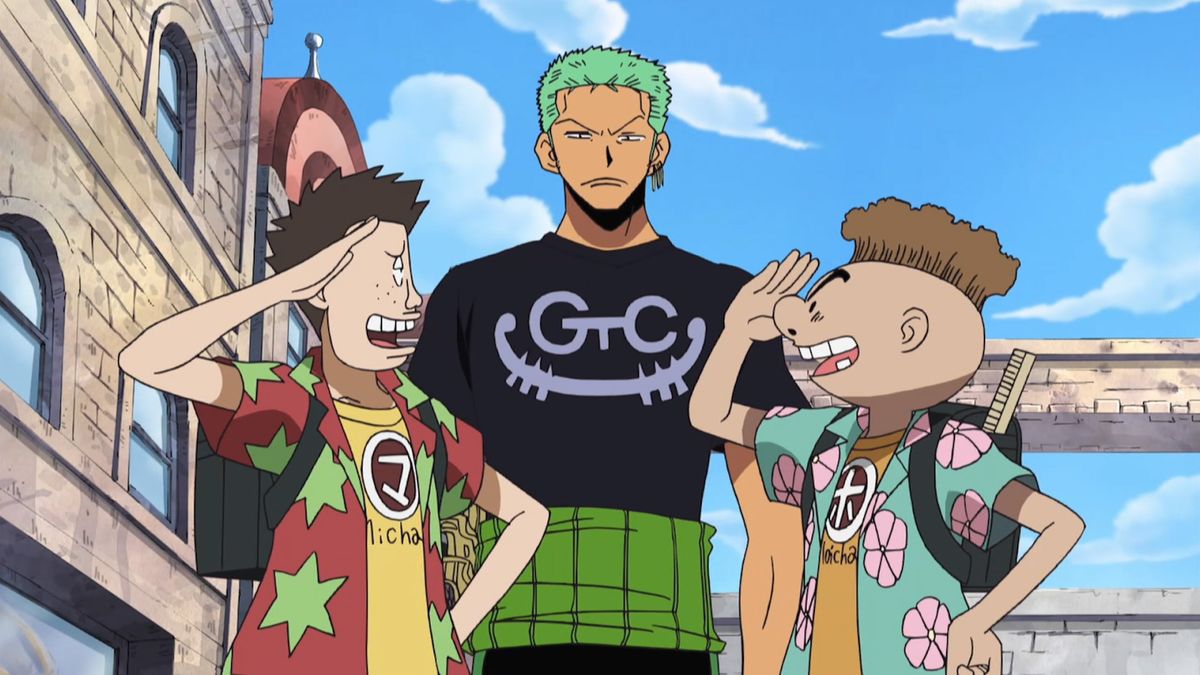
One Piece Episode 318 turns Zoro into an accidental oldest brother when Michael, Hoichael, and their formidable mother claim his help.
The short version
Episode 318 gives Zoro a battle no sword style prepared him for: becoming the temporary oldest brother in a crowded Water 7 household. Michael and Hoichael attach themselves to him, and their formidable mother turns pirate intimidation into unpaid domestic labor.
Zoro’s reputation loses to a mother with a schedule
The joke works because the city’s toughest household authority does not care about bounty logic. Chores become nonnegotiable.
Strength looks different around children
Zoro can cut steel, yet holding a baby demands patience and restraint. Competence in combat does not automatically transfer to care.
The brothers choose a hero they can reach
Michael and Hoichael follow Zoro because his blunt confidence feels larger than neighborhood fear. Their admiration creates responsibility he never requested.
Water 7 recovery needs ordinary labor
Feeding children and supporting a household matter beside rebuilding docks. The episode honors survival work through comedy rather than treating domestic life as background.
RaeRae’s receipt
Zoro facing ten younger siblings is exactly the humiliation his cool image needed. The swordsman survives because care, like combat, rewards showing up.
Episode facts and receipts
Episode 318 aired July 15, 2007. ONE PIECE.com credits Naoki Koga, Keisuke Onishi, Kazuyuki Iigai, Miho Shiraishi, and Michiyo Kawasaki.
Classification: numbered anime-original Water 7 television episode and RaeRae React. Anime, Anime Series, Japanese Anime, and Anime Reacts, not Anime Reviews.
Michael and Hoichael choose Zoro before he agrees
The brothers see a famous swordsman and immediately decide they have found the older-brother energy their lives require. Zoro hears noise, interruption, and two children ignoring every warning sign he knows how to produce. Their mismatch creates comedy, but the attachment also reveals how quickly children identify a version of strength that feels protective.
Zoro never performs friendliness to win them. His bluntness makes their trust funnier and more sincere. They are not attracted to polished charm. They are attracted to somebody who looks impossible to move.
A formidable mother defeats pirate intimidation with logistics
Zoro can stare down bounty hunters, assassins, and government forces. A mother managing more than ten children has no spare attention for his reputation. She sees capable hands standing nearby and assigns work. Her authority comes from necessity repeated every day, which makes his criminal mystique useless inside the household.
The joke respects her rather than treating motherhood as softness. She commands because a large family requires coordination, endurance, and the refusal to indulge dramatic nonsense when a baby needs care.
Zoro becomes the eldest brother through labor, not sentiment
Nobody gathers for a speech about family. He is handed responsibility and must respond in real time. Feeding, carrying, supervising, and keeping chaos from becoming injury create the relationship before Zoro would ever name one. Care enters through tasks he cannot solve by cutting harder.
That method suits him. Zoro expresses loyalty through showing up under pressure. Domestic pressure looks ridiculous beside Enies Lobby, yet the underlying language remains action.
A baby demands control more difficult than force
Swordsmanship teaches Zoro to direct tremendous power through precision. Holding an infant requires another kind of precision: softness, responsiveness, and constant awareness of a fragile body that cannot explain every need. His strength becomes useful only after restraint reshapes the way he applies strength.
The episode lets physical comedy expose a serious distinction. Power is not care until the powerful person adjusts to the vulnerable person’s reality.
The crowded home reveals labor adventure stories often hide
Meals, cleaning, childcare, and emotional refereeing keep a family alive without producing wanted posters. Episode 318 places a celebrated fighter inside that workload and watches his confidence collapse. The result makes invisible labor visible through contrast.
No single chore equals defeating Lucci. The repetition creates another endurance test. Domestic responsibility returns every morning, whether anybody applauds or not.
Zoro’s irritation cannot hide his reliability
He complains because the situation violates every preference for sleep, training, sake, and personal space. He still does not abandon the children once their safety becomes attached to him. The gap between his language and behavior tells us where his values actually live.
One Piece often lets Zoro protect tenderness behind annoyance. Episode 318 removes battle as camouflage, so reliability must reveal itself through ordinary inconvenience.
The brothers imitate strength before understanding responsibility
Michael and Hoichael want the posture, reputation, and fearlessness associated with Zoro. Household chaos teaches that being an older brother means more than looking dangerous. Strength includes absorbing trouble so smaller people can remain safe.
The lesson never arrives as a lecture. They watch the swordsman they admire become responsible for needs he did not create. Example gives their hero worship a healthier direction.
Water 7’s children survived a citywide disaster too
Aqua Laguna and CP9 dominate the adult political story, but children experienced interrupted homes, frightened parents, damaged streets, and routines suddenly made uncertain. The brothers’ energy can look like pure mischief while also belonging to a community shaking itself back into ordinary life.
Zoro’s temporary presence provides stability disguised as chaos. Recovery sometimes looks like children feeling safe enough to become annoying again.
Anime-original comedy earns value through character pressure
The episode does not move the manga plot, yet the premise places Zoro where his established tools offer no easy victory. That is useful expansion. A side story can reveal character by changing the kind of demand rather than inventing a villain strong enough to distort continuity.
Zoro remains recognizable throughout. The comedy stretches circumstance, not personality. His resistance, competence, pride, and hidden care all belong to the man viewers already know.
The mother refuses to mistake masculinity for exemption
Zoro’s swords, scars, and attitude might convince another household that childcare belongs outside his role. She sees no such boundary. If he can carry weapons and survive battles, he can carry a child and help with work.
That assumption punctures the fantasy that dangerous men become incapable around domestic tasks by nature. Inexperience explains awkwardness. Inexperience does not excuse refusal.
Zoro’s lost sense of direction becomes social captivity
His legendary inability to navigate usually strands him in streets, forests, and corridors. Here, other people direct his movement so completely that escape becomes impossible for a different reason. Every attempted exit seems to produce another assignment.
The familiar gag gains a domestic variation. Zoro can get lost even when an entire family knows exactly where they need him.
Children read kindness through consistency rather than performance
Zoro rarely smiles on command or offers the reassuring language adults use around children. Michael and Hoichael keep trusting him because he remains present. They observe what he does when frustration would provide an easy excuse to leave.
That judgment is sharper than adults sometimes expect. Children notice reliability. Zoro accidentally passes their test through behavior he would never advertise as tenderness.
The episode broadens what crew strength can mean
The Straw Hats need Zoro to cut obstacles and stand beside Luffy against overwhelming enemies. A future crew also needs members capable of sharing space with vulnerable people without turning every problem into combat. Household duty exercises the social side of belonging.
No sword technique receives a name. The accomplishment is completing care while remaining comically overwhelmed. That counts as growth, even if Zoro would deny every word.
Motherhood becomes a form of command recognized by action
The mother lacks a military rank or pirate flag, yet her family responds to an authority built through responsibility. She understands supplies, temperaments, schedules, risks, and the exact task each available person can handle. That is leadership grounded in daily survival.
Zoro submits because reality supports her commands. The household works only when somebody coordinates, and she has earned the role through knowledge nobody else in the room possesses.
Comedy lets Zoro be vulnerable without diminishing him
Watching him struggle with babies and chores does not erase the swordsman who faced Kaku. The contrast expands him. Competence can coexist with confusion when context changes. A person does not become weak because another domain exposes inexperience.
The episode invites laughter without contempt. Zoro’s dignity survives precisely because he keeps trying while the situation humiliates his preferred image.
The children offer him belonging outside the crew
Zoro’s deepest loyalty belongs to the Straw Hats, but temporary community in Water 7 lets residents see more than a wanted man. Michael and Hoichael treat him as family before politics can define the interaction. Their mother treats him as useful kin before he can object.
That welcome reflects the city’s changed relationship with the crew. Former suspects now move through homes as trusted protectors, even when protection looks like babysitting.
Zoro learns that being followed creates obligation
He never asked the brothers to imitate him. Influence does not disappear because consent was absent. Once children read his behavior as instruction, his choices carry additional weight. Hero worship creates a responsibility to model more than aggression.
The lesson anticipates the broader consequences of fame. Wanted posters will soon carry crew images across the world. People they never meet may decide what strength looks like by watching from a distance.
Household chaos prepares the bounty joke
Episode 320 will formalize the crew as global threats. Episode 318 first lets Water 7 reduce one feared pirate to an exhausted helper. The sequence protects viewers from confusing government labels with complete identity.
A swordsman can be dangerous to enemies and safe for children. The poster will capture only one half. Neighborhood memory preserves the other.
RaeRae’s final receipt
I came for Zoro losing a battle against one mother and more children than he can count, but the episode earns more than the gag. He cannot intimidate a feeding schedule. He cannot cut a baby into cooperation. He has to adjust, stay, and let strength become useful on somebody else’s terms.
Michael and Hoichael choose him because he looks fearless. What they actually receive is better: a man who complains through every chore and still refuses to leave them unsafe. Episode 318 understands that older-brother energy is not a pose. The title gets earned when smaller people can depend on what happens after the pose fails.
Responsibility reaches Zoro without waiting for comfort
Zoro does not become ready before the family needs help. Readiness develops inside the work. Every awkward attempt teaches him something another training session with weights could never provide: somebody else’s vulnerability can set the pace, and strength must follow that pace instead of demanding control.
The lesson fits his larger journey. Protecting Luffy’s dream repeatedly asks him to accept burdens before certainty arrives. Household duty brings the same principle down to human scale.
Neighborhood memory will outlast the wanted poster
Government paper can describe Zoro as a dangerous pirate and assign a number to the threat. Michael, Hoichael, their siblings, and their mother carry another record. They know the man who became overwhelmed, complained loudly, and still helped when the house needed another pair of hands.
Neither image is completely false. The contrast warns viewers against believing public classification contains a whole person. Water 7 has receipts the government cannot print.
The family gives Zoro a victory nobody will announce
No newspaper reports that children were fed, a baby stayed safe, or an exhausted mother received support. The absence of recognition does not reduce the outcome. Private stability is often built from victories that never become public stories.
Zoro usually measures progress against swordsmen and promises. Episode 318 offers another measure: people who can breathe a little easier because he stayed.
His embarrassment protects the tenderness without canceling the tenderness
Zoro would rather frame the entire day as capture, inconvenience, and terrible luck. The language lets him return to his preferred identity after performing care in public. Viewers can honor both the embarrassment and the behavior.
He does not need to become openly sentimental for the episode to reveal him. Affection appears through endurance, restraint, and the fact that every child remains safe when the chaos finally releases him.
The children remember a swordsman who stayed when staying demanded patience instead of glory. That memory deserves a place beside every legendary duel. Protection becomes most trustworthy when nobody needs an audience, a reward, or a dramatic enemy before choosing to help.
The neighborhood keeps that receipt forever.
Still standing.