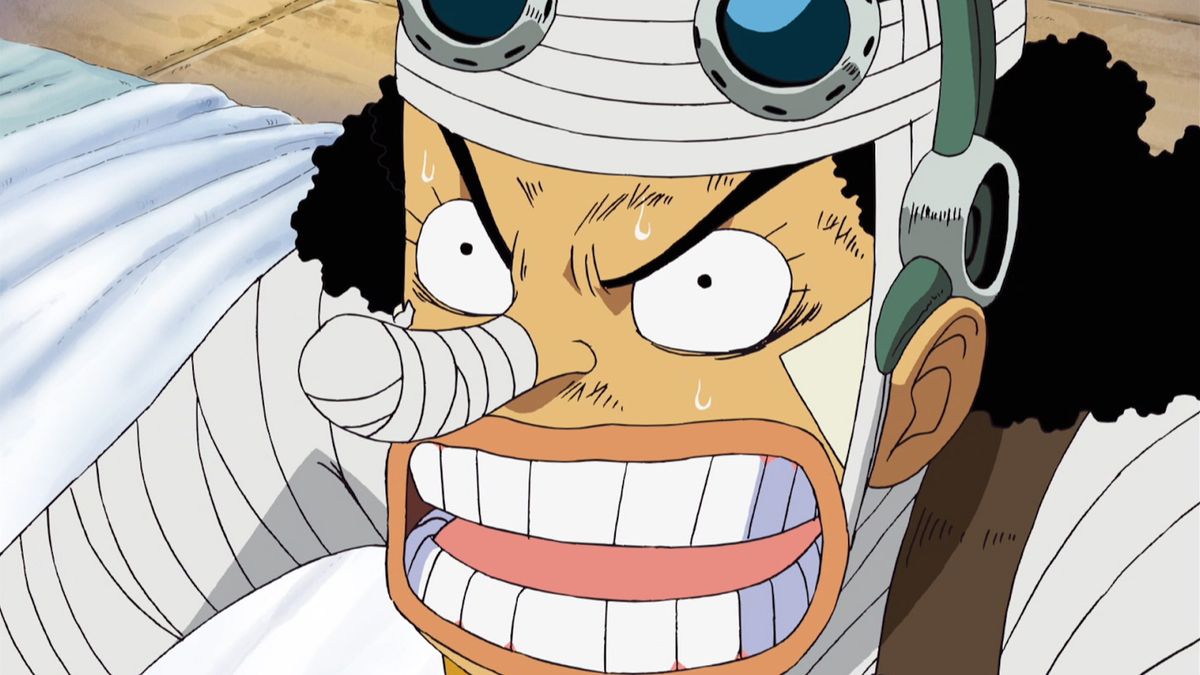
RaeRae Reacts · One Piece Episode 235
Luffy Makes the Necessary Decision and Nearly Destroys Usopp Explaining the Choice
One Piece Episode 235 forces Luffy to retire the Going Merry and forces Usopp to hear that decision while grief and shame turn love into a crew-breaking argument.
Bottom line: Luffy makes the necessary decision and nearly destroys Usopp during the explanation
One Piece Episode 235 forces Luffy to say the Going Merry cannot continue and forces Usopp to hear that decision while bruised, ashamed, and convinced that weak crewmates will be discarded next. Both men love the ship. Their shared love does not produce shared meaning.
Luffy is right that a captain cannot sail everyone into death on a broken keel. Usopp is right that the Merry is a crewmate rather than disposable equipment. The argument becomes catastrophic because they debate different questions and use anger to protect grief from being seen.
Episode facts: Usopp leaves the crew under the moon
Episode 235 aired in Japan on June 12, 2005 under the official title “A Big Fight Under the Moon! The Pirate Flag Flutters With Sorrow.” Hirohiko Kamisaka wrote the screenplay, Katsumi Tokoro directed, Masayuki Takagi served as animation director, and Miyuki Sato with Kumiko Fukuzawa handled the art direction.
The official synopsis confirms that Usopp becomes furious when Luffy says the crew will change ships. Usopp calls the Merry a precious companion who survived every wave with them. Luffy shares that feeling but cannot change the captain’s decision. Usopp opposes him and leaves the crew.
The decision is about safety before the argument makes the decision feel personal
Kaku’s inspection established that the keel cannot be repaired and the Merry cannot survive another voyage safely. Luffy’s decision begins from responsibility toward everybody aboard. A captain cannot ask the sea to honor sentiment.
Usopp hears a hierarchy of value instead. The strong crew chooses efficiency over the damaged companion. Because he already identifies with the Merry, the ship decision becomes a forecast about his own place.
Usopp and the Merry share the same wound in his mind
The Merry has accumulated damage and cannot perform the next journey. Usopp has been beaten, lost the money, and watched stronger crewmates avenge him. He feels unable to perform at the level the next journey may demand.
That parallel is emotional rather than literal. Usopp is a person capable of learning, healing, and choosing. A broken keel is a structural limit. Shame erases the difference because the comparison gives his fear a visible body.
Luffy’s bluntness becomes cruelty when he treats grief like refusal to understand facts
Luffy tries to explain the professional verdict and the need for another ship. Usopp already understands the words. His resistance is not a technical misunderstanding waiting for repetition.
He needs acknowledgment that replacing the vessel hurts, that his repairs mattered, and that the decision says nothing about whether the crew will replace him. Luffy offers the decision before building that emotional bridge.
Usopp attacks Luffy’s authority because authority delivered the unbearable answer
A captain must decide, and that role makes Luffy the face of reality. Usopp cannot fight the broken keel. He can fight the person announcing what the keel means for their future.
Challenging authority gives grief a target and creates the fantasy that winning the argument could change the structure. If Luffy backs down, perhaps the Merry becomes repairable again. The logic fails physically and serves an emotional need.
The near-command for Usopp to leave exposes Luffy’s immaturity
Anger pushes Luffy toward telling Usopp that anyone unhappy with his decision can leave. Sanji stops the sentence with a kick before the damage becomes complete. The interruption is deserved.
A captain can enforce necessary decisions without weaponizing membership during conflict. Threatening expulsion confirms the exact fear driving Usopp: damaged things and inconvenient people get removed. Luffy nearly turns a false belief into his own language.
Sanji protects the relationship by attacking the sentence
Sanji does not kick Luffy because the ship decision is wrong. He stops the captain from saying something that cannot be retrieved. The distinction shows sharp emotional judgment under pressure.
Sometimes loyalty to leadership requires interrupting the leader. Sanji protects Luffy’s authority from Luffy’s anger and protects Usopp from hearing the captain formally validate his worst fear.
Zoro knows command cannot become a popularity contest
Zoro understands that Luffy cannot reverse a safety decision merely because a crewmate objects. If every painful order disappears under emotional pressure, captaincy becomes symbolic and the crew loses a reliable center during crisis.
His firmness does not require celebrating Usopp’s departure. Zoro separates the rule needed for collective survival from the sadness produced by enforcing the rule. Water 7 will later show how seriously he takes both authority and the conditions for return.
Nami tries to keep communication open while both men shut every route
Nami understands the practical verdict and Usopp’s attachment. She tries to reduce escalation because she can see the argument moving beyond the ship. Neither man is ready to accept translation from a third person.
Conflict can become self-sealing. Every attempt to soften the exchange looks like taking the other side. Nami’s position reveals how family members become trapped between love and authority when two people turn grief into a test of loyalty.
Chopper responds as the youngest person watching home split
Chopper wants the crew to remain together and lacks a role capable of overriding captain or dissenter. His distress shows the collateral damage created when leaders fight as though only two people are present.
Family conflict reorganizes safety for everybody nearby. Chopper has already lost homes and mentors. Watching Usopp leave makes belonging feel conditional again, even though the dispute does not target him.
Robin watches a crew enact the abandonment Aokiji predicted
Aokiji warned that Robin’s affiliations collapse. Now she sees Usopp walk away while the Merry crisis fractures the group. The timing can strengthen her belief that removing herself may protect the others.
That conclusion would misread the cause, but trauma does not wait for perfect analysis. Robin knows the World Government is closing in. A visibly divided crew looks less able to survive another burden attached to her.
The pirate flag carries shared identity while the people beneath the symbol separate
A flag claims unity, history, and chosen allegiance. Episode 235 places that symbol above a crew unable to agree on whether one beloved member must be left behind. The flag does not magically resolve the contradiction.
Symbols matter because people keep choosing what the symbols mean. Usopp’s departure tests whether the Straw Hat identity can survive disagreement without pretending no boundary exists.
Usopp’s departure is a choice made under emotional coercion from his own shame
No crewmate physically forces him off the ship. His decision is still shaped by pain, injuries, fear of replacement, and the belief that accepting a new vessel would betray the Merry and expose his own disposability.
Calling the choice voluntary does not make the conditions healthy. Agency can operate inside distorted beliefs. Respecting Usopp means taking his decision seriously and understanding why the decision may not express what he wants once the crisis passes.
Luffy cannot simply overrule departure without destroying Usopp’s dignity
Luffy could use captain’s authority to say Usopp remains aboard. That command would avoid immediate separation and ignore the fact that Usopp has made belonging conditional on a dispute he intends to settle through a duel.
Chosen family requires choice. Keeping someone through force would repeat the ownership logic the crew rejected during the Davy Back Fight. Luffy must allow Usopp to leave even while hating the outcome.
The Merry becomes contested property because love needs a practical arrangement
Usopp claims the ship as part of leaving, and Luffy ultimately accepts the duel’s terms. The Merry belongs to the crew collectively, came from Kaya through Usopp’s connection, and carries emotional claims that ordinary ownership language cannot settle cleanly.
A practical decision still has to be made about who stays with the vessel. Love does not remove property questions. Water 7 makes the legal, material, and emotional meanings collide on the same deck.
Class and competence sharpen Usopp’s fear of replacement
Water 7 surrounds the crew with professional shipwrights whose skill exceeds Usopp’s repair ability. Luffy also talks about finding a new ship and eventually a shipwright. Usopp hears a future position already being filled.
The crew sees expansion: a specialist could handle work no current member was trained to perform. Usopp sees redundancy. His lack of formal expertise becomes another reason he imagines belonging as temporary.
Both men protect themselves by becoming angrier than they are sad
Anger supplies movement, sharp words, and a side to defend. Grief supplies helplessness. Luffy and Usopp choose the emotion that feels more actionable.
The result is honest and disastrous. Neither performs calm maturity for the audience. Their inability to say “I am terrified of losing this home” turns shared sorrow into opposing pride.
The crew needs a grief process and receives a chain of emergencies instead
No funeral, farewell plan, private meeting, or shared ritual exists when Kaku delivers the verdict. Usopp is missing. The money is stolen. Franky House becomes a battlefield. By the time everybody returns, exhaustion and shame have already hardened the available positions.
A ritual would not repair the keel, but shared acknowledgment could establish that the Merry matters to everyone. Without that space, Usopp interprets practical planning as emotional abandonment while Luffy interprets resistance as refusal to protect the crew.
Kaya’s gift remains present even though she is far from Water 7
The Merry entered the crew through Kaya and Merry after the Syrup Village conflict. For Usopp, losing the ship carries the fear of failing people from home who trusted his new journey. He cannot ask Kaya what she would want or return the damaged vessel with an apology.
Distance turns responsibility into imagination. Usopp supplies the harshest possible answer on Kaya’s behalf because shame rarely invents a compassionate witness. The ship becomes proof he was worthy of the gift, so the end of the ship feels like the end of that worth.
What changed when I stopped treating the conflict as a leadership lesson with one answer
Luffy must replace the ship. Usopp must not be allowed to set the safety standard through denial. Those conclusions are clear. The path toward those conclusions still matters.
Leadership can be correct in substance and harmful in delivery. Grief can be valid and produce dangerous demands. Episode 235 remains powerful because moral clarity about the voyage does not simplify emotional responsibility.
The episode’s craft lets moonlight turn the deck into a private courtroom
The night setting removes Water 7’s tourist color and public bustle. The Merry, flag, crew, and water become the visual field. The argument feels isolated even though the consequences will reshape the entire arc.
Moonlight suits a conflict built from partial visibility. Everybody sees pieces of the truth. Nobody can see enough of the other person’s fear to stop the duel.
The episode’s weakness is giving Usopp little space to hear reassurance before escalation
The pacing intentionally traps him in crisis, but the conversation moves quickly from verdict to authority and departure. A direct statement that the crew does not consider him replaceable might not change the outcome. The absence becomes part of the wound.
Luffy assumes membership is obvious because he never considered removing Usopp. Usopp assumes removal is coming because weakness makes the possibility obvious to him. Unspoken certainty loses to spoken anger.
RaeRae verdict: the captain is right, the friend is failing, and both truths matter
Luffy cannot gamble seven lives on a ship qualified experts declared unable to sail. That decision is captaincy. Nearly telling Usopp to leave because he cannot accept the decision is not captaincy. Sanji’s kick marks the difference.
Usopp’s love for the Merry honors everything the ship has done. Demanding that everyone sail her toward destruction does not honor the people aboard. Water 7 hurts because correct action cannot prevent grief, and grief does not excuse every action taken in grief’s name.
Receipts and the route into the duel
The official One Piece Episode 235 page supplies the June 12, 2005 broadcast date, Japanese title, synopsis, and production credits. The synopsis confirms Luffy’s decision to change ships, Usopp’s defense of the Merry as a companion, Luffy’s unchanged captain’s decision, and Usopp leaving the crew.
Episode 236 begins the promised ten o’clock duel. Usopp uses everything he knows about Luffy, and the Merry appears to cry as the battle decides possession and departure. Continue through the planned Water 7 Arrival Episodes 229–236 shelf once unique canonical media production resumes.