RaeRae Reacts · One Piece Episode 231
Three Hundred Million Berries Cannot Buy Protection From Looking Like an Easy Target
One Piece Episode 231 prices the Skypiea gold, introduces Kaku and Dock One, and lets Water 7 criminals recognize Usopp as the weak link carrying the repair fund.
Bottom line: three hundred million berries cannot buy protection from being seen as an easy target
One Piece Episode 231 confirms that the Skypiea gold is worth three hundred million berries, gives the Straw Hats enough money to imagine any repair, and immediately places that fortune inside a city where skilled workers and organized thieves know how to read newcomers. Hope receives a number. Risk receives a map.
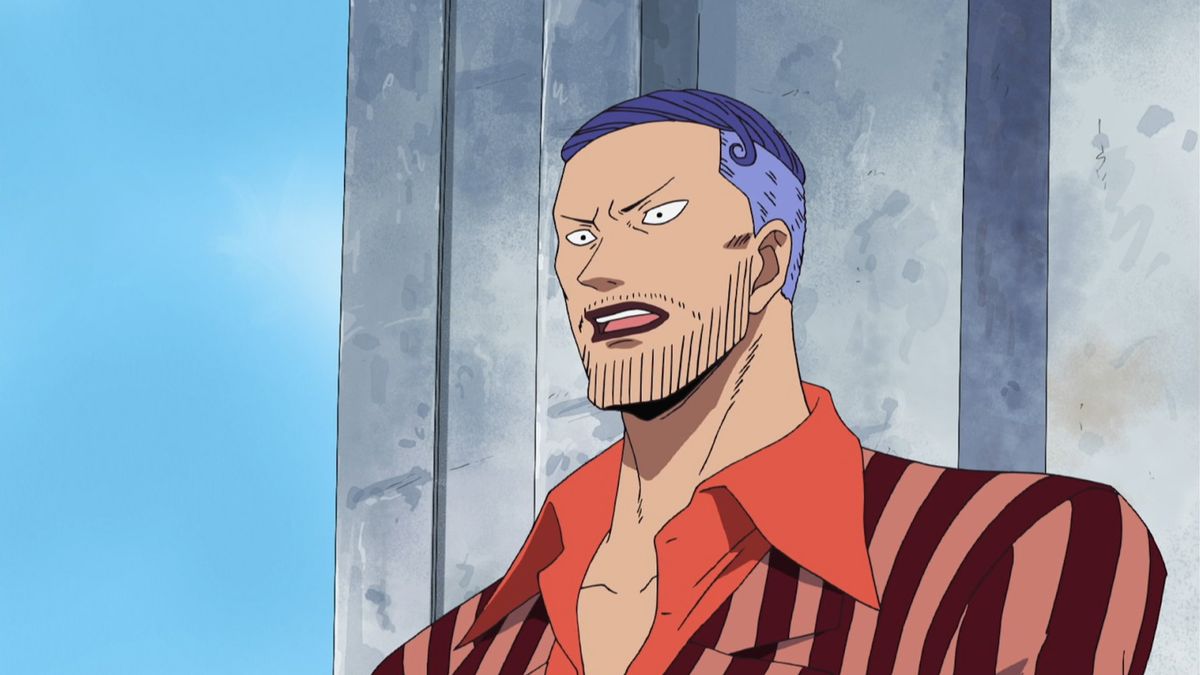
Kaku stops Luffy’s group at Dock One because Galley-La does not operate as a playground for excited pirates. The boundary is professional, not personal. Meanwhile, the Franky Family watches for money and weakness. Water 7’s labor culture and criminal economy exist beside each other, each capable of identifying what the crew carries.
Episode facts: Kaku, Iceburg, and the Franky Family enter the route
Episode 231 aired in Japan on May 1, 2005 under the official title “The Franky Family and Iceburg!” Hirohiko Kamisaka wrote the screenplay, Yoshio Mukunakano directed, Yuji Kondo served as animation director, and Miyuki Sato with Fumihiro Uchikawa handled the art direction.
The official synopsis confirms that the crew exchanges the gold for three hundred million berries and celebrates the possibility of repairing the Merry. At the shipyard, a long-nosed man blocks their entrance: Kaku, foreman of the carpenters responsible for joinery and pegs at Galley-La Company’s Dock One. The synopsis uses the meeting to move from tourist wonder into the city’s working hierarchy.
The appraisal converts a sky-island miracle into earthly purchasing power
Gold taken from Skypiea carries adventure, history, and Nami’s determination to leave with something valuable. Water 7’s appraiser converts that story into a market price. Three hundred million berries is not the treasure’s spiritual meaning. The number is what the crew can spend.
That conversion is necessary and dangerous. Money can purchase labor and materials only after private treasure becomes recognizable currency. The same process makes the crew’s wealth legible to merchants, workers, observers, and thieves.
Nami wins the transaction because she refuses the first convenient number
Nami knows that sellers and buyers rarely enter a negotiation with equal information. She does not treat the first offer as neutral truth. Her suspicion protects the crew from losing value before any criminal enters the scene.
The moment is often played through her love of money, but the skill underneath deserves respect. Nami understands leverage, visible eagerness, appraisal, and the cost of accepting a number without testing the person who supplies the number. Financial competence keeps adventure from becoming charity for every dishonest shopkeeper.
Three hundred million berries becomes the Merry in Usopp’s mind
Once the total is known, Usopp no longer carries abstract treasure. He carries imagined repairs: timber replacing broken structure, professional hands correcting his patches, and another voyage for the ship Kaya gave them. Every bundle feels attached to the Merry’s continued life.
That emotional attachment turns ordinary security responsibility into a moral test he cannot grade fairly. If somebody steals the money, Usopp will not say a criminal exploited a vulnerable situation. He will say he failed the ship. Shame arrives before the robbery because he already believes protection must prove his worth.
Luffy hears the price and imagines possibility without understanding the burden
Luffy responds to the fortune with enthusiasm. Money means the crew can ask the best shipwrights for whatever the Merry needs. His optimism is reasonable because he trusts action and resources to create a route forward.
He does not carry the same history with the ship as Usopp. Luffy loves the Merry, but Usopp links the vessel to Kaya, Syrup Village, his repair labor, and his place on the crew. The same three hundred million berries therefore produces shared hope and unequal pressure.
Galley-La’s gate marks expertise as organized labor
Dock One is not a collection of talented individuals waiting for clients to wander through active work areas. Galley-La has roles, foremen, access boundaries, specialized trades, and a public reputation. Kaku’s refusal to let strangers enter protects workers and projects.
The boundary also tells the Straw Hats that money does not erase process. A wealthy pirate crew still needs permission, assessment, scheduling, and professional judgment. Luffy cannot treat a functioning yard like an island ruin open for exploration.
Kaku’s long nose invites an Usopp joke before his competence takes over
The visual resemblance between Kaku and Usopp creates immediate comedy. One Piece uses a simple feature to make a new character memorable, then lets Kaku’s movement and confidence establish a separate identity. He is not another Usopp placed in work clothes.
Kaku belongs to Water 7 through craft. His body moves across roofs and ship structures with the assurance of somebody who understands how the city and its vessels fit together. The joke opens the door. Competence controls what happens after the laugh.
Shipwright specialization makes the Merry’s problems harder to simplify
Kaku’s trade title emphasizes carpentry, joinery, and pegs. Other Dock One foremen hold different specialties. A ship is a system built from interdependent skills, not one object repaired by any strong person with a hammer.
Usopp’s emergency work deserves credit for keeping the Merry afloat. Galley-La’s structure reveals why emergency repair has limits. Professional judgment comes from accumulated knowledge distributed across people who understand different failure points.
Iceburg’s public status connects shipbuilding to political power
Iceburg is not merely a gifted craftsman. He leads Galley-La and serves as Water 7’s mayor. That combination ties the city’s most important industry to civic authority. Ships generate wealth, movement, defense, and reputation, so the person organizing shipbuilding naturally holds political influence.
The arrangement also concentrates power. Workers, clients, officials, and government interests all intersect around one organization. Iceburg’s popularity may be earned, but popularity does not remove the structural stakes attached to his office.
Dock One’s foremen carry public respect because craft is visible power
Water 7 residents know the names and specialties of leading shipwrights. That recognition differs from celebrity built only through image. A foreman’s reputation comes from vessels people can see, jobs completed under pressure, apprentices directed, and dangerous work performed in public.
The respect also creates expectations. A famous craftsperson represents the company during disputes and becomes responsible for maintaining standards beyond one private job. Kaku cannot wave Luffy through the gate simply because the visitor looks enthusiastic. His role requires him to protect the yard’s process.
Specialized labor makes the crew’s do-everything survival model look fragile
At sea, every Straw Hat stretches beyond a formal job. Usopp repairs, invents, fights, scouts, and entertains. Nami navigates, negotiates, and plans. Sanji cooks and protects. That flexibility keeps a small crew alive, but Water 7 shows what concentrated professional training can accomplish.
The contrast does not make Usopp useless. Emergency competence and specialist competence answer different needs. Trouble begins when shame tells him that needing a professional means his earlier labor never mattered. The Merry reached Water 7 partly because his imperfect repairs held long enough.
The Franky Family reads public wealth as an invitation
Criminal groups survive by noticing who carries value, who lacks local allies, and who can be isolated. The Straw Hats display wealth while moving through unfamiliar districts. Their strength matters less if a thief can separate one crewmate from the others.
The Franky Family’s interest is not random bad luck. Water 7’s economy creates opportunities for predation beside legitimate trade. Where expensive ships, repair funds, and travelers gather, organized theft can build its own labor system.
Usopp looks vulnerable because he protects the money too visibly
Usopp’s vigilance communicates value. His body tells observers that the cases matter and that losing them would hurt. Fear becomes information for anybody watching.
That does not make him responsible for being targeted. The thief remains responsible for theft and violence. Understanding how predators read vulnerability should never become an excuse to blame the person carrying the burden.
The episode places honest work and organized theft in the same urban frame
Galley-La builds and repairs the vessels that sustain Water 7. The Franky Family extracts money through intimidation and force. Both groups organize people, divide roles, and build reputations. Purpose separates their labor.
The comparison prevents “organization” from becoming proof of legitimacy. A coordinated group can serve a community or prey on one. Water 7’s social order depends on who receives protection, who receives punishment, and whose work the city recognizes as valuable.
Robin remains outside the repair conversation emotionally
The crew focuses on gold and shipwrights while Robin carries Aokiji’s warning. Her danger has not disappeared, but Water 7 gives everybody an urgent practical task that can postpone difficult conversation.
That postponement creates room for isolation. Robin can interpret the crew’s excitement as something worth protecting from her problems. The more hopeful they become about the ship, the easier she may find the idea that leaving could spare them another threat.
The Merry’s repair fund becomes a symbol of whether care can control loss
Three hundred million berries feels like evidence that the crew took responsibility. They found the best city, brought serious money, and sought professionals. If the Merry still cannot be saved, no one can blame a lack of effort.
Grief often resists that logic. People search for the missed action that would have changed the outcome because helplessness feels unbearable. Usopp will turn the money, the damage, and his own labor into evidence against himself when the professional verdict arrives.
Kaku’s boundary is the first kindness the crew may later resent
Stopping strangers from entering an active yard protects them from injury and protects workers from interference. Professional limits can feel unfriendly to somebody arriving with urgency. The limit remains appropriate.
Kaku will also become associated with the Merry’s condition, which means the messenger can absorb anger meant for reality. People often resent the person qualified to name a loss. Water 7 understands that expertise can deliver care through an answer nobody wants.
What changed when I watched the money scene knowing Usopp would lose the cases
The celebration becomes painful on a repeat watch because the number magnifies the coming shame. Usopp’s happiness is not greed. He believes the money proves the crew can keep the Merry. Losing part of the fund will feel like he personally removed that chance.
The robbery does not cause the Merry’s structural failure, but grief will combine separate events. Usopp will connect stolen money, professional rejection, physical defeat, and his own insecurity into one accusation: everybody would be safer and stronger without him.
The episode’s weakness is making criminal surveillance almost invisible until needed
The Franky Family’s later attack works dramatically, but more evidence of their network would strengthen the city. A lookout noticing the exchange, a local warning about carrying cash, or a merchant reacting to the family’s name could show how organized predation operates.
Without that groundwork, the criminals can feel like plot machinery appearing near the money. Water 7 has enough economic detail to support a fuller criminal ecosystem. The story gestures toward one and moves quickly.
RaeRae verdict: money gives the crew hope and gives predators a target
Episode 231 turns Skypiea treasure into a repair fund large enough to make optimism feel responsible. Nami earns the value. Usopp protects the cases. Luffy heads toward the best yard. The crew appears to be doing everything correctly.
That correctness makes the coming losses hurt. Good planning cannot remove every threat. Money cannot force damaged structure to become repairable. Strength cannot protect a separated crewmate from every organized attack. Water 7 begins dismantling the belief that effort always purchases the desired answer.
Receipts and the route into Dock One
The official One Piece Episode 231 page supplies the May 1, 2005 broadcast date, Japanese title, synopsis, and production credits. The synopsis confirms the three hundred million berry appraisal, the crew’s repair hopes, Kaku blocking entry, and his Dock One foreman role at Galley-La Company.
Episode 232 introduces Dock One’s other foremen, lets Paulie stop the Franky Family from escaping with money, and reveals Lucci’s talking pigeon performance. Continue through the planned Water 7 Arrival Episodes 229–236 shelf once unique canonical images can be produced and verified.