RaeRae Reacts · One Piece Episode 230
Water 7 Sells Wonder While the Crew Carries Three Hundred Million Reasons to Panic
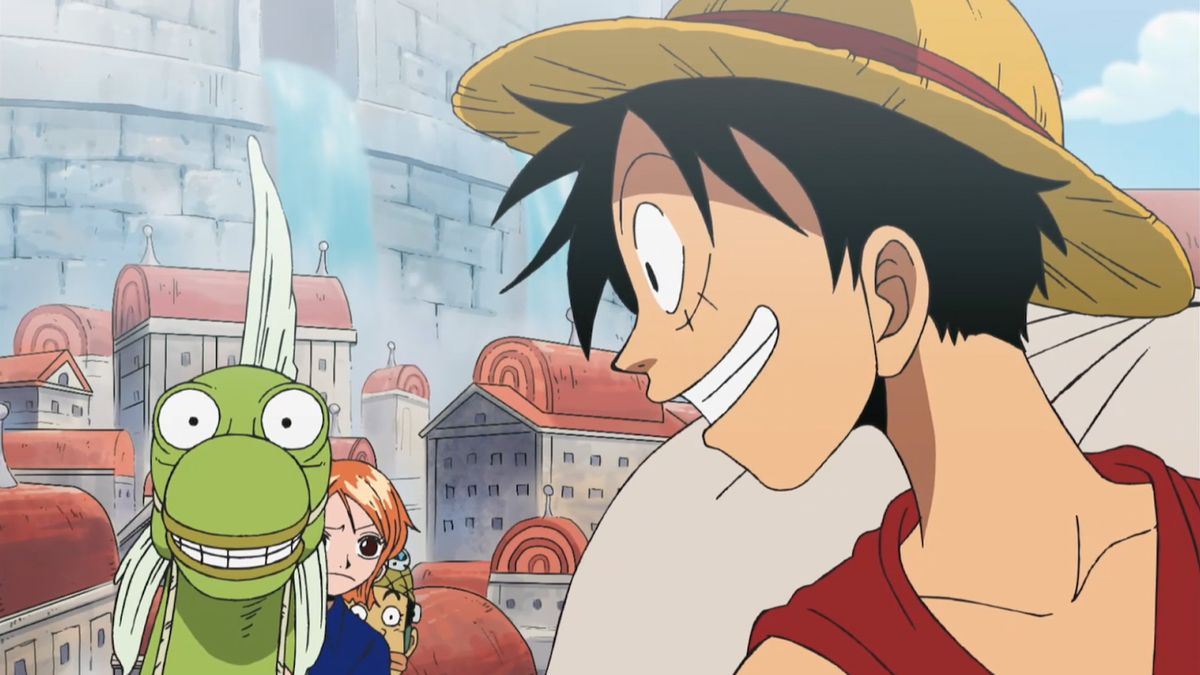
One Piece Episode 230 turns Water 7 into a canal-city playground while the Straw Hats move Skypiea gold through a crowd built to notice vulnerable newcomers.
Bottom line: Water 7 sells wonder while the crew carries three hundred million reasons to panic
One Piece Episode 230 sends the Straw Hats into Water 7 on Yagara Bulls, feeds Luffy water-water meat, lifts the crew through a water elevator, and makes the city feel like the best possible place to repair the Going Merry. The episode also places their Skypiea gold in public motion through a crowded economy. Every delightful discovery increases the number of ways the day can go wrong.
The city entrance works because joy and vulnerability arrive together. Luffy wants to eat and explore. Nami wants the treasure valued correctly. Usopp wants the money to save the Merry. Robin watches the crowd after Aokiji’s warning. The same canals that make Water 7 beautiful can separate the crew within minutes.
Episode facts: the crew enters the giant shipbuilding city
Episode 230 aired in Japan on April 24, 2005 under the official title “Adventure in the City on the Water! Head to the Giant Shipbuilding Plant.” Hirohiko Kamisaka wrote the screenplay, Konosuke Uda directed, Takeo Ide served as animation director, and Miyuki Sato with Michiyo Kawasaki handled the art direction.
The official synopsis follows the Straw Hats after landing in Water 7. They ride Yagara fish toward the central city to exchange their gold, eat the soft local water-water meat, and travel through a water elevator. The official page emphasizes fun and scale because the episode’s immediate job is orientation.
Yagara Bulls make local movement depend on knowledge visitors do not possess
The Straw Hats own a ship and have crossed impossible seas, but Water 7’s interior routes require local transport. Yagara Bulls understand the canals, traffic, and physical design that newcomers cannot read immediately. The crew’s global experience does not cancel local dependence.
That humility matters. Adventure stories often treat arrival as conquest by observation. Water 7 asks the visitors to hire help, follow routes, and learn civic systems already functioning without them. The city does not wait for Luffy to make the canals interesting.
The Blue Station world expands into a working urban network
Shift Station introduced the sea train as regional infrastructure. Water 7 reveals the urban systems connected to that route. Goods, workers, visitors, money, and information can move through waterways and rail lines rather than depending only on independent ships.
The network changes who can accumulate power. Shipbuilders benefit from clients who can reach the city. Merchants benefit from repeatable routes. Government agents benefit from predictable movement and records. Infrastructure serves ordinary life and creates new forms of visibility.
The water elevator turns geography into managed access
Water 7 rises across levels that would make ordinary street travel exhausting. The water elevator converts elevation into a controlled route. People enter a system, wait for water to move them, and emerge in another district.
The design communicates civic competence while revealing dependence. When movement relies on managed channels, whoever controls gates, schedules, and access controls more than convenience. The episode presents the elevator as delight. The arc will later show how quickly a working city can become a trap.
Beautiful water also announces the city’s permanent environmental risk
Water 7 builds identity around the element that threatens the city. Canals provide transport, trade, cooling, work, and spectacle. Rising water also erodes foundations and forces residents to adapt the urban landscape over time. The city cannot separate prosperity from danger because both arrive through the same channels.
That relationship gives the setting more weight than a fantasy Venice comparison. Residents do not merely decorate around water. They engineer routes, elevate districts, maintain walls, and organize evacuation knowledge because survival requires collective memory. The Straw Hats see the attractive surface first, which is exactly how a visitor would encounter a place whose residents have normalized recurring risk.
Tourism can enjoy systems residents must trust with their lives
Luffy experiences the water elevator as entertainment. A worker carrying goods or a family traveling home experiences the same mechanism as necessary infrastructure. The difference does not make his delight disrespectful, but the difference reminds us that novelty depends on position.
Visitors can leave after the ride. Residents must live with maintenance failures, blocked routes, storms, and political decisions about which district receives protection. Water 7’s design becomes richer once the shiny invention is understood as a public obligation rather than a theme-park feature.
Luffy eats the city before he understands the city
Luffy’s first reliable method of cultural exchange remains appetite. Water-water meat becomes proof that the new place contains pleasures unavailable at sea. Food lets him belong temporarily without needing a map or political briefing.
That instinct is comic and emotionally useful. After Aokiji, eating says the body survived and still wants the world. The meal does not resolve the danger. The meal gives the crew a reason to keep moving through a world dangerous enough to freeze them.
Sanji reads local food as evidence of trade and adaptation
Sanji pays attention to ingredients, preparation, and texture because food records the environment. A city built around water develops dishes suited to local supply, movement, and taste. Culinary curiosity becomes another form of research.
His interest also connects shipboard life to the city. New ingredients may return to the Merry and become part of future meals. The crew does not only collect treasure and enemies. They carry flavors, techniques, and memories between places.
Nami knows gold becomes dangerous once strangers can price the gold
Skypiea treasure felt secure while the crew controlled the ship and understood who stood nearby. Exchanging gold requires disclosure. A merchant must inspect, weigh, value, and pay. The process converts private wealth into public information.
Nami’s caution comes from experience. She knows thieves, dishonest dealers, shifting prices, and the consequences of looking rich in an unfamiliar city. Her suspicion is not greed reduced to a joke. She is protecting the only realistic repair fund the crew possesses.
Usopp carries money that feels like the Merry’s life
For Usopp, the treasure is not merely wealth. Every berry appears convertible into timber, labor, and another chance for the ship Kaya gave them. Protecting the money feels identical to protecting the Merry.
That emotional conversion creates unbearable pressure. If the money disappears, Usopp will not experience the loss as a bad transaction. He will experience the loss as personal failure toward a crewmate he already fears cannot survive. The episode’s cheerful errands place that future wound quietly in his hands.
The crew divides because efficiency and curiosity pull in different directions
A large city offers too many goals for one group: exchange treasure, locate shipwrights, buy supplies, explore, eat, and guard the Merry. Splitting up makes practical sense. Splitting up also weakens the collective protection that carried them through earlier threats.
Water 7 exploits specialization. Nami handles finance. Luffy seeks the shipyard. Sanji shops. Robin observes. Usopp guards what he can. The crew’s strengths create separate routes, and separate routes make misunderstanding easier.
Robin’s calm walk carries the residue of Aokiji’s accusation
Robin moves through Water 7 with her usual composure, but viewers now know that a Marine admiral has located her and warned the crew. Crowds provide cover and risk. Any face could belong to a watcher, agent, or person who recognizes the bounty.
Her quiet cannot be treated as proof that fear passed. Robin has survived by appearing useful, controlled, and ready to leave before others can discard her. A busy city gives that survival pattern room to reactivate without immediate notice.
Water 7’s beauty depends on labor the tourist view barely sees
Canals remain clear enough for transport. Elevators function. Yagara routes connect districts. Shops receive goods. Shipyards employ specialized craftspeople. The city’s wonder rests on maintenance and organized work.
The episode presents the finished surface because the Straw Hats arrive as visitors. The coming shipyard material will reveal workers, hierarchy, skill, and conflict behind the beauty. A city is never only architecture. Somebody keeps the water moving.
Shipwrights hold celebrity status because ships determine survival
In a world dominated by oceans, a person who can build and repair ships controls access to travel, trade, escape, and war. Water 7 respects shipwrights because their craft keeps the city economically central and keeps clients alive after departure.
The Straw Hats approach that authority with hope. Usopp has performed emergency repairs, but Water 7 offers specialists who can judge the Merry beyond sentiment. Expertise will soon become painful because a trustworthy verdict can destroy the answer a client came to purchase.
The crew assumes money can solve a structural problem
Three hundred million berries seems large enough to force possibility into existence. The treasure allows them to imagine premium materials, elite labor, and any repair the ship needs. Wealth gives hope a number.
Structural failure does not always respond to budget. Some damage changes what remains possible. The episode lets the crew enjoy financial confidence before professional knowledge removes the fantasy. That sequence makes the later verdict feel like loss rather than information.
The city’s class structure appears through who serves whom
Visitors hire Yagara. Merchants evaluate treasure. Laborers build ships. Foremen command docks. Political leaders benefit from the city’s reputation. Water 7 distributes status through craft, property, employment, and access to transport.
The Straw Hats enter with wealth but without local standing. Money can buy services and attract predation. Their pirate identity can close doors or create leverage. The city forces them to negotiate power through more than fighting ability.
Luffy sees a playground where Nami sees a security problem
Luffy’s excitement makes the arrival infectious. He responds to moving water, strange food, animals, and scale with immediate delight. Nami reads the same environment through routes, prices, crowds, and risk.
Neither perspective should eliminate the other. Luffy preserves the reason for traveling. Nami protects the material conditions that allow travel to continue. The crew needs wonder and administration, even when each side finds the other exhausting.
What changed when I watched the city after knowing the Franky Family was close
The early Water 7 tour feels generous on a first watch. Later knowledge turns every separation and public display of wealth into warning. The city has not betrayed them. The crew has entered a place with its own criminal economy while carrying an obvious fortune.
Usopp’s vulnerability becomes especially hard to watch. His desire to protect the Merry’s money makes him predictable. Predators do not need to understand his entire history. They only need to see who carries the case and how urgently he reacts.
The episode’s weakness is treating the city’s workers as scenery for too long
The urban tour provides scale, but many people remain background bodies moving through beautiful systems. We see services more clearly than the labor conditions behind those services. The later dock episodes improve that balance.
A brief exchange with a Yagara handler, elevator worker, or canal merchant could have made the city’s competence feel more human. Water 7 becomes memorable through named workers soon enough. Episode 230 stays mostly on the visitor side of the transaction.
RaeRae verdict: wonder is doing narrative work, not delaying the pain
Episode 230 spends time on food, transport, and architecture because Water 7 must become desirable before the arc breaks anything. The crew needs to believe this city can save the Merry. Viewers need to understand why skilled workers and functioning systems command trust.
The joy is not filler between Aokiji and the next fight. Joy establishes value. The canals, Yagara, shops, and elevators make Water 7 feel alive enough that later conflict becomes a crisis inside a community rather than a battle staged on decorative streets.
Receipts and the route toward Galley-La
The official One Piece Episode 230 page supplies the April 24, 2005 broadcast date, Japanese title, synopsis, and production credits. The synopsis confirms the Yagara ride, gold-exchange goal, water-water meat, water elevator, and the crew’s excitement inside the giant city.
Episode 231 reveals that the gold is worth three hundred million berries, introduces Kaku at the Galley-La yard, and places the Franky Family near the repair fund. Continue through the planned Water 7 Arrival Episodes 229–236 shelf once unique media production resumes. Every React will receive a visible static card rather than disappearing inside a long text list.