RaeRae Reacts · One Piece Episode 428
Boss Rejects Largo’s Flaming Nets and a Sacrifice Disguised as Consent
One Piece Episode 428 movie tie-in special React follows Largo’s Net-Net Fruit, Yoko’s defense, Boss’s coerced surrender, early molt, and fire-powered rescue.
One Piece Episode 428 movie tie-in special React: Largo turns swallowed materials into nets, traps Luffy, Zoro, and Sanji, burns Boss out of the sky, and nearly wins through the beetle’s willingness to surrender before Luffy forces the island to remember that sacrifice is not consent.
What happened in Episode 428
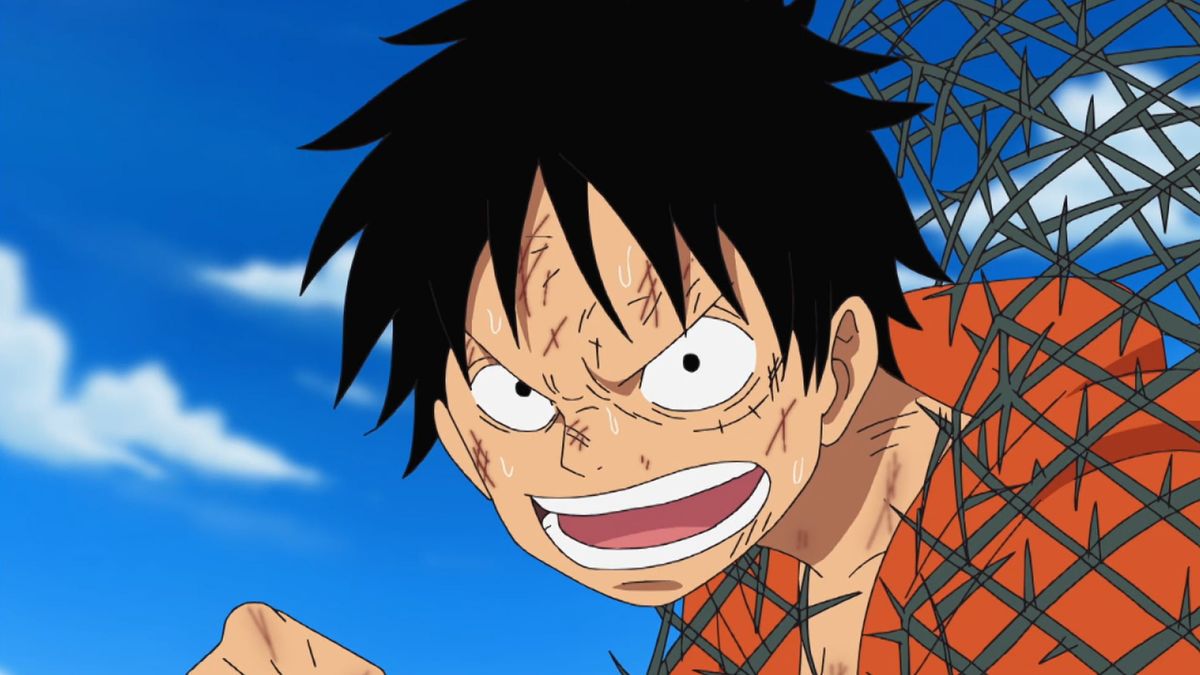
Largo reveals the Net-Net Fruit, which lets him create nets from his body and reproduce materials he consumes. Zoro and Sanji attack, but Largo traps both. Luffy remains bound as the three main fighters lose movement. Yoko charges Corto with a bamboo sword. Boss intervenes and attacks the Amigo Pirates. Largo eats a torch and produces a flaming net that stops the beetle in flight. Gunfire brings Boss down beside Yoko.
Boss rises and moves toward the Amigo Pirates, willing to be captured if surrender protects Little East Blue. Largo prepares an iron net. Luffy punches Boss away from the trap and rejects the sacrifice because their promised fight remains unfinished. Residents realize that accepting Boss’s surrender would betray him and begin resisting. Boss molts early, emerging larger and differently colored, then breathes fire to free Luffy, Zoro, and Sanji. The premature transformation leaves him collapsing as the final battle begins.
RaeRae’s opening receipt
Boss tries to save everybody by removing himself from the community. That choice looks noble because sacrifice photographs beautifully. Luffy refuses the photograph. A friend volunteering for captivity under armed pressure is not a clean solution, and a village accepting the trade does not become innocent because the prisoner walked forward.
Episode 428 understands the difference between choosing risk and being cornered into surrender. Boss has agency, but Shiki’s threat creates the terms. Luffy protects that agency by refusing to let coercion wear the costume of heroism.
Largo explains the Net-Net Fruit through action
His body produces capture tools shaped by materials he consumes.
The power turns appetite into flexible restraint.
A simple net becomes a combat system
Sticky material stops movement, iron raises strength, and flame attacks living targets.
Largo adapts one concept across changing opponents.
Zoro attacks the obvious captor
Cutting power should answer woven restraint.
Largo’s timing closes the net before the swordsman controls range.
Sanji joins from another angle
Speed and kicks normally punish a stationary opponent.
The expanding mesh turns approach into capture.
Both fighters lose movement
Strength remains present but unavailable inside the wrong geometry.
The episode makes restraint more important than injury.
Luffy remains trapped too
The Amigo Pirates neutralize the crew’s most direct force at once.
Little East Blue can no longer wait for famous heroes to solve everything.
The Net-Net Fruit suits extraction perfectly
Largo can seize targets without immediately killing them.
Shiki wants Boss delivered, so containment matters more than destruction.
Capture technology reveals the mission
Every attack is designed to turn a living creature into transportable inventory.
Violence serves logistics.
Yoko reaches for a bamboo sword
She cannot match the invaders’ weapons or Devil Fruit power.
Action still lets her reject helpless observation.
Her target is Corto
The younger brother represents the threat directly in front of her.
Courage becomes specific rather than symbolic.
Yoko’s Marine inheritance changes form
She carries the impulse to defend civilians without waiting for official uniforms.
Duty survives even when the institution remains absent.
Boss answers her danger
The beetle attacks when Yoko places herself against the Amigo crew.
Their bond operates through mutual protection, not ownership.
Largo eats a torch
The absurd motion produces a flaming net with immediate tactical value.
One Piece lets body comedy become credible threat in the same beat.
Fire targets Boss’s flight
Wings and combustible vulnerability make the net especially cruel.
Largo chooses material according to the captive.
The flaming mesh stops him midair
Boss loses altitude and freedom at once.
A creature defined by enormous movement becomes suspended cargo.
Gunfire follows restraint
The Amigo crew shoots once the target cannot evade.
Collective force concentrates on a trapped body.
Yoko reaches Boss after the fall
Concern replaces every abstract question about whether the beetle is dangerous.
She sees a friend hurt for defending her.
Boss rises because the village remains threatened
Injury does not end his sense of responsibility.
Protection pushes him toward the worst available bargain.
He offers himself to the captors
Surrender promises to redirect violence away from residents.
The choice is loving and coerced at the same time.
Coerced sacrifice can still feel voluntary
Boss moves without physical chains because the village has become leverage.
Threat controls the decision from a distance.
The villagers hesitate
Accepting the exchange might end immediate destruction.
Fear makes betrayal look like practical survival.
Largo prepares an iron net
He changes material to contain Boss’s size and strength.
The captor treats surrender as an engineering requirement.
Luffy punches Boss away
The strike looks hostile until purpose becomes clear.
He uses force to interrupt a coerced walk into captivity.
Our fight is not finished carries friendship badly and honestly
Luffy frames refusal through the language he shares with Boss.
A promised rematch gives the beetle a future beyond sacrifice.
Luffy refuses martyrdom as closure
Boss cannot protect friends by disappearing into Shiki’s weapon program.
Survival remains part of the promise.
The villagers recognize their moral shortcut
They were allowing one neighbor to absorb every consequence.
Awareness turns fear into collective shame and then resistance.
Community means sharing danger
Boss protected the island first.
Residents now choose to protect Boss rather than consume his loyalty.
The islanders begin fighting back
Famous pirates no longer carry the whole defense.
Local action restores ownership of the struggle.
Yoko’s courage becomes contagious
Her bamboo sword could not defeat the crew alone.
The refusal helped make passivity harder for everyone else.
Boss begins an early molt
Transformation usually belongs to biological timing.
Crisis forces his body to attempt change before safety.
The new shell changes color and scale
Boss emerges larger and visually connected to the engineered creatures surrounding Shiki’s plan.
Growth arrives as both power and warning.
Fire becomes liberation
The beetle uses new breath to burn the nets holding Luffy, Zoro, and Sanji.
Largo’s capture material meets an ability produced by the intended captive.
The rescue reverses the hero order
Boss frees the Straw Hats rather than waiting for the Straw Hats to save him.
Mutual aid replaces celebrity hierarchy.
Zoro and Sanji return to the fight
Freedom restores two forms of direct force against the Amigo Pirates.
The battlefield changes because one injured creature completed the molt.
The transformation costs too much
Boss cannot stabilize after forcing biological change.
Power obtained under emergency leaves the body carrying the bill.
Collapse does not make the effort a failure
Three fighters stand free and the villagers resist.
Boss changes collective possibility before losing strength.
Largo catches the falling beetle
His nets can look protective while serving capture.
Saving a valuable target from impact does not erase the intended exploitation.
Pity from a captor remains suspect
Largo speaks as though Boss’s failed molt deserves sympathy.
He still plans delivery to the system that created the crisis.
Luffy rejects the declaration of an ending
Boss’s last breath cannot become Largo’s property or the scene’s conclusion.
The captain insists that the battle still contains choices.
Zoro and Sanji stand beside him
The three fighters return without pretending Boss needs passive guardians.
They fight because Boss already fought for them.
The episode turns sacrifice into a group responsibility test
Everybody loves the volunteer while someone else pays.
Real loyalty asks whether the group will refuse that bargain.
Boss’s agency remains complicated rather than erased
He genuinely chooses to protect residents.
Calling the choice coerced does not insult courage; calling the coercion noble would insult truth.
The Amigo Pirates use material flexibility without moral flexibility
Largo can produce sticky, burning, and iron nets.
Every variation serves the same refusal to hear no.
Little East Blue finally acts like a community
Buildings and fan clubs made culture visible.
Shared risk proves whether that culture includes responsibility.
Yoko sees the Straw Hats trapped
The supposed heroes cannot rescue themselves for much of the episode.
Trust grows through shared vulnerability as well as victory.
The special connects directly to Strong World’s animal program
Boss’s unusual transformation points toward Shiki’s experiments and military ambition.
The television conflict previews the film’s larger exploitation.
This remains a numbered television special React
This page responds to Largo’s Net-Net Fruit, Zoro and Sanji’s capture, Yoko’s bamboo sword, the flaming net, Boss’s surrender, Luffy’s refusal, the early molt, and the fighters’ release. Film-level judgment remains separate.
Clear labeling protects the episode-versus-Review boundary and the continuity record.
The official local still remains canonical
The Episode 428 official story image serves as featured image, hero, static directory card, and social preview through one local attachment.
Complete metadata preserves source, accessibility, filing, and unique use.
RaeRae’s final receipt
Boss walks toward an iron net because the island has become a weapon pointed at his conscience. Calling that surrender voluntary would be convenient for Largo and cruel to everybody else. Luffy punches him away because a future rematch is a better promise than a beautiful sacrifice.
The residents finally understand that accepting Boss’s captivity would turn his love into a resource they consumed. They join the fight. Boss forces an early molt, burns the nets, and frees the heroes who came to protect him. That reversal gives the friendship weight.
Episode 428 makes one principle loud beneath all the net jokes: nobody gets to call coercion consent simply because the threatened person volunteers to pay. Community begins when everybody else refuses the payment.
The Net-Net Fruit literalizes control
Largo’s power does not destroy opponents first. His power defines where bodies may move.
That makes the ability a clean extension of Shiki’s extraction project.
Material changes disguise an unchanged purpose
Sticky nets restrain fighters, flame punishes flight, and iron contains strength.
Innovation serves domination when purpose never changes.
Boss protects people who nearly surrender him
His loyalty does not wait for the villagers to behave perfectly.
Their later resistance matters because they correct fear rather than receiving automatic forgiveness.
Luffy understands friendship as interruption
Sometimes supporting a friend means stopping the choice that fear has made feel mandatory.
Respect does not require passive agreement with self-destruction.
The promised rematch restores time
Sacrifice collapses the future into one final action.
Luffy’s challenge insists that Boss still has appointments beyond the current battle.
Yoko receives evidence against pirate stereotypes
Luffy does not demand Boss as a recruit after the beetle refuses.
He protects the same refusal against another pirate crew.
Consent separates the two captains
Both notice Boss’s power. Largo sees a resource to deliver. Luffy sees a rival whose no remains valid.
Pirate identity alone cannot explain conduct.
The early molt resembles emergency labor
Boss forces his body past safe timing because everyone else needs release.
Heroism arrives through physical debt that friends must not romanticize.
Burning the nets converts imposed material
Largo used fire to capture Boss. Boss uses fire to free the trapped crew.
The same element changes moral meaning through purpose.
The villagers leave spectatorship
Fan culture becomes responsibility once residents fight beside the people they celebrated.
Admiration finally costs something.
Sanji and Zoro owe the beetle a reversal
Neither fighter can pretend they arrived only as rescuers.
Boss gave them movement when their own attacks failed.
Largo’s sympathy protects his self-image
Feeling sorry for the collapsing target lets him imagine decency without changing the capture plan.
Emotion becomes camouflage when action stays exploitative.
Little East Blue chooses what kind of memory to preserve
A community honoring heroic stories cannot quietly trade away the neighbor acting heroically in front of them.
The decision aligns tribute with conduct.
The cliffhanger belongs to Boss
The final battle matters because his body created the opening and now hangs in danger.
Luffy’s coming victory must answer that sacrifice rather than replace the beetle’s role.
RaeRae’s extra receipt
Episode 428 gives everybody a chance to fail Boss. Largo calls capture recruitment. The villagers consider survival purchased with one neighbor. Even Boss mistakes disappearance for the only protection he can offer. Luffy’s refusal breaks the agreement before fear can make the agreement permanent.
Then Boss does what the supposedly helpless target was never expected to do. He changes, burns the nets, and releases the fighters. The final confrontation belongs to a whole community because the captive made resistance possible.
Boss’s collapse transfers responsibility back to everyone else
The beetle has attacked the invaders, shielded Yoko, offered himself for the village, forced an unsafe molt, and burned three fighters free. Nobody can honestly demand another payment.
Luffy, Zoro, Sanji, Yoko, and the residents now have to convert gratitude into action. Protecting Boss means carrying the struggle after his body says enough.