RaeRae Reacts · One Piece Episode 427
The Amigo Pirates Target Boss and Turn Little East Blue’s Memories into a Battlefield
One Piece Episode 427 movie tie-in special React follows the recreated hometowns, Yoko’s distrust, Boss’s refusal, Corto, Largo, and the broken Baratie sign.
One Piece Episode 427 movie tie-in special React: Little East Blue welcomes the Straw Hats through recreated hometowns, Yoko keeps refusing the pirate fan club, and the Amigo Pirates attack the island for Boss, forcing nostalgia to prove whether the replica is a community or scenery.
What happened in Episode 427
The Straw Hats split up across Little East Blue and discover tributes to their origins. Luffy finds Foosha Village memories, Zoro encounters familiar training and sword references, Usopp sees Syrup Village affection, Nami visits the Orenami fan club, and Sanji cooks near a Baratie recreation. Residents celebrate the pirates whose adventures gave their distant home new legends. Yoko remains suspicious and challenges the assumption that famous pirates deserve trust.
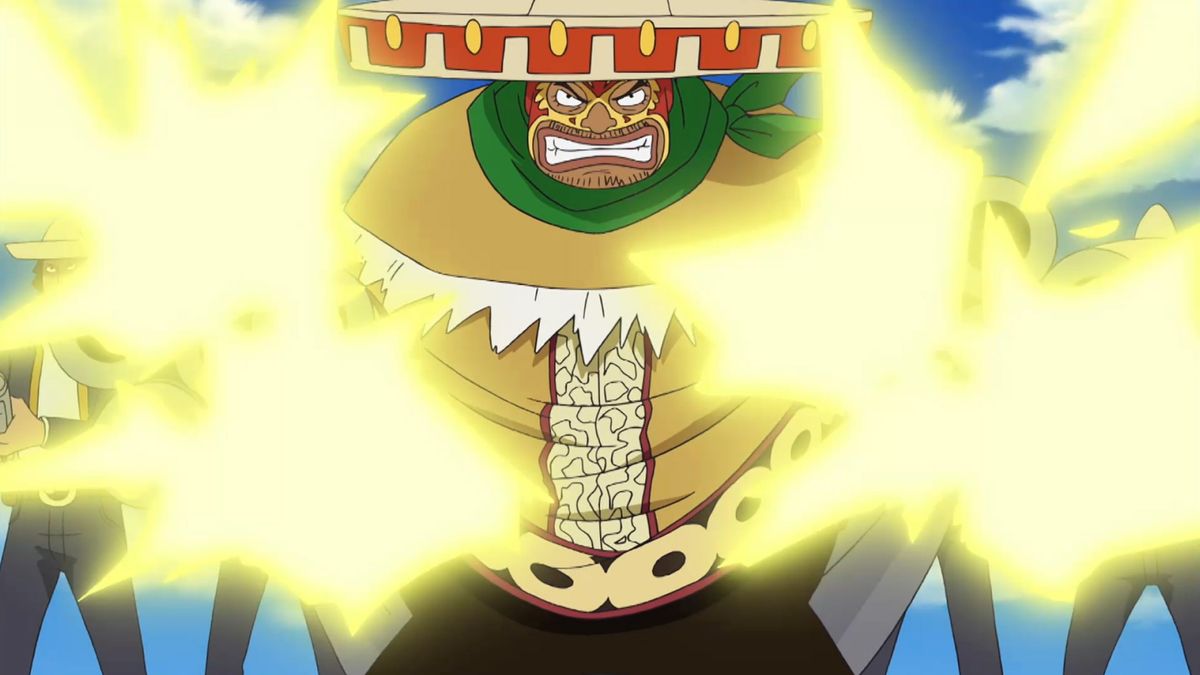
The Amigo Pirates arrive with guns and demand Boss. Corto confronts Luffy while Largo’s presence raises the threat. The islanders refuse to surrender the giant beetle, who does not want to join a pirate crew. Violence damages the recreated Baratie sign, making the invasion personal for Sanji. What began as a cheerful homecoming becomes a test of whether the Straw Hats will defend a place built from their own memories and somebody else’s labor.
RaeRae’s opening receipt
Episode 427 spends enough time inside the replica to make one fact clear: Little East Blue does not belong to the Straw Hats merely because residents built monuments to their stories. The island belongs to the people who cooked, hammered, painted, remembered, and raised children there.
That distinction matters when the Amigo Pirates arrive. Defending a fan tribute can flatter the ego. Defending residents who refuse to hand over a living creature requires solidarity. The episode moves the crew from celebrity guests to accountable visitors.
The crew separates according to memory
Each member follows details connected to a different beginning.
The island becomes a collection of personal routes rather than one guided tour.
Luffy meets Foosha Village at a distance
Buildings and food recall Makino, the mountain bandits, Shanks, and the departure that began everything.
Home returns without trapping him inside childhood.
A replica cannot reproduce the people
Familiar walls carry emotional force while every face remains new.
Nostalgia supplies recognition without actual reunion.
Zoro encounters the culture of his promise
Sword practice recalls the dojo and Kuina without needing a sentimental speech.
His ambition began in a small room before the Grand Line made the promise famous.
Usopp finds affection for Syrup Village
A place mocked as quiet receives space beside larger East Blue landmarks.
Memory does not rank hometowns by military importance.
Nami discovers the Orenami fan club
Residents celebrate the navigator as a local legend.
Admiration feels ridiculous and healing after years when Arlong reduced her talent to forced labor.
The fan club sees the wanted poster and the person
Public reputation arrives before conversation.
Nami can enjoy the attention while recognizing how incomplete fame remains.
Sanji finds the Baratie recreated
The restaurant sign carries Zeff, kitchen discipline, hunger, and the farewell that launched his voyage.
A commercial facade becomes family history.
Cooking turns tribute into participation
Sanji does not only admire the replica.
He uses the kitchen, feeds people, and makes the remembered place function.
Food keeps memory active
A sign can become decoration. A meal requires repetition, skill, ingredients, and service.
The island preserves East Blue through daily practice.
Residents built celebrity shrines before meeting celebrities
Stories and wanted posters shaped the island’s idea of the Straw Hats.
The real crew now has to live beside curated versions of themselves.
Fandom can flatten complicated people
A heroic display may ignore mistakes, conflict, fear, or collateral damage.
Yoko’s resistance keeps the celebration from becoming unquestioned worship.
Yoko does not owe instant trust
Her Marine father taught her to treat pirates as threats.
One cheerful meal cannot erase the category that organizes her grief.
The islanders pressure her through consensus
Everyone else appears ready to welcome the crew.
Being outnumbered does not automatically make a concern dishonest.
Luffy does not perform respectability
He cannot explain himself into Yoko’s approval through polished manners.
His best argument will always be what he does when danger arrives.
Boss chooses the island
The giant beetle has relationships and preferences beyond Shiki’s biological program.
Refusing a pirate crew becomes an act of agency others must honor.
Corto treats refusal as inconvenience
The Amigo mission assumes the target has no right to reject recruitment.
Power calls capture an invitation when consent would slow the job.
The guns change the island’s atmosphere
Festival energy gives way to residents facing organized force.
The invaders turn nostalgia into a hostage surface.
Demanding Boss tests communal loyalty
Surrender could protect buildings and bodies in the short term.
Refusal declares that the beetle belongs inside the community rather than outside moral concern.
The residents do not reduce Boss to property
Their protection comes from affection and shared life.
That relationship carries more ethical weight than Shiki’s ownership claim.
Corto confronts Luffy as an obstacle
The younger Amigo expects force to remove an interfering pirate.
He underestimates a captain whose entire identity resists forced separation.
Luffy recognizes captivity before strategy
Boss does not want to go.
That answer gives Luffy enough reason to oppose the hunters.
The Straw Hats understand involuntary recruitment
Nami drew maps for Arlong, Robin served organizations for survival, and Franky watched weapons knowledge become government desire.
The crew carries personal reasons to reject Shiki’s extraction.
Chopper reads Boss as a living patient
Size and strange origin do not turn a creature into equipment.
Medical attention begins with life rather than military usefulness.
Robin recognizes a power structure
Shiki remains distant while subordinates perform capture.
Hierarchy protects the person issuing the order from the community absorbing harm.
Franky sees destruction aimed at community craft
Every damaged building represents resident labor.
Repairable structures still carry violated effort.
The Baratie sign breaks
A piece of Sanji’s remembered home falls because invaders treat the island as expendable scenery.
The damage turns abstract threat into an intimate insult.
Sanji’s silence lands before anger
The cook sees Zeff’s name broken in front of him.
Memory transforms a board into something worth defending.
Destroying replicas can still hurt
An object does not need to be original to carry real attachment.
Meaning accumulates through recognition, labor, and use.
The Amigo Pirates misread the display
They see decorative buildings around a target.
Residents and Straw Hats see a shared cultural archive.
Largo’s arrival escalates the threat
The captain brings greater power and stronger connection to Shiki’s ambition.
Corto’s confrontation becomes part of an organized extraction campaign.
Brotherhood supports the antagonists too
Largo and Corto act as a family team seeking advancement.
Family loyalty becomes dangerous when loyalty excuses coercion.
The episode asks whether loyalty has limits
Supporting a brother does not make every shared mission just.
Affection cannot replace moral judgment.
Yoko watches pirates protect the island
Evidence begins contradicting the broad category she inherited.
Changing belief should take more than one heroic pose, but action opens the door.
The Straw Hats defend without owning
Little East Blue celebrates them, yet they do not claim control over the island.
Protection can support local choice instead of creating a new authority.
Boss remains the center of consent
The argument cannot become only a contest between pirate crews.
The creature’s refusal is the reason the Amigo demand fails.
The special uses familiar spaces as emotional shorthand
Foosha, Syrup, Cocoyasi, and Baratie references reach long histories quickly.
Recognition allows a four-episode arc to build stakes without pretending decades passed.
Shorthand still needs substance
The island works because residents maintain the spaces and relationships.
References alone would leave the conflict empty.
The crew receives a mirror of public legend
Little East Blue knows stories about them rather than private reality.
The invasion lets the crew decide what kind of legend to become in front of witnesses.
Yoko prevents easy self-congratulation
Her skepticism asks whether one community’s heroes could remain another person’s danger.
The answer must be specific, not a slogan about good pirates.
Episode 427 makes the movie bridge explicit
Boss, Largo, Corto, and Shiki’s network move the television story toward Strong World.
The material remains a tie-in rather than an Impel Down development.
This remains a numbered television special React
This page responds to the recreated hometowns, Orenami fan club, Baratie tribute, Yoko’s suspicion, Boss’s refusal, the Amigo invasion, Corto’s confrontation, and Largo’s arrival. Film-level judgment remains separate.
Clear labeling protects the episode-versus-Review boundary and the continuity record.
The official local still remains canonical
The Episode 427 official story image serves as featured image, hero, static directory card, and social preview through one local attachment.
Complete metadata preserves source, accessibility, filing, and unique use.
RaeRae’s final receipt
Little East Blue gives the Straw Hats a flattering homecoming, but Episode 427 refuses to let admiration finish the argument. Yoko does not trust pirate celebrity. Boss does not consent to Shiki’s recruitment. Residents have to decide whether their community protects a living neighbor when armed men demand surrender.
The broken Baratie sign provides the cleanest emotional receipt. The board is a replica. Sanji’s reaction is real. Objects gain weight through the people, labor, and memories attached to them, not through certificates proving originality.
The Amigo Pirates arrive believing a small island will exchange Boss for safety. Instead, they find residents who built home twice and pirates who know exactly what forced service costs. Nostalgia stops being decoration and becomes a line the invaders crossed.
Nami’s fan club carries a sharp reversal
Arlong once used her skill while denying her freedom. Little East Blue celebrates the same navigator because she escaped and kept sailing.
Admiration cannot repair childhood, but the contrast shows how far ownership lost.
Sanji’s kitchen response rejects passive nostalgia
He honors Baratie by feeding people rather than guarding a sign from fingerprints.
Tradition survives through practice.
Usopp gets proof that small stories travel
A village liar became part of a crew whose adventures reached emigrant communities.
The replica turns exaggeration into a strange form of prophecy.
Zoro’s promise needs no fan club
His relationship to origin remains private, disciplined, and attached to one lost rival.
The island cannot reproduce Kuina, which keeps memory from becoming merchandise.
Yoko distinguishes reputation from evidence
Fans cite stories supporting trust. She cites a category supporting fear.
Neither position knows the full person until the crisis provides direct observation.
The residents risk more than the visitors
The Straw Hats can sail away after battle. Little East Blue must repair buildings and live with retaliation.
Defense should follow local refusal rather than pirate appetite for a fight.
Boss cannot speak human language and still communicates choice
Behavior, attachment, and resistance show that capture is unwanted.
Consent does not require vocabulary convenient to the captor.
Shiki’s organization calls coercion recruitment
Joining a pirate fleet sounds voluntary until guns arrive.
Language launders extraction when power controls the invitation.
Largo and Corto mirror a healthier bond badly
The Straw Hats choose one another while preserving argument and refusal.
The brothers support hierarchy even when the mission harms outsiders.
A good crew does not demand silence
Disagreement can protect people from collective wrongdoing.
Loyalty becomes strongest when truth remains allowed inside the bond.
The broken sign proves replicas create original meaning
Little East Blue’s Baratie is not Zeff’s restaurant, yet residents made new meals and memories there.
Damage therefore destroys something genuinely local as well as symbolically distant.
The Straw Hats become guests accountable to hosts
Their faces appear in displays, but celebration does not grant ownership.
Respect means following the community’s defense of Boss rather than claiming the story.
The special earns conflict through consent
A simple monster hunt could reduce Boss to a prize.
Giving the beetle preference and neighbors turns the hunt into a moral violation.
Yoko’s change must remain earned
One battle can challenge prejudice without resolving grief.
The strongest outcome would let trust grow through specific actions rather than instant conversion.
Episode 427 makes fan service answer to character
Every familiar landmark reveals a relationship, and every damaged tribute affects someone differently.
Recognition becomes story rather than inventory.
The Strong World bridge gains thematic relevance
Shiki seeks living power to dominate wider populations. Little East Blue preserves living memory through community.
Extraction and preservation now face each other before the film begins.
RaeRae’s extra receipt
Episode 427 could have spent twenty minutes asking viewers to clap at recreated landmarks. Instead, the Amigo Pirates force the replicas to prove they hold more than references. People work there. People remember there. Boss belongs there because relationship, not military usefulness, defines his place.
Yoko remains essential because fandom should never erase the harm associated with a symbol. The Straw Hats earn their argument by standing between armed extraction and a community’s refusal. Protection becomes the receipt that celebrity alone could never provide.